
Upgrading Halogen Landscape Lights to LED: The 2026 Retrofit Guide
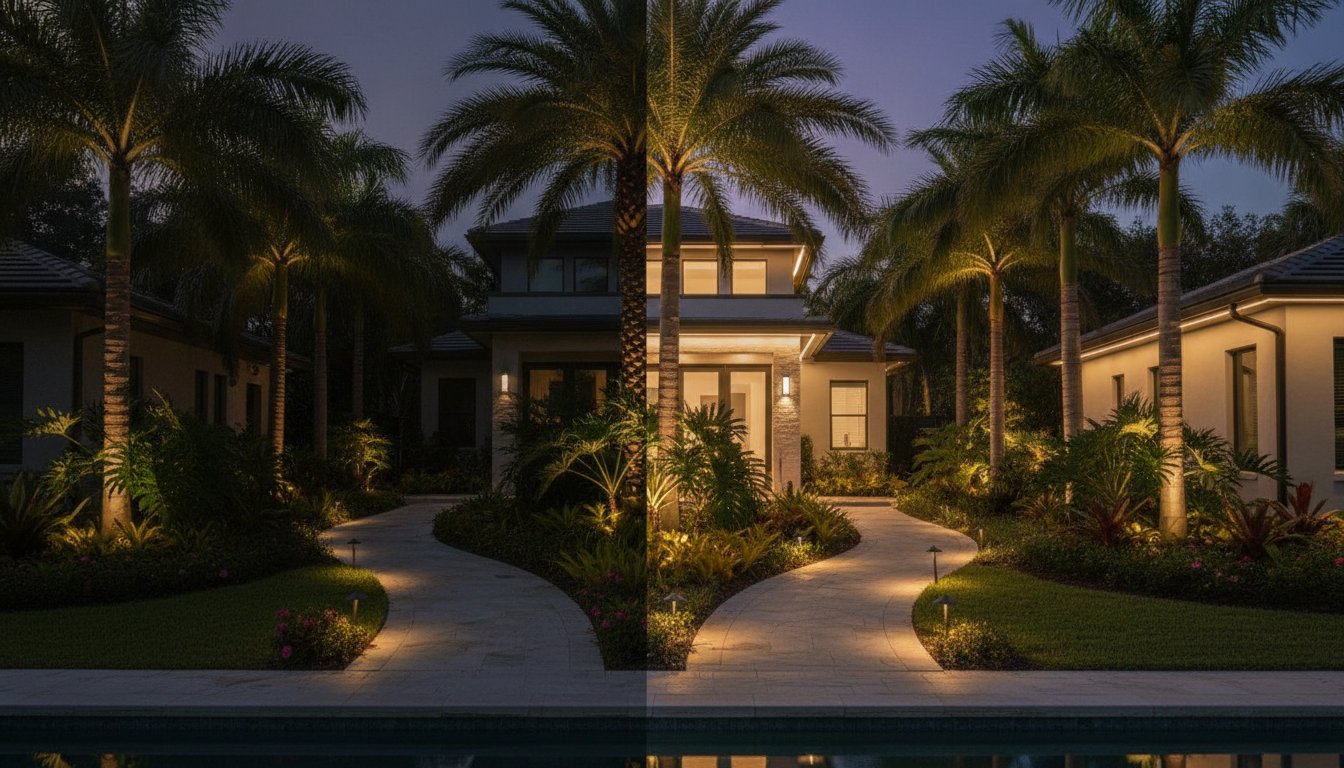
The golden glow of a halogen landscape system often comes at a hidden price that goes beyond your monthly utility bill. In 2026, the federal phase-out of inefficient bulbs has made finding replacements nearly impossible, leaving many homeowners with darkening gardens and outdated technology. You likely appreciate the warm ambiance of your current setup, but the constant maintenance and heat damage to your foliage are becoming difficult to ignore. Upgrading halogen landscape lights to LED is no longer just a suggestion for energy efficiency; it’s a necessary restoration of your property’s nighttime elegance and security.
We understand that you want to preserve the sophisticated atmosphere of your outdoor space without the technical headaches of high-voltage consumption. This guide will show you how to transform your existing system into a high-performance, maintenance-free masterpiece designed to thrive in Florida’s humidity. We’ll explore the engineering balance required for a successful retrofit, from managing voltage loads to selecting the perfect 2700K color temperature that rivals the classic halogen aesthetic. Discover how a professional approach to LED technology can provide significant energy savings while enhancing the luxury and reliability of your South Florida home.
Key Takeaways
- Understand why the 80% reduction in energy consumption makes transitioning from heat-based filaments to semiconductor light a necessary evolution for modern estates.
- Learn how to navigate technical engineering requirements, such as transformer minimum loads and voltage drop correction, to ensure your new system operates with perfect stability.
- Compare the benefits of cost-effective drop-in bulbs versus premium integrated fixtures when upgrading halogen landscape lights to LED for long-term durability.
- Discover the methodology for preserving the classic, warm 2700K aesthetic while utilizing high-performance components built to survive the South Florida climate.
- Identify how a professional “System Restoration” approach can fix original design flaws and permanently eliminate the recurring expense of professional bulb replacement services.
Why Upgrading Halogen Landscape Lights to LED is Essential in 2026
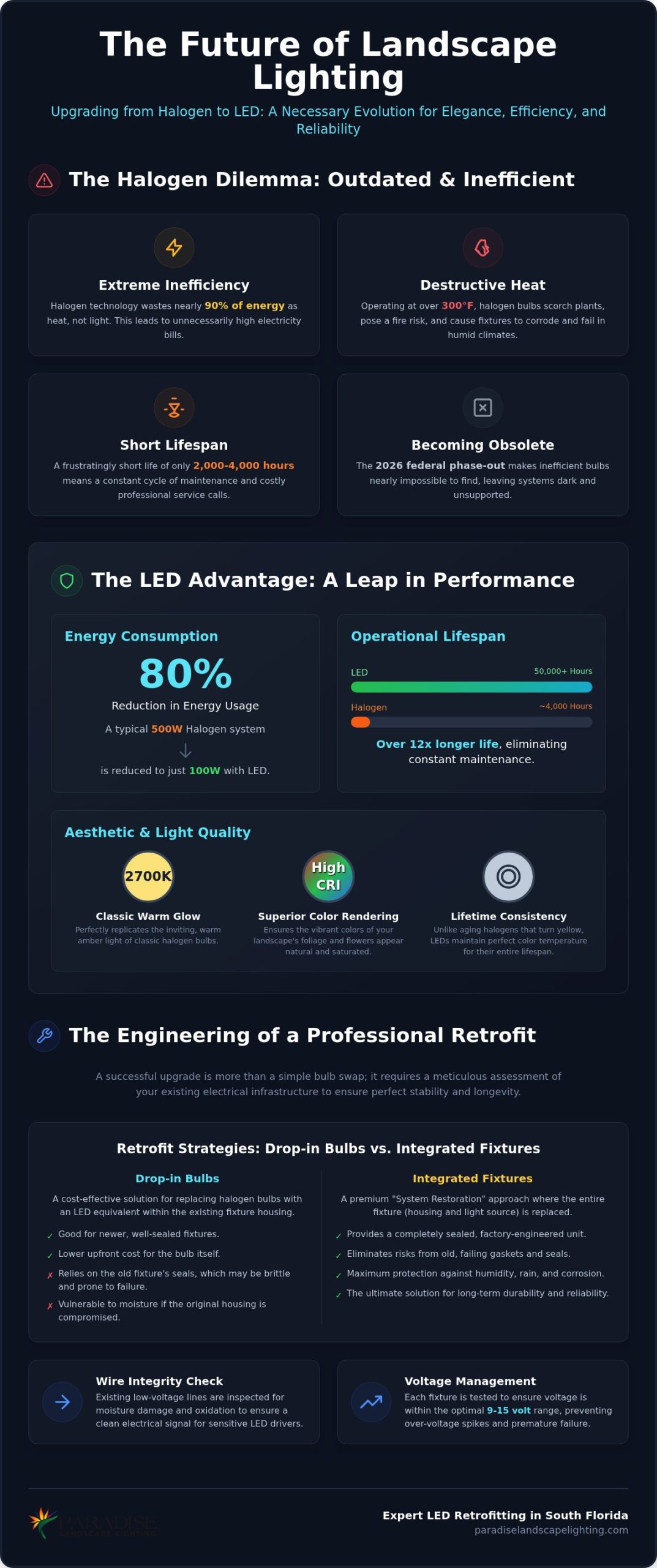
The transition from traditional halogen bulbs to modern light-emitting diodes is a fundamental shift in physics. Halogen technology relies on heating a tungsten filament until it glows, a process that wastes nearly 90% of its energy as heat. In contrast, the engineering of an LED utilizes semiconductors to convert electrons directly into light. This efficiency is why upgrading halogen landscape lights to LED results in a staggering 80% reduction in energy consumption. For a standard South Florida property, a 500-watt halogen system can be reduced to just 100 watts of total load. With residential electricity rates reaching approximately 19 cents per kilowatt-hour in 2026, this reduction provides immediate relief for your monthly operating costs.
Reliability is the other half of the equation. Halogen bulbs have a frustratingly short lifespan, usually lasting between 2,000 and 4,000 hours. This creates a cycle of constant maintenance and professional service calls. High-performance LED retrofits offer decade-long reliability, with many components rated for 50,000 hours of operation. This shift moves your outdoor lighting from a high-maintenance chore to a set-and-forget luxury asset.
The Environmental Impact of Halogen Heat
Halogen bulbs are essentially small heaters that happen to produce light, often reaching temperatures exceeding 300 degrees Fahrenheit. In the intense South Florida climate, this internal heat is destructive. It causes the rubber gaskets and seals of your fixtures to become brittle and fail, which allows humidity and rain to enter the housing. Once moisture enters a hot fixture, the internal components corrode rapidly. By removing this thermal stress, you protect the structural integrity of your expensive brass or copper fixtures. Additionally, low-heat LED systems are far safer for your garden. They won’t scorch delicate tropical foliage or create a fire hazard in dry mulch beds during the winter months.
Light Quality: Matching the Warm Halogen Glow
Many homeowners hesitate to switch because they fear the “cold” blue light associated with early LED technology. Modern high-end LEDs have solved this aesthetic challenge. By selecting a 2700K color temperature, we can perfectly replicate the warm, inviting amber glow of a classic halogen bulb. Furthermore, professional-grade LEDs offer a superior Color Rendering Index (CRI). This ensures that the deep greens of your palms and the vibrant reds of your hibiscus appear natural and saturated under the night sky. Unlike halogens, which shift toward a dull yellow as they age, LEDs maintain a consistent color temperature across the entire property for their entire lifespan.
The Engineering of a Professional LED Retrofit
Transitioning a luxury lighting system isn’t as simple as unscrewing a bulb. It requires a meticulous assessment of the electrical infrastructure already in place. We begin by examining the integrity of your existing low-voltage lines. Over years of service in South Florida, moisture can penetrate wire jackets, causing copper oxidation that turns the metal black and brittle. If the wire is compromised, it won’t provide the clean electrical signal required for sensitive LED drivers. Upgrading halogen landscape lights to LED on a failing wire run is a recipe for flickering and premature failure.
Voltage management also changes significantly during a retrofit. Halogen bulbs are notorious for “voltage drop,” where the lights at the end of a long wire run appear dimmer than those closest to the transformer. LEDs are much more resilient, often operating perfectly between 9 and 15 volts. However, this flexibility doesn’t excuse poor engineering. We test every fixture to ensure the voltage stays within the manufacturer’s specified range, protecting the internal circuitry from “over-voltage” spikes that can occur when a high-capacity transformer is suddenly powering a much lighter load. If you encounter persistent flickering or dark zones during this process, a professional diagnostic checklist for troubleshooting low voltage landscape lighting can help identify the root cause before new components are installed.
Transformer Optimization and Load Balancing
Many older systems rely on heavy-duty 600-watt or 900-watt transformers. While these were necessary for power-hungry halogens, they present a unique challenge for modern components. Some traditional magnetic transformers require a minimum load to function correctly. If your new LED total wattage falls below this threshold, the system may hum, flicker, or fail to activate. A seasoned landscape lighting engineer calculates these loads to ensure the transformer remains in its optimal operating range. We often recommend transitioning to smart transformers during this phase. These units offer astronomical timers that adjust with the seasons and allow for precise dimming control from your smartphone.
Combating the South Florida Climate
Coastal environments in Miami and Palm Beach are notoriously aggressive. Salt air accelerates corrosion at the socket level, which is where most halogen systems fail first. During a professional retrofit, we don’t just replace the light source; we clean or replace sockets and use moisture-proof grease caps on every connection. These silicone-filled connectors are non-negotiable for preventing “wicking,” where moisture travels up the wire into the fixture housing. When salt air damage has already taken its toll on your system’s connections and wiring, low voltage landscape lighting repair in Fort Lauderdale can address these root causes before a full LED retrofit is performed. High-quality LED components also feature advanced heat sinking to dissipate the ambient heat of 90-degree Florida nights. This protection ensures the internal electronics don’t overheat, preserving the long-term reliability of your investment.
Retrofit Strategies: Drop-in Bulbs vs. Integrated Fixtures
When considering upgrading halogen landscape lights to LED, homeowners often face a choice between the convenience of drop-in bulbs and the permanence of integrated fixtures. A drop-in bulb is a cost-effective solution that fits into your existing sockets. While this approach is appealing for those with high-quality brass or copper housings, its success depends entirely on the condition of the internal hardware. In South Florida, salt air and humidity can create “socket rot,” where the electrical contact points have corroded beyond repair. Inserting a premium LED into a compromised socket is a temporary fix that often leads to flickering and premature failure.
Integrated fixtures represent the peak of outdoor lighting technology. Unlike a bulb that sits inside a separate housing, an integrated unit is engineered as a single, sealed component. This design allows the entire fixture body to act as a heat sink, drawing warmth away from the delicate LED diodes. Because heat is the primary enemy of LED longevity, integrated systems often carry manufacturer warranties of 10 to 15 years, significantly outperforming the 1 to 3 year coverage typical of drop-in bulbs.
When is a “Bulb Swap” Sufficient?
We recommend a bulb-only upgrade only when the existing fixtures are in pristine condition. High-end solid brass or copper units that have been well-maintained can often host a new LED lamp successfully. However, we must match the optics of the new bulb to the original reflector. If the beam spread doesn’t align with the fixture’s design, you’ll lose the intentional light patterns that define your home’s nighttime character. Upgrading halogen landscape lights to LED via a bulb swap is a technical match, not just a physical one.
The Case for Full Fixture Replacement
For luxury estates in Boca Raton and Coral Gables, integrated fixtures are the preferred standard. Our professional outdoor lighting installation in Broward County focuses on these units because they offer superior optical control. Integrated optics allow for precise beam shaping and significant glare reduction, ensuring the light hits your architectural features without spilling into windows or neighbors’ yards. These fixtures are also physically smaller and more discreet, allowing the beauty of your landscape to remain the focus while the light source disappears into the shadows.
Calculating the ROI: Energy, Maintenance, and Value
The financial logic behind upgrading halogen landscape lights to LED is undeniable when you look at the total cost of ownership. While the initial investment for a professional retrofit is higher than buying a few boxes of bulbs, the payback period is remarkably short. In a typical residential scenario, the energy and maintenance savings can cover the cost of the upgrade in just over two years. By reducing your system’s load by 80%, you aren’t just saving pennies; you’re fundamentally changing the utility profile of your estate. An LED system installed in 2026 is engineered to be a permanent fixture of your home, with many systems expected to perform flawlessly well into 2040.
Direct energy savings are the most visible benefit. With residential electricity rates in 2026 averaging approximately 19 cents per kilowatt-hour, the wattage reduction from a 500-watt halogen system to a 100-watt LED system results in significant monthly savings. Over a decade, these savings often exceed the original cost of the installation, making the upgrade one of the most efficient capital improvements you can make for your property.
The Hidden Costs of Halogen Maintenance
The true expense of a halogen system is the “maintenance tax” that homeowners pay year after year. Consider a property with 20 fixtures. Halogen bulbs generally require replacement twice a year to maintain full system integrity. When you add the cost of the bulbs to the labor of professional service calls, the numbers climb quickly. Halogen systems also suffer from “cascading failure.” When one bulb burns out, the remaining bulbs on that circuit receive a higher voltage, which shortens their lifespan and leads to a frustrating cycle of constant outages. Transitioning to professional landscape lighting system maintenance shifts the focus from constant repairs to proactive optimization, ensuring your system looks as good as the day it was installed.
Increasing Nighttime Curb Appeal and Resale Value
Luxury real estate in South Florida moves fast, and curb appeal is often decided after sunset. High-end buyers in Miami and Palm Beach now view LED systems as a standard requirement rather than an optional upgrade. A halogen system often looks “spotty” and inconsistent, with yellowish pools of light that diminish the home’s architectural details. In contrast, upgrading halogen landscape lights to LED allows for layered, engineered lighting that highlights textures and depths previously lost to the shadows. You can use the retrofit process to integrate residential architectural lighting in Miami, transforming your home’s facade into a striking visual statement. This enhancement doesn’t just make your home more beautiful; it protects your property value by ensuring your estate remains modern and competitive.
If you’re ready to eliminate the maintenance tax and see your home in a new light, consider a professional evaluation from Paradise Landscape Lighting to begin your system restoration.
The Paradise Approach: Expert Retrofitting in South Florida
At Paradise Landscape Lighting, we view the process of upgrading halogen landscape lights to LED as a “System Restoration” rather than a simple hardware replacement. Our methodology begins with a comprehensive Design Review to address the evolution of your property. Since your original halogen system was installed, your specimen trees have matured and your architectural features may have changed. We use this retrofit opportunity to eliminate dark spots and fix original design mistakes, ensuring your light artistry reflects the current beauty of your estate.
Engineering precision is the foundation of our work. Before any new components are installed, we test every existing line for voltage stability. This diagnostic phase identifies hidden weaknesses in the copper wire or insulation that could compromise your new high-performance LEDs. We also offer bespoke selection of fixture finishes, matching the hardware to the specific architectural style of your home, whether it is a Mediterranean villa in Coral Gables or a modern waterfront estate in Fort Lauderdale. Our goal is a seamless transition that restores your system with minimal disruption to your manicured gardens.
Redesigning the Nightscape
A retrofit provides the perfect moment to expand the emotional impact of your property. We often recommend integrating water feature lighting design in Miami to highlight the movement of pools and fountains. By moving fixtures to accommodate years of plant growth, we can re-establish the depth and drama of your landscape. Our designers implement sophisticated layering techniques, combining path, accent, and wash lighting to create a cohesive nightscape that feels like a natural extension of your home.
Our Professional Installation Standards
Our technical standards are designed to survive the harsh coastal environment. We utilize heavy-duty, marine-grade connectors on every junction to prevent the “Florida flicker” caused by salt air corrosion. Once the installation is complete, we conduct a final “Aiming and Tuning” session after dark. This meticulous process ensures every beam hits its intended target with surgical precision, eliminating glare and perfecting the shadows. Schedule your professional LED conversion assessment today to see how upgrading halogen landscape lights to LED can redefine your outdoor living experience.
Secure Your Property’s Nighttime Legacy
Transitioning your outdoor lighting is more than a simple bulb swap; it’s a fundamental restoration of your estate’s evening atmosphere. We’ve explored how moving away from high-heat filaments to semiconductor technology permanently eliminates the “maintenance tax” and protects your fixtures from the aggressive South Florida climate. By upgrading halogen landscape lights to LED, you’re investing in a system that balances technical performance with aesthetic beauty. This evolution ensures your property remains illuminated with a consistent, warm glow while significantly reducing your energy footprint for years to come.
Our team of on-staff engineers and designers brings decades of experience in luxury lighting transformations. We specialize in creating bespoke nightscapes that thrive in coastal environments, ensuring every component is chosen for its durability and visual impact. Don’t let an outdated system dim the beauty of your home. Request a Professional LED Retrofit Assessment today and let us transform your landscape into a high-performance masterpiece designed for longevity. Your garden deserves a light that is as enduring as the Florida sun.
Frequently Asked Questions
Can I just put LED bulbs in my existing halogen landscape lighting fixtures?
You can often perform a “drop-in” bulb swap if your existing brass or copper fixtures are structurally sound. However, this method depends heavily on the integrity of the internal sockets and seals. If the fixture has suffered from years of halogen heat damage or moisture intrusion, a simple bulb replacement may result in poor performance. A professional assessment ensures that your current housings are capable of protecting the new LED components.
Will my halogen transformer work with new LED bulbs?
Most halogen transformers are compatible with LEDs, but they often require a minimum electrical load to stay active. Since LEDs consume roughly 80% less power, your new total wattage might fall below the transformer’s threshold, causing the system to shut off or hum. We evaluate your specific transformer to determine if it needs a load adjustment or an upgrade to a modern, smart-controlled unit for better stability.
How much money will I actually save by switching to LED landscape lighting?
Switching to LED typically reduces energy consumption by 75% to 80%, which translates directly into lower monthly utility bills. Beyond electricity, you save significantly on the cost of replacement bulbs and professional service calls. While halogen bulbs require bi-annual changes, a high-quality LED system is designed to perform for decades. Most homeowners find that the initial investment pays for itself through these combined savings in just over two years.
Do LEDs look as warm and inviting as halogen lights?
Modern LED technology perfectly replicates the warm amber glow of traditional halogens by utilizing a 2700K color temperature. High-end LEDs also offer a superior Color Rendering Index (CRI), which makes the greens of your palms and the textures of your stonework appear more vibrant. When upgrading halogen landscape lights to LED, you don’t have to sacrifice the cozy, luxury aesthetic you love for the sake of efficiency.
Why do my new LED landscape lights flicker or blink?
Flickering is usually a symptom of poor electrical communication, often caused by corroded wire connections or a transformer that isn’t receiving its required minimum load. In some cases, it’s the result of voltage drop on older, thin-gauge wiring that worked for halogens but struggles to provide a clean signal for LED drivers. Professional retrofitting includes testing every line to eliminate these issues and ensure a steady, flicker-free light across your property. For a step-by-step approach to diagnosing these problems, our guide on troubleshooting low voltage landscape lighting walks through each potential failure point with a professional diagnostic checklist.
How long does a professional LED retrofit take to complete?
A standard residential retrofit typically takes one to three days, depending on the number of fixtures and the complexity of the existing wiring. This process includes a full engineering check of the transformer, cleaning or replacing sockets, and the final nighttime aiming and tuning session. We work methodically to ensure the transition is seamless and causes minimal disruption to your gardens, providing a transformed nightscape in a very short timeframe.
What happens to my warranty if I only replace the bulbs?
If you choose a bulb-only upgrade, the warranty typically only covers the LED lamp itself for one to three years. These warranties often don’t cover failures caused by water intrusion or socket corrosion in your old fixtures. In contrast, full integrated fixtures often come with 10 to 15 year manufacturer warranties. Choosing the right strategy when upgrading halogen landscape lights to LED is essential for securing long-term protection for your investment.
Are LED landscape lights better for the environment in South Florida?
LEDs are significantly better for the local ecosystem because they produce far less heat and consume less power. Lower operating temperatures prevent the scorching of delicate tropical foliage and reduce the risk of fire in dry mulch beds. Additionally, the extreme longevity of LED components means fewer bulbs end up in Florida landfills. By choosing a more efficient system, you’re contributing to a more sustainable and environmentally responsible luxury lifestyle.
Return to News