
The 2026 Buying Guide to Energy Efficient Outdoor Lighting in Fort Lauderdale
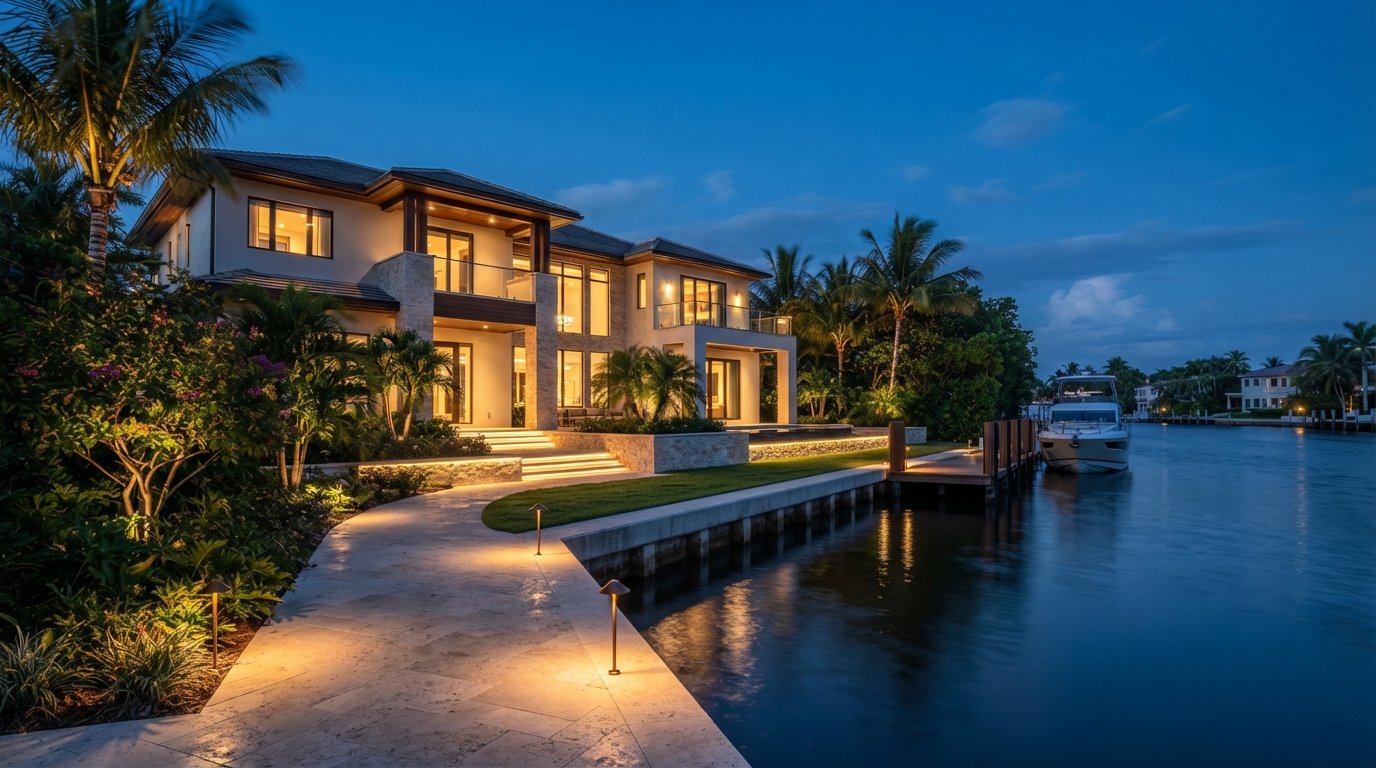
In the salt-laden air of Fort Lauderdale, a standard outdoor light fixture isn’t just an investment; it’s often a countdown to corrosion. You’ve likely watched expensive fixtures pit and peel within two seasons while your energy bills climb alongside the rising summer humidity. It’s frustrating to see a luxury landscape marred by the orange hum of outdated halogens or the harsh glare of unshielded bulbs that ruin your garden’s evening ambiance. We understand that you want a nightscape that reflects the elegance of your estate without the constant cycle of repair and replacement.
This 2026 guide reveals how to master energy efficient outdoor lighting Fort Lauderdale by merging high-end South Florida aesthetics with precision LED engineering. By choosing the right metallurgy and “invisible source” design tactics, you can slash power consumption by up to 85% while creating a stunning, maintenance-free environment. We will walk through the essential components of a sustainable system, from marine-grade materials that defy the Atlantic coast to smart zoning that protects our local sea turtle populations. Discover how to transform your property into a luminous sanctuary that is as technically sound as it is beautiful.
Key Takeaways
- Discover why specifying solid brass or copper fixtures is essential for preventing the structural failure and pitting common with standard aluminum systems in our tropical climate.
- Implement the “Invisible Source” strategy to create a high-end aesthetic using energy efficient outdoor lighting Fort Lauderdale homeowners rely on for glare-free, sophisticated nightscapes.
- Learn how low-voltage 12V engineering ensures your lighting system remains safe, flexible, and significantly more cost-effective than traditional line-voltage alternatives.
- Gain clarity on the 2026 sea turtle lighting requirements to ensure your coastal property meets strict FWC standards while maintaining its evening elegance.
- Identify the key differences between a standard contractor and a specialist team that integrates both lighting design and technical engineering for long-term ROI.
Why Energy Efficiency is Essential for Fort Lauderdale Landscapes
In Fort Lauderdale, energy efficiency isn’t a luxury; it’s a technical requirement for survival. The relentless 80% humidity and salt-laden air along the Intracoastal Waterway create a corrosive environment that quickly exposes the flaws in traditional landscape lighting systems. While older halogen setups struggle against the elements, modern energy efficient outdoor lighting Fort Lauderdale systems are engineered to thrive. For the 2026 homeowner, sustainable luxury means a nightscape that remains pristine without the constant burden of high utility bills or frequent fixture replacements. It’s about creating a luminous sanctuary that respects both your investment and the delicate South Florida ecosystem.
The Shift from Halogen to High-Performance LED
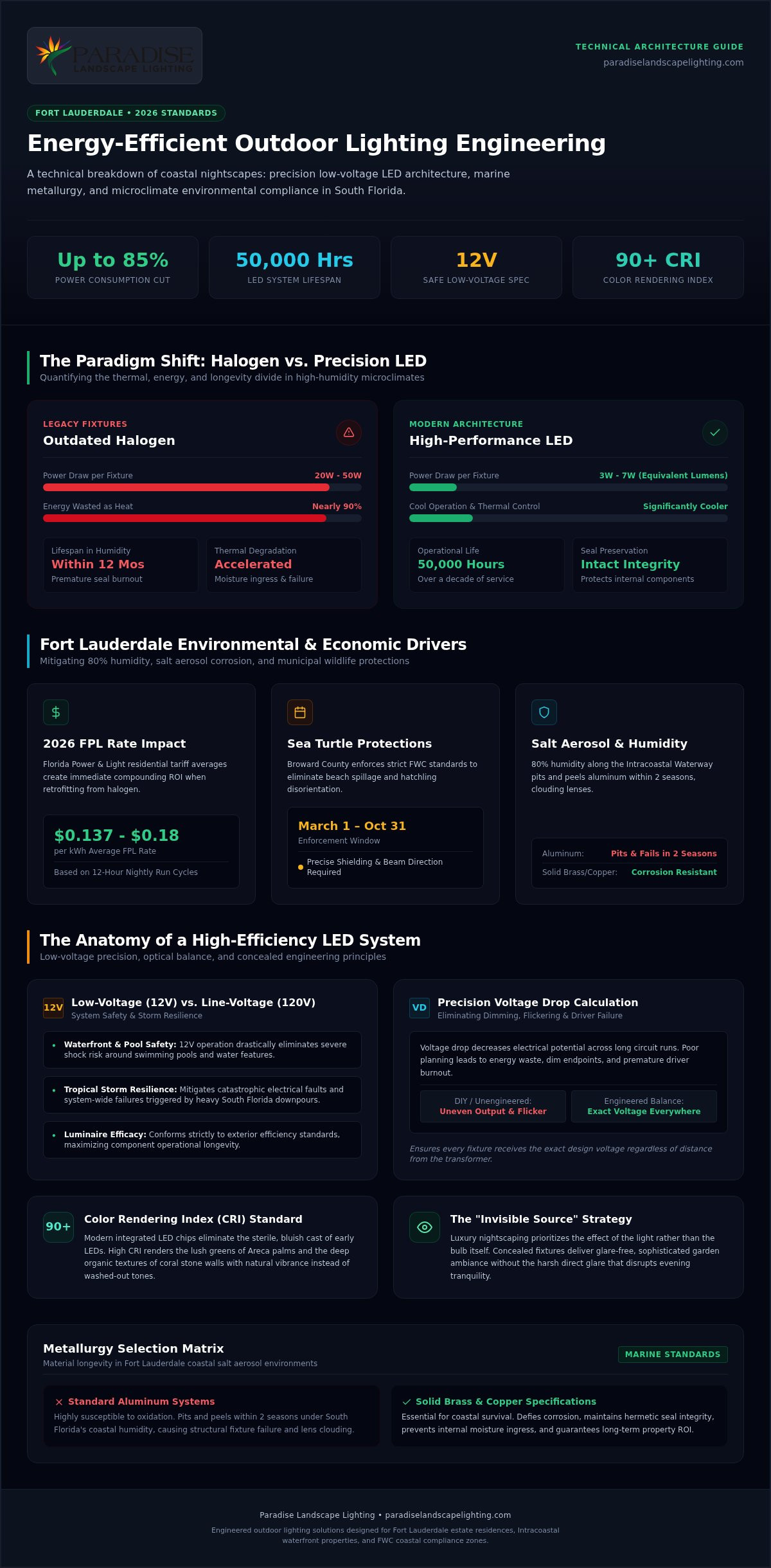
Halogen bulbs are effectively obsolete in the high-end market. They waste nearly 90% of their energy as heat, which is a recipe for disaster in the Florida sun. This excessive heat accelerates the degradation of seals and internal components, leading to moisture ingress and total system failure. High-performance LEDs offer an efficiency gap that’s impossible to ignore. A professional-grade LED draws only 3W to 7W to match the lumen output of a 20W to 50W halogen lamp. Because LEDs run significantly cooler, they maintain their integrity for up to 50,000 hours. In our humid climate, a halogen lamp might fail within 12 months, but a properly engineered LED system provides over a decade of reliable service.
Local Environmental Considerations in Broward County
Protecting the local ecosystem is a hallmark of responsible property ownership in South Florida. From March 1 through October 31, Broward County enforces strict sea turtle lighting protections to prevent hatchling disorientation. High-efficiency systems allow for precise beam control and shielding, ensuring light stays on your specimen palms rather than spilling onto the beach. Managing the “salt air factor” is equally critical for maintaining efficiency. Salt aerosol corrosion can cloud lenses and pit low-quality housings, reducing light output and forcing the system to work harder.
If you’re currently managing a legacy system, upgrading halogen landscape lights to LED is the most effective way to achieve immediate financial ROI. With FPL’s 2026 residential rates averaging between $0.137 and $0.18 per kWh, the savings on a 12-hour nightly run cycle are substantial. By choosing energy efficient outdoor lighting Fort Lauderdale, you eliminate the “glare” that ruins garden ambiance while securing a maintenance-free nightscape that withstands the unique pressures of the Atlantic coast.
The Anatomy of a High-Efficiency LED Lighting System
Low-voltage (12V) systems represent the foundation of modern luxury nightscapes. They provide enhanced safety around pools and water features while significantly lowering energy consumption compared to traditional 120V line-voltage systems. In Fort Lauderdale, where tropical storms and high humidity are constant, low-voltage systems reduce the risk of electrical faults and system-wide failures. These systems meet the latest energy-efficient exterior lighting standards by maximizing luminaire efficacy and ensuring the highest possible lifespan for every component.
A critical component of energy efficient outdoor lighting Fort Lauderdale is the meticulous calculation of voltage drop. Voltage drop is the decrease in electrical potential along the path of a circuit, which causes energy waste and leads to uneven light output or premature LED driver failure. A lighting engineer ensures that every fixture receives the precise voltage required, regardless of its distance from the transformer. This level of technical oversight prevents the flickering and dimming often seen in DIY or poorly planned installations.
The 2026 standard for high-end LEDs also prioritizes a high Color Rendering Index (CRI). Unlike the bluish or sterile tones of early LEDs, modern integrated chips achieve a CRI of 90 or higher. This ensures the lush greens of your Areca palms and the deep textures of coral stone walls appear vibrant and natural, rather than washed out. High-CRI lighting bridges the gap between technical efficiency and the warm, inviting glow homeowners previously associated with power-hungry incandescent bulbs.
Precision Engineering for Voltage Stability
Large Fort Lauderdale estates require complex wiring layouts to maintain stability across multiple zones. An engineer prevents failure by designing dedicated circuits that balance the load, protecting sensitive electronics from the “salt air factor” that can increase resistance in electrical connections. This technical precision ensures your energy efficient outdoor lighting Fort Lauderdale performs at peak efficiency for years. By accounting for the specific environmental stressors of Broward County, we eliminate the energy waste associated with over-taxed transformers and improperly gauged wire.
Smart Controls and App Integration
Efficiency is further enhanced by smart transformers that utilize real-time astronomical data. These units automatically adjust to Fort Lauderdale’s specific sunset times, ensuring lights only engage when truly necessary. Through integrated apps, you can create custom zones or dim specific areas to 50% power after midnight, aligning with the latest Florida Building Code energy conservation standards. If you are ready to elevate your property, exploring bespoke outdoor LED lighting design in Fort Lauderdale offers the perfect blend of technical mastery and aesthetic vision.
Choosing Fixtures: Materials and Durability Ratings
In the humid, salt-laden atmosphere of Broward County, the physical integrity of your fixtures is just as important as the diodes inside them. Standard powder-coated aluminum fixtures, often sold as “professional grade,” typically pit, chalk, and fail mechanically within 24 to 36 months due to airborne chlorides. For energy efficient outdoor lighting Fort Lauderdale estates require, we specify solid cast brass, bronze, or copper. These investment-grade materials don’t corrode or peel; instead, they develop a natural patina that strengthens their resistance to the elements. This structural longevity is a core component of sustainability. A fixture that lasts twenty years is inherently more efficient than one that requires replacement every three.
We also consider the engineering trade-offs between modular and integrated LED systems. Integrated LEDs offer superior heat dissipation because the light source is thermally bonded to the fixture housing, which is vital for longevity in the Florida heat. Modular systems, however, allow for easier component replacement without discarding the entire housing. Regardless of the light source, the Ingress Protection (IP) rating is non-negotiable. While IP65 is sufficient for most directional uplights, any fixture flush with the ground needs an IP67 rating to withstand the temporary standing water common during our tropical downpours.
Material Science: Brass vs. Aluminum in Salt Air
Salt air acts as a catalyst for galvanic corrosion, especially in thin-walled aluminum housings. Once the powder coating is breached by a small scratch or UV degradation, the underlying metal oxidizes rapidly. Solid brass and copper fixtures are far more resilient because they’re non-ferrous and dense. They maintain a watertight seal around the internal electronics, ensuring that the energy-efficient drivers aren’t compromised by moisture. While the upfront cost of premium metals is higher, the long-term value is undeniable when you factor in the avoided costs of labor and replacement hardware.
Specialized Water Feature and Pool Lighting
Lighting a pool deck or a fountain requires an even higher level of technical precision. For these environments, we utilize IP68-rated fixtures, which are engineered for continuous immersion. The complexities of water feature lighting design Miami and Fort Lauderdale homeowners expect involve more than just waterproofing. It requires specialized submersible LED technology that accounts for light refraction and heat management underwater. By using low-voltage, high-efficiency submersibles, we create dramatic focal points in ponds and fountains that remain safe for the property and gentle on the monthly utility bill.
The ‘Invisible Source’ Strategy for Luxury Design
Luxury isn’t defined by how many lights you can fit on a property; it’s defined by the effect those lights create. The “Invisible Source” strategy ensures that you see the texture of the coral stone or the canopy of a Royal Palm without ever spotting the fixture itself. This approach is the hallmark of energy efficient outdoor lighting Fort Lauderdale designers use to create high-end ambiance. By concealing hardware within the foliage or using recessed well lights, we eliminate the visual clutter of stakes and wires. It turns your landscape into a living gallery where the light feels organic, not artificial. This philosophy prioritizes the illuminated target over the equipment, ensuring your nightscape remains sophisticated and uncluttered.
Mastering the Art of Shadow and Light
A common mistake in South Florida is over-lighting. Flooding a garden with light washes out depth and wastes energy. Instead, we use silhouetting to create drama. By placing a light source behind a specimen plant or sculpture, we create a dark, recognizable shape against a softly lit background. This technique requires fewer fixtures and lower wattage, which maximizes your long-term ROI. Our approach to residential architectural lighting Miami and Fort Lauderdale estates prioritizes these subtle contrasts to elevate the home’s nightscape. It’s a method that relies on the artistry of shadow as much as the science of light, proving that “less is more” when the design is intentional.
Strategic Placement for Maximum Impact
Glare is the enemy of a luxury garden. If a light shines directly into your eyes while walking a path, the design has failed. We utilize shields, snoots, and shrouds to direct light exactly where it’s needed. Strategic placement, such as moonlighting from high in a tree canopy, mimics natural light and prevents “hot spots” on the ground. This precision ensures that every watt is used to enhance a feature rather than contributing to light pollution. Proper design prevents energy waste by ensuring light doesn’t spill into the sky or onto a neighbor’s property.
For architectural features, we focus on grazing techniques. By placing a fixture inches from a textured wall and directing the beam upward, we highlight the natural variations in the stone. This creates a three-dimensional depth that a flat floodlight could never achieve. Because we use narrow beam optics, we can illuminate a three-story facade with minimal light spill, keeping the energy footprint remarkably small. It’s this level of technical control that separates a professional installation from a generic kit. If you’re ready to master the “Invisible Source” on your property, schedule a design consultation with our expert team today.
Selecting Your Fort Lauderdale Lighting Partner
Choosing a partner for your property requires more than finding a technician with a shovel. In the competitive South Florida market, many companies promise quick installations but lack the technical depth to ensure long-term performance. A standard contractor might install a functional system, yet they often overlook the nuanced artistry that defines a luxury estate. Conversely, a designer without technical backing may create a beautiful concept that suffers from voltage drop or premature failure due to poor engineering. For truly energy efficient outdoor lighting Fort Lauderdale homeowners must seek a team that provides a holistic approach, blending creative vision with rigorous technical standards.
Reviewing a portfolio is your first step in identifying a qualified partner. Look for consistency in nightscape artistry and how the light interacts with architectural textures. A professional portfolio should demonstrate a mastery of the “Invisible Source” strategy discussed earlier, showing properties where the light feels natural rather than forced. Beyond the initial design, inquire about local maintenance plans. The local environment is unforgiving, and a dedicated maintenance schedule is the only way to protect your investment from the persistent humidity and salt spray that define our coastal climate.
The Paradise Process: Artistry Meets Engineering
Our approach at Paradise Landscape Lighting is defined by the collaboration between our lighting designer and our lead engineer. This partnership ensures that every aesthetic choice is supported by a sound electrical foundation, preventing the common pitfalls of DIY or basic contractor setups. We don’t just install fixtures; we engineer systems that thrive in the South Florida heat. We specialize in the LED landscape lighting retrofit Broward County estates need to modernize their existing nightscapes. By customizing maintenance plans for every client, we ensure that your LED investment remains as efficient on year ten as it was on day one.
Taking the Next Step Toward a Sustainable Nightscape
The journey toward a sustainable nightscape begins with a comprehensive audit of your property. During your initial design consultation, we evaluate your existing system for energy-saving opportunities and identify ways to enhance your home’s architectural features. We look for wasted energy, light spill, and outdated fixtures that are vulnerable to corrosion. This audit allows us to create a bespoke plan that balances your desire for luxury with the practical need for efficiency. If you are ready to transform your property into a luminous, cost-effective sanctuary, Contact Paradise Landscape Lighting for a bespoke consultation and discover the difference that professional engineering makes.
Transforming Your Fort Lauderdale Estate for the Future
Elevating your property’s nightscape is a balance of artistic vision and technical durability. We’ve explored how specifying solid brass and copper fixtures is non-negotiable for coastal resilience; these materials thrive where standard aluminum fails in our salt-air environment. By prioritizing the “Invisible Source” strategy, you can achieve a sophisticated look that highlights your home’s architecture while minimizing energy waste. Investing in energy efficient outdoor lighting Fort Lauderdale homeowners trust means choosing a system built on precision engineering and intentional design.
Our unique design-engineer collaboration ensures your system isn’t just beautiful but technically sound for the long term. We’re ready to help you transition from outdated, high-maintenance systems to a sustainable, high-performance nightscape that enhances your lifestyle and property value. Your garden deserves a lightscape that reflects the true luxury of South Florida. Schedule Your Bespoke Design Consultation Today to see how professional engineering can redefine your evening experience. We look forward to bringing your vision to life with expertise and integrity.
Frequently Asked Questions
How much energy does an LED landscape lighting system actually save?
High-performance LED systems reduce energy consumption by 75% to 85% compared to traditional halogen setups. A typical LED fixture draws between 3W and 7W, whereas a halogen equivalent requires 20W to 50W to produce the same light output. For a Fort Lauderdale estate running lights for 12 hours nightly, this translates to significant monthly utility savings. These efficiency gains are achieved without sacrificing the warm, high-CRI glow that defines luxury nightscapes.
Can I retrofit my existing halogen lights to LED without replacing fixtures?
You can often retrofit existing halogen systems by replacing the lamps with LED equivalents, but the success depends on the condition of your hardware. In South Florida’s humidity, older fixtures frequently suffer from seal failure or socket corrosion. We recommend a full audit to ensure the existing transformer and wiring can handle the technical requirements of modern LED drivers. A professional retrofit ensures your energy efficient outdoor lighting Fort Lauderdale system remains stable and moisture-resistant.
What is the best material for outdoor light fixtures in Fort Lauderdale’s salt air?
Solid cast brass and copper are the only materials that truly withstand the corrosive salt air along the Intracoastal Waterway. While powder-coated aluminum is common, it typically pits and chalks within 24 to 36 months in coastal zones. Brass and copper age naturally, developing a protective patina that maintains the fixture’s structural integrity for decades. Choosing these investment-grade metals prevents the frequent replacement costs associated with lower-quality materials found in big-box kits.
Do energy-efficient outdoor lights work with smart home systems like Alexa or Lutron?
Modern LED systems integrate seamlessly with smart home ecosystems like Lutron, Alexa, and Google Home through Wi-Fi or Bluetooth-enabled transformers. You can create custom dimming zones, set astronomical timers that track the sunset, and control your entire nightscape via a smartphone app. This level of automation ensures your lights only run when needed, further reducing energy waste. It allows for effortless adjustments during sea turtle nesting season or for specific evening events.
How long do professional-grade LED landscape lights last in South Florida?
Professional-grade LED boards are rated for 50,000 hours, which equates to roughly 10 to 12 years of continuous nightly use. This longevity far exceeds the 2,000-hour lifespan of traditional halogen bulbs, which often fail within six months in our high-heat environment. By utilizing an engineer to manage heat dissipation and voltage stability, we maximize these lifespans. Regular maintenance ensures that seals remain watertight, protecting the internal electronics from Broward County’s intense humidity.
Is low-voltage lighting safer for homes with pools and water features?
Low-voltage 12V systems are significantly safer for residential properties with pools, fountains, and wet landscape beds. Unlike high-voltage 120V lines, 12V systems carry a negligible risk of electrical shock if a cable is accidentally cut or exposed to water. This safety profile makes low-voltage the gold standard for architectural and fountain lighting in Fort Lauderdale. It also allows for more flexible cable placement around intricate hardscapes without the need for deep, high-voltage conduit trenching.
Why is professional design better than buying an LED kit from a big-box store?
Professional design combines artistic vision with technical engineering that retail kits simply can’t match. Big-box kits often use low-grade plastic or thin aluminum that fails quickly in the Florida sun. A bespoke approach by Paradise Landscape Lighting ensures that beam angles, color temperatures, and voltage loads are perfectly balanced for your specific estate. We eliminate glare and “hot spots” while using high-CRI LEDs that make your landscape’s natural colors pop with sophisticated clarity.
What is ‘Dark Sky’ compliance and does my Fort Lauderdale home need it?
Dark Sky compliance involves using shielded fixtures and specific wavelengths to reduce light pollution and protect local wildlife. In Fort Lauderdale, this is especially critical during sea turtle nesting season from March through October. energy efficient outdoor lighting Fort Lauderdale regulations require coastal-visible lights to be “low, long, and shielded.” By using FWC-certified amber LEDs and precision shrouds, we ensure your property remains elegantly illuminated while fully complying with Broward County’s environmental protection ordinances.
Return to News