
LED Fountain Lighting Installation: The Art and Engineering of Underwater Illumination
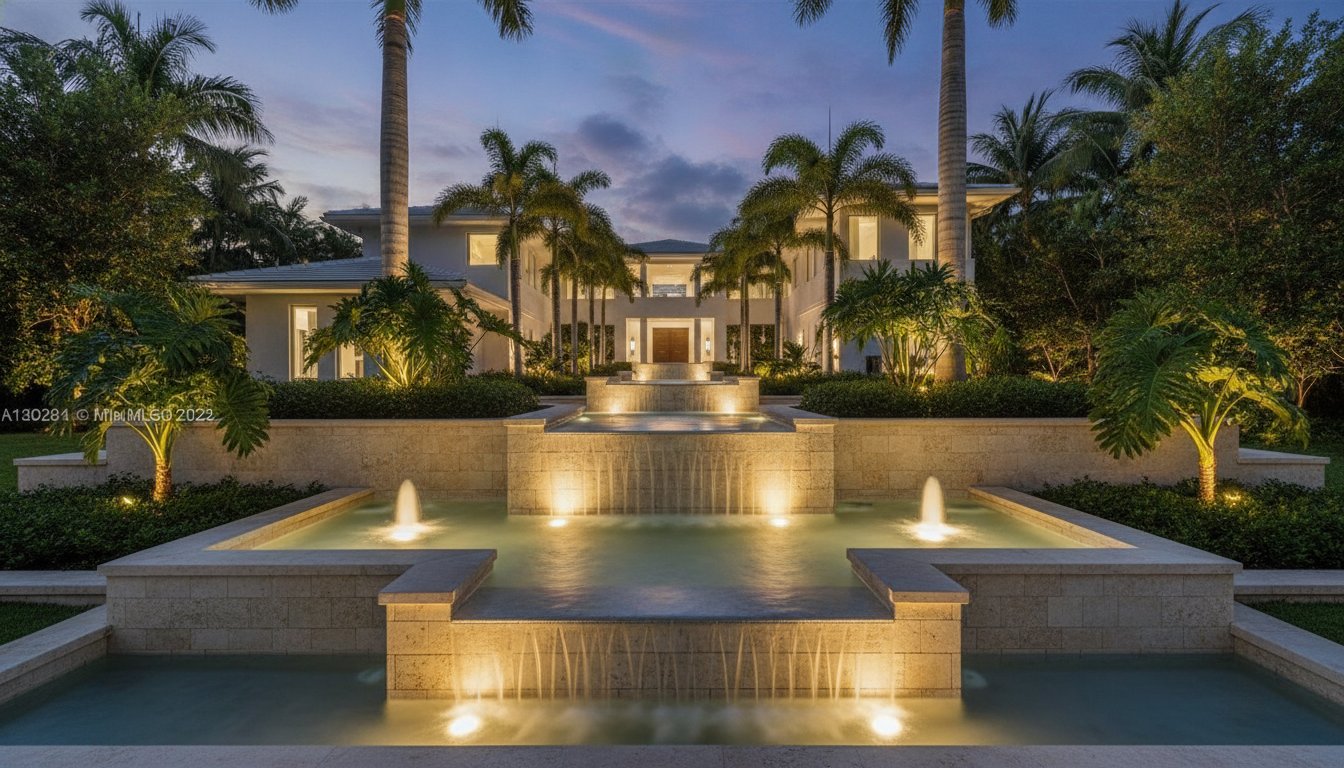
Why do so many homeowners settle for a flickering, corroded light fixture when their fountain could be a luminous masterpiece of liquid glass? It is common to feel a sense of hesitation when researching underwater fountain lighting ideas, especially when you are concerned about mixing electricity with water or dealing with cheap fixtures that leak. You deserve a nighttime retreat that feels like a luxury resort, not a project that risks your safety or your property’s integrity.
By understanding the marriage of aquatic engineering and artistic design, you can transform a simple water feature into a breathtaking centerpiece. This article provides a deep dive into the precision-engineered systems and “invisible source” techniques that ensure long-term durability and visual elegance. We will examine the critical role of IP68-rated components, low-voltage safety standards, and the sophisticated methodology used to create a reliable, energy-efficient nightscape that stands the test of time. Discover how professional design and precision engineering ensure your water features become breathtaking nighttime centerpieces while providing total peace of mind.
Key Takeaways
- Learn why an IP68 rating is the non-negotiable standard for submersible fixtures to ensure total waterproofing and long-term electrical safety.
- Explore sophisticated underwater fountain lighting ideas such as grazing and silhouetting that emphasize the architectural texture of stone and the dynamic movement of water.
- Master the “Invisible Source” philosophy, which uses meticulous fixture placement to create stunning visual effects without the distraction of visible hardware.
- Understand the engineering precision required to manage voltage drop and environmental factors, ensuring your system remains reliable in South Florida’s climate.
- Discover how a collaborative design and engineering process results in a bespoke lighting system that is as durable as it is aesthetically captivating.
Mastering Underwater Illumination: Why Fountain Lighting Requires a Specialized Approach
Lighting a water feature isn’t just about making it visible; it’s about choreographing light through a medium that’s constantly in motion. In luxury landscape design, fountain lighting is a highly specialized discipline that requires a deep understanding of fluid dynamics and optical physics. Unlike dry land applications, water introduces complex variables like light refraction, which can distort the intended beam angle, and fixture buoyancy, which can cause unsecured lights to shift or float. Standard outdoor LEDs simply aren’t built to withstand the constant hydrostatic pressure or the corrosive effects of chemically treated water. Achieving high-end results requires a bespoke design where the fountain’s unique architecture and water flow patterns dictate the precise placement of every fixture. This tailored approach ensures that the lighting highlights the movement of the water without creating unwanted glare or hotspots.
The Aesthetic Impact of Light on Water
The way light behaves changes dramatically depending on the state of the water. Falling water, such as a tiered fountain or a dramatic spillway, acts as a prism that catches and scatters light, creating a sparkling, kinetic effect. Conversely, still reflecting pools require a more subtle approach to avoid harsh reflections and maintain the glassy surface look. When exploring underwater fountain lighting ideas, many homeowners consider color-changing LEDs. While these systems offer incredible versatility, we focus on using them to enhance mood and atmosphere with sophisticated palettes rather than creating a “gimmicky” light show. Our “Invisible Source” philosophy ensures that the hardware remains hidden from view, allowing the focus to remain entirely on the dancing water and the architectural beauty of the feature itself.
Safety and Low-Voltage Advantages
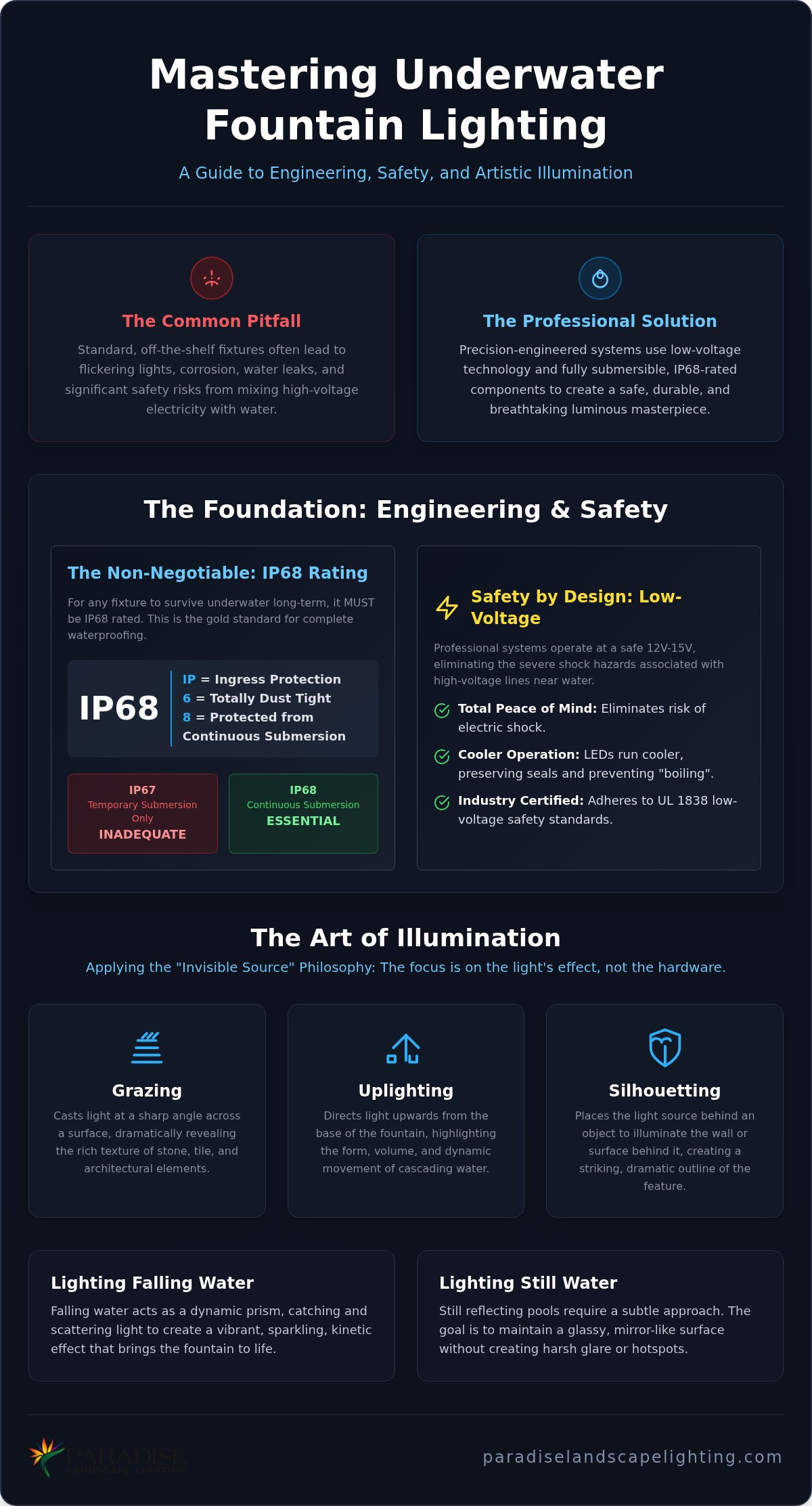
Safety remains the primary concern whenever electricity and water coexist. For residential water features, low-voltage systems, typically between 12V and 15V, are the industry gold standard. These systems provide exceptional illumination while eliminating the shock hazards associated with high-voltage lines. Modern LED technology is inherently safer than traditional halogen bulbs because it operates at significantly lower temperatures, which prevents the “boiling” effect on the fixture’s lens and extends the life of the seals. To ensure long-term reliability, every component must adhere to strict IP Ratings and Waterproofing standards. The UL 1838 standard specifies the safety requirements for low-voltage landscape lighting systems to ensure they are safe for use in residential outdoor environments. By prioritizing engineering precision, we create a system that’s as secure as it is stunning.
The Engineering Behind Submersible LEDs: IP Ratings and Waterproofing
When implementing sophisticated underwater fountain lighting ideas, the difference between a system that lasts for years and one that fails in a single season lies in the engineering. For luxury homeowners in Miami Beach or Fort Lauderdale, understanding the Ingress Protection (IP) rating system is the first step in ensuring a sound investment. The IP code consists of two digits; the first measures protection against solids, while the second measures protection against liquids. While an IP67 rating might suffice for a light that occasionally gets splashed, it’s entirely inadequate for a fountain. Submersible fixtures must carry an IP68 rating, which signifies they are designed for continuous, long-term submersion under specific pressure conditions. Without this certification, water will eventually find its way into the housing, leading to immediate circuit failure.
Precision engineering extends beyond the outer shell to the very heart of the fixture. High-performance submersible lights utilize hermetically sealed diodes that are encased in protective resins to prevent any moisture from reaching the sensitive electronics. The Engineering Behind Submersible LEDs has evolved to include solid-state technology that manages heat dissipation even when surrounded by water. Despite these internal protections, the most common point of failure isn’t the bulb itself, but the cable connection. If a connection isn’t perfectly sealed, water can travel through the interior of the wire’s insulation. This phenomenon, known as “wicking,” can pull moisture directly into the fixture or the power supply, destroying the system from the inside out.
Material Science: Resisting Corrosion
South Florida’s environment is notoriously harsh on outdoor hardware. Between the high humidity, salt-laden air in Palm Beach, and the chemicals used to maintain water clarity, entry-level fixtures quickly succumb to the elements. We prioritize heavy-cast brass and marine-grade stainless steel because these materials develop a protective patina rather than corroding or pitting. Unlike the thin aluminum or plastic found in big-box retail alternatives, professional-grade materials maintain their structural integrity against chlorine and bromine. This durability ensures that your investment remains beautiful and functional despite constant exposure to the corrosive coastal climate.
Cable Management and Waterproof Splicing
Reliable underwater illumination requires more than just waterproof lights; it demands a custom-engineered wiring ecosystem. We utilize specialized underwater junction boxes and resin-filled connectors to create a fortress against moisture. Every splice is further protected with heat-shrink tubing to ensure a permanent, airtight seal. This is where the role of a dedicated lighting engineer in Fort Lauderdale becomes vital. They must calculate the exact electrical load and voltage drop for submersible runs to ensure every light receives the consistent power it needs without overloading the circuit. If you are ready to see how technical precision can enhance your property, our team can help you design a fountain lighting system that combines safety with unmatched visual impact.
Design Techniques for Water Features: Uplighting, Grazing, and Silhouetting
While basic tutorials often suggest simply dropping a light into a basin, true artistry requires a nuanced understanding of the fountain’s form. Professional underwater fountain lighting ideas focus on how light interacts with the specific architecture of the feature. For example, a tiered fountain requires a multi-layered approach where each basin is individually illuminated to highlight the vertical spill. In contrast, a pondless fountain often benefits from uplighting that focuses on the bubbling surface or the surrounding stone. By tailoring the technique to the fountain type, we ensure the water looks vibrant and alive rather than flat or over-illuminated.
To achieve a high-end look, we utilize several specialized lighting methods:
- Grazing: Placing fixtures close to the surface of stone or marble architectural fountains to cast light at a sharp angle. This emphasizes the natural texture and intricate carvings of the material.
- Silhouetting: Lighting the backdrop or the water wall behind a central sculpture or jet. This creates a dramatic, high-contrast effect where the central element stands out as a powerful dark shape against a luminous glow.
- Uplighting: Positioning lights at the base of the feature to draw the eye upward, following the movement of the water.
A critical part of the design process is managing “hot spots” and glare. We carefully calculate beam angles and use shielding to ensure the light source remains hidden from every viewing angle. This follows our “Invisible Source” philosophy, ensuring that the observer sees the beauty of the illuminated water without being blinded by the hardware.
Illuminating the Moving Stream
Lighting a moving stream of water is a technical challenge that yields spectacular results when done correctly. By placing fixtures directly under spouts, the light “carries” through the water stream via internal reflection, making the water itself appear to glow from within. For mist effects or aerated jets, wider beam angles are used to catch the tiny droplets, creating a soft, ethereal cloud of light. Applying professional water feature lighting design Miami principles not only enhances the visual appeal but also significantly increases the nighttime property value for luxury homes.
Perimeter vs. Submersible Placement
Choosing between internal submerged fixtures and external spot lighting depends on the desired effect and maintenance preferences. Submerged fixtures offer the most integrated look, supporting a clean aesthetic where no hardware is visible. However, external spots can be effective for larger fountains where the light needs to travel a greater distance. In a truly bespoke outdoor lighting design, we often combine both. When evaluating different underwater fountain lighting ideas, this hybrid approach creates a cohesive narrative between the fountain and the surrounding garden architecture. It ensures the water feature feels like a natural extension of the landscape rather than an isolated element.
Precision Installation: Protecting Your System from South Florida’s Elements
Executing high-end underwater fountain lighting ideas requires more than just placing fixtures; it demands a rigorous, multi-step engineering protocol. We begin every project with a thorough site analysis and electrical load test specifically designed for aquatic environments to ensure the residential infrastructure is prepared for a low-voltage LED upgrade. Once the foundation is set, our team engineers a custom wiring plan that accounts for voltage drop over long distances, ensuring every light performs at its peak. We then install heavy-duty, low-voltage transformers within weather-protected enclosures to shield the heart of your system from the elements. Precision placement follows, utilizing marine-grade stainless steel mounting hardware and “invisible” wire routing to maintain the aesthetic integrity of your fountain. The process concludes with final nighttime aiming and adjustment, where we perfect the visual balance and eliminate glare to create a seamless, inviting glow.
The South Florida Environmental Factor
Our local climate presents unique challenges that standard installation methods fail to address. We engineer our systems to withstand tropical storms, extreme humidity, and the heavy rainfall characteristic of the region. A critical component of this resilience is managing heat dissipation in LED drivers, which can struggle during intense Florida summers if not properly ventilated. This is why professional landscape lighting in Fort Lauderdale requires specific corrosion-resistant techniques to combat the salt-laden air and high moisture levels. By using materials that won’t pit or degrade, we ensure your investment remains a centerpiece for years to come rather than a maintenance burden.
Voltage Drop and System Stability
If you’ve ever seen underwater lights flicker or appear dim at the end of a run, you’re witnessing the effects of poor electrical engineering. Maintaining system stability in a submerged environment is complex because water features often require longer cable runs than standard garden paths. We use the correct wire gauge for every submerged run to maintain consistent brightness and prevent the “dimming” effect. Our lighting engineer meticulously balances the load across the entire circuit to ensure uniform brightness across all fixtures, regardless of their distance from the transformer. This technical precision is what separates a DIY kit from a professional nightscape. To ensure your water feature receives this level of expert care, you can schedule a technical consultation with our installation team today.
Bespoke Fountain Lighting Design with Paradise Landscape Lighting
At Paradise Landscape Lighting, we believe that a water feature is more than just a landscape element; it’s the crown jewel of your estate’s nighttime narrative. Our process is built on a foundation of end-to-end excellence, moving seamlessly from initial design concepts to meticulous installation and long-term technical maintenance. Unlike generic kits that fail to account for architectural nuance, we specialize in stationary features and bespoke sculpture lighting that require a higher level of technical scrutiny. By pairing a dedicated lighting designer with a specialized lighting engineer, we ensure that every creative vision is backed by sound electrical integrity. This collaborative approach allows us to explore ambitious underwater fountain lighting ideas that result in a system that is as durable as it is beautiful.
For homeowners with existing features that have lost their luster, we often recommend upgrading halogen landscape lights to LED. This retrofit doesn’t just reduce energy consumption; it eliminates the excessive heat that often compromises underwater seals in older systems. Modern LED technology provides a more stable, vibrant light that breathes new life into classic fountains while significantly extending the system’s lifespan. By integrating these high-performance components, we can achieve the sophisticated lighting effects discussed earlier in this guide with greater precision and far less maintenance than traditional bulbs.
The Paradise Difference: Artistry and Accountability
Our commitment to high-end craftsmanship is defined by our “Invisible Source” philosophy. We believe the hardware should never compete with the effect; the focus should remain entirely on the water’s movement and the stone’s texture. During the day, our fixtures remain discreetly hidden within the architecture of your fountain, preserving the clean lines of your luxury space. At night, they transform the environment into a breathtaking display of light and shadow. This level of sophistication requires ongoing accountability. We provide professional maintenance services to protect your aquatic lighting investment in coastal areas like Palm Beach and Miami Beach, ensuring that mineral buildup or salt air never dim the brilliance of your water feature.
Get Started with Your Custom Design
Whether you’re looking for innovative underwater fountain lighting ideas for a new installation or need to modernize a classic pond, our team possesses the specialized knowledge to handle the most complex residential projects. We proudly serve luxury communities throughout Fort Lauderdale, Miami, Weston, and the surrounding South Florida areas. We invite you to experience a process defined by reliability, creative flair, and professional integrity. Your journey toward a more luminous and secure estate begins with a single conversation. Schedule your custom lighting consultation today.
Illuminate the Potential of Your Water Feature
A successful fountain lighting system is a delicate balance of artistry and technical rigor. You’ve seen how IP68-rated components and precision engineering prevent the common pitfalls of leaks and corrosion. By applying sophisticated underwater fountain lighting ideas like grazing and silhouetting, your water feature becomes a dynamic sculpture of light and shadow rather than a mere utility. This transformation requires a specialized approach that accounts for the unique challenges of the South Florida climate.
Our award-winning design and engineering team specializes in the unique demands of South Florida’s coastal environments. Whether you need a brand-new installation or comprehensive maintenance and retrofitting services for an existing system, we provide the expertise required for long-term reliability. It’s time to bring your vision to life with a partner dedicated to high-end craftsmanship and personal accountability. Transform your water feature with a custom design consultation and enjoy the peace of mind that comes from professional engineering. We look forward to helping you create a nighttime masterpiece that defines your estate.
Frequently Asked Questions
Is LED fountain lighting safe for my family and pets?
LED fountain lighting is exceptionally safe when installed as a low-voltage system. We utilize 12V to 15V technology, which poses no shock risk to humans or pets in the water. Every circuit is protected by a Ground-Fault Circuit Interrupter (GFCI) to meet National Electrical Code standards. This professional setup provides total peace of mind for families in Miami Beach and Fort Lauderdale who want a stunning nightscape without compromising safety.
Can I install LED fountain lights myself using a kit?
While DIY kits are available, they often lack the engineering required for long-term durability in South Florida’s climate. Professional installation ensures that every cable connection is hermetically sealed and that voltage drop is correctly calculated. Our team includes a lighting engineer who manages these technical complexities, preventing the common leaks and flickering issues that plague entry-level underwater fountain lighting ideas found in big-box retail stores.
How long do professional submersible LED fixtures typically last?
Professional-grade submersible LED fixtures are designed to last for a decade or more. High-quality materials like heavy-cast brass and marine-grade stainless steel resist the corrosive effects of chemically treated water and salt air. While the LED diodes themselves are rated for 50,000 hours of operation, the longevity of the system depends on the integrity of the waterproof seals and professional maintenance, which we provide throughout South Florida’s luxury communities.
What is the best IP rating for a fountain lighting system?
The only acceptable rating for fixtures that remain underwater indefinitely is IP68. This specific Ingress Protection code signifies that the fixture is hermetically sealed against continuous submersion under pressure. You should avoid IP67 ratings for fountains, as they are only designed for temporary immersion. In our coastal environment, using anything less than IP68-certified hardware is a recipe for system failure and costly repairs within the first year.
Do I need to drain my fountain to install new LED lighting?
Draining the fountain is typically necessary to ensure a precision installation. This allows our technicians to securely mount fixtures using stainless steel hardware and properly route “invisible” wiring through the structure. Draining the feature also provides an opportunity to test the waterproof integrity of every seal before the system is fully submerged. This methodical approach ensures your new lighting system remains stable and beautiful for years to come.
How often do LED fountain lights require maintenance in South Florida?
We recommend a professional maintenance check every six to twelve months for South Florida water features. Our local climate, characterized by intense heat and heavy tropical rainfall, can lead to mineral buildup on lenses or environmental shifts in the fountain basin. Regular service visits in cities like Weston and Coral Gables allow us to clean fixtures, check seal integrity, and adjust the aim of the lights to maintain your ideal aesthetic.
Can I add color-changing lights to my existing fountain?
You can absolutely integrate color-changing technology into an existing water feature through our retrofitting services. We specialize in upgrading older systems to modern RGBW LED technology, allowing you to create custom palettes and moods. This is a popular way to refresh underwater fountain lighting ideas for luxury estates, providing a dynamic visual experience that can be controlled via smart devices while maintaining the sophisticated look of your original architecture.
Will adding fountain lighting significantly increase my energy bill?
Adding an LED lighting system will not significantly impact your energy costs. Modern LED technology is incredibly efficient, consuming roughly 75% to 80% less electricity than traditional halogen bulbs. For homeowners in West Palm Beach and Miami, this means you can illuminate your fountain every night for a fraction of the cost of older systems. The long-term savings on both energy and bulb replacements make LED the most sustainable choice for any nightscape.
Return to News