
Tropical Garden Lighting Design in Miami Beach: A Guide to a Beautiful, Balanced Nightscape
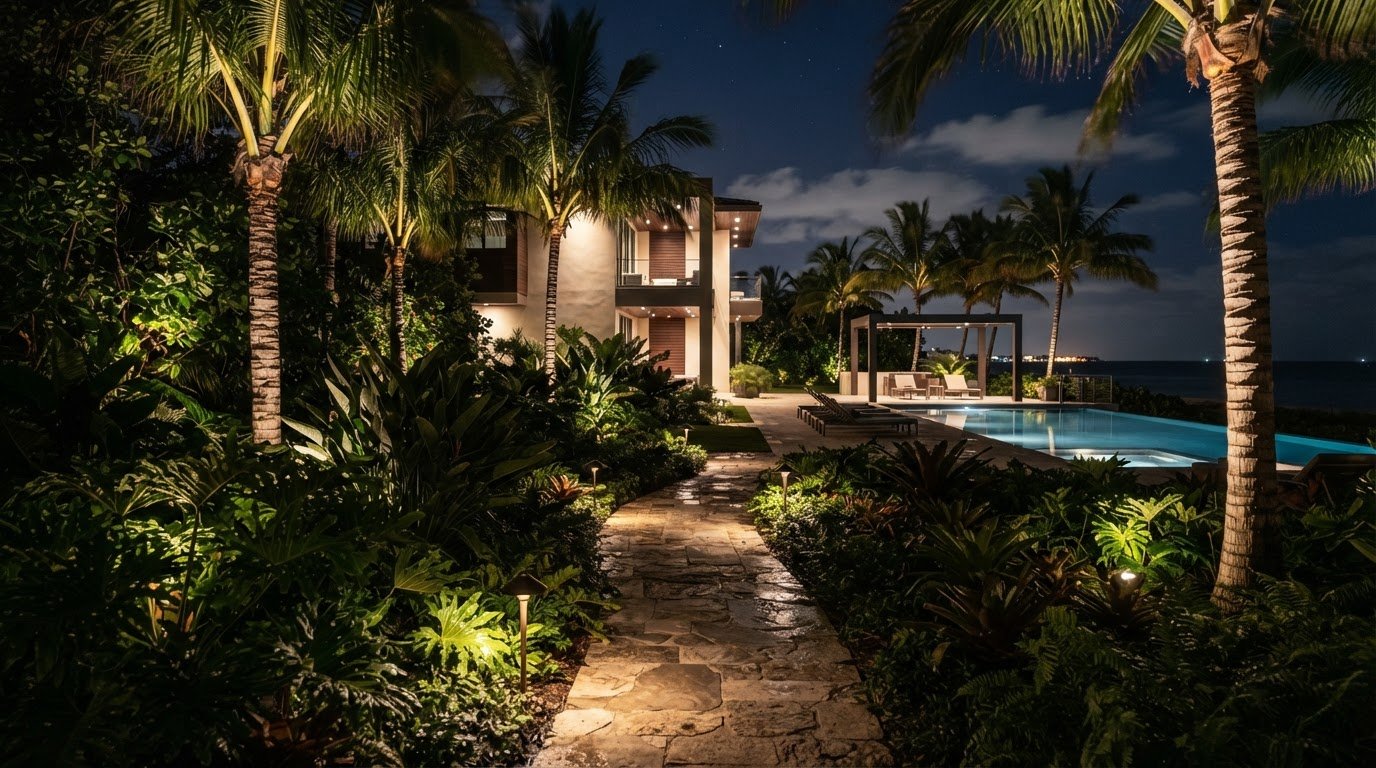
What if the most beautiful feature of your tropical garden at night is the one you barely notice: the lighting itself? A thoughtful tropical garden lighting design Miami Beach homeowners can enjoy reveals the shapes of palms and lush planting without flooding the yard with glare or making fixtures the focal point.
It’s natural to wonder which plants deserve emphasis, how to keep paths and gathering areas comfortable to use, and how coastal conditions may affect outdoor equipment. The answer isn’t to add more light everywhere. It’s to create a balanced, layered plan that suits the garden, the home, and the way you spend time outdoors.
This guide explains how to highlight tropical foliage, coordinate garden accents with pathway, pool deck, architectural, and water-feature lighting, and keep fixtures discreet. You’ll also learn why careful placement and equipment selection matter in Miami Beach’s humid, salt-air environment, and how a professionally designed low-voltage LED system can bring visual interest and everyday visibility together after dark.
Key Takeaways
- Plan light around how you use the garden, from arrival and pathways to favorite plants and outdoor gathering areas.
- Combine ambient, accent, and pathway lighting to reveal tropical foliage without making the scene feel flat or overlit.
- With tropical garden lighting design Miami Beach homeowners should consider plant-specific responses, coastal exposure, and discreet fixture placement.
- Coordinate garden lighting with pool decks, architecture, and water features for a balanced, comfortable nightscape.
- A lighting designer and lighting engineer can bring aesthetic planning and technical coordination together in a custom low-voltage LED system.
What makes tropical garden lighting in Miami Beach feel natural and inviting?
A tropical garden should feel like itself after sunset, not like a brightly lit display. Tropical garden lighting design Miami Beach homeowners can use starts with a purpose for each light: highlighting plants, making paths easier to follow, or bringing attention to an outdoor feature. The aim is to reveal the garden’s shapes and make key areas more usable while keeping the overall scene comfortable.
That takes more than choosing fixtures. Landscape lighting combines light sources and techniques to shape an outdoor space. In a tropical garden, a soft wash across foliage, a discreet accent on a sculptural palm, and gentle illumination at an entrance can create depth without flooding the entire yard with brightness.
A balanced tropical garden lighting scheme draws attention to selected plants and outdoor features while keeping routes visible and light out of people’s eyes. Visual emphasis comes from where light is placed and aimed, not simply from using brighter lights or adding more fixtures.
Which parts of a tropical garden deserve attention after dark?
Start with the features that give the property its character. Mature palms, sea grape, and distinctive foliage may offer compelling shapes and textures, where present. Then consider practical areas: the entrance, garden paths, seating, and focal features such as artwork or a fountain. A path should be easy to follow, while a favorite planting or gathering spot may call for a more considered accent.
Every property has its own planting, layout, and nighttime routines. Professional landscaping and garden design teams, such as MRjardins, emphasize structuring plant beds and outdoor living spaces so that daytime greenery and night illumination work in harmony. Plan for what is actually there rather than treating every tropical landscape as interchangeable.
How can lighting look elegant rather than overdone?
Restraint helps preserve the garden’s atmosphere. Instead of lighting every plant, select a few features and leave darker areas between them. That contrast gives the eye room to move and can make individual leaves, trunks, or canopy shapes more noticeable. Use enough illumination for comfortable movement, but avoid turning the whole garden into one uniformly bright scene.
Glare occurs when light shines directly into someone’s eyes or spills where it isn’t wanted, such as into a home or neighboring space. Careful aiming and shielding can help control it. Fixtures can also be positioned among planting or near garden edges to make them less prominent, although concealment depends on the site and installation.
Good design balances visual interest with everyday use. A lighting designer can identify the garden’s strongest features and shape a coordinated plan, while engineering supports a custom low-voltage LED system suited to the property. The result should feel deliberate: welcoming along the routes you use, expressive around selected planting, and calm rather than overlit.
How lighting layers bring tropical gardens to life
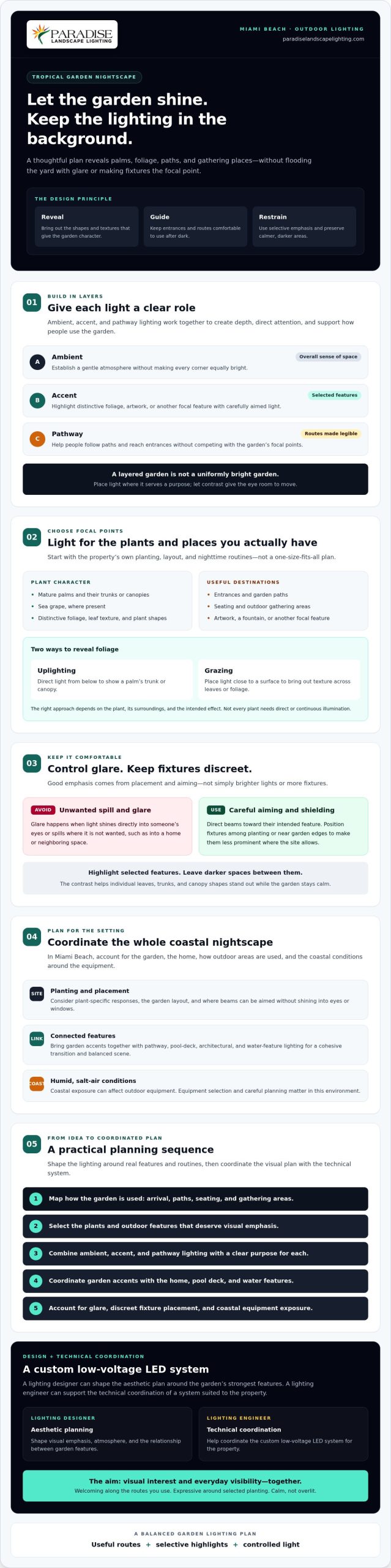
A layered plan gives each light a role. Ambient lighting establishes a gentle overall sense of the space, accent lighting highlights selected foliage or artwork, and pathway lighting helps make routes easier to follow. These layers work together rather than competing for attention. The goal isn’t to illuminate every corner equally, but to guide the eye through the garden while supporting how people use it after dark.
Layered illumination can make a garden easier to navigate and appreciate by pairing comfortable route lighting with selective highlights that reveal the character of plants and outdoor features. Consider where each beam falls and how the layers look together. DarkSky International offers guidance on responsible outdoor lighting, including limiting glare and directing light where it’s needed.
How should palms, foliage, and specimen plants be illuminated?
Uplighting directs light from below to show a palm’s trunk or canopy. Grazing places light close to a surface to bring out texture across leaves or other foliage. The right approach depends on the plant’s shape, its surroundings, and the effect you want. Aim carefully so the beam highlights the plant without shining into windows or people’s eyes. Not every plant needs direct or continuous illumination.
How can paths, seating, and water features fit the same design?
Pathway lighting should make the route legible without pulling focus from a specimen plant. At a seating area, consider how light on nearby foliage relates to the home’s architectural lighting, so the transition from indoors to outdoors feels cohesive. Include a pool or fountain in the wider lighting plan rather than treating it as a separate focal point. Explore landscape lighting for pools and fountains for more ideas.
Beam direction and fixture placement shape what you notice. A focused beam can define a trunk, while a softer wash can suggest the outline of a broader planting. Leaving space between highlighted elements preserves contrast and helps the garden feel dimensional instead of uniformly bright. A lighting designer can assess views, planting, pathways, and gathering areas together, then develop a site-specific plan. For a tailored approach, explore custom landscape lighting design for your Miami Beach property.
Will tropical garden lighting create glare, harm plants, or struggle near the coast?
More fixtures or brighter light won’t automatically make a garden more attractive or useful. Excess illumination can compete with the planting, create uncomfortable glare, and send light beyond the area you intend to illuminate. Start by identifying the purpose of each light, then account for the garden, neighboring spaces, and the property’s coastal exposure.
Thoughtful garden lighting makes selected features and routes visible; excessive brightness makes light itself the main attraction. With tropical garden lighting design Miami Beach homeowners should consider not only where illumination falls, but also how long it remains on and what it may affect.
Does landscape lighting harm tropical plants?
Plant response depends on the species, the light’s intensity and placement, and how much exposure it receives. There isn’t one rule that applies to every palm, shrub, or specimen plant. A lighting plan should account for the individual planting rather than assuming direct or continuous illumination is suitable for all greenery.
If you have sensitive, mature, or especially valuable plants, point them out during the site review and discuss fixture positions before installation. Selective placement can focus attention where it’s wanted without treating the entire garden as a display. Don’t assume lighting has no effect on plants or that a particular outcome is guaranteed.
What should Miami Beach homeowners check for coastal conditions?
Humidity, rain, and salt-laden air are practical considerations for outdoor equipment in a coastal setting. Rather than relying on a broad claim that a fixture is “weatherproof,” ask the installer to confirm its suitability for the property’s exposure and exact location. Check the materials, ratings, and product specifications for the equipment being proposed.
During the site review, discuss how water drains around fixture locations, where wiring will run, and whether equipment will remain accessible for maintenance. These details help shape a system that can be inspected and serviced without unnecessarily disrupting the garden.
- Ask how proposed fixtures are suited to their specific exposure.
- Review drainage, wiring routes, and access for future maintenance.
- Check which local requirements and wildlife considerations apply to the property and lighting locations.
Coastal conditions and nearby wildlife can call for site-specific decisions, especially where a property is close to the beach or includes a pool or other water feature. Confirm applicable requirements rather than relying on assumptions, since considerations may vary by location and project. A designer and lighting engineer can weigh visual priorities against installation and maintenance needs, then develop a custom low-voltage LED plan around the property.
How can you plan tropical garden lighting for a Miami Beach property?
Start with how you want to experience the property after dark. A useful plan connects practical needs, favorite views, and the garden’s character instead of beginning with a fixture count. For tropical garden lighting design Miami Beach homeowners can begin with a site review, then refine those priorities into a coordinated design.
What should you decide before requesting a lighting design?
List the places and activities the lighting should support. Consider how you arrive, which paths you use, where you sit outdoors, and which plants or water features you want to see from inside or outside the home. Note areas you’d prefer to keep dim, too. Reference images can help communicate a mood, such as softly defined foliage or a welcoming entry, without committing you to a particular fixture layout.
Before a design discussion, make a brief inventory of:
- Key garden views, paths, seating areas, and outdoor activities.
- Existing landscape features and any known access to power.
- Windows, neighboring sightlines, and areas where you want to preserve darkness.
- Water features or pool areas that may need to be coordinated with the garden plan.
If possible, walk the property after sunset. Notice where routes become hard to see, which plants already stand out, and where existing fixtures send light toward windows or neighboring spaces. View the garden from more than one position, including a favorite seating spot and the rooms from which you look outside. These observations turn general preferences into clearer design priorities.
The home is part of the composition, too. Coordinating garden illumination with exterior architectural lighting can create a more connected view from the street, patio, or interior windows. For ideas on that relationship, explore residential architectural lighting in Miami.
What should a professional design and installation process cover?
Ask how the project moves from an initial discussion and site review through lighting design, engineering, installation, and future maintenance. A lighting designer can shape the visual plan; a lighting engineer can contribute technical planning for the custom low-voltage LED system. Together, they can align the intended effects with practical site conditions.
Before proceeding, review what the proposed work includes and clarify responsibilities. Ask how the plan addresses light aiming and glare, wiring routes, access for future service, and any requirements that may apply to your property or lighting locations. Clarifying these details early helps set expectations and gives you a useful basis for reviewing the finished work.
Once you’ve identified your priorities, discuss a site-specific landscape lighting design for your Miami Beach property.
Why work with a landscape lighting designer in Miami Beach?
A tropical garden may include layered planting, several views from the home, walkways, seating areas, and water features. Planning these elements together takes more than deciding where an individual light might look attractive. A landscape lighting designer can shape a visual plan around the property, while engineering helps address how the system will be installed and maintained. That brings aesthetic decisions and practical considerations into the same conversation.
For tropical garden lighting design Miami Beach homeowners also need to account for the setting. Coastal exposure, planting conditions, views from neighboring properties, and the relationship between garden and architecture can influence fixture placement and system planning. A site-specific approach responds to those details rather than relying on a generic layout.
When is a custom design preferable to placing fixtures yourself?
Placing a few lights yourself may suit a simple space with limited features. A custom plan can be especially helpful when the garden has mature or varied planting, multiple sightlines, or outdoor elements such as a pool, fountain, artwork, and architectural details. Each light affects the overall scene, so placing fixtures independently can create visual clutter or uneven emphasis. A coordinated design considers how the elements work together while leaving room for homeowner preferences and site conditions.
Professional planning doesn’t guarantee a particular visual result, but it gives you a clear opportunity to discuss priorities, positioning, and trade-offs before installation. It can also keep practical lighting needs in view alongside the desired mood.
What should you ask a Miami Beach lighting team?
Use the discussion to understand the proposed approach and who is responsible for each part of the work. Useful questions include:
- How will the design account for existing and future planting, key views, and areas you want to keep darker?
- How will the team consider coastal exposure, glare, and light reaching nearby windows?
- Where will wiring run, and how will installed equipment remain accessible for maintenance?
- Which services are included, and what should you expect for design, engineering, installation, and ongoing maintenance?
- Are there property-specific requirements or wildlife considerations to verify before work begins?
Paradise Landscape Lighting provides custom low-voltage LED lighting design, engineering, installation, and maintenance for residential outdoor spaces in South Florida, including Miami Beach. Its lighting designer and lighting engineer bring distinct perspectives: one helps shape the visual composition, while the other supports technical planning. Together, they can develop an approach that considers the garden and its connected outdoor features as a whole.
If you’re ready to explore a tailored plan for your property, discuss a custom landscape lighting project with Paradise Landscape Lighting.
Bring Your Tropical Garden to Life After Dark
A memorable nightscape doesn’t come from lighting every plant or filling every shadow. It comes from choosing the views and routes that matter, layering gentle pathway illumination with selective accents, and aiming light carefully to limit glare. In Miami Beach, planning should also account for the property’s coastal exposure, planting, and any applicable wildlife considerations.
Thoughtful tropical garden lighting design Miami Beach brings beauty and everyday use into balance. A site-specific plan can coordinate tropical foliage with pathways, outdoor living areas, architecture, and water features, while considering how the system will be installed and maintained.
Paradise Landscape Lighting designs, engineers, installs, and maintains residential low-voltage LED systems in South Florida, including Miami Beach. Its lighting designer and lighting engineer contribute aesthetic and technical perspectives to custom solutions. Discuss a custom tropical garden lighting design for your Miami Beach home and take the next step toward an inviting, comfortable garden after dark.
Frequently Asked Questions
Can tropical garden lighting in Miami Beach withstand coastal weather?
Outdoor lighting may be suitable for coastal conditions, but performance depends on the specific fixture, its placement, exposure, and installation. Humidity, rain, and salt air can affect equipment differently across a property. Ask the lighting professional to verify product ratings for the proposed equipment and explain its maintenance needs for your site. Look for recommendations tied to your property’s conditions rather than relying on general claims.
Will landscape lighting damage tropical plants?
Landscape lighting can affect plants differently depending on species, exposure, intensity, and fixture placement. A thoughtful design can focus illumination selectively, but it can’t promise every plant will be unaffected. Point out sensitive or valued planting during the site review, including mature palms or specimen plants you want to preserve. The designer can consider those plants when planning where light falls and how much exposure is appropriate.
How do you light palm trees without creating glare?
Careful fixture positioning, beam direction, and aiming help reveal a palm’s form while limiting glare. The right placement depends on the tree, nearby planting, and surrounding views, so there isn’t one position that suits every palm. Check the effect from different places, including inside the home and from garden seating areas. Adjusting the aim can help keep light out of nearby windows and people’s eyes.
What lighting works best for a tropical garden path?
Path lighting should make the route easy to read without overpowering nearby planting or creating distracting bright spots. Consider where people walk, how the path appears from the home, and whether nearby seating will be affected by the light. Coordinate pathway illumination with the broader garden plan instead of choosing fixtures by appearance alone. The goal is a comfortable route that complements, rather than competes with, the garden’s focal features.
Can garden lighting be coordinated with pool or fountain lighting?
Yes, a coordinated plan can connect garden accents, pathways, and water features while giving each area a clear role. Pool and fountain lighting have their own placement and safety considerations, so assess those details for the property as part of the design. Consider how the water feature looks from seating areas and the home, and how its illumination relates to nearby planting, paths, and architectural lighting.
How should I choose a landscape lighting designer in Miami Beach?
Choose a team that can explain how it evaluates planting, sightlines, glare, coastal exposure, and maintenance access. Confirm who handles design, engineering, installation, and ongoing service. A useful discussion should connect your priorities to a site-specific plan, not simply present a generic fixture list. Paradise Landscape Lighting serves South Florida communities including Fort Lauderdale, Weston, Southwest Ranches, Wilton Manors, Palm Beach, Miami, Miami Beach, Coral Gables, Plantation, West Palm Beach, and Coconut Grove.
Is low-voltage LED lighting a good option for a tropical garden?
Low-voltage LED lighting can be a suitable option, depending on the property and project needs. Paradise Landscape Lighting designs and installs custom low-voltage LED systems for residential outdoor spaces. Whether a particular system is right for your garden depends on its layout, electrical conditions, intended use, and selected equipment. Ask a lighting professional to assess those factors before settling on a design rather than assuming one configuration suits every landscape.
Return to News