
The Miami Homeowner’s Checklist for Professional Outdoor Art Lighting
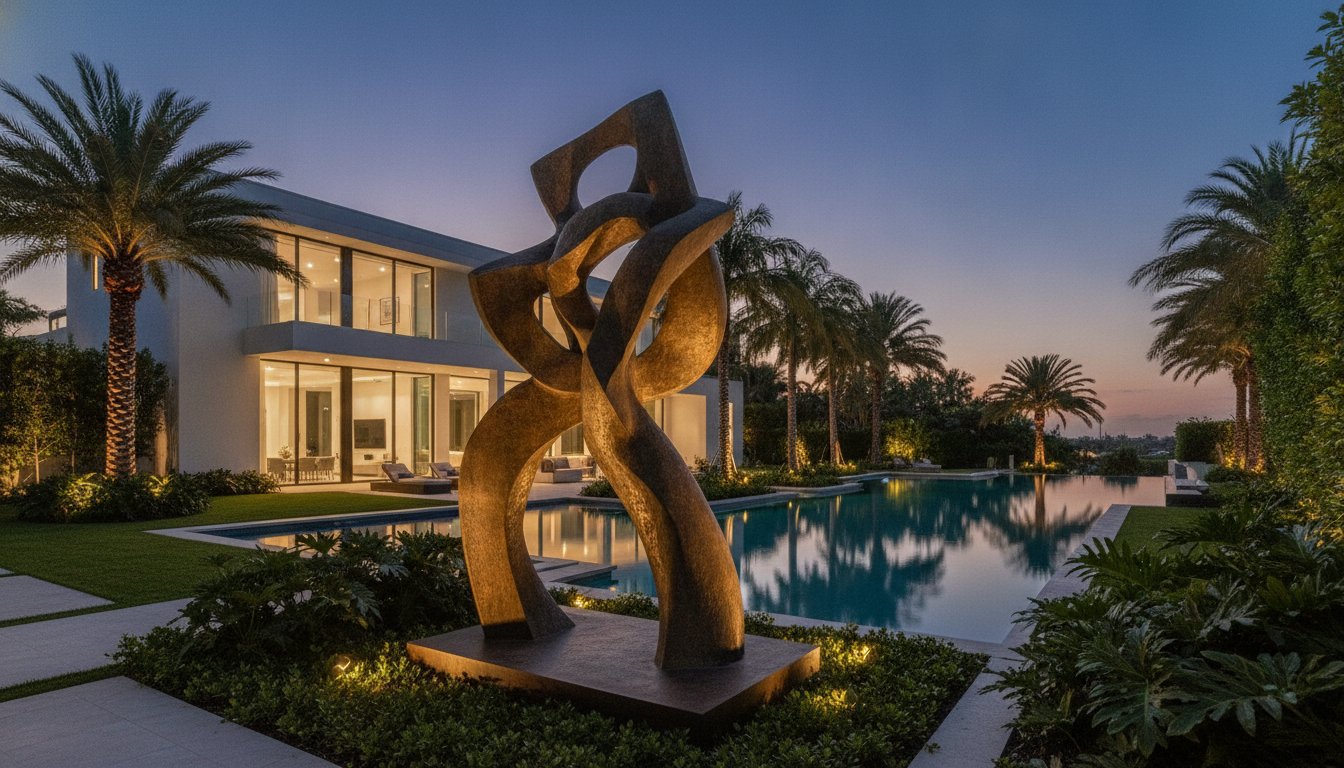
An exquisite sculpture in your garden is only half-finished until the sun goes down. Without a professional eye, the very piece you’ve curated to define your estate can disappear into the darkness or, even worse, become distorted by amateurish, high-glare floodlights that create harsh, unflattering shadows. When investing in outdoor art lighting Miami homeowners often discover that salt-air corrosion begins to pit and peel inferior fixtures within months, ruining the daytime aesthetic. You’ve curated a collection that deserves to be seen, and it’s frustrating when the night hides your most prized outdoor features.
Achieving a gallery-quality nightscape requires a precise balance of artistic vision and engineering. This article reveals the essential technical and aesthetic steps to transform your collection into museum-quality focal points. We’ll preview the “Invisible Source” technique, explain how to navigate the 2026 NEC safety requirements for GFCI protection, and show you how a designer-engineer duo can ensure your lights emphasize the art, not the hardware. Discover how to protect your investment with marine-grade materials while creating a sophisticated, low-voltage LED system that withstands the unique challenges of the Florida climate.
Key Takeaways
- Learn why professional outdoor art lighting Miami specialists focus on revealing texture and emotion rather than simply flooding a space with flat, distracting glare.
- Master the technical side of illumination by understanding how high CRI ratings and specific Kelvin temperatures preserve the true colors of materials like bronze and marble.
- Discover how to use front lighting and silhouetting to emphasize the three-dimensional form of your sculptures without washing out fine details.
- Use our professional checklist to identify primary viewing angles and verify that your LED system meets the standards of a high-end gallery.
- Understand why a collaborative approach between a lighting designer and an engineer is the only way to ensure your system survives the harsh Miami climate.
Beyond Basic Landscape Lighting: The Nuance of Outdoor Art Lighting in Miami
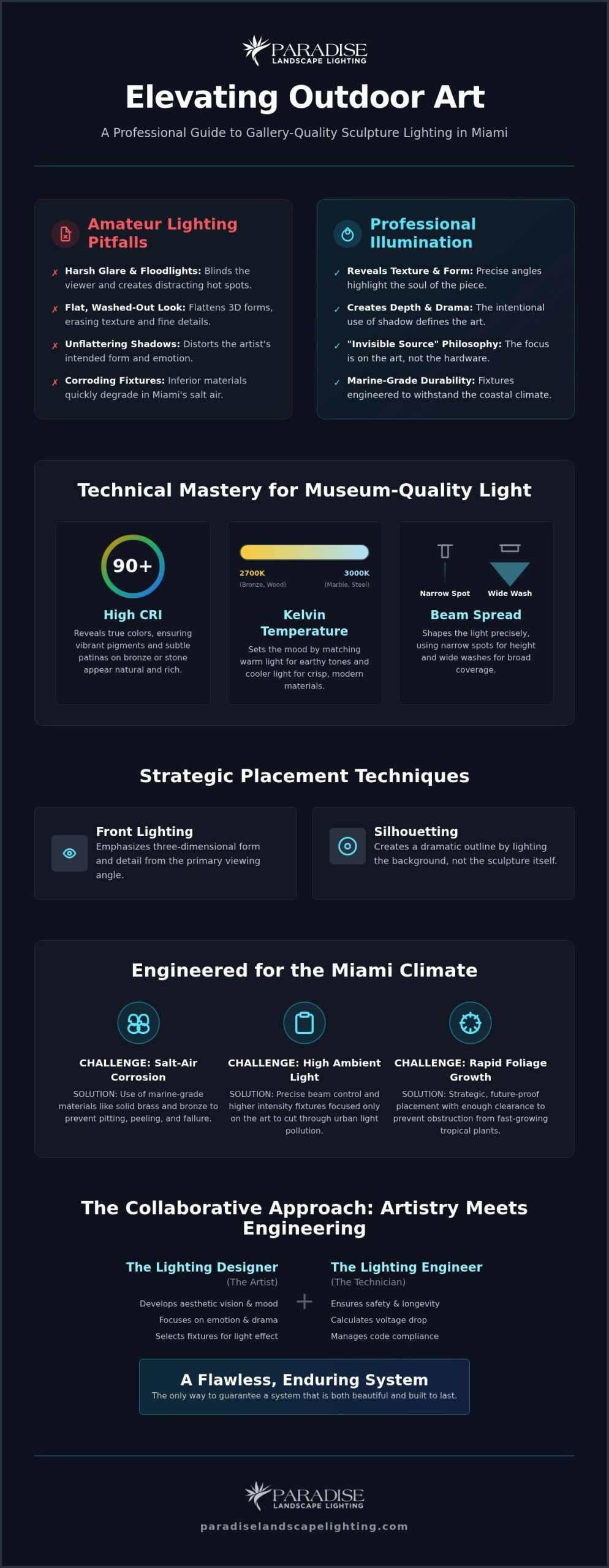
Outdoor art lighting is far more than a utility; it’s a deliberate practice of revealing the soul of a piece through light. While standard landscape lighting focuses on safety or general visibility, the outdoor art lighting Miami collectors invest in is designed to highlight texture, form, and the emotional intent of the artist. Standard floodlights often fail here because they lack nuance. They tend to flatten three-dimensional works, creating a washed-out look and distracting glare that pulls the eye away from the art itself.
Our “Invisible Source” philosophy dictates that the viewer shouldn’t see the hardware. The fixture is merely a tool; the light it casts is the performance. By hiding sources within the landscape or architectural features, we ensure that your sculptures remain the undisputed stars of the nightscape. It’s about the effect, not the equipment.
The Aesthetic Difference: Artistry vs. Utility
True art lighting transforms a sculpture into a focal point that anchors your entire outdoor design. It isn’t just about brightness. It’s about the intentional use of shadows and negative space to define a piece’s silhouette. By controlling where light doesn’t fall, we create a sense of depth that makes a bronze or stone figure feel alive. Achieving this requires careful management of contrast ratios, ensuring that the art light complements rather than competes with your residential architectural lighting in Miami. When these elements work in harmony, the transition from the home’s facade to the garden’s gallery is seamless and sophisticated.
Miami’s Environmental Factors for Outdoor Art
Designing for South Florida requires technical foresight that goes beyond aesthetics. In high-density areas like Brickell or Downtown Miami, we must account for high levels of ambient light that can dilute the impact of your lighting. Conversely, coastal properties in Miami Beach face the constant threat of salt-air corrosion. We specify marine-grade materials to ensure that your system remains functional and beautiful despite the humidity. Finally, our professional designs anticipate the rapid growth of tropical foliage. We place fixtures with enough clearance to prevent palms and ferns from obscuring the light path within a single season, maintaining the integrity of your outdoor art lighting Miami installation year-round.
Technical Essentials: Achieving Museum-Quality Illumination Outdoors
Museum-quality lighting requires a mastery of technical specifications that many general contractors overlook. To maintain the integrity of an artist’s color palette, the Color Rendering Index (CRI) is the most critical metric. In the context of outdoor art, CRI measures how accurately an LED light source reveals the true colors of a sculpture compared to natural sunlight. We insist on high-performance LEDs with a CRI of 90 or higher. This ensures that vibrant pigments and subtle patinas don’t appear muddy or gray under artificial light.
Choosing the right Kelvin temperature is equally vital for material expression. A warm 2700K light enhances the rich, earthy tones of bronze or weathered wood. Conversely, a slightly cooler 3000K source brings out the crisp, clean lines of white marble or contemporary stainless steel. When these temperatures are paired with precision beam spreads, the result is breathtaking. We use narrow spots to accentuate the verticality of a towering piece and wide washes to provide even coverage for sprawling, large-scale installations. Low-voltage LED technology remains the gold standard for these applications, offering the safety, energy efficiency, and longevity required to survive the Florida heat.
The Role of the Lighting Engineer
A dedicated lighting engineer ensures this beauty remains consistent across your entire estate. They calculate voltage drop to prevent the “dimming effect” that often plagues amateur installations. This technical precision is essential when integrating new sculptures into existing systems, such as the low voltage landscape lighting in Boca Raton designs we manage for regional collectors. By balancing power loads, the engineer ensures that the furthest sculpture in your garden shines with the same intentional brilliance as the one nearest the transformer, a standard we maintain for all high-end properties from Miami Beach to Palm Beach.
Material-Specific Lighting Strategies
Reflective surfaces present a unique challenge. Polished steel or glass can create blinding hotspots. This happens if the light isn’t angled with mathematical accuracy. Our team uses specialized louvers and shields to direct light exactly where it’s needed while protecting the viewer’s eyes. For porous stones and reclaimed wood, we utilize “grazing” techniques. By placing fixtures close to the surface, we cast long shadows that emphasize every crevice and grain. If you want your collection to truly stand out, consider how a professional outdoor art lighting Miami design can elevate your property’s nighttime aesthetic.
Strategic Placement: Lighting Techniques for Three-Dimensional Art
Placement is the bridge between technical hardware and artistic expression. While front lighting is the standard choice for revealing intricate details, it requires precise angling to avoid “washing out” the piece. If the light is too direct, the sculpture loses its depth. We often recommend backlighting or silhouetting to create a sense of drama. By placing the light source behind the artwork and directing it toward a wall or hedge, we emphasize the sculpture’s outline, turning it into a bold silhouette against a glowing background.
Choosing between uplighting and downlighting depends on the desired atmosphere. Uplighting is the traditional method for creating a heroic, monumental feel. However, downlighting, often referred to as “moonlighting,” offers a more naturalistic gallery feel. By mounting fixtures high in nearby trees, we cast a soft, filtered light that mimics the moon. This technique is particularly effective for outdoor art lighting Miami estates, where mature oaks or palms provide the perfect canopy for a subtle, overhead glow. Pairing these techniques with smart landscape lighting South Florida systems allows you to dynamically adjust the mood and intensity of your sculpture garden from a single app, shifting the atmosphere effortlessly between an intimate evening setting and a fully illuminated event space.
The Cross-Lighting Framework
The most effective way to reveal a three-dimensional form is through cross-lighting. This involves using two or more light sources from different angles to eliminate harsh, distracting shadows. We apply a “key and fill” approach, where a primary light defines the main features and a softer secondary light fills in the shadows. This methodology ensures the sculpture looks magnificent from every viewing angle while significantly reducing glare for guests walking through the garden. For a truly cohesive estate, we often balance these techniques with water feature lighting design in Miami, ensuring that the reflections from a pool or fountain don’t compete with the art’s primary illumination.
Maintaining the Nighttime Narrative
A successful lighting design tells a story as you move through the landscape. We use dimmable zones to control the hierarchy of light, allowing you to dial back the intensity for intimate gatherings or brighten the focal points for large events. The final, and perhaps most critical, step in our process is the post-dark aiming session. Once the sun sets, our team fine-tunes every fixture by hand. This meticulous adjustment ensures the light hits the artwork with surgical precision, achieving the perfect artistic alignment that defines high-end outdoor art lighting Miami projects. It’s the difference between a garden that’s simply lit and one that’s curated.
The Ultimate Sculpture Garden Lighting Checklist for Miami Estates
High-end outdoor art lighting Miami projects require more than just a creative eye; they demand a rigorous technical audit to ensure the final result matches the quality of the artwork itself. Before finalizing any installation, homeowners should use this checklist to verify that their system meets professional standards. These steps help bridge the gap between a garden that is simply illuminated and one that feels like a curated nighttime gallery.
- Identify the Primary Viewing Angle: Determine where you will most often view each art piece. Whether it’s from the patio, the living room window, or the garden path, the lighting must be optimized for that specific perspective.
- Verify the CRI Rating: Ensure every LED lamp in your system has a Color Rendering Index (CRI) of 90 or higher. This is the only way to guarantee the artist’s intended colors remain vivid and accurate after dark.
- Inspect for Light Trespass: Direct your beams with precision. Professional designs ensure light stays on the sculpture and doesn’t spill into your neighbor’s yard or bedroom windows, maintaining privacy and local compliance.
- Confirm Hidden or Recessed Fixtures: Walk your property during the day. If the lighting hardware is obvious and distracting, it ruins the “Invisible Source” aesthetic. Fixtures should be tucked into foliage or recessed into the ground.
- Evaluate Salt-Air Resistance: Miami’s coastal environment is brutal on metals. Verify that your fixtures are made of solid brass or copper, as these materials develop a protective patina rather than corroding like cheaper aluminum alternatives.
Phase 1: The Design & Engineering Audit
A successful project starts with a plan that accounts for both beauty and physics. Ask your provider if they’ve conducted professional load calculations to prevent voltage drops across the system. It’s also vital to check that Kelvin temperatures are consistent across the entire sculpture garden; a sudden shift from warm to cool light can make the collection feel disjointed. Finally, ensure the design is flexible. As your collection grows, your lighting system should have the capacity to integrate new acquisitions without a total overhaul of the wiring.
Phase 2: The Installation & Hardware Check
During the final walkthrough, pay close attention to the placement of the transformers. These should be high-quality units tucked away from the main viewing areas to maintain the garden’s clean lines. We use low-voltage LED systems specifically to minimize heat output near delicate artworks, protecting stone and bronze from thermal stress. To ensure total visual comfort, you should check for glare by walking a full 360 degrees around each sculpture. If you’re ready to see your collection in a new light, you can schedule a professional design consultation to begin your transformation.
Engineering the Aesthetic: Why Professional Design is Vital for Art
Professional design for fine art isn’t just a luxury; it’s a technical requirement for preserving the artist’s intent. The Paradise Landscape Lighting advantage lies in the unique synergy between our dedicated lighting designer and our lighting engineer. This partnership ensures that every creative vision is backed by rigorous technical execution. While the designer focuses on the emotional impact and visual storytelling, the engineer calculates the electrical loads and thermal management necessary for long-term reliability. This dual approach is why our outdoor art lighting Miami installations consistently outperform standard landscape setups.
Custom engineering is particularly vital in the South Florida environment. The combination of intense UV exposure, high humidity, and salt-air corrosion can quickly degrade inferior systems. We build our systems to last, using high-quality materials that develop a protective patina rather than failing under environmental stress. Beyond durability, professional lighting significantly increases your property’s nighttime curb appeal and overall market value. A well-lit sculpture garden serves as a powerful visual statement, signaling a home that is both secure and sophisticated. For coastal estates further up the shoreline, understanding LED landscape lighting maintenance Palm Beach strategies is equally essential to preserving the long-term brilliance of brass and bronze fixtures against relentless salt-air exposure.
Bespoke Solutions for Unique Pieces
Off-the-shelf fixtures are fundamentally insufficient for high-value outdoor art. Every sculpture has its own set of dimensions, textures, and reflective properties that require a tailored approach. We customize beam angles and intensity levels to match the exact scale of your piece, ensuring that light never spills into the night sky or creates distracting hotspots. It’s essential to work with a lighting partner who understands the financial and emotional value of your collection. We treat your artwork with the same respect as a museum curator, ensuring that our technical work never compromises the physical integrity of the piece.
Your Next Steps to a Gallery-Standard Garden
Transforming your estate begins with a methodical consultation process. We start with a comprehensive site walk-through to understand your vision and identify the primary viewing angles discussed earlier. From there, we can perform a nighttime demonstration, allowing you to see the transformative power of professional light before a single wire is buried. This process makes it easy to integrate specialized art lighting into a full-scale landscape lighting retrofit, creating a unified and elegant nightscape. If you’re ready to elevate your collection, Schedule your custom art lighting consultation with Paradise Landscape Lighting today.
Illuminate Your Vision with Technical Precision
Your outdoor art collection represents a significant investment in beauty and culture. Protecting that investment requires more than just high-quality fixtures; it demands a sophisticated approach that balances artistic intent with technical durability. By mastering the nuances of beam spread, color rendering, and strategic placement, you can transform your garden into a private nighttime gallery that rivals any museum. Achieving this level of excellence in outdoor art lighting Miami estates requires the specialized knowledge of our design-engineer collaborative team.
We specialize in high-end Miami estates, utilizing energy-efficient low-voltage LED expertise to create systems that withstand the Florida climate while highlighting every detail of your sculptures. Our “Invisible Source” philosophy ensures that your artwork remains the undisputed star of the show. If you’re ready to see your collection in its best light, Request a Bespoke Art Lighting Design Consultation with our experts today. Let’s work together to ensure your artwork remains the breathtaking centerpiece of your home, long after the sun goes down.
Frequently Asked Questions
What is the best color temperature for lighting outdoor sculptures?
The ideal color temperature typically falls between 2700K and 3000K, depending on the specific material of your sculpture. We recommend a warm 2700K for materials like bronze, copper, or wood to enhance their natural richness and depth. For cooler materials like white marble or modern stainless steel, a 3000K source provides a crisp, gallery-like clarity that emphasizes clean lines. This range ensures your artwork feels inviting rather than clinical.
How do I light a sculpture without seeing the light fixture?
You can achieve a seamless look by utilizing the “Invisible Source” technique, which involves hiding fixtures within the landscape. This includes using recessed in-ground lights or tucking small fixtures behind dense tropical foliage and architectural features. We also use specialized shrouds and shields to direct light precisely toward the art while keeping the hardware out of the viewer’s sightline. This ensures the focus remains entirely on the art itself.
Can LED lights damage my outdoor art or sculptures?
High-quality LED systems are actually safer for your artwork than traditional halogen bulbs because they emit virtually no UV radiation and significantly less heat. This prevents the thermal stress that can cause stone to crack or pigments to fade over time. Using professional outdoor art lighting Miami collectors prefer ensures your investment remains protected while being beautifully illuminated every night. It’s the most sustainable way to showcase fine art.
How do I prevent glare when lighting a sculpture from multiple angles?
Preventing glare requires a combination of precise aiming and the use of anti-glare accessories like hex-cell louvers or external shields. When we use cross-lighting from multiple angles, we carefully calculate the beam’s path to ensure it hits the sculpture without reflecting into the viewer’s eyes. This methodical approach allows guests to walk 360 degrees around a piece without experiencing any blinding hotspots. Proper positioning is the key to visual comfort.
Is low-voltage lighting powerful enough for large outdoor art installations?
Modern low-voltage LED technology is more than powerful enough to illuminate even the most massive outdoor installations. The key lies in professional engineering, where we calculate the exact power requirements to ensure consistent brightness without the need for high-voltage wiring. This provides a safer, more energy-efficient solution that delivers museum-level intensity for large-scale sculptures across your entire estate. It’s a robust choice for any high-end residential application.
How does Miami’s salt air affect outdoor art lighting fixtures?
Miami’s salt air is highly corrosive and can cause standard aluminum or plastic fixtures to pit, peel, and fail within a few seasons. This environmental challenge makes it essential to use marine-grade materials like solid brass or copper for your system. These metals naturally develop a protective patina over time, ensuring your outdoor art lighting Miami system remains functional and elegant despite the harsh coastal conditions. Quality materials are non-negotiable for longevity.
Should I use cool or warm light for a modern metal sculpture?
Modern metal sculptures, particularly those made of stainless steel or chrome, generally look best under 3000K light. This slightly cooler temperature emphasizes the clean, industrial lines and reflective properties of the metal without making it look blue or sterile. If the sculpture has a rusted or weathered steel finish, a warmer 2700K light may be better to highlight the earthy textures. We always test both options during a nighttime demonstration.
What is the difference between grazing and silhouetting in art lighting?
Grazing involves placing the light source very close to the sculpture’s surface to cast long shadows that emphasize its texture and crevices. Silhouetting, on the other hand, places the light behind the piece to illuminate a background wall or hedge. This creates a dramatic dark outline of the sculpture’s form, focusing the viewer’s attention on its overall shape rather than its surface details. Both techniques offer distinct ways to tell a story.
Return to News