
Outdoor Sculpture Lighting Ideas Florida: Artful Illumination for Luxury Nightscapes
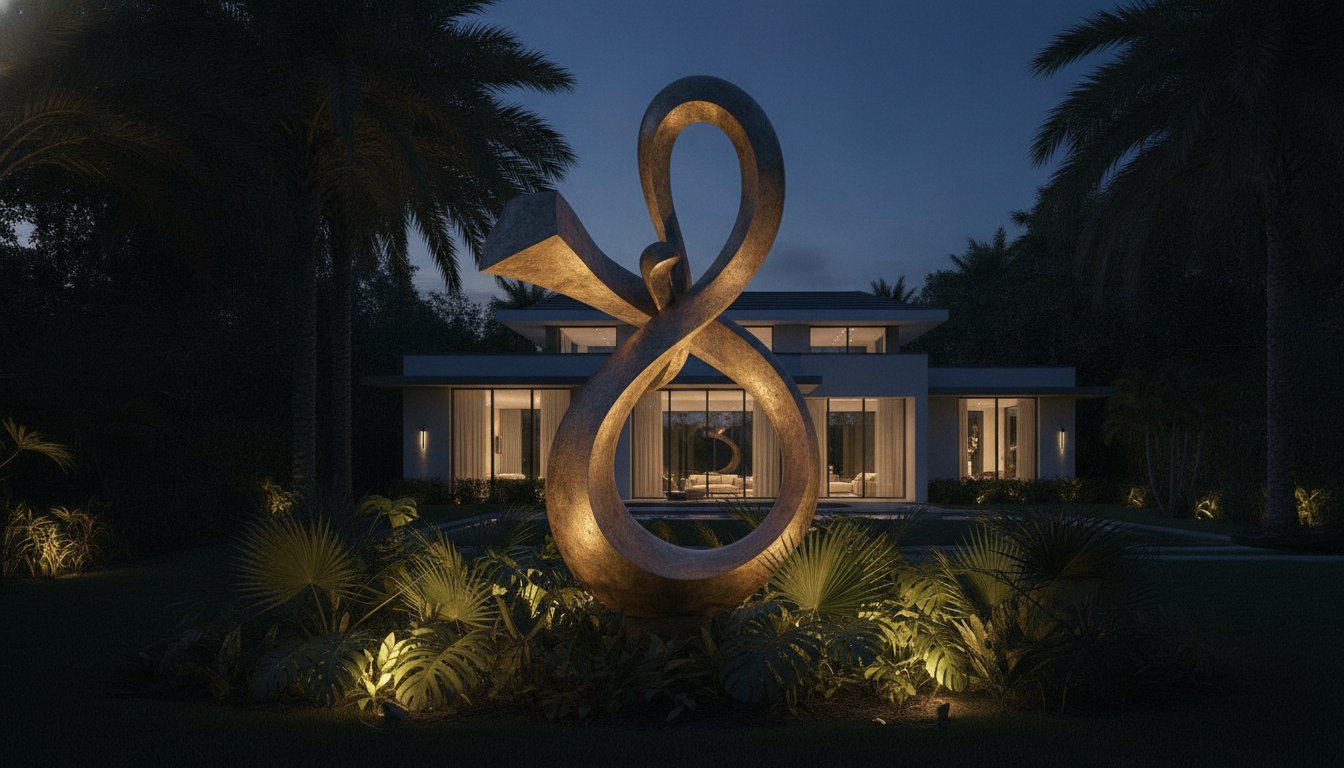
Why does your most prized garden sculpture, a centerpiece by day, become a flat, ghostly silhouette or disappear entirely once the sun sets over the Atlantic? You’ve invested in world-class art to define your estate, yet the transition to evening often leaves these pieces looking one-dimensional or obscured by shifting tropical overgrowth. It’s a common frustration for luxury homeowners who want their gardens to feel like private galleries. Finding the right outdoor sculpture lighting ideas Florida climate demands means balancing high-end aesthetics with the technical grit required to survive Miami’s humidity and salt air.
In this article, you’ll discover how to transform your garden artwork into a nighttime masterpiece using professional techniques that prioritize the “invisible source” concept. We’ll show you how a blend of lighting engineering and artistic vision can eliminate glare and prevent your fixtures from corroding in the coastal heat. From the specific challenges of Fort Lauderdale’s lush foliage to the nuances of creating three-dimensional shadows, you’ll learn how to build a low-maintenance, durable LED system. We’re moving beyond simple illumination to create a dramatic, resort-style atmosphere that enhances your nightly view.
Key Takeaways
- Transform your garden into a private gallery by learning how to highlight the three-dimensional textures and forms of your sculpture collection at night.
- Discover effective outdoor sculpture lighting ideas Florida designers use to create a resort-style atmosphere while overcoming challenges like tropical foliage and salt air.
- Master the “Invisible Source” technique to ensure your lighting fixtures remain hidden, allowing the beauty of the art to take center stage without distracting glare.
- Learn why high-performance, marine-grade components and professional engineering are critical for a durable system that withstands the unique South Florida climate.
- Understand the collaborative process between designers and engineers that results in a bespoke, low-voltage LED system tailored to your estate’s specific nightscape.
Mastering Outdoor Sculpture Lighting in Florida’s Unique Landscapes
Lighting isn’t just about visibility; it’s about extending the narrative of the artwork into the evening hours. In luxury estates across Miami and Fort Lauderdale, a sculpture is a deliberate investment in the property’s character. Treating it as a mere object to be “lit up” misses the opportunity for total transformation. Implementing sophisticated outdoor sculpture lighting ideas Florida estates require means moving beyond simple floodlights to embrace a holistic design that treats light as a medium itself.
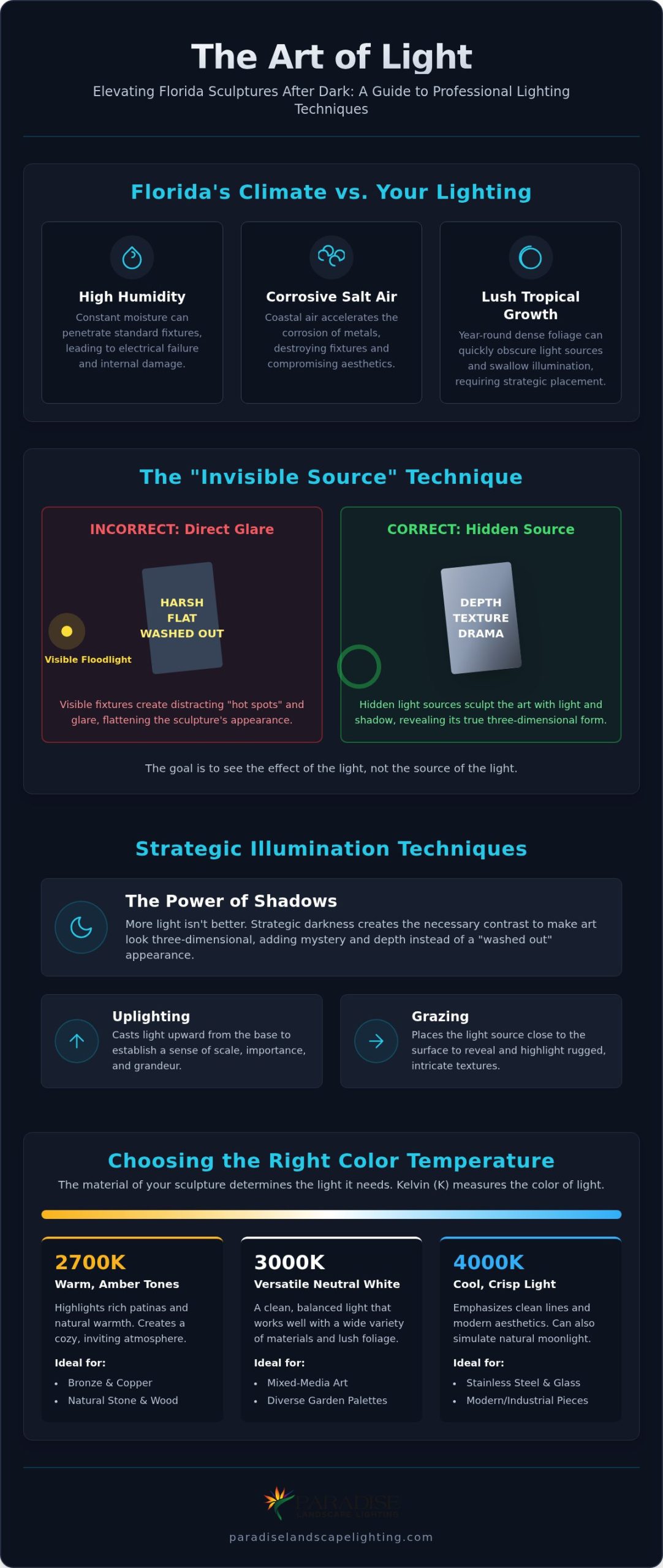
A professional approach considers the sculpture an extension of the landscape’s soul. Unlike northern gardens where dormant winters create a predictable backdrop, Florida’s year-round tropical growth demands a more dynamic strategy. High humidity and dense foliage can swallow light, while salt air corrodes standard fixtures. Landscape lighting in the subtropics is as much about engineering as it is about artistry. Beyond the visual appeal, a masterfully illuminated nightscape provides a sense of security and significantly boosts the perceived value of the property by turning the garden into a 24-hour living space.
The Aesthetic Role of Shadows
Many homeowners assume that more light equals better results. In reality, the most compelling outdoor sculpture lighting ideas Florida designers implement rely on the strategic use of darkness. Shadows provide the necessary contrast to make a piece look three-dimensional rather than flat and “washed out.” By carefully placing fixtures to create intentional shadows, we add a sense of mystery and depth to the garden. This technique also helps balance the artwork with the architectural facade lighting of the home; it ensures the sculpture stands out without competing for attention or creating visual clutter.
Choosing the Right Color Temperature
The material of your sculpture determines the light it needs. Bronze and copper pieces thrive under warm, amber tones that highlight their rich patinas. Conversely, contemporary stainless steel or glass works often benefit from cooler, crisper light to emphasize their clean lines. Kelvin temperature is a numerical scale used to describe the color characteristics of light, ranging from warm yellow-orange to cool blue-white.
- 2700K: Ideal for natural stone, wood, and warm metals like bronze.
- 3000K: A versatile “neutral” that works well with diverse foliage and mixed-media art.
- 4000K: Best for modern, industrial materials or simulating natural moonlighting.
The right choice ensures that textures like chiseled stone or smooth marble are perceived with their intended clarity, preventing the “chalky” look that occurs when light and material are mismatched. This technical precision is what separates a professional installation from a generic DIY attempt.
Strategic Illumination Techniques for Three-Dimensional Art
Lighting a three-dimensional sculpture requires more than a single beam of light; it demands a multi-directional strategy that respects the artist’s intent. When exploring outdoor sculpture lighting ideas Florida estates can truly benefit from, the goal is to reveal the form without creating a flat, washed-out appearance. Professional design utilizes several specific techniques to ensure the artwork remains the focal point while the light source itself stays hidden. By combining different angles, we can eliminate distracting glares and reveal intricate details that might be lost in the dark.
Uplighting and Grazing for Texture
Uplighting serves as the foundational technique for establishing a sense of scale and importance. By positioning low-voltage LED fixtures at the base of a piece, we can cast light upward to accentuate its verticality and grandeur. This is particularly effective for large-scale installations in Miami or Fort Lauderdale where the art competes with tall tropical backgrounds. Grazing, a variation of this technique, involves placing the light source very close to the surface of the sculpture. It’s the ideal way to highlight the rugged texture of coral stone or the subtle imperfections of oxidized steel. To avoid “hot spots,” our engineers use precision optics that distribute light evenly across the entire surface rather than concentrating it in one blinding patch.
Moonlighting and Downlighting from Palms
In South Florida, we have the unique advantage of using tall palms and canopy trees as natural mounting points. Moonlighting involves installing fixtures high within the tree branches to cast a soft, filtered wash downward. This creates a naturalistic effect that mimics a full Miami moon, bathing the sculpture in a gentle glow that feels organic rather than artificial. When designing these systems, we adhere to the principles of responsible outdoor lighting to ensure your estate remains a sanctuary without contributing to unnecessary light pollution. Our engineering team utilizes tree-friendly mounting hardware that allows the palm to grow naturally without compromising the security of the electrical system.
Beyond these vertical approaches, silhouetting and cross-lighting add the final layers of drama. Silhouetting places the light behind the sculpture, casting it against a lit wall or hedge to emphasize a bold, recognizable shape. Cross-lighting uses two or more light sources from different angles to “fill” the shadows, revealing the depth of the piece from every perspective. If you are looking to elevate your garden, a bespoke sculpture and artwork lighting plan can transform these individual techniques into a cohesive nighttime masterpiece.
Navigating the Florida Environment: Durability and Maintenance
Florida’s climate is famously unforgiving to outdoor hardware. While the sun and sea breeze define the luxury lifestyle in Miami and Fort Lauderdale, they also create a corrosive cocktail that can quickly degrade inferior lighting systems. When researching outdoor sculpture lighting ideas Florida estates require, the conversation must start with engineering for durability. Without a focus on high-performance materials, even the most artistic lighting design will fail under the pressure of salt air and intense humidity.
Combating Corrosion in Coastal Areas
In coastal regions like Boca Raton and Miami Beach, salt spray is a constant factor that eats through powder-coated aluminum fixtures. We specify cast brass and copper for our installations because these materials do not rust or peel; instead, they develop a natural patina that gracefully blends into the landscape. This longevity is supported by using fully sealed LED modules that prevent moisture ingress, which is the primary cause of electrical failure in the subtropics. For those with older systems, upgrading halogen landscape lights to LED provides an opportunity to replace vulnerable components with marine-grade technology designed to last for decades.
Managing the Tropical Jungle
South Florida’s rapid plant growth can “swallow” a lighting fixture in a single season. A fixture perfectly positioned to highlight a sculpture in January might be completely obscured by a Philodendron or Areca palm by July. We address this through strategic placement, ensuring that lights are installed with enough clearance for routine landscaping and pruning. This approach protects the “invisible source” design, keeping the equipment hidden while the light continues to reach the artwork without obstruction.
Regular maintenance is a necessity for luxury estates. Humidity often leads to mineral deposits or biological growth on fixture lenses, which can dim the light output and ruin the intended effect. A professional maintenance plan ensures the system continues to perform at its peak. This process includes several critical steps:
- Precision cleaning of all optical lenses to maintain light clarity.
- Adjusting fixture aim to account for the shifting weight of growing trees.
- Inspecting all seals and connections to ensure they remain watertight.
- Trimming back encroaching foliage to maintain the intended beam spread.
Our team of designers and engineers provides these bespoke services to ensure your nightscape remains as pristine as the day it was installed. By treating maintenance as a proactive technical check, we protect your investment in both the art and the lighting system.
The true mark of a luxury estate isn’t just the quality of the artwork, but how that art is presented after dark. When exploring outdoor sculpture lighting ideas Florida homeowners often realize that the most impactful designs are those where the light source remains completely hidden. This “invisible source” philosophy shifts the focus away from the hardware and onto the art itself. It creates a magical, resort-like atmosphere where sculptures seem to glow from within, rather than being harshly illuminated by a visible lamp. By removing the visual clutter of fixtures and stakes, we allow the viewer to engage directly with the form and texture of the piece.
Concealment Strategies for Open Spaces
In many South Florida landscapes, sculptures are placed in the center of manicured lawns or open courtyards where there is nowhere to hide a traditional stake-mounted fixture. We solve this by utilizing recessed wells that sit flush with the grade, allowing the light to project upward while the equipment remains out of sight. In more densely planted areas of Miami or Fort Lauderdale, we tuck fixtures deep within hedges and groundcover, ensuring that wires and transformers are buried at least 8 inches below the surface to meet safety standards and prevent accidental damage. Our approach to how to hide landscape lighting fixtures ensures that the daytime beauty of your garden isn’t compromised by a clutter of metal and plastic hardware.
Glare Control and Visual Comfort
One of the most common mistakes in amateur lighting is creating “hot spots” or glare that ruins the view from inside the home. If you’re looking out from your terrace in Boca Raton, you shouldn’t be blinded by a stray beam of light. We use advanced engineering tools like long shrouds and hex baffles to precisely direct every lumen. These components function like blinkers on a horse, allowing the light to reach the sculpture while shielding the eyes of the viewer. This technical precision ensures the sculpture is the undisputed star of the nightscape, providing a comfortable and inviting view from both the garden and the living room.
By prioritizing visual comfort, we also protect the local environment. Our designs utilize dark-sky compliant fixtures that minimize skyglow, which is particularly important in coastal areas to protect the natural rhythm of the night. If you’re ready to see your collection in a new light, our team can provide a bespoke sculpture lighting installation that balances artistic drama with technical discretion.
Engineering the Perfect Nightscape: Professional Design and Installation
Achieving a world-class outdoor gallery requires a seamless marriage between artistic vision and technical rigor. While many homeowners start by looking for outdoor sculpture lighting ideas Florida designers recommend, the execution of those ideas depends entirely on the engineering behind the scenes. A luxury nightscape is more than a collection of fixtures; it’s a sophisticated electrical system designed to perform under the specific stresses of a tropical environment. This is why we utilize a collaborative process that pairs a dedicated lighting designer with a specialized lighting engineer to ensure your art is presented with both beauty and reliability.
Bespoke systems far outperform off-the-shelf DIY kits because they’re tailored to the unique electrical load and layout of your estate. Retail kits often lack the durability to survive a single Miami hurricane season and rarely offer the precision optics needed to highlight fine art. By contrast, a professional installation is built from the ground up to handle the high-performance demands of a luxury property, providing consistent light quality that won’t flicker or fade over time.
The Role of the Lighting Engineer
Technical precision is what keeps a nightscape looking pristine year after year. Our lighting engineer focuses on calculating voltage drop, a common issue in large estates where lights positioned far from the transformer can appear dimmer than those closer to the power source. By balancing the electrical load, we ensure that every sculpture, whether it’s at the front gate or the back of the property, receives the exact same intensity of light. We also prioritize the integrity of the system by using waterproof, heat-shrink connections that prevent moisture from creeping into the wiring during our heavy rain seasons. This level of engineering also allows for scalability, making it easy to add new fixtures as your art collection grows without overloading the existing infrastructure.
Integrated Nightscape Design
A sculpture shouldn’t exist in a dark vacuum; it needs to be part of a cohesive visual story. We coordinate your outdoor sculpture lighting ideas Florida with other key elements of your property, such as pool decks, fountains, and residential architectural lighting in Miami estates. This integrated approach ensures that the light reflecting off a fountain doesn’t create unwanted glare on a nearby bronze piece. We also design smart “scenes” that allow you to transition the atmosphere at the touch of a button, whether you’re hosting a vibrant outdoor gala or seeking a subtle, secure glow for a quiet evening. Moving from an initial design concept to a long-term, high-performance system is a journey that begins with expert planning. Scheduling a professional design consultation is the first step toward reclaiming your garden from the darkness and showcasing your collection as the masterpiece it truly is.
Elevate Your Nightscape with Professional Artistry
Illuminating a luxury estate is a delicate balance of technical engineering and creative vision. By prioritizing the invisible source philosophy and utilizing durable, low-voltage LED technology, you ensure that your garden artwork remains the focal point while the hardware disappears into the lush landscape. Implementing the right outdoor sculpture lighting ideas Florida homeowners trust protects your investment from the corrosive salt air of Miami and the dense foliage of Fort Lauderdale.
A well-designed system doesn’t just light a path; it transforms your entire property into a resort-style gallery that reveals new dimensions of your collection after dark. Our team of expert lighting engineers and designers is dedicated to crafting bespoke solutions that withstand the unique challenges of the subtropics while highlighting every intricate detail of your collection.
Transform your Florida estate with a bespoke sculpture lighting design from Paradise Landscape Lighting. We serve luxury residences across Miami, Fort Lauderdale, and Palm Beach with a commitment to craftsmanship and long-term performance. It’s time to see your garden in its best light.
Frequently Asked Questions
What is the best light color for a bronze sculpture in Florida?
Warm white light, specifically 2700K, is the premier choice for bronze sculptures. This temperature enhances the deep browns and golden undertones of the metal’s patina without making it look clinical or cold. In estates across Coral Gables and Palm Beach, we avoid cool white LEDs for metal art because they can make bronze look gray and lifeless. The goal is a rich, inviting glow that emphasizes the artist’s chosen material.
How do I prevent my outdoor art lights from corroding in the salt air?
Selecting cast brass or copper fixtures is the only way to truly prevent corrosion in coastal areas like Miami Beach. Unlike aluminum, which pits and peels when exposed to salt air, these high-quality metals develop a protective patina over time. We also use sealed LED modules to prevent internal moisture ingress. This engineering-first approach ensures your outdoor sculpture lighting ideas Florida system remains functional and beautiful despite the harsh, humid environment of the subtropics.
Can I light a sculpture that is located in the middle of my pool or fountain?
You can absolutely illuminate art within water features using specialized low-voltage LED fountain lighting. This requires a dedicated lighting engineer to ensure all underwater connections are perfectly sealed and meet safety standards. In luxury pools in Southwest Ranches or Weston, we often use submersible fixtures to create a dramatic glow from below effect. This technique turns the water into a reflective canvas that enhances the sculpture’s presence while maintaining total electrical safety.
How many lights do I need to properly illuminate a large outdoor statue?
Most large outdoor statues require two to three fixtures to achieve a balanced, three-dimensional look. Using a single light source often creates harsh shadows and a flat appearance, whereas cross-lighting from multiple angles reveals the sculpture’s true form. For estates in Wilton Manors or Plantation, we analyze the piece’s height and texture to determine the exact beam spreads needed. This professional design prevents the washed out look common in amateur installations.
Is solar lighting sufficient for high-end outdoor artwork?
Solar lighting is generally insufficient for high-end artwork because it lacks the lumen output and color precision required for fine art. These systems depend on daily sunlight, which is unreliable during Florida’s rainy season, and they rarely offer the warmth needed for luxury aesthetics. Professional low-voltage LED systems provide consistent brightness and the invisible source control that solar stakes simply cannot match. Investing in wired technology ensures your collection looks its best every night.
How do I hide the wires for my sculpture lighting in a manicured garden?
We hide wires by trenching them at least 8 inches below the surface, which is the standard depth required by the Florida Building Code for residential lines. In manicured gardens from Coconut Grove to Boca Raton, we utilize the invisible source philosophy to tuck fixtures into groundcover or use recessed wells. This ensures that the only thing you see at night is the art itself, while the technical infrastructure remains completely hidden from view during the day.
What happens to my lighting system during a Florida hurricane?
Professionally engineered lighting systems are designed to withstand the heavy rains and high winds of a Florida hurricane. We use heavy-duty cast brass fixtures that are securely staked into the ground and utilize heat-shrink, waterproof connections to prevent electrical shorts. While you should clear loose garden debris before a storm, the low-voltage LED hardware itself is built for extreme durability. This resilience is a hallmark of the bespoke systems we install in storm-prone coastal communities.
How often should I have my outdoor lighting system maintained?
You should schedule professional maintenance for your system every six to twelve months to account for South Florida’s rapid plant growth. During these visits, we clean mineral deposits from lenses, adjust fixture aiming, and trim back foliage that may be obscuring the light. Regular check-ups in cities like West Palm Beach or Fort Lauderdale prevent moisture issues and ensure your outdoor sculpture lighting ideas Florida continue to perform with the same brilliance as the day they were installed.
Return to News