
Hurricane Prep for South Florida Landscape Lighting
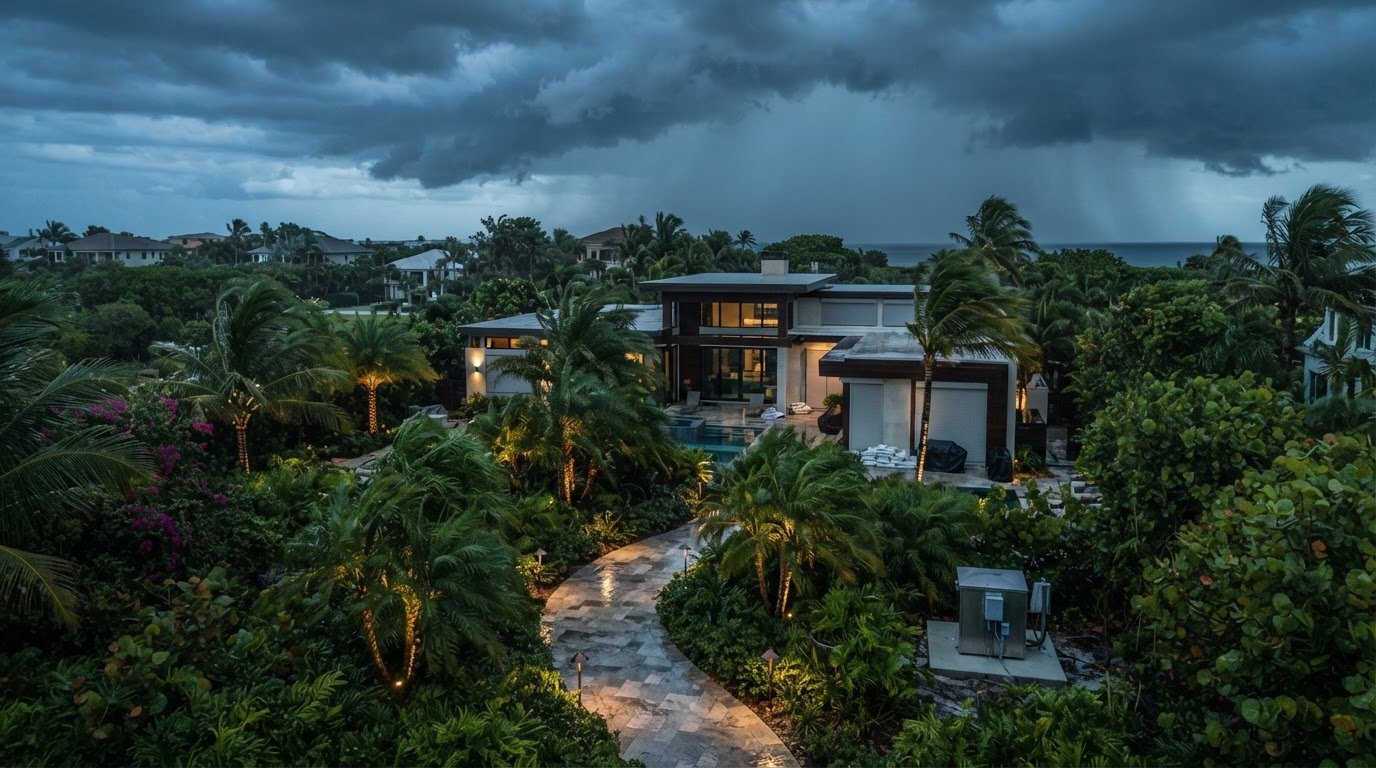
Preparing landscape lighting for a hurricane starts with a calm plan, not a last-minute guess. In South Florida, wind-driven rain, flooding, and salt air can affect fixtures, wiring, connections, and transformers, and damage may not be obvious at first glance. The safest approach is to know what is exposed before a storm and what you can observe from a safe distance afterward.
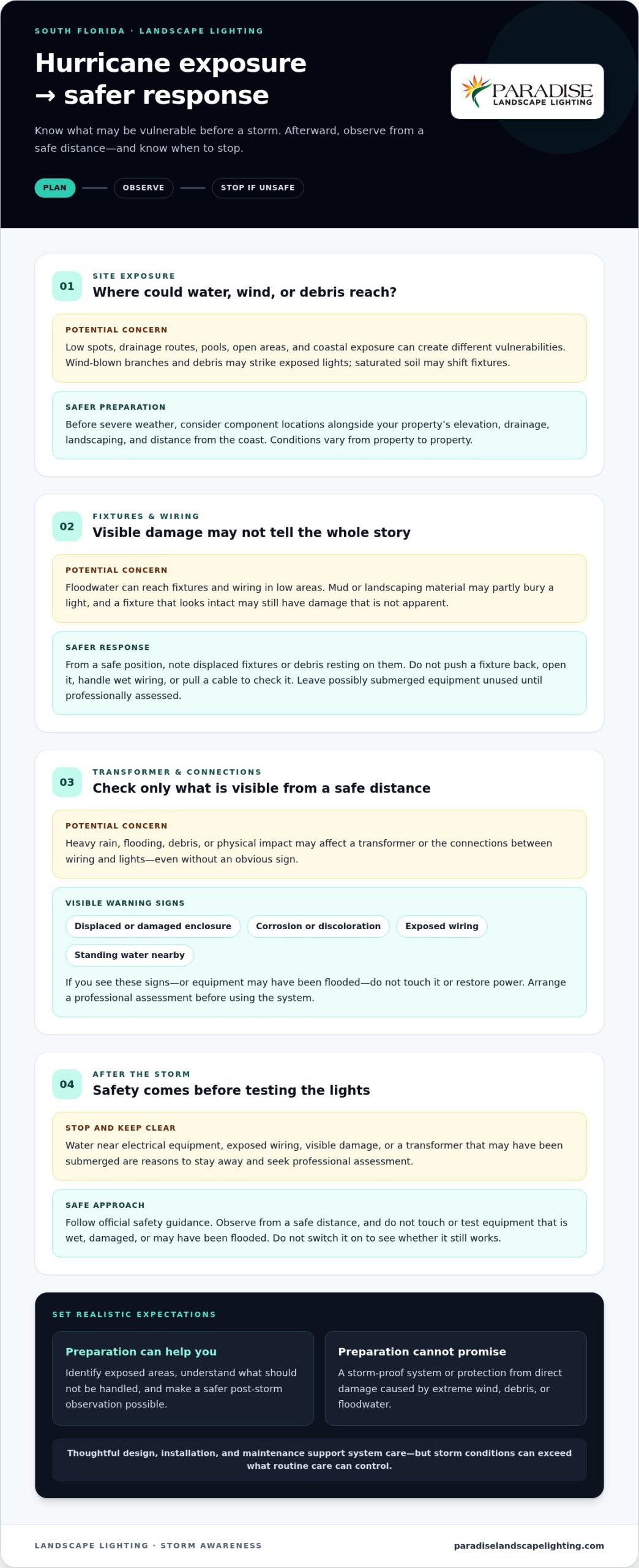
Before a hurricane, consider where lights and other system components sit in relation to low spots, drainage routes, pools, and open areas exposed to wind and debris. Afterward, follow official safety guidance and avoid touching or testing equipment if it is wet, damaged, or may have been flooded. Water near electrical equipment, exposed wiring, or a transformer that may have been submerged are reasons to keep clear and arrange a professional assessment.
Paradise Landscape Lighting designs, installs, and maintains residential low-voltage LED lighting systems for South Florida outdoor spaces. A little planning, followed by careful observation after a storm, can help you identify concerns without taking unnecessary risks.
Key Takeaways
- Preparing landscape lighting for a hurricane means reducing avoidable risks, not assuming any system is storm-proof.
- Fixtures, wiring, connections, and transformers can be exposed to wind, flooding, and saltwater, and damage may not be immediately visible.
- Consider each component’s location and visible condition, then decide when a professional assessment is appropriate.
- Follow official hurricane guidance. Observe from a safe distance and do not touch equipment when conditions or damage raise concerns.
- Thoughtful design, installation, and maintenance support the long-term care of a residential landscape lighting system.
Why South Florida Landscape Lighting Needs a Hurricane Plan
A hurricane plan for landscape lighting is about reducing avoidable risks and knowing how to respond, not making a system storm-proof. South Florida homes can face heavy rain, strong winds, saturated ground, flooding, and coastal exposure, but conditions vary by property. A home near the coast, a low-lying yard, and a sheltered inland garden may each have different vulnerabilities. Preparing landscape lighting for a hurricane means considering the system’s location and condition before severe weather threatens access to the yard.
Include lighting in your broader yard-preparation plan, but treat it differently from loose belongings. Patio furniture, planters, and other items may need to be secured or moved according to official storm guidance. Fixtures, wiring, connections, and transformers are electrical system components. Observe them carefully, and leave handling or assessment to a professional when there is a safety concern.
Which South Florida storm conditions can affect outdoor lighting?
Wind-blown branches and debris can strike exposed fixtures, while saturated soil may shift lights set in planting beds or beside walkways. Floodwater can reach components in low areas, and saltwater exposure in some coastal locations may contribute to corrosion over time. A property’s elevation, drainage, landscaping, and distance from the coast all affect what deserves attention. For an overview of the hazards associated with tropical cyclones, see Understanding Tropical Cyclones.
Damage may affect more than a visible fixture. Water or debris can affect connections and wiring, and a transformer’s location influences its exposure to flooding. A light that appears intact after a storm does not reveal the condition of every part of the system. Plan to observe from a safe distance and stop if you see a reason for professional assessment.
What does hurricane preparation realistically accomplish?
Preparation helps you identify exposed areas in advance, understand which components should not be handled, and make a safer post-storm assessment possible. Routine maintenance can also bring existing wear or loose fixtures to attention before severe weather arrives. Neither preparation nor maintenance prevents direct damage from extreme wind, debris, or floodwater.
Storm-ready lighting means the system’s condition and layout have been considered as part of a practical storm plan, with a safe approach to inspection and follow-up. It does not mean hurricane-proof. Custom design, engineering, installation, and ongoing maintenance support thoughtful care of a residential low-voltage LED system, but no design can promise that a system will withstand every storm. Maintenance addresses system condition; a hurricane can introduce forces and water exposure that routine care cannot control.
How Hurricanes Can Affect Landscape Lighting Components
Storm damage isn’t always easy to identify at a glance. Wind, debris, saturated soil, and floodwater can affect different parts of a landscape lighting system, while saltwater exposure may contribute to corrosion over time. After a storm, the main components to consider are fixtures, visible wiring, connections, and the transformer. Begin with safe, distant observation, not by touching or testing equipment.
Follow official safety instructions before approaching the yard, and stay away from electrical equipment in or near standing water. NOAA’s Hurricane Preparedness Guidelines offer broader preparation and safety information for homeowners. If equipment appears damaged or may have been submerged, don’t try to find out whether it still works by switching it on.
Fixtures and wiring exposed to flooding or debris
Debris or saturated soil can shift exposed fixtures. A light may also be partly buried by mud or landscaping material, making its condition harder to judge. If a fixture appears displaced or debris is resting on it, take note from a safe position. Don’t push it back into place while the ground or equipment is wet.
Floodwater can reach fixtures and wiring in low-lying areas. Even if a submerged fixture looks intact after the water recedes, its internal condition may not be apparent. Leave it unused until the system has been professionally assessed. Don’t open fixtures, handle wet wiring, or pull a cable to see whether it is loose. These precautions apply even to residential low-voltage systems.
Transformers and connections after heavy rain
A transformer changes the incoming electrical supply to the lower voltage used by landscape lighting fixtures. After heavy rain or flooding, its location and visible condition matter, as do the connection points between the wiring and lights. Water exposure, debris, or physical impact may affect these parts without leaving an obvious sign.
From a safe distance, look for visible signs such as a displaced or damaged enclosure, corrosion, exposed wiring, or standing water around equipment. Corrosion may appear as buildup or discoloration on visible metal parts, but appearance alone can’t confirm the extent of a problem. If you see these signs, or the transformer or connections may have been flooded, don’t touch the equipment or restore power. Arrange a professional assessment before using the system.
Preparing landscape lighting for a hurricane includes knowing what to observe and when to stop. A professional can assess visible issues and determine whether the system needs further attention. Ongoing landscape lighting maintenance can also help South Florida homeowners keep track of system condition before severe weather arrives.
What to Check When Comparing Storm-Readiness Measures
Compare storm readiness by considering each light’s surroundings, what you can safely observe, and whether the system needs professional attention. A fixture on higher ground may face less standing-water exposure than one in a low garden bed, but it may be more exposed to wind or flying debris. Sheltered locations can still have poor drainage or collect water near walls and planting beds. Neither setting is automatically protected.
This property-by-property approach is more useful than relying on broad labels such as “durable” or “weather-resistant.” Those terms don’t establish that a component can withstand hurricane conditions or flooding. A fixture’s appearance after a storm also can’t confirm the condition of its wiring or internal connections.
How property exposure changes the assessment
Consider where water flows or gathers, whether a light sits near a drainage route or water feature, and how open the location is to wind and debris. Coastal exposure can add concern about saltwater, but distance from the coast alone doesn’t determine flood risk. In Fort Lauderdale, Miami, and Miami Beach, neighboring properties can have different elevations, drainage patterns, and landscape layouts. Assess locations individually rather than assuming one regional rule applies to every yard.
How to interpret visible damage and product claims
A tilted fixture, debris impact, exposed wiring, or visible corrosion is a reason to avoid handling the equipment. Other electrical concerns may not be visible. Don’t test a component to see whether it works, especially if it may have been flooded. The comparison below can help you organize observations and decide when to stop and seek an assessment.
| Exposure | Visible condition | Practical action | Professional assessment? |
|---|---|---|---|
| Elevated or open area with possible wind and debris exposure | Fixture appears shifted, struck, or covered by debris | Observe from a safe position; don’t move it while conditions are unsafe | Appropriate if damage is visible or the fixture’s stability is uncertain |
| Low-lying bed, drainage route, or area near a water feature | Water reached the fixture or its surrounding ground | Keep the system unused if flooding may have reached components | Appropriate when equipment may have been submerged |
| Coastal or saltwater-exposed location | Corrosion, discoloration, or deposits are visible | Don’t touch or attempt to clean electrical parts | Appropriate if corrosion or water exposure is suspected |
| Sheltered area with no obvious impact | No visible damage, but system behavior has changed | Note the location and symptoms; don’t assume appearance proves safety | Appropriate for persistent or repeated problems |
Use this framework to record locations and visible signs without opening fixtures or touching wiring. Preparing landscape lighting for a hurricane means considering exposure, condition, and next steps together. If flooding or possible electrical damage is involved, a professional assessment is the prudent choice, even when a fixture looks sturdy or remains intact.
A Safe Landscape Lighting Checklist Before and After a Hurricane
A useful checklist puts personal safety first and separates what you can observe from work that belongs to a professional. Follow current guidance from the National Hurricane Center and your local emergency-management agency, since instructions can change with the storm and conditions at your property. Don’t approach floodwater, downed wires, or wet or damaged electrical equipment.
Before a hurricane threatens your property
- Arrange maintenance early. Have your landscape lighting system reviewed ahead of storm season rather than waiting until a warning is in effect. Routine maintenance can help identify existing concerns while there’s time to address them safely.
- Record the system’s current condition. From a safe, dry location, photograph visible fixtures and note existing issues, such as a light that appears tilted or an area where water tends to collect. These notes can help you distinguish pre-existing conditions from changes you observe later.
- Follow official preparation instructions. Secure loose outdoor items as directed by local authorities. Treat electrical equipment differently: don’t move fixtures, handle wiring, or switch or disconnect components unless official instructions establish that it’s safe and appropriate.
- Prioritize people and property safety. As the storm approaches, follow evacuation and shelter guidance. Don’t put yourself at risk to protect outdoor lighting or retrieve belongings.
After the storm passes
- Wait for the all-clear. Don’t return to assess the yard until authorities say it’s safe. Flooding, unstable debris, and electrical hazards may remain after the storm has moved on.
- Observe from a safe distance. Look for displaced fixtures, standing water, visible corrosion, debris impact, or damaged and exposed wiring. Don’t walk through floodwater to inspect a light. Stay well clear of downed wires and equipment that is wet, submerged, or visibly damaged.
- Leave uncertain equipment alone. A fixture that looks intact may still have been exposed to water. Don’t touch it, open it, test it, or restore power if flooding or damage is suspected. Note its location and keep others away from the area.
- Arrange an assessment when needed. If water reached lighting components, wiring appears damaged, or you notice visible corrosion or other concerning changes, have the system assessed before using it. Don’t try to clean, reposition, or repair electrical components yourself.
Preparing landscape lighting for a hurricane is easier when maintenance and documentation happen well before a storm threatens. System layouts and exposure vary, so make post-storm decisions based on observed conditions, not assumptions about how a fixture looks. Paradise Landscape Lighting provides residential landscape lighting maintenance and system retrofitting for South Florida properties. Explore landscape lighting maintenance if storm exposure or visible changes raise concerns about your system.
When South Florida Landscape Lighting Needs Professional Attention
Suspected flooding, visible corrosion, damaged wiring, or lights that repeatedly go out are good reasons to stop using the system and arrange a professional assessment. A fixture that looks intact cannot reveal the condition of every connection or component. Don’t open equipment, handle wet parts, or keep switching the system on to see whether it works. An assessment can identify concerns and guide next steps, without promising that any lighting system can withstand future storms.
Why a coordinated lighting system matters after severe weather
A landscape lighting system works as a whole. Fixtures, wiring, connections, and the transformer all contribute to its operation, so a problem in one area may need to be considered alongside the rest. After suspected storm damage, looking only at the light that appears affected may not give a complete picture.
Design and engineering bring different perspectives to a residential low-voltage LED system. A lighting designer considers how fixtures shape the appearance and experience of an outdoor space, while a lighting engineer contributes technical planning. Installation puts the design into place, and maintenance provides an opportunity to review system condition over time. Together, these disciplines support informed care, though they can’t eliminate the risk of direct storm damage.
For context on the installation process, professional outdoor lighting installation in Broward County connects system planning with the finished landscape. After a hurricane, a professional assessment can help determine what needs attention before the lights are used again.
Plan ongoing care for South Florida outdoor lighting
Include landscape lighting in regular property maintenance rather than treating it as an afterthought before storm season. A planned review can surface emerging concerns and help you keep a record of existing conditions. This is especially useful for systems near planting beds, drainage routes, pools, or fountains, where the surrounding landscape can affect access and exposure. For design considerations around water features, explore this landscape lighting guide for pools and fountains.
In Fort Lauderdale, Weston, Southwest Ranches, Wilton Manors, Palm Beach, Miami, Miami Beach, Coral Gables, Plantation, West Palm Beach, and Coconut Grove, property layouts and storm exposure differ from home to home. A tailored maintenance plan can account for the existing system and the outdoor spaces it serves. Preparing landscape lighting for a hurricane is part of ongoing care, not a guarantee against damage. Paradise Landscape Lighting designs, engineers, installs, and maintains residential low-voltage LED systems, with attention to technical function and the character of the landscape.
Plan landscape lighting design, installation, or maintenance for your South Florida property.
Make Storm Readiness Part of Your Lighting Plan
Let your lighting plan evolve with your landscape. A new tree, a changed planting bed, or adjustments to drainage can alter how exposed fixtures and other system components are. Add a brief lighting review to regular property planning, especially when outdoor changes could affect access, water flow, or visibility. This creates a useful point of reference before the next storm season, without treating any precaution as a guarantee against damage.
Preparing landscape lighting for a hurricane is an ongoing part of caring for a home, not a one-time task. If your system needs a fresh design, installation, maintenance, or retrofitting, Paradise Landscape Lighting provides residential landscape lighting services for South Florida properties, including Fort Lauderdale, Miami, and Miami Beach.
Plan a landscape lighting system with Paradise Landscape Lighting and take the next step toward a thoughtfully designed outdoor space with a practical plan for ongoing care.
Frequently Asked Questions
Should I turn off landscape lighting before a hurricane?
Follow current local emergency instructions and any guidance specific to your lighting system. Don’t approach a switch or transformer if the area is wet, flooded, or otherwise unsafe. Preparing landscape lighting for a hurricane doesn’t mean taking electrical risks to shut it down. After the storm, keep clear if equipment looks damaged or may have been exposed to water, and arrange a professional assessment before using the system.
Can landscape lights survive a hurricane?
There’s no reliable way to promise that a landscape light or complete system will survive a hurricane. The outcome depends on storm intensity, a property’s exposure, installation, and the condition of individual components. Durable materials and thoughtful planning can support long-term performance, but they don’t make outdoor lighting hurricane-proof. Once it’s safe to assess the property, look for signs of impact or water exposure from a safe distance and seek professional advice if damage is suspected.
What should I do if landscape lights were submerged in floodwater?
Don’t touch, open, or turn on lighting equipment that was submerged. Floodwater may affect fixtures, wiring, connections, or the transformer, and a clean-looking exterior can’t establish that electrical components are safe. Keep people away from the affected area, follow local safety guidance, and arrange a professional assessment before using the system again. Don’t try to dry, clean, or reposition submerged equipment yourself.
How can I tell if a landscape lighting transformer was damaged by a hurricane?
Visible corrosion, physical damage, unusual operation, or lights that stop working can indicate a problem, but none of these signs identifies the cause by itself. Don’t open the transformer or handle it if it’s wet. If flooding or saltwater exposure is possible, keep clear and leave the system unused until it’s professionally assessed. Note what changed and when, such as whether the lights stopped working after heavy rain.
Is low-voltage landscape lighting safe after heavy rain?
Low voltage doesn’t make wet or storm-damaged equipment automatically safe to touch or use. Heavy rain, flooding, and saltwater exposure can affect system components, even if the lights appear normal. Stay out of standing water and away from damaged equipment, and follow local safety instructions. If a component was submerged, wiring looks compromised, or the system behaves differently after the storm, leave it unused and seek professional assessment.
When should I have landscape lighting inspected after a hurricane?
Arrange an assessment if fixtures or wiring appear displaced or damaged, equipment was submerged, corrosion is visible, or the system behaves unusually. Wait until authorities say it’s safe to return, and don’t touch wet or damaged components while checking the property. A professional can assess the system and advise on appropriate repairs or maintenance. This guidance applies across Fort Lauderdale, Weston, Southwest Ranches, Wilton Manors, Palm Beach, Miami, Miami Beach, Coral Gables, Plantation, West Palm Beach, and Coconut Grove.
Return to News