
Brass vs. Aluminum Landscape Lights in Florida: Which Material Holds Up?
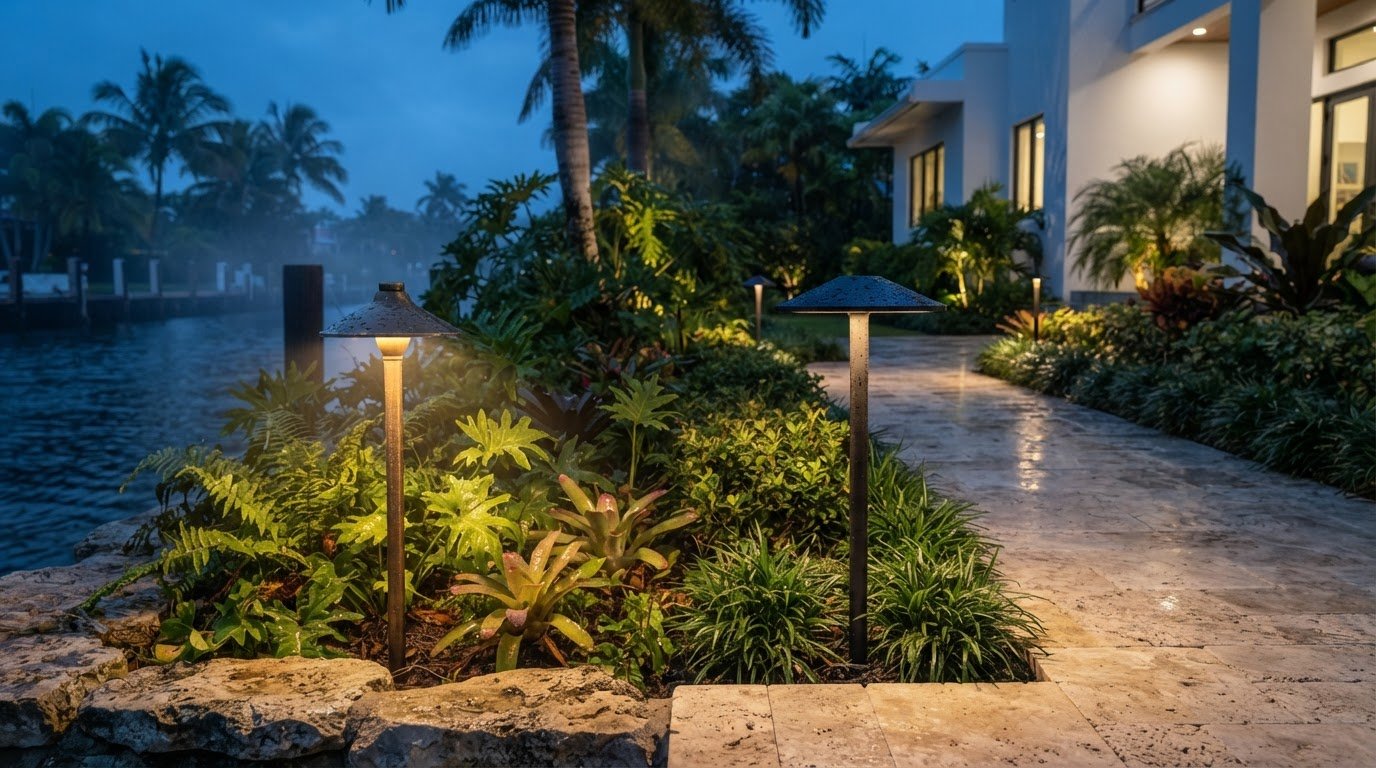
Brass may be a strong option for a coastal Florida garden, but it isn’t automatically the right fixture for every property. The brass vs aluminum landscape lights Florida homeowners compare depends on more than appearance: humidity, heavy rain, salt-laden air, fixture placement, and the protective finish all affect how materials hold up over time.
It’s reasonable to want a durable system that suits your home without adding unnecessary upkeep. Brass can develop a natural patina, while aluminum relies on its protective finish. The exact alloy, finish, hardware, and exposure conditions matter. A bronze-colored finish alone doesn’t tell you what the fixture is made of.
This guide compares the practical differences between brass and aluminum landscape lights, including how coastal proximity and garden conditions shape the choice. You’ll also learn how material selection fits into a coordinated lighting design, so fixtures complement your property and support manageable upkeep. There isn’t one universal winner. The right choice is a thoughtfully designed system suited to your landscape and each fixture’s exposure.
Key Takeaways
- Compare fixture housing materials separately from the LED, lamp, and wiring, so the product specifications tell the full story.
- Use the brass vs aluminum landscape lights Florida comparison to weigh coastal salt exposure, irrigation, fixture location, and your preferred finish.
- Read product documentation for the alloy, protective finish, hardware, and intended outdoor use rather than relying on a color label such as “bronze.”
- Consider weight, upkeep, and visual character alongside durability when choosing fixtures for garden beds, walkways, pools, and architectural features.
- See how thoughtful placement, beam control, and material selection come together in a coordinated landscape lighting plan.
Brass vs. Aluminum Landscape Lights in Florida: Why Exposure Matters
Neither brass nor aluminum is automatically best for every Florida property. In the brass vs aluminum landscape lights Florida decision, consider where each fixture will sit, how much moisture and salt it encounters, and how its materials are made and finished.
Brass and aluminum refer to the fixture housing, the outer body that holds and protects the light components. They’re separate from the lamp or LED that produces light and the wiring that powers it. A well-designed system considers all these elements together, with particular attention to the housing’s exposure in Florida’s humid, rainy climate.
How Florida’s coastal conditions affect outdoor fixtures
Coastal gardens in South Florida may receive salt spray alongside regular rain and humid air. An inland residential property may have less direct salt exposure, but fixtures can still face persistent moisture from rainfall, damp planting beds, or irrigation. Placement matters: a light tucked under a roof overhang has different exposure from one beside a pool, in a frequently watered garden, or set into wet soil.
Corrosion is a material response to its environment, not simply a sign that a fixture is old. Salt and moisture can contribute to deterioration, and contact between dissimilar metals may also matter. Understanding Corrosion offers an overview of processes such as galvanic corrosion and passivation. The practical lesson is to assess the fixture’s full construction and setting rather than assume one material behaves the same everywhere.
What “brass” and “aluminum” mean for a landscape fixture
These labels identify a base housing material, but they don’t describe every detail of a fixture. Alloy composition and construction can vary by manufacturer. A housing may also have a coating or decorative finish, while its fasteners, internal parts, and lens may use other materials. Each component can affect how the assembled fixture responds to outdoor conditions.
Brass may develop a natural patina, changing its appearance over time; a visible color change alone doesn’t prove material failure. Aluminum fixtures may have a protective finish, and the condition of that finish is relevant to ongoing performance. Don’t assume every brass housing is equally resistant or every aluminum housing will wear alike. Product documentation can clarify the alloy, finish, hardware, and intended outdoor use.
For Florida fixtures, alloy, finish, construction, and actual exposure matter more than the material label alone. That distinction helps homeowners compare products realistically, whether they’re illuminating a sheltered inland walkway or shaping a coastal garden’s nighttime character.
How Brass and Aluminum Landscape Fixtures Behave in Florida Weather
Both materials can be used in outdoor fixtures, but they respond differently to wear, finishes, and design needs. For brass vs aluminum landscape lights Florida decisions, compare the specific fixture rather than relying on a broad material label. Alloy, coating, hardware, and exposure all affect the care a fixture may need.
| Consideration | Brass | Aluminum |
|---|---|---|
| Corrosion considerations | Performance depends on alloy, construction, hardware, and exposure. | Performance depends on alloy, construction, finish, hardware, and exposure. |
| Finish and patina | May develop a natural patina; the appearance depends on finish and conditions. | Often has a coating or finish that influences its appearance and surface protection. |
| Weight | Typically feels more substantial, which may influence fixture handling and placement. | Lighter weight can be useful where a less substantial fixture is preferred. |
| Upkeep | Care depends on the desired appearance and product guidance. | Inspect the finish and follow the manufacturer’s care instructions. |
| Design character | Can suit a classic, substantial look and a finish that patinates. | Can suit a clean, lighter profile and a range of finishes. |
Brass landscape lights: patina, construction, and upkeep
Brass can change in appearance as it’s exposed to outdoor conditions. Depending on the alloy and finish, a fixture may develop a patina, which some homeowners appreciate for its softer, aged look. That visible change isn’t, by itself, proof of material failure. Brass’s substantial feel can also contribute to a fixture’s design character, but weight alone doesn’t establish durability or guarantee longer service.
Care needs vary. Check product documentation for alloy composition, finish, cleaning guidance, and any corrosion or maintenance claims. A polished appearance may require different care from a finish intended to age naturally.
Aluminum landscape lights: finishes and exposure considerations
Aluminum’s lighter weight can make it a practical design choice, but its outdoor performance depends on the whole fixture, including alloy, construction, coating, and hardware. A scratch or damaged coating may leave part of the surface exposed; the implications depend on the specific product and conditions. Follow the manufacturer’s guidance rather than assuming all aluminum fixtures respond alike.
Aluminum can offer a crisp, contemporary appearance, while brass may bring more visual weight. Neither dictates the style of the entire lighting scheme. Paradise Landscape Lighting considers fixture materials as part of a coordinated landscape lighting design, balancing the property’s exposure, desired aesthetic, and maintenance preferences.
Brass vs. Aluminum Landscape Lights: Which Fits Your Florida Property?
The right fixture material depends on the conditions around each light, the look you want, and the upkeep you’re comfortable with. A sheltered garden bed, a frequently irrigated planting area, and an ocean-facing entry don’t present the same exposure. In the brass vs aluminum landscape lights Florida comparison, it can make sense to choose materials by location rather than specify one material throughout the property.
Choosing fixtures for coastal and inland South Florida homes
Miami and Fort Lauderdale include properties with varied exposure. A home close to the coast may receive salt-laden air, but orientation, prevailing wind, landscaping, and shelter from walls or rooflines all influence what reaches an individual fixture. Inland properties may have less direct salt exposure, while irrigation and damp soil can still shape conditions in garden beds.
Consider each fixture’s position. A light facing ocean winds or placed beside regularly watered planting may need different material and finish considerations from one under a sheltered eave. Compare the product’s alloy, finish, hardware, and outdoor-use guidance with its intended location. There’s no reliable distance-based rule that replaces assessing the site itself.
Matching fixture material to gardens, paths, and water features
Material selection should support both the visual effect and the fixture’s setting. A brass uplight can complement a garden with a substantial, classic character, while a lighter aluminum path light may suit a more restrained, contemporary scheme. For architectural fixtures, coordinate the housing appearance with the home’s exterior finishes and consider how much direct weather the placement receives.
Pool decks and fountains add nearby moisture and spray, but that doesn’t mean every fixture is submerged or designed for direct water contact. Choose a fixture for its actual position and follow its product documentation for intended outdoor use. For more context on integrating light around these features, explore this landscape lighting guide for pools and fountains.
A mixed-material plan can work well when a property combines sheltered beds, exposed paths, and water-feature surroundings. The key is visual coherence: align finishes, fixture forms, and light placement so different materials feel intentional rather than mismatched. Treat material selection as part of a whole-property composition, not a fixture-by-fixture choice made in isolation.
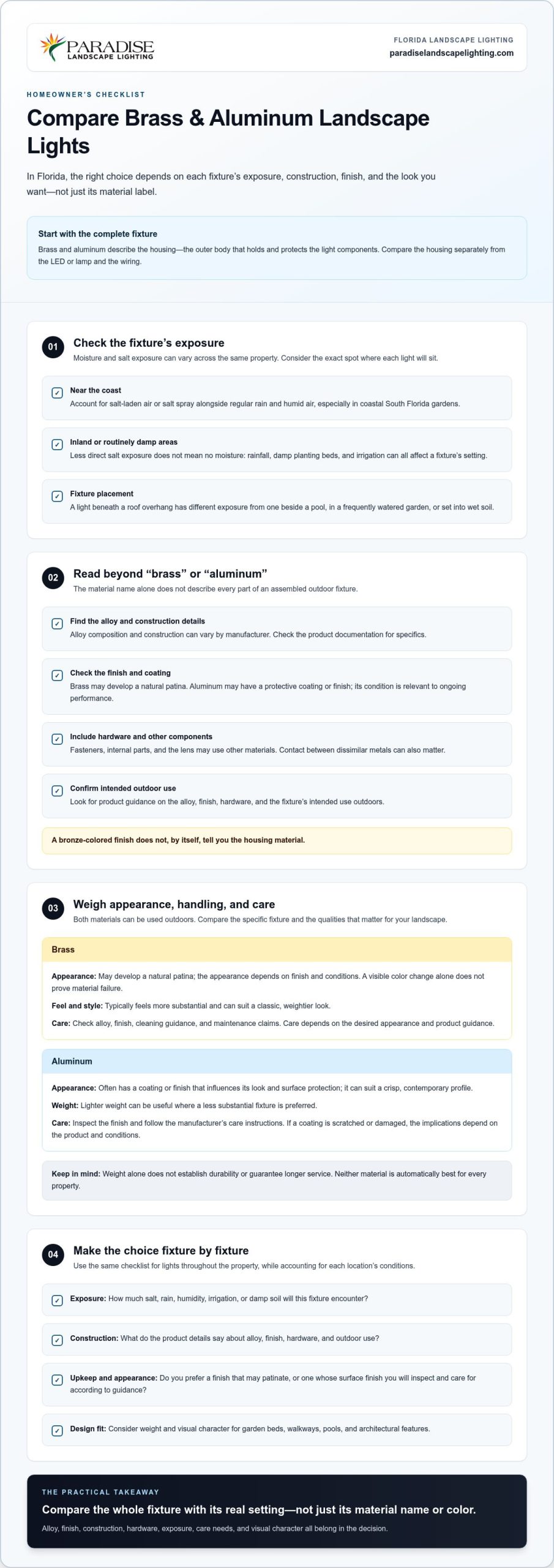
A Florida Homeowner’s Checklist for Comparing Landscape Light Materials
Use this checklist to compare fixtures based on the conditions they’ll face and the experience you want from your finished lighting system. A material label is a starting point, not a complete performance guide.
Five questions to answer before choosing fixture materials
- What exposure will each fixture face? Note whether its location is coastal, sheltered, heavily irrigated, or prone to standing moisture. Conditions can vary between areas of the same property.
- What finish do you want over time? Decide whether you’d welcome brass’s potential to develop a natural patina or prefer a more consistent finished appearance. Check whether the product’s finish is intended to change.
- Where will the fixture sit? Identify whether it’s planned for a garden bed, path, pool deck, fountain area, or architectural feature. Placement affects exposure and the role the light plays in the design.
- What upkeep feels manageable? Compare the manufacturer’s cleaning and inspection recommendations for each fixture. Don’t assume brass or aluminum follows one universal maintenance schedule.
- What matters most across the property? Prioritize the areas and effects that matter to you, such as welcoming path lighting, highlighting mature planting, or creating a unified appearance around the home.
Compare specifications and the complete lighting effect
Before selecting a fixture, review its product documentation for the housing alloy, finish or coating, hardware, and intended outdoor application. Check care instructions too, including recommended cleaning methods and inspection guidance. Those details help you compare actual products rather than relying on broad assumptions about brass or aluminum.
Then look beyond the housing. Beam direction influences what the light reveals, while thoughtful glare control helps keep illumination comfortable and focused. LED performance also contributes to the result. A durable fixture can still disappoint if it throws light into a window or creates harsh glare on a walkway. The material choice should support the lighting purpose and complement the landscape.
For a coordinated plan, consider how fixture placement, finishes, beam control, and maintenance fit together across the property. Paradise Landscape Lighting brings design and engineering together with installation and ongoing maintenance for custom low-voltage LED systems in South Florida. Plan a coordinated landscape lighting system around your property’s exposure, design priorities, and preferred upkeep.
Designing and Installing Florida Landscape Lights Around the Right Material
Fixture material works best as part of a larger lighting plan. In a coordinated design, housing finish and construction are considered alongside location, intended beam direction, and the features each light should reveal. That joined-up approach helps the system feel composed after dark rather than like a collection of fixtures chosen one at a time.
Why material selection belongs in the lighting design
A light’s setting influences both its exposure and its purpose. A fixture near coastal planting, for example, may face different conditions from one beneath a sheltered architectural detail. Its visual role matters too: an uplight can shape the silhouette of a tree, while a carefully aimed fixture can draw attention to stonework or artwork without directing glare toward nearby seating or windows.
Paradise Landscape Lighting brings a lighting designer and lighting engineer together to develop custom low-voltage LED systems for South Florida homes. By considering fixture material, placement, and beam control within the design, the team can shape a consistent visual language across the property. The brass vs aluminum landscape lights Florida decision then becomes part of the full composition, informed by each location and lighting objective.
Plan a custom South Florida landscape lighting system
A project moves from design and engineering into installation, with maintenance supporting the system over time. Planning the layout as a whole helps align fixture locations, light direction, and material choices with the property’s landscape and architecture. Product details and exposure inform decisions for individual areas, while the overall plan keeps the nighttime experience cohesive.
Paradise Landscape Lighting designs, engineers, installs, and maintains residential outdoor lighting systems in South Florida, including properties in Fort Lauderdale, Miami, Weston, Southwest Ranches, Wilton Manors, Palm Beach, Miami Beach, Coral Gables, Plantation, West Palm Beach, and Coconut Grove. Whether the vision centers on garden depth, a more welcoming walkway, architectural accents, or a softly illuminated pool and fountain setting, the plan is tailored to the home and its landscape.
Explore custom landscape lighting with Paradise Landscape Lighting.
Shape a Landscape Lighting Plan That Fits Your Florida Home
The best choice in brass vs aluminum landscape lights Florida depends on each fixture’s exposure, construction, finish, and role in the design. Brass and aluminum can both suit outdoor spaces, but neither material label alone tells you how a fixture will perform or look over time. Compare product details, consider the upkeep you prefer, and think about how each light contributes to the whole property.
A coordinated plan brings those decisions together. Paradise Landscape Lighting’s lighting designer and lighting engineer create custom residential low-voltage LED systems for South Florida, with design, engineering, installation, maintenance, and retrofitting. From gardens and walkways to pools, fountains, artwork, and architectural features, each space can be considered as part of a unified nighttime composition.
Explore custom landscape lighting with Paradise Landscape Lighting and take the next step toward an outdoor setting that reflects your home and priorities. Thoughtful planning can help your landscape feel welcoming, balanced, and beautifully illuminated.
Frequently Asked Questions
Is brass or aluminum better for landscape lights in Florida?
Neither brass nor aluminum is universally better for Florida landscape lighting. For brass vs aluminum landscape lights Florida, compare the fixture’s alloy, finish, construction, and actual exposure. A coastal, salt-exposed location may call for different considerations than a sheltered inland garden. Review manufacturer documentation, then weigh the intended appearance and care guidance. Choose for the specific placement, not the material name alone.
Do brass landscape lights rust or change color?
Brass doesn’t rust like iron, but its surface appearance can change over time. Depending on the fixture’s finish and environment, it may develop a natural patina. That change can be aesthetic rather than evidence of damage or failure. The exact appearance and care needs vary by product, so consult the manufacturer’s information about the brass material, finish, and recommended maintenance rather than assuming every fixture will age alike.
Are aluminum landscape lights suitable for coastal Florida?
Aluminum landscape lights can be suitable for coastal Florida, depending on the fixture’s alloy, protective finish, construction, hardware, and actual salt exposure. Not all aluminum fixtures are built or finished alike, and no material label alone establishes corrosion-proof performance. Compare product specifications with the intended location, considering whether the fixture faces coastal air, irrigation, or shelter from the elements. Placement and product guidance both matter.
How long do brass and aluminum landscape lights last outdoors?
There isn’t a universal lifespan for either material. Outdoor performance varies with product quality, alloy, finish, installation, exposure, and maintenance, so a single number could be misleading. Check the manufacturer’s documentation for the specific fixture and its intended use. Periodic inspection and appropriate care can help you spot changes in the finish, hardware, or light output before wear affects the appearance or performance of the overall system.
Can brass and aluminum landscape lights be used in the same yard?
Yes, different fixture materials can be used in the same yard when they suit the site conditions and work with the overall design. Consider each fixture’s exposure, placement, finish, and maintenance needs, then look at how the materials appear together at night. A coordinated plan can use different housings in distinct areas without making the landscape feel inconsistent. Assess the whole composition rather than choosing each fixture independently.
What should I look for when comparing outdoor landscape light materials?
Compare the stated alloy, finish, hardware, intended outdoor application, care guidance, and warranty terms where provided. Then consider the location’s salt exposure, irrigation, and moisture, along with the appearance you want over time. Material is only one part of the decision. Beam direction, glare control, LED performance, and how fixtures work together also shape the finished effect, so assess the fixture within the broader lighting plan.
Does brass or aluminum need more maintenance in South Florida?
Maintenance depends on the specific fixture’s construction, finish, location, and exposure, not just whether it’s brass or aluminum. Coastal salt, irrigation, and accumulated debris can influence inspection needs, so follow the manufacturer’s care guidance rather than assuming a universal cleaning schedule. Include periodic fixture checks in your landscape-lighting maintenance plan, whether your home is in Fort Lauderdale, Weston, Southwest Ranches, Wilton Manors, Palm Beach, Miami, Miami Beach, Coral Gables, Plantation, West Palm Beach, or Coconut Grove.
Return to News