
2026 Residential Facade Lighting Design Guide: Sculpting Your Home with Light
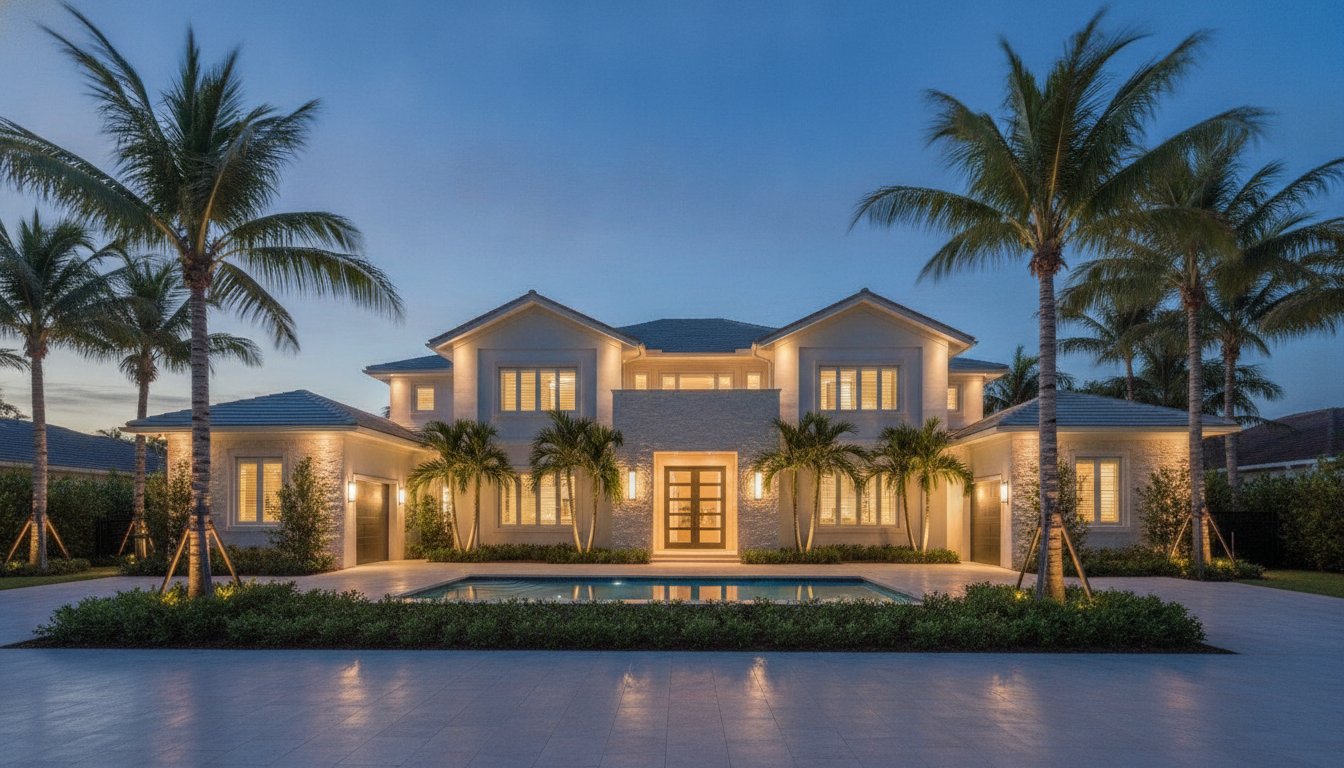
What if your home’s most striking architectural features only truly came to life after the sun went down? For many homeowners, the transition from day to night often means losing the visual impact of their property’s design to shadows or, worse, burying it under the harsh glare of poorly placed floodlights. You’ve likely spent years perfecting your estate’s aesthetic, so it’s only natural to want that same level of sophistication to shine through the evening hours without the constant worry of salt air corrosion or skyrocketing energy bills.
This guide reveals how professional architectural lighting for different home styles transforms a standard exterior into a sophisticated, resort-style masterpiece. We’ll show you how a meticulously engineered, low-voltage system not only enhances your home’s security but also builds tangible property value through 2026 LED technology. We’ll preview the “invisible source” philosophy and explore specific design strategies that ensure your home looks like a curated work of art rather than a commercial parking lot. By the end of this article, you’ll understand how to achieve a durable, energy-efficient glow that withstands the unique demands of a coastal environment.
Key Takeaways
- Understand how architectural lighting for different home styles emphasizes structural beauty while significantly increasing your property’s nighttime value.
- Learn professional techniques like wall washing and grazing to highlight unique textures and create a soft, resort-style glow.
- Discover why low-voltage LED engineering is the gold standard for energy efficiency and long-term durability in coastal climates.
- Identify strategic focal points like gables and entryways to maximize visual drama and improve home security.
- Explore the “invisible source” philosophy that prioritizes the artistry of the light over the appearance of the fixtures.
What is Architectural Facade Lighting for Residential Properties?
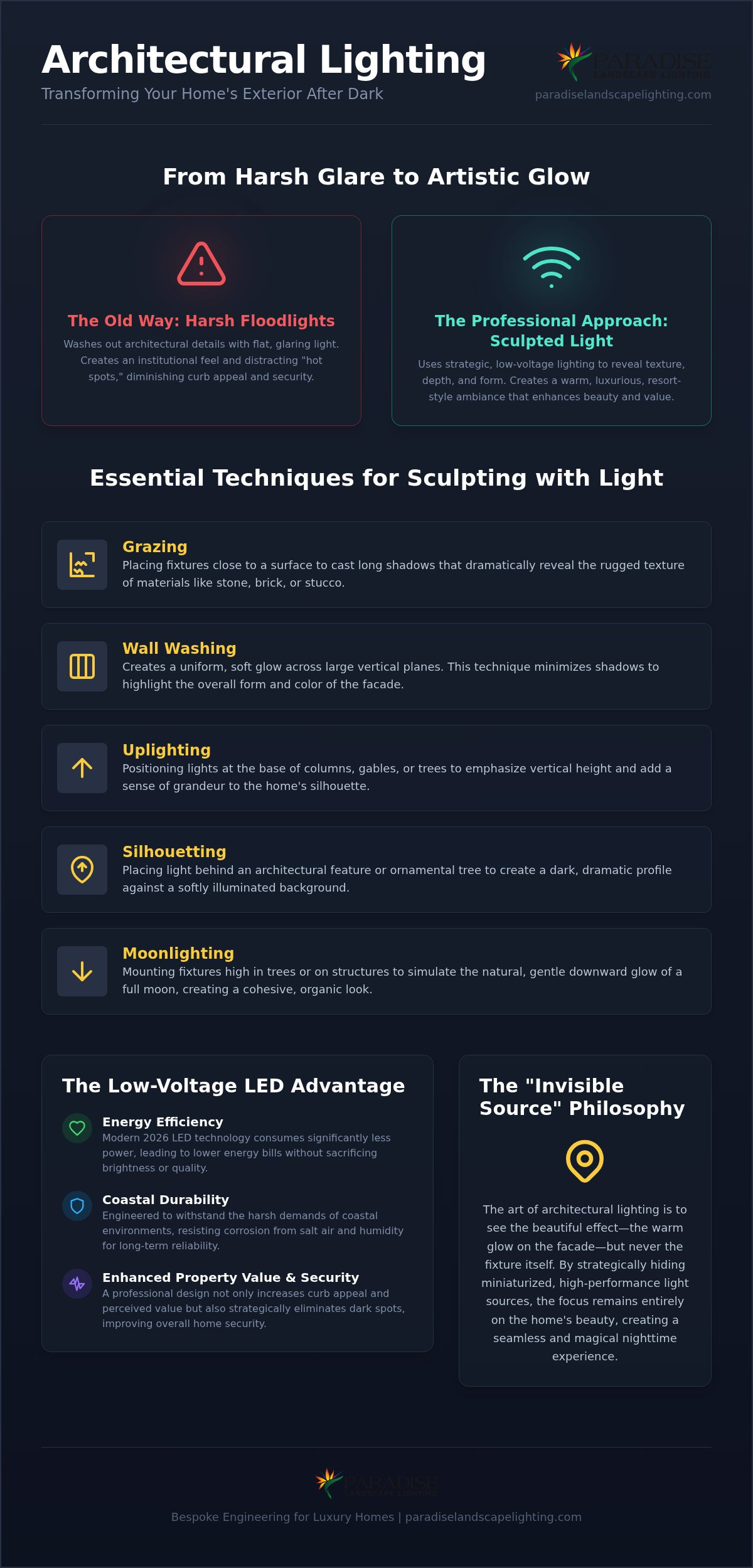
Architectural facade lighting is far more than a functional necessity for nighttime visibility. It’s the strategic application of light to emphasize the structural beauty of your residence, turning stone, glass, and steel into a visual narrative. Unlike standard floodlights or motion-triggered security lamps that wash out details with harsh, flat illumination, professional architectural lighting design focuses on depth and dimension. It uses light as a medium to reveal the textures and shapes that define your home’s character.
Modern 2026 technology has revolutionized this field by moving toward miniaturized, high-performance fixtures. This allows for an “invisible source” philosophy where the observer sees the beautiful glow on the architecture but never the fixture itself. This approach is essential when considering architectural lighting for different home styles, as a Mediterranean estate requires a vastly different technical setup than a minimalist modern build in Miami Beach. By hiding the source, we ensure the focus remains on the home’s silhouette rather than the hardware.
The Shift from Illumination to Artistry
Moving beyond basic visibility requires a transition from simple illumination to true artistry. It’s about creating a nighttime signature that reflects your personal style. By using intentional highlights and purposeful shadows, we can accentuate a grand entryway or the intricate details of a custom cornice. Color temperature plays a vital role here. A warm, golden hue might suit a classic Coral Gables villa, while a cooler, crisp white light enhances the clean lines of a contemporary waterfront property. This level of customization ensures that architectural lighting for different home styles feels intentional and bespoke rather than generic.
Why Curb Appeal Matters After Dark
The psychological impact of a well-lit home is profound for both guests and neighbors. A masterfully lit facade creates a sense of warmth and welcome that feels secure yet luxurious. From the street, a professional lighting design enhances the home’s silhouette, making it stand out as a landmark in the neighborhood. Beyond the aesthetic appeal, there’s a clear correlation between sophisticated lighting and perceived property value. It suggests a level of care and custom engineering that elevates the entire estate. Balancing these luxury aesthetics with functional security benefits ensures your home is as safe as it is stunning, providing peace of mind without the institutional look of traditional security lights.
If you are also considering a larger home transformation, Lux Renovations LLC provides the comprehensive remodeling expertise needed to ensure your property’s architecture serves as the perfect foundation for high-end lighting.
Essential Techniques for Sculpting Your Home’s Exterior
Sculpting a home’s exterior is a delicate balance between engineering precision and artistic intuition. It’s about more than just placing fixtures; it’s about directing the eye to the most compelling features of your property. By mastering specific light applications, we can change how a structure feels after dark, turning flat surfaces into dynamic landscapes of light and shadow. Professional architectural lighting for different home styles relies on a toolkit of proven techniques:
- Grazing: By placing fixtures mere inches from a surface, we cast long shadows that reveal the rugged texture of Coquina stone, brick, or stucco.
- Wall Washing: This technique creates a uniform, soft glow across large vertical planes, minimizing shadows to highlight the overall form and color of the facade.
- Silhouetting: We place light behind architectural features or ornamental trees to create a dark, dramatic profile against a softly lit background.
- Uplighting: Positioning lights at the base of columns, gables, or peaks emphasizes vertical height and adds a sense of grandeur to the home’s silhouette.
- Moonlighting: Mounting fixtures high in the canopy of trees or along rooflines simulates the natural, gentle downward glow of a full moon, providing a cohesive and organic look.
While these techniques focus on the artistry of light, the quality of the underlying structure is equally important. For homeowners looking to prepare their property for such an upgrade, companies like Cascade Outdoor Services offer the expert hardscaping and deck restoration that serve as the perfect canvas for professional architectural lighting.
Sculpting with Light and Shadow
The true power of architectural lighting for different home styles lies in the strategic use of shadow. Without darkness, light loses its ability to define shape. We focus on avoiding “hot spots,” those distracting, over-bright patches that break the visual rhythm of a facade. By layering light at different intensities and angles, we create a sense of depth that makes a home feel three-dimensional even in the dead of night. It’s a meticulous process of ensuring every beam serves a purpose while eliminating glare that could disturb neighbors or guests.
Matching Technique to Architectural Style
Different architectures demand distinct approaches to light. A Mediterranean Revival home in Coral Gables, with its ornate columns and heavy textures, benefits from warm uplighting and aggressive grazing. In contrast, the minimalist glass and concrete structures found in Miami Beach require clean wall washing and precise silhouetting to maintain their modern edge. Our team bridges the gap between these structural needs and bespoke outdoor LED lighting design by selecting techniques that honor the original architect’s vision. If you’re ready to see your home in a new light, a professional design consultation can help define your property’s unique nighttime identity.
The Low-Voltage LED Advantage: Engineering for South Florida
Designing architectural lighting for different home styles requires more than an artistic eye; it demands rigorous engineering. In South Florida, where salt air and intense humidity are constant, the technical foundation of your system determines its lifespan. Low-voltage 12V and 24V systems have become the gold standard for residential safety. They offer a safer environment for families and pets while providing the precision needed for sophisticated design. Because these systems operate at a lower power threshold, they don’t require the intrusive, deep trenching associated with high-voltage electrical work, preserving your landscape’s integrity.
Energy efficiency is another hallmark of 2026 LED technology. Today’s high-performance fixtures allow you to illuminate an entire multi-story facade for less energy than a single traditional halogen bulb would consume. This efficiency doesn’t come at the cost of power. Modern LEDs provide incredible throw and clarity, ensuring that every architectural detail is crisp and vibrant. When implementing architectural lighting for different home styles, this balance of low consumption and high output allows for layered, complex designs that remain sustainable and cost-effective for years.
Engineering for Longevity and Performance
The role of a lighting engineer is critical in preventing common system failures like voltage drop or flickering. Without precise electrical calculations, the fixtures furthest from the power source often appear dimmer, ruining the visual symmetry of a design. We solve this through custom engineering, ensuring consistent light output across the entire property. In coastal environments, material choice is everything. We prioritize heavy-gauge, corrosion-resistant metals like solid brass and copper. These materials withstand the corrosive South Florida air, developing a natural patina over time rather than pitting or failing like cheaper aluminum alternatives. Integrating smart controls further enhances performance, allowing you to create automated, dimmable scenes that adapt to the time of night.
Myth-Busting: LED Temperature and Quality
A common misconception is that LED light feels sterile or “blue.” While early iterations of the technology struggled with color accuracy, 2026 high-CRI (Color Rendering Index) LEDs offer stunning warmth and fidelity. We typically select fixtures in the 2700K to 3000K range to mimic the inviting glow of traditional incandescent lighting. This ensures that the natural colors of your home’s stone, wood, and foliage are rendered accurately. If your property still relies on outdated technology, upgrading halogen landscape lights to LED is a seamless way to improve both aesthetic quality and system reliability. This transition provides the high-end look of a luxury resort while slashing maintenance needs and energy costs.
Strategic Focal Points: Prioritizing Your Lighting ROI
Maximizing the return on your investment in architectural lighting for different home styles requires a disciplined approach to placement. It’s easy to over-light a property, but true sophistication lies in restraint and the strategic selection of focal points. By prioritizing specific architectural elements, you create a nighttime masterpiece that feels balanced and intentional rather than cluttered. High-impact areas like entryways, gables, and textured surfaces serve as the foundation for a professional design that enhances both beauty and security.
- Entryways: This is the handshake of your home. A warm, inviting glow at the front door provides a secure transition for guests while establishing a central focal point for the entire facade.
- Gables and Peaks: Lighting these high points adds essential vertical height. It draws the eye upward, emphasizing the grand scale of the architecture and creating a sense of drama.
- Texture and Materials: We use precision fixtures to make natural stonework or wood accents “pop.” This adds tactile depth that is often lost in the flat light of the moon.
- Window Trim and Arches: Framing these unique features highlights the home’s character and ensures that its most distinct structural elements are visible from the street.
Defining the Visual Hierarchy
A successful design relies on a clear visual hierarchy. We begin by identifying the “hero” feature of your home’s architecture, whether it’s a sprawling Mediterranean arch or a sleek, modern cantilever. Once the hero is established, secondary lights guide the eye through the property landscape in a logical flow. We take great care to avoid the “tombstone” effect, which occurs when too much light is concentrated on the ground level. By pushing light higher up the facade, we ensure the home feels tall and stately rather than bottom-heavy.
Integrating Landscape and Facade
In South Florida, the relationship between the structure and the surrounding flora is inseparable. Effective residential architectural lighting in Miami must include the greenery that frames the house. We often use tree shadows to add movement and organic texture to a sterile facade, creating a dynamic interplay between nature and architecture. This creates a seamless transition from the garden to the front door, making the entire estate feel like a unified environment. If you want to transform your property into a nighttime landmark, contact us today for a custom lighting design consultation that brings your vision to life.
The Paradise Approach: Bespoke Engineering for Luxury Homes
At Paradise Landscape Lighting, we believe that the most effective architectural lighting for different home styles is achieved through the synergy of two distinct disciplines: visionary artistry and rigorous engineering. Every project we undertake is a collaborative effort between a professional lighting designer and a lighting engineer. This dual approach ensures that your home isn’t just illuminated, but transformed with absolute technical precision. Our “invisible source” philosophy is central to this process. We want you to see the light and the beauty it reveals, never the fixture itself. This requires meticulous placement and custom shielding to eliminate glare while maximizing the visual impact on the facade.
Bespoke Design vs. One-Size-Fits-All
A generic, one-size-fits-all approach fails to account for the diverse architectural lighting for different home styles found throughout South Florida. A modern waterfront estate in Fort Lauderdale faces vastly different environmental and aesthetic challenges than a sprawling Mediterranean villa in Weston. Thomas Crowley and Justin Lawrence lead our team with a commitment to personalized service, ensuring every property receives a custom engineering plan tailored to its specific structural needs. This is especially vital for coastal estates in Palm Beach or Miami Beach where salt air and high humidity can quickly degrade inferior systems. We prioritize high-grade, corrosion-resistant materials like solid brass that are built to withstand the elements. Our methodology, much like our guide on our approach to bespoke low voltage landscape lighting, emphasizes that true luxury is found where artistry meets structural integrity.
Next Steps: Transforming Your Nightscape
Starting your project begins with an intentional design consultation where we listen to your specific vision and assess your home’s unique structural features. We don’t just install fixtures; we provide a comprehensive enhancement to your property’s nighttime identity, security, and overall market value. Our systems are engineered for longevity, and we emphasize the importance of professional maintenance to keep your nightscape looking as pristine as the day it was installed. Whether you are located in Fort Lauderdale, Weston, or Coconut Grove, we are dedicated to creating a nighttime masterpiece that reflects your personal standard of excellence. Schedule your custom facade lighting consultation today and discover how our expertise can sculpt your home with light.
Elevate Your Home’s Nighttime Identity
Your home’s architecture deserves to be celebrated long after the sun sets. We’ve explored how the intersection of custom engineering and artistic vision creates a nighttime masterpiece that enhances both security and property value. By prioritizing high-CRI 2026 LED technology and our “invisible source” philosophy, you ensure your estate remains a beacon of sophistication without the distraction of glare or high energy costs. This level of professional architectural lighting for different home styles isn’t just about simple visibility; it’s about defining your property’s unique character through the intentional use of light and shadow.
Our team specializes in the specific demands of South Florida’s luxury residential market, providing durable, energy-efficient low-voltage systems built to withstand harsh coastal air. Every project we handle is a bespoke design led by expert lighting engineers who understand that your home is a work of art. Don’t settle for standard floodlights when you can have a system that is as efficient as it is elegant. Request Your Custom Facade Lighting Design today to begin your property’s transformation. We look forward to helping you see your home in a whole new light.
Frequently Asked Questions
Is architectural facade lighting the same as security lighting?
Architectural facade lighting differs significantly from standard security lighting. While security lights often rely on high-intensity floodlights to startle intruders, facade lighting uses a layered, artistic approach to eliminate shadows. It provides safety by illuminating entryways and dark corners without the harsh glare that can blind homeowners. This creates a secure perimeter that feels like a luxury resort rather than an institutional facility.
How much does a residential facade lighting system cost to run?
Operating a modern residential facade system is remarkably affordable. Thanks to 2026 LED technology, a full system typically consumes about 80% less energy than traditional halogen setups. Most homeowners find that running their entire outdoor nightscape costs less per month than a single high-wattage indoor lamp. This efficiency allows you to maintain a stunning nighttime presence without worrying about your monthly utility bills in cities like Weston or Miami.
Can facade lighting be added to an existing home, or is it only for new builds?
You can easily add architectural lighting for different home styles to existing properties. Low-voltage systems are particularly well-suited for retrofitting because they require minimal disruption to your landscape. Our team uses specialized techniques to install wiring under established sod and around mature gardens in Coral Gables or Plantation. This ensures your home gains a sophisticated new look without the need for major construction or deep trenching.
What is the best color temperature for residential architectural lighting?
The most effective color temperature for luxury homes falls between 2700K and 3000K. This warm white range mimics the soft glow of traditional incandescent bulbs, which is ideal for highlighting natural stone, wood, and stucco. It creates a welcoming atmosphere that feels high-end and sophisticated. Avoid cooler temperatures above 4000K; these often look blue and clinical, which can strip the warmth and character from your home’s facade.
How do I avoid light pollution while still highlighting my home?
We minimize light pollution by following our “invisible source” philosophy. This involves using precision-engineered fixtures with built-in shrouds and shields to direct light exactly where it belongs. By focusing the beam on the architectural features of the home and avoiding upward spill, we protect the night sky. This careful placement ensures your home stands out beautifully while respecting the local environment and your neighbors’ privacy.
Do I need a lighting engineer for a residential project?
Hiring a lighting engineer is essential for any high-end residential project. While a designer focuses on the visual effect, the engineer ensures the system functions reliably. They calculate voltage drop to prevent flickering and ensure that every fixture provides consistent brightness regardless of its distance from the power source. This technical expertise is vital for maintaining the integrity of architectural lighting for different home styles over many years.
How does South Florida’s weather affect outdoor lighting fixtures?
South Florida’s intense humidity and salt air are incredibly hard on outdoor hardware. Standard aluminum or plastic fixtures often corrode, pit, or fail within just a few seasons. We combat this by using heavy-gauge, solid brass and copper fixtures that naturally resist the elements. These materials are built to handle the tropical climate in Fort Lauderdale and Palm Beach, developing a beautiful patina rather than breaking down.
What are the benefits of low-voltage LED over traditional halogen?
Modern low-voltage LEDs offer superior longevity and performance compared to outdated halogen bulbs. An LED fixture can last up to 50,000 hours, whereas halogens typically require replacement every year. LEDs also produce significantly less heat, making them safer for nearby foliage and delicate architectural materials. They provide a much higher degree of control over beam spread and color accuracy, which is necessary for sculpting a truly bespoke nightscape.
Return to News