
Upgrade Old Landscape Lighting to LED in Weston by Matching Brightness and Color
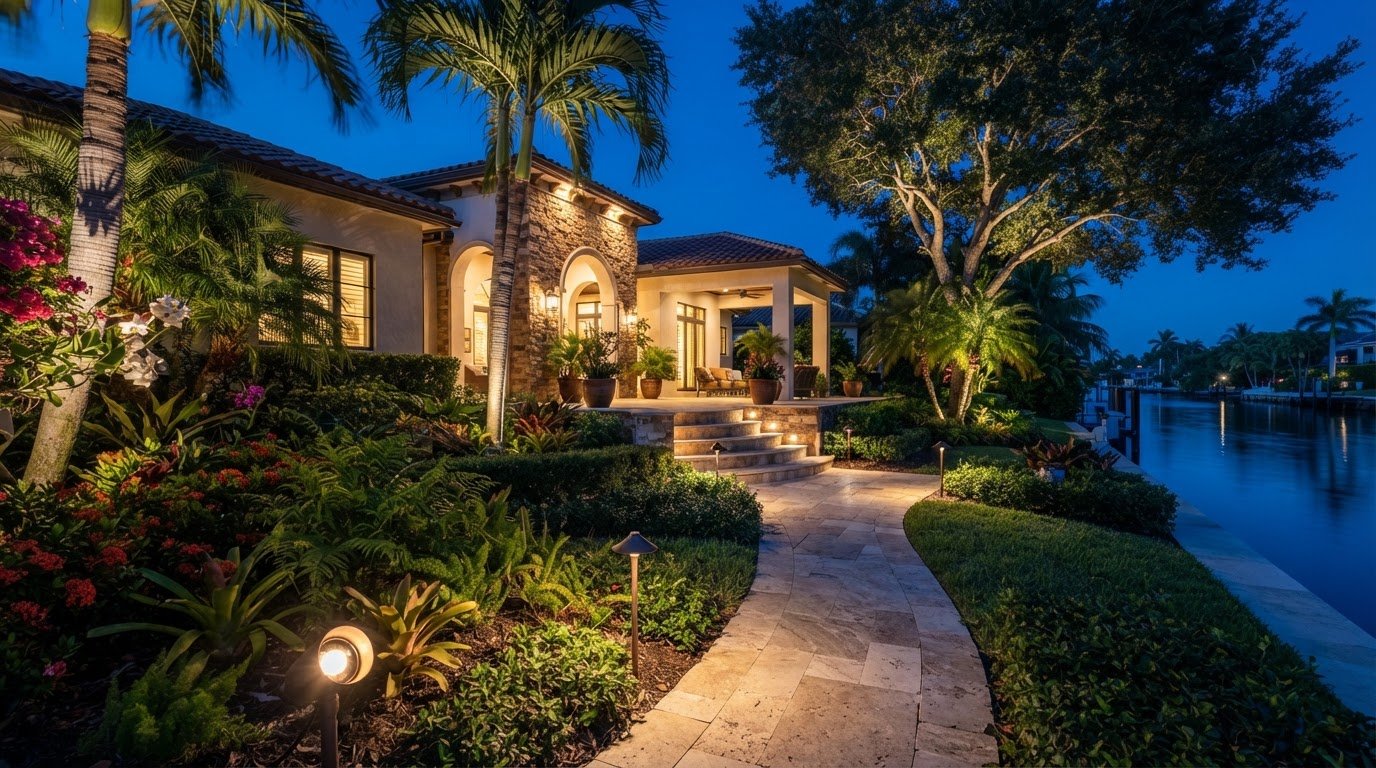
The oldest fixtures don’t always need to go: existing garden lights can often be upgraded with LED bulbs, while systems older than 15 years may be better candidates for replacement than repair. If you plan to upgrade old landscape lighting to LED in Weston, the right choice depends on fixture condition and whether its bulbs, wiring, and overall layout still suit the property.
It’s understandable to want brighter, more efficient lighting without losing the warm look that makes a garden or walkway inviting. But replacing every fixture isn’t always necessary, and changing bulbs without considering brightness or color can alter the feel of the whole landscape.
This guide explains when repair, a bulb change, or fixture replacement makes sense, and how to compare LED brightness, energy use, color temperature, and beam spread. You’ll also see how thoughtful placement can make the finished lighting feel balanced, useful, and suited to your outdoor space.
Key Takeaways
- Decide whether to repair, replace, or retrofit by considering fixture condition; systems older than 15 years may be better candidates for replacement than repair.
- Compare LED brightness by light output, not wattage alone: a 1.5-watt LED may produce as much or more light than an 11-watt incandescent bulb.
- LED landscape lighting can use up to 75-80% less electricity than traditional lighting, making it worth comparing energy use alongside brightness.
- Choose color temperature to suit the scene: 2700K creates warmer, more yellow light than 3000K, both common choices for landscape lighting.
- Match beam spread to the feature you want to highlight, so the light draws attention where intended without unnecessary spill.
Benefits of upgrading existing landscape fixtures to LED
Keeping sound fixtures can preserve a familiar garden layout while improving its light quality and efficiency. Existing garden-light fixtures can often accept LED bulbs, so a full replacement isn’t always needed. Systems older than 15 years may be better candidates for replacement than repair, especially when worn fixtures, connections, and wiring affect the whole lighting system.
Weston permit and electrical-code requirements depend on the work involved. Replacing a compatible bulb differs from changing wiring, the transformer, or other electrical components, so identify the scope of the upgrade before work begins. Don’t assume every lighting change has the same requirements.
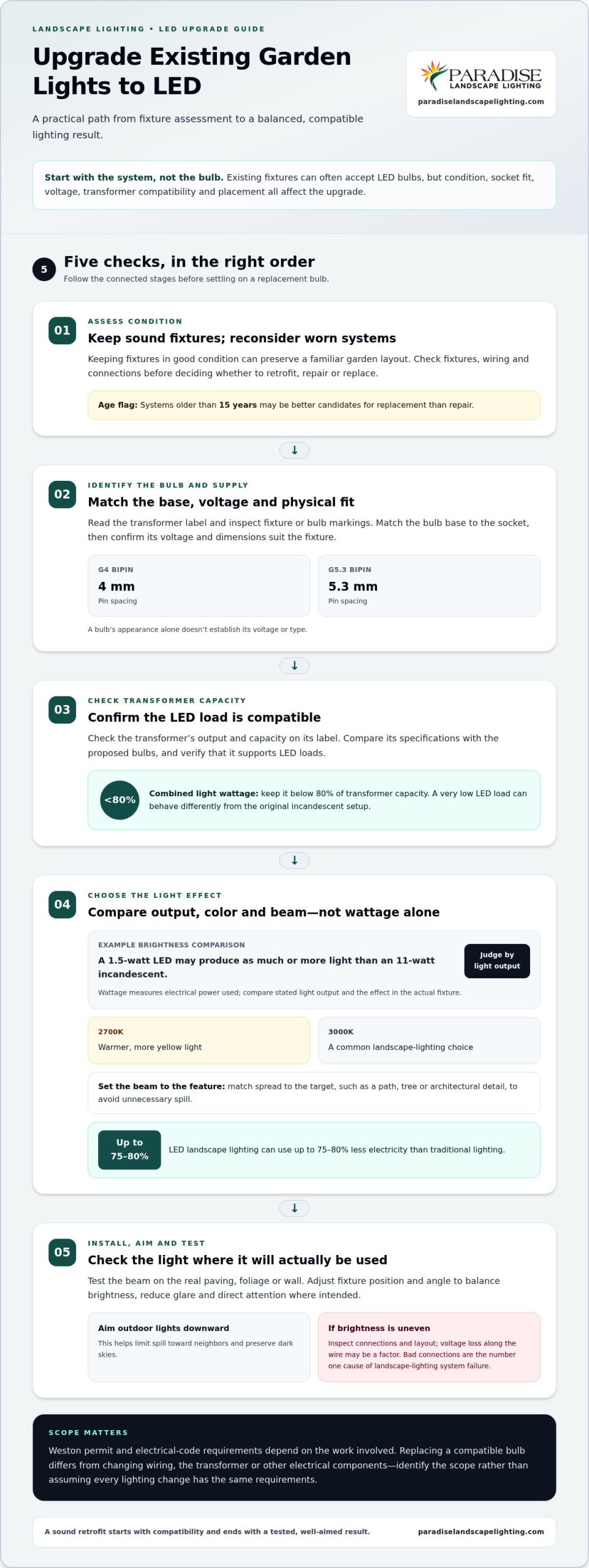
Yes, existing low-voltage landscape fixtures can often be upgraded with LED bulbs. First match the bulb base, voltage, physical dimensions, and fixture requirements. For example, G4 bipin bulbs have 4 mm pin spacing, while G5.3 bipin bulbs have 5.3 mm spacing.
To identify an old system’s voltage, read the transformer label and inspect the fixture or bulb markings. Then match the bulb’s base to the socket; pin spacing can distinguish a G4 from a G5.3. A bulb’s appearance alone doesn’t establish its voltage or type.
Check the transformer’s output and capacity on its label, then compare its specifications with the proposed LED bulbs. The combined wattage of landscape lights should remain below 80% of transformer capacity. Also verify that the transformer supports the LED load, since a very low load can behave differently from its original incandescent setup.
An upgrade typically involves assessing fixtures and wiring, identifying bulb bases and voltage, checking transformer capacity, selecting compatible LEDs, and testing the result. Reposition fixtures as needed to direct light onto paths, plants, or architectural details. Aim outdoor lights downward to limit spill toward neighbors and preserve dark skies.
LED replacements can cause problems when the base, voltage, or transformer compatibility doesn’t match. A poor connection can also disrupt operation; bad connections are the number one cause of landscape-lighting system failure. Uneven brightness may reflect voltage loss along the wire, so inspect connections and layout rather than assuming each bulb is faulty.
Placement matters as much as the bulb. A fixture aimed at a tree trunk creates a different effect from one angled across a walkway, and moving a fixture can reduce glare or unwanted spill. Outdoor upgrades need planning, suitable placement, and proper electrical work to suit the property.
Weather exposure makes fixture material and condition relevant. Copper and brass fixtures can develop a patina over time without rusting, so a change in surface color doesn’t automatically mean replacement is needed. LED landscape lights often operate for 30,000 to 50,000 hours or more, while halogen bulbs may last only a few thousand hours.
Comparing bulb brightness and wattage
Wattage tells you how much electrical power a bulb uses, not how bright the landscape will look. Compare LED brightness by its light output, then consider the fixture’s position and the surface it illuminates. A path light aimed at paving has a different visual effect from a spotlight aimed at a tree.
For common landscape fixtures, choose an LED that matches the socket, required voltage, physical fit, and transformer’s compatibility with LED loads. A bulb can fit the base yet still be unsuitable if its voltage or operating requirements don’t match the lighting system.
A useful comparison from the available examples: a 1.5-watt LED may be advertised as replacing an 11-watt incandescent bulb while producing as much or more light. That illustrates why wattage alone can mislead. Check the stated light output and compare it with the effect of the existing bulb, rather than assuming higher wattage means brighter outdoor lighting.
Start with the task each fixture performs. A low path light, for example, should reveal the walking surface without dominating the garden, while a fixture aimed at a mature tree may need stronger output to make its canopy visible. The target, distance, fixture position, and surrounding darkness all shape perceived brightness.
Review bulbs in similar conditions before choosing replacements. A bulb viewed up close can seem intense, but its light spreads differently when installed at its usual height and angle. Compare the beam on the actual stone, foliage, or wall to distinguish a bulb that provides enough light from one that causes harsh glare.
Keep the design balanced across the property. If one fixture is much brighter than nearby lights, it can draw attention away from a fountain, entry, or garden bed. Matching brightness doesn’t mean every bulb needs the same output. Each fixture should serve its purpose without overwhelming nearby features.
For an existing lighting system, record each fixture’s purpose and current bulb details before comparing replacement options. Then assess whether the desired effect calls for more output, a different angle, or repositioning. A considered outdoor lighting plan can bring brightness and placement into harmony across the landscape.
When comparing brightness across fixtures, keep bulb performance and power control as separate decisions. The recommendation is to leave the garden-light transformer switched on manually and control its power with a compatible wireless outdoor outlet adapter. This gives the system a defined control arrangement without changing the basis for judging whether a bulb suits its fixture. Record that arrangement alongside the bulb information you are comparing, so the control choice does not get mistaken for a brightness difference. When reviewing a lighting plan, return to the intended effect at each location and assess bulb options on their light output, position, and target. Keep the transformer control arrangement consistent with the recommendation as you make those comparisons. This keeps the focus on the visual job of each light while accounting for how the system is powered.
LED versus halogen and incandescent energy use
LED landscape lighting uses up to 75-80% less electricity than traditional lighting. Comparing technologies by light output and operating pattern helps explain where an upgrade can reduce energy demand.
LED Energy Use
LED energy use describes the electricity LED fixtures consume while producing outdoor light. Compared with traditional lighting, LEDs use up to 75-80% less electricity, making the technology relevant when a property has multiple fixtures operating regularly. The difference relates to the bulbs’ power needs, not simply how bright the landscape appears.
Review the full lighting system rather than one bulb in isolation. A garden with path lights, tree uplights, and pool-deck fixtures has several loads contributing to overall use. Comparing each fixture’s wattage and intended light output helps show which replacements can preserve the design while reducing electricity demand.
Operating time also affects total consumption. A fixture used for longer consumes more electricity over that period than the same fixture used briefly. Compare LED and older bulb wattages for the same lighting purpose, then consider how often each area needs illumination.
During installation, account for the entire LED load connected to the transformer. The combined wattage of landscape lights should remain below 80% of transformer capacity. This matters even though LED bulbs draw less power: the transformer still needs to suit the connected system and operate the fixtures appropriately.
Halogen and Incandescent Energy Use
Halogen and incandescent landscape lighting use more energy than LED systems. This matters when older bulbs illuminate several areas, such as a driveway approach and garden beds, throughout the evening.
Replacing a halogen or incandescent bulb with an LED can lower the fixture’s electricity demand, but compare bulbs serving equivalent purposes. A bulb illuminating a walkway, for example, should provide useful visibility rather than being judged only by its former wattage. Brightness, beam direction, and the target surface all affect the result.
Existing incandescent or halogen fixtures may differ in condition and layout. If a fixture is poorly aimed, changing its bulb alone won’t correct glare or wasted light. Review its position alongside its energy use, and direct the beam toward the intended feature rather than illuminating unnecessary areas.
For a clear comparison, note the existing bulb type and wattage, then compare them with an LED suited to the same fixture and purpose. Consider how many lights operate together and their schedule. This helps show whether the change addresses one high-use area or the broader landscape lighting system.
One option mentioned for areas where pets are constantly exposed to light is a 12-volt method for using incandescent lighting. When reviewing older fixtures, consider this method alongside bulb type, wattage, and operating pattern. The comparison should account for where illumination is needed and how long it stays on, while keeping the intended lighting role in view.
Matching Kelvin color temperature
Kelvin describes a lamp’s color temperature, or whether its light appears warmer or cooler. Landscape lighting commonly uses 2700K and 3000K. A 2700K lamp produces warmer, more yellow light than a 3000K lamp, so this choice changes the character of an outdoor scene.
Begin by considering the feature and atmosphere you want. For example, 2700K can suit a garden where softer, warmer light feels cohesive, while 3000K may look less yellow on the same foliage or stone. Neither value is automatically right for every Weston property; the surrounding finishes and existing lights affect how each appears.
Consistency matters across nearby fixtures. If path lights use 2700K while an adjacent garden spotlight uses 3000K, the difference may be noticeable where their illumination overlaps. Matching Kelvin values across a visible group can create a more unified scene. A deliberate contrast can also help separate zones, such as a walkway and a feature tree.
Use the setting itself as your guide. Compare how 2700K and 3000K illuminate the actual plants, paving, walls, or water feature, rather than choosing from a bulb label alone. Surface color and fixture direction influence the effect. A light aimed across pale stone may read differently from one directed onto deep green foliage.
Landscape-light bulbs below 4,000 K are generally considered warm. This provides useful context when comparing product labels, but it doesn’t replace looking at the finished effect. For example, both 2700K and 3000K fall below that threshold, yet 2700K appears warmer and more yellow than 3000K.
When replacing several bulbs, note each fixture’s location and current color temperature before choosing replacements. Group fixtures that illuminate the same area, then decide whether to match their Kelvin values or create a clear transition between zones. This prevents a mismatched look from emerging one bulb at a time.
Color LED lighting offers another approach when a landscape calls for intentional color rather than a consistent warm-white look. Use it to shape a distinct focal effect, while considering how it relates to nearby white fixtures. Whether choosing 2700K, 3000K, or colored light, judge the result against the property’s materials and overall lighting composition.
Beam spread and lighting focal points
Beam spread describes how widely a fixture distributes light across a surface. A narrower beam can emphasize a feature, such as a sculpture, while a wider beam can cover more of a walkway or garden bed. Match the beam to the target, not simply to the fixture’s previous bulb.
Start by choosing the focal point in each view. A mature palm near an entry, for example, may deserve focused illumination, while nearby planting needs a softer supporting glow. If every fixture spreads light broadly, the palm can lose definition and the entry may feel uniformly bright.
Consider distance and scale together. A small garden ornament close to a fixture may need a different beam spread from a large tree farther away. A broad beam can cover the tree’s canopy, while a more concentrated beam can draw attention to the ornament without washing out nearby leaves.
Walkways need a different treatment from focal features. Aim path lights at the walking surface, not directly into someone’s line of sight. For a curved path, position fixtures so their pools of light guide the eye along the route without making each light a competing focal point.
Fixture placement can refine the beam’s effect. If a spotlight aimed at a wall creates glare, adjust its angle or position so it highlights architectural texture instead. Outdoor lights should generally point downward to limit spill toward neighbors and help preserve dark skies.
Existing fixtures may shape light through their reflectors, lenses, and shields. A replacement LED bulb can fit the socket yet distribute light differently from the old bulb. Compare its beam on the actual target, such as a stone wall or fountain edge, before deciding whether the fixture still suits the design.
Review the scene after dusk, when daylight no longer masks the lighting pattern. Look from the driveway, walkway, and patio, then note dark gaps, glare, and overlapping beams. Repositioning a fixture can correct these issues without adding another light.
For a balanced composition, assign each fixture a role: guide movement, reveal texture, or highlight a focal object. A tree, walkway, and sculpture shouldn’t all compete equally for attention. Plan landscape lighting around focal points to align beam direction, fixture placement, and the features you want to emphasize.
Paradise Landscape Lighting: Landscape Lighting Design
Paradise Landscape Lighting can turn your LED choices into a cohesive outdoor lighting plan. Its Landscape Lighting Design considers how brightness, color temperature, fixture placement, and beam direction work together across your property. This is especially useful when existing fixtures create uneven illumination or you’re deciding which areas to refresh and which features to emphasize.
For a property that needs more than bulb changes, Paradise Landscape Lighting’s LED Lighting Installation can support a coordinated upgrade. Sculpture and Artwork Lighting or Pool Deck Lighting can address specific focal points and outdoor areas. The design connects each fixture to its purpose, from guiding movement to highlighting a feature without unnecessary spill.
Contact Paradise Landscape Lighting to discuss your landscape lighting design and LED upgrade.
Shape the Next Chapter of Your Outdoor Lighting
A lighting upgrade is an opportunity to rethink how your property feels after dusk, not simply replace aging equipment. Consider the first view you want guests to notice, the routes that should feel welcoming, and the garden details that deserve a quieter presence. That vision gives each lighting decision a purpose.
If you’re ready to upgrade old landscape lighting to LED in Weston, Paradise Landscape Lighting can bring the aesthetic and technical choices together in a considered plan. Landscape Lighting Design guides the overall composition, while LED Lighting Installation and Sculpture and Artwork Lighting address practical execution and individual focal points.
Bring your ideas for the outdoor spaces you want to transform, and contact Paradise Landscape Lighting to discuss a thoughtful next step. A clear vision can turn familiar paths and garden features into a more inviting evening setting.
Frequently Asked Questions
Repair or Replace?
Repair makes sense when a problem is limited to one fixture or a localized connection and the rest of the system still serves the property well. Replacement is a better fit when damage affects multiple fixtures or the existing layout no longer meets your needs. Before you upgrade old landscape lighting to LED in Weston, assess whether the fixtures can support compatible bulbs or need broader replacement.
Is it better to replace LED bulbs or install new LED landscape lighting fixtures?
Replace bulbs if the existing fixtures are sound and their optics still create the effect you want. Choose new fixtures if housings are damaged, light distribution is unsuitable, or the design needs a different look. A sound fixture along a garden border may suit an LED bulb, while a badly aimed spotlight may need repositioning or a different fixture design.
How much energy can LED landscape lighting save compared with halogen?
LED landscape lighting uses up to 75-80% less electricity than traditional lighting, including halogen systems. Your system’s actual energy use depends on the bulbs installed and how long the lights operate. For a useful comparison, consider the lighting load across the full property and its operating schedule, rather than judging savings from one replacement bulb alone.
Which local Weston contractors install or upgrade LED landscape lighting?
For homeowners looking to upgrade old landscape lighting to LED in Weston, Paradise Landscape Lighting provides Landscape Lighting Design and LED Lighting Installation. The company also serves Fort Lauderdale, Southwest Ranches, Wilton Manors, Palm Beach, Miami, Miami Beach, Coral Gables, Plantation, West Palm Beach, and Coconut Grove. Discuss how your existing outdoor lighting can be refreshed to suit your property.
Return to News