
Spanish-Style Home Exterior Lighting in Coral Gables: A 2026 Design Guide
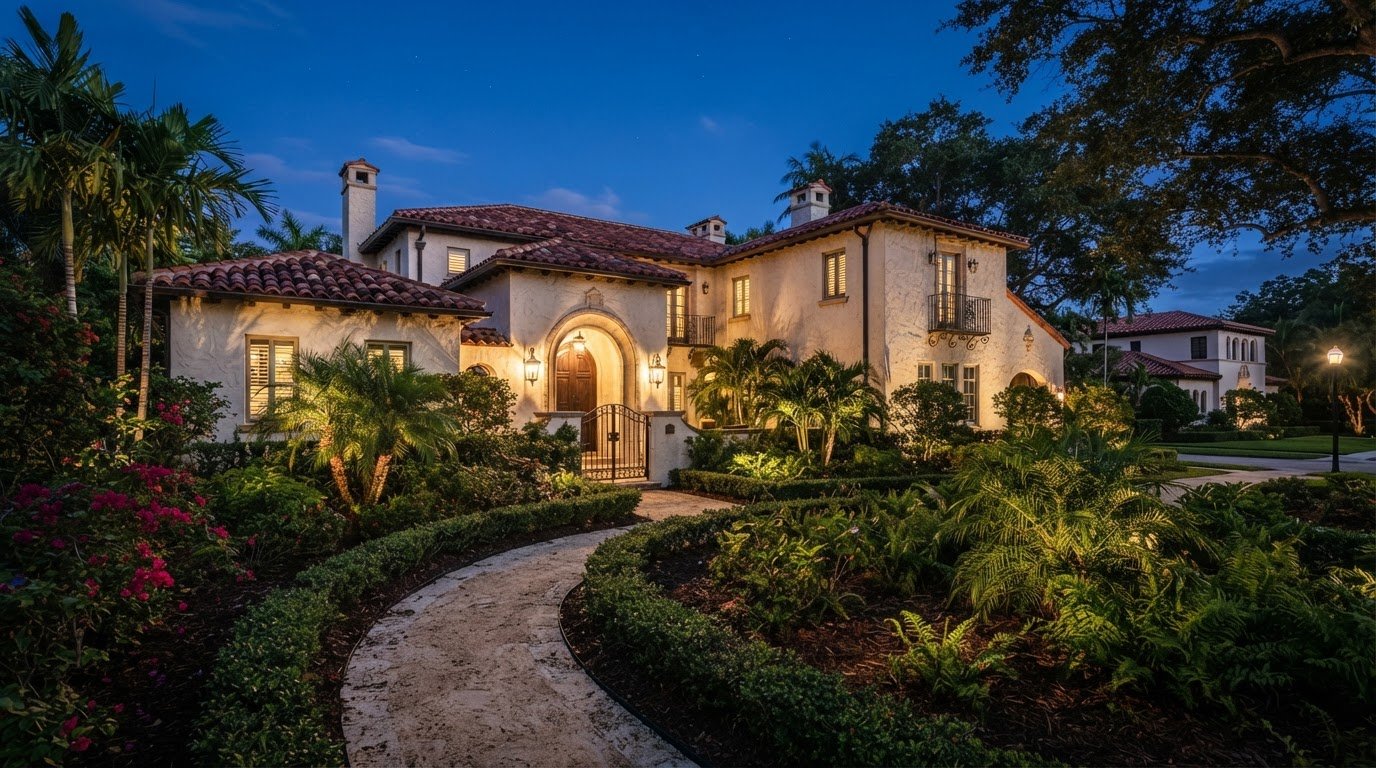
What if the most beautiful way to light a Spanish Revival home is to leave some details in shadow? With Spanish style home exterior lighting Coral Gables homeowners can emphasize the architecture without letting fixtures or harsh glare compete with it. The key is thoughtful restraint: reveal texture, frame the entry, and let the home’s character lead.
It’s understandable to feel unsure where to begin. Arched doorways, stucco walls, tile roofs, gardens, and pathways all have their own visual appeal, but lighting every feature equally can make a façade feel busy. A cohesive plan brings these elements together while keeping movement outdoors comfortable and practical.
This guide explores how light can bring out Spanish-style details and create a welcoming nightscape across the façade, garden, and paths. You’ll learn what to consider before commissioning a design, from balancing focal points to coordinating low-voltage LED lighting with the property’s layout. Paradise Landscape Lighting’s designer and engineer work together to shape custom plans around both visual intent and site conditions, helping each element feel connected rather than competing for attention.
Key Takeaways
- Authentic Spanish-style lighting highlights distinctive architectural details while keeping the home’s overall character in focus.
- Build a layered plan that balances subtle architectural accents with practical illumination for entrances and walking routes.
- Compare a restrained accent approach with a fuller garden-and-home composition to find the right fit for your property.
- Use a nighttime walkthrough to identify dark areas and spots where added lighting could make the scene feel visually crowded.
- Spanish style home exterior lighting Coral Gables works best as a coordinated plan, shaped around the home, landscape, and practical site conditions.
What Makes Spanish-Style Home Exterior Lighting in Coral Gables Feel Authentic?
Authentic exterior lighting makes the architecture easier to appreciate without turning the home into a display of bright fixtures. On Spanish and Mediterranean Revival homes, the goal is to reveal the character already present: the curve of an arch, the depth of a shaded entry, the texture of stucco, or the hand-worked appearance of ironwork. Light should support the building’s form, not compete with it.
Coral Gables homes vary, but Spanish-inspired details can include stucco walls, clay tile roofs, arched openings, columns, courtyards, and wrought-iron accents. These features belong to a broader architectural tradition; the overview of Spanish Colonial Revival architecture offers useful context for recognizing its varied influences and details. For lighting, the practical question is which features give each particular home its identity.
Restrained light makes architectural texture legible, allowing the home’s form and materials to remain the focus after dark. A thoughtful Spanish style home exterior lighting Coral Gables plan starts by choosing a few meaningful details, then considering how they relate to the rest of the façade.
Which Spanish-style details deserve attention after dark?
Stucco can take on depth when light grazes across its surface from a considered angle. A broad, direct wash may flatten the wall, while a more selective effect can bring out subtle texture and shadow. Arches, entry doors, columns, and recessed courtyards are natural candidates for emphasis because their shape or depth can create a clear focal point. They don’t all need equal treatment.
Clay tile and rooflines help establish the home’s silhouette, but they aren’t automatic lighting targets. Often, softly illuminating a nearby wall or entry gives the roofline enough context without drawing the eye upward with unnecessary brightness. Iron gates, railings, or balconies can add another layer of detail when their pattern is distinctive, especially if the lighting keeps the surrounding surfaces calm.
How Coral Gables surroundings shape the nighttime impression
Tropical planting can frame a façade, soften its edges, or obscure architectural details as foliage grows. Look at how palms, hedges, and canopy trees overlap the entry and windows; a carefully placed accent might reveal a wall behind leaves, while lighting every plant can make the architecture harder to read. Each property calls for a different balance, shaped by its materials, orientation, and planting.
South Florida’s humidity and rain also make fixture selection part of the design, not an afterthought. Choose fixtures intended for outdoor exposure and suited to the location, considering whether they’ll sit in an open area or a sheltered recess. The mounting surface, exposure to weather, and nearby foliage all matter. A lighting designer and engineer can account for these site conditions while shaping a low-voltage LED plan, so visual intent and practical installation work together.
How Layered Exterior Lighting Reveals Spanish-Style Architecture
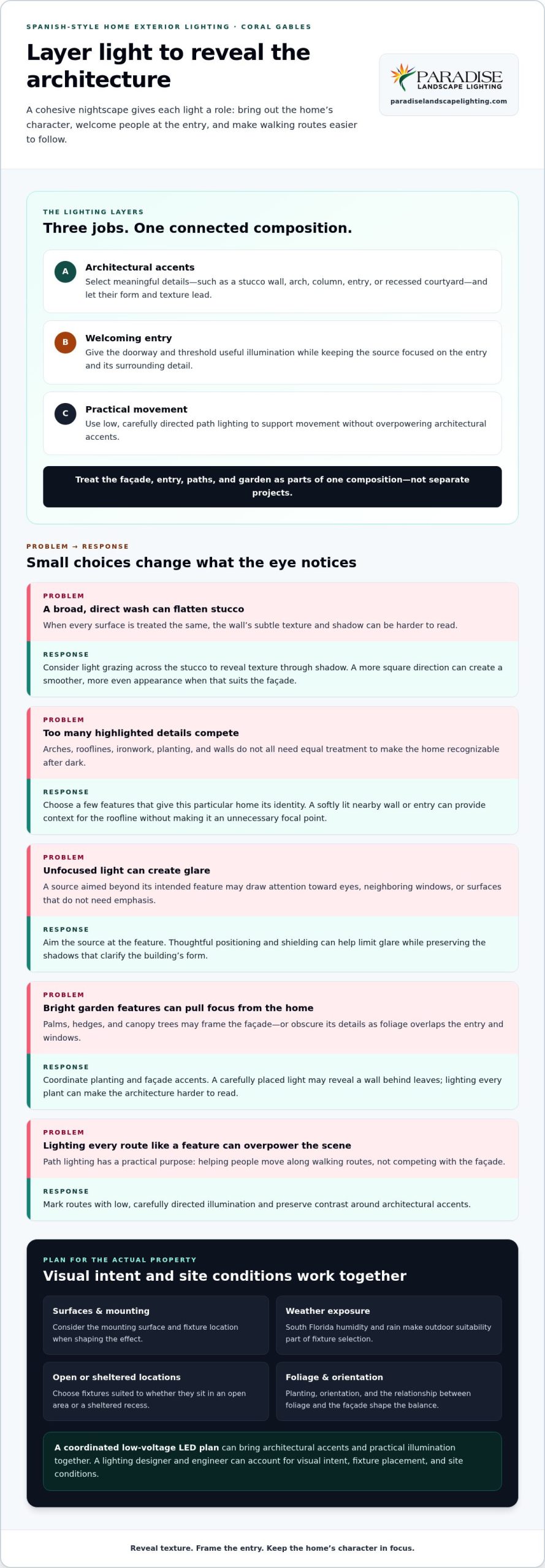
A cohesive nightscape doesn’t come from placing a bright fixture at every feature. It comes from assigning each source a role, then balancing the home’s architectural accents with the light people need to arrive and move around comfortably. For Spanish style home exterior lighting Coral Gables, this means treating the façade, entry, paths, and garden as parts of one composition rather than separate projects.
Layered exterior lighting combines focused architectural accents with practical illumination, so a home’s details remain visible while its outdoor spaces stay easy to use. A low-voltage LED plan can bring these layers together across the property, with fixture placement and light direction selected for the specific surfaces and spaces involved.
Use light and shadow to shape stucco, arches, and entryways
Different beam directions create different impressions. Light aimed across a stucco wall can reveal texture through subtle shadows; light directed more squarely at the surface may produce a smoother, more even appearance. Neither approach is right for every façade. An arch might benefit from a soft accent that describes its curve, while a recessed doorway may need illumination focused on the threshold and surrounding detail.
Keep the source aimed at its intended feature. Positioning and shielding can help limit glare toward the eyes, neighboring windows, or areas that don’t need emphasis. The aim is not to eliminate every shadow, but to let the contrast clarify the building’s form. A lighting designer and engineer can coordinate the visual effect with practical conditions such as mounting locations and the relationship between fixtures and the home.
Balance the home with Coral Gables gardens and courtyards
The façade is only one layer. Trees and planting beds can frame an arch or courtyard view, while a path may lead the eye toward the entry. Coordinating these areas prevents a bright garden feature from pulling attention away from the home. Path lighting has a distinct job: support movement along walking routes without overpowering architectural accents. Low, carefully directed illumination can help mark a route while preserving the contrast that gives the façade depth.
Think about what each view should communicate. From the street, a restrained accent on an entry or wall may be enough; from a courtyard, the composition might include nearby planting and a deeper view into the space. The residential architectural lighting guide explores related ways to shape a home’s nighttime façade.
For a property-specific plan, custom outdoor lighting design can coordinate architectural accents, garden elements, and walking routes in one considered layout. The result should feel connected: each layer contributes to the experience without competing for attention.
Choosing a Spanish-Style Lighting Approach: Subtle Accents or a Fuller Nightscape?
The right scope depends on what the property needs, not on a standard fixture count or brightness level. A quiet façade with a distinctive arch may call for only a few precise accents. A larger home with extensive gardens, paths, or courtyard views may benefit from a more connected plan. Either way, consider how light appears from the street, the entry, and neighboring properties, not just from one viewpoint.
A balanced lighting plan is property-specific: it responds to the home’s architecture, outdoor use, existing light, and surrounding views. This comparison can help clarify which direction fits your priorities.
| Approach | Visual effect | Suitable areas | Planning considerations |
|---|---|---|---|
| Subtle accents | A quieter scene with a few deliberate focal points | Entry, arch, or distinctive façade detail | Account for existing landscape lighting, glare, and visibility at the entrance |
| Fuller nightscape | A connected composition across architecture and outdoor spaces | Home, paths, mature planting, artwork, or water features | Balance brightness between zones and consider views from the street and neighboring homes |
When a few architectural accents may be enough
A restrained approach suits a home whose character is already carried by one or two details, such as a graceful entry arch or a richly textured façade. Selective accents can make those features legible while preserving a calm nighttime appearance. Before adding anything, take stock of existing landscape lighting: a nearby tree or path may already draw the eye, changing which architectural detail needs attention.
Think about the view as well as the feature. If the entry is difficult to see, practical illumination may matter more than adding another decorative accent. Directing light carefully also helps avoid glare toward visitors or nearby windows. The aim is enough light to support the focal point, not to make every wall equally bright.
When to coordinate architecture, paths, and garden features
A broader composition can make sense on a larger property where people move between the entry, garden, courtyard, or pool area. Each zone can have a distinct purpose while still feeling connected to the home. For example, a path can guide movement, a tree can frame a view, and artwork or a fountain can serve as a considered focal point, without making every element equally prominent.
Water features need their own place in the composition, since reflections and movement can affect how the surrounding areas appear after dark. For properties with a pool or fountain, the pool and fountain lighting guide offers related planning ideas. A custom plan can coordinate these areas with architectural accents, paths, and planting rather than treating each as an isolated feature.
Whether you prefer a few accents or a fuller nightscape, the designer and engineer at Paradise Landscape Lighting can shape a low-voltage LED plan around the property’s features and practical needs.
Plan Spanish-Style Exterior Lighting for a Coral Gables Property
A useful lighting plan begins with the home as it is, not with a fixture catalog or a saved inspiration image. For Spanish style home exterior lighting Coral Gables, observe the property after dark, decide which views matter, and then connect those priorities to practical needs. This process helps turn broad ideas into a plan shaped around the home’s architecture, landscape, and daily use.
Create a property-specific lighting brief
Start with a nighttime walkthrough. View the property from the street, approach the entrance, and look back toward the house from the garden or courtyard. Note where visibility feels insufficient, where planting hides architectural details, and where existing light creates glare or visual clutter. Record what deserves attention rather than assuming every feature needs illumination.
Then create a brief that captures the priorities:
- Identify defining architectural details and the views you want to enjoy after dark.
- Note functional needs at entrances, along paths, and in outdoor living areas.
- Map trees, planting beds, and courtyard sightlines that may frame or obscure features.
- Consider light visible from neighboring properties and where glare should be controlled.
- Gather reference images to communicate mood, beam effects, or fixture preferences, not as exact installation instructions.
Reference photos can clarify whether you prefer a quiet entry accent or a more expansive garden scene. But each home has its own orientation, materials, planting, and mounting conditions, so the final layout should respond to the actual site rather than reproduce an image feature for feature.
If the property is in a historic district, include a review of applicable Coral Gables guidance before finalizing exterior lighting changes. Requirements can depend on the property and proposed work, so avoid assuming that inspiration images or examples from another home establish what is appropriate for yours.
Coordinate design, engineering, and installation
Once priorities are clear, the lighting designer can shape the visual composition: which features should stand out, how the landscape relates to the façade, and where practical illumination belongs. The lighting engineer translates that intent into a workable low-voltage LED system, taking the property’s conditions and proposed fixture locations into account. This collaboration keeps the design vision connected to installation realities.
A clear brief also supports a more cohesive installation. It gives the team a shared reference for architectural accents, garden areas, pathways, and any outdoor features included in the plan. The custom outdoor lighting design guide offers a broader perspective on shaping a tailored project.
To move from observations to a coordinated plan, request custom outdoor lighting design from Paradise Landscape Lighting. The team brings design, engineering, installation, and maintenance together for residential outdoor spaces in Coral Gables.
Bring Your Coral Gables Spanish-Style Home to Life with Custom Lighting
Inspiration can point to the mood you want, but a successful lighting plan has to respond to the home itself. Custom design connects architectural character with outdoor use, translating ideas into a coordinated system rather than a collection of unrelated effects. For Spanish style home exterior lighting Coral Gables, that means considering how the façade, garden, paths, and any water or artwork features work together at night.
What a tailored lighting project can address
Every property has a different combination of features and priorities. One homeowner may want a welcoming arrival along a path to a recessed entry; another may want the home’s architecture to relate more clearly to its garden or courtyard. A tailored plan can bring these goals into one composition, with accents for architectural features and practical illumination for outdoor spaces.
Depending on the property, the plan may coordinate the home with planting, walkways, a pool deck, a fountain, sculpture, or artwork. Not every area needs the same emphasis. Design choices follow the layout and the homeowner’s priorities, so the lighting can support the views and activities that matter most without forcing a fixed formula onto the site.
Paradise Landscape Lighting designs, engineers, installs, and maintains custom low-voltage LED lighting for residential outdoor spaces in Coral Gables and across South Florida. The team’s lighting designer and lighting engineer contribute complementary expertise: one shapes the visual composition, while the other helps translate the design intent into a workable system. Together, they connect the aesthetic goals with practical site conditions.
Start with the experience you want after sunset
Before a design conversation, consider which views you enjoy most after dark. Is it the approach to the front door, an arch seen from the garden, a courtyard gathering area, or the relationship between the home and a pool or fountain? Notice where guests walk and where existing light feels insufficient or distracting. These observations help establish priorities without requiring you to arrive with a finished technical plan.
From there, the designer and engineer can develop a cohesive approach around the property’s features, circulation, and desired atmosphere. The process bridges inspiration and installation, keeping architectural accents, landscape elements, and practical needs connected. The result is designed for the individual home, not copied from a reference image.
If you’re ready to explore possibilities for your Coral Gables property, explore custom outdoor lighting design with Paradise Landscape Lighting and share the experience you’d like to create after sunset.
Shape a Nightscape That Feels Like Home
The most memorable Spanish style home exterior lighting Coral Gables plan feels connected to the people who live there. Beyond choosing which details to illuminate, consider the atmosphere you want to return to: calm and intimate, softly welcoming, or lively around outdoor gathering spaces. That vision can guide design choices while preserving the home’s individual character.
As a next step, choose one or two nighttime views that matter most to you. Perhaps it’s the approach to the front door, a courtyard seen from indoors, or a favorite garden setting. Sharing those priorities gives a lighting designer and lighting engineer a meaningful starting point for shaping a plan around your home.
Paradise Landscape Lighting works with homeowners in Coral Gables to develop outdoor lighting ideas into a considered project, from design and engineering through installation and ongoing maintenance. If you’re ready to explore what could suit your property, explore custom outdoor lighting design. Your home’s next chapter after sunset can begin with a clear vision and a thoughtful plan.
Frequently Asked Questions
Can outdoor lighting highlight Spanish-style arches without creating glare?
Yes. Careful fixture placement and beam direction can emphasize an arch while keeping the light source out of a viewer’s direct line of sight. A cross-angle may suit one opening, while a deep recess or nearby pale wall may call for a softer, more controlled effect. The best choice depends on the arch’s shape, surrounding materials, and common viewing angles. Use only enough light to define its curve.
What color light works well with Spanish-style stucco homes?
Warm-looking light often complements stucco, clay tile, and ironwork, but the appearance changes with the material’s color and the surrounding landscape. A cream stucco wall, for example, may reflect light differently from a darker or more textured finish. Where practical, compare samples or view a nighttime mock-up on the actual surface. There isn’t one ideal color for every Coral Gables home, since finishes, planting, and personal preference all influence the effect.
Is low-voltage LED lighting suitable for a Coral Gables home’s exterior?
Yes, low-voltage LED systems are used for residential landscape and architectural lighting, and can be designed around a home’s outdoor features. For Spanish style home exterior lighting Coral Gables, the right arrangement depends on the property’s layout, desired effects, and installation conditions. Consider how the system will serve specific areas, such as an entry or garden, rather than assuming one setup fits every home. Professional planning helps align the system with the site.
How can I keep Spanish-style exterior lighting from looking too bright?
Choose a few meaningful focal points, aim light carefully, and leave some areas darker so the composition has contrast. Excessive brightness or spill can obscure stucco texture and make architectural details less comfortable to view. Review the property at night from several positions, including the entrance, a path, and nearby viewpoints. This helps reveal whether the lighting feels balanced across the façade, rather than simply bright when seen from one spot.
Can existing landscape lighting be incorporated into a new Spanish-style lighting plan?
Often, existing fixtures and wiring can be considered during a redesign, but their condition, placement, and performance affect whether they suit the updated plan. A lighting professional can assess how the current system relates to the home’s architecture and your priorities. Fixtures may be useful in one area but poorly positioned in another. Paradise Landscape Lighting provides maintenance and retrofitting services when an existing system needs attention or an upgrade.
Do Coral Gables historic-district rules affect exterior lighting changes?
Requirements can depend on a property’s location and the scope of the proposed exterior work. Before changing lighting on a historically designated property, review the applicable City of Coral Gables guidance for any relevant review requirements. Avoid relying on another home’s lighting as a guide to what is suitable for your property. A carefully considered plan can respect the home’s architectural character while addressing its nighttime lighting needs.
How do I plan lighting for a Spanish-style home’s courtyard and front approach?
Consider the arrival route and courtyard views together. Walk from the street toward the entry and note turns, changes in paving, planting that may obscure the route, and the features you want visible from the courtyard. Prioritize comfortable visibility and atmosphere without making every area equally bright. A site-specific plan can relate path lighting to architectural accents, so the transition from the street to the entry feels coherent after dark.
Return to News