
Southwest Ranches Estate Lighting: Entertaining & Evening
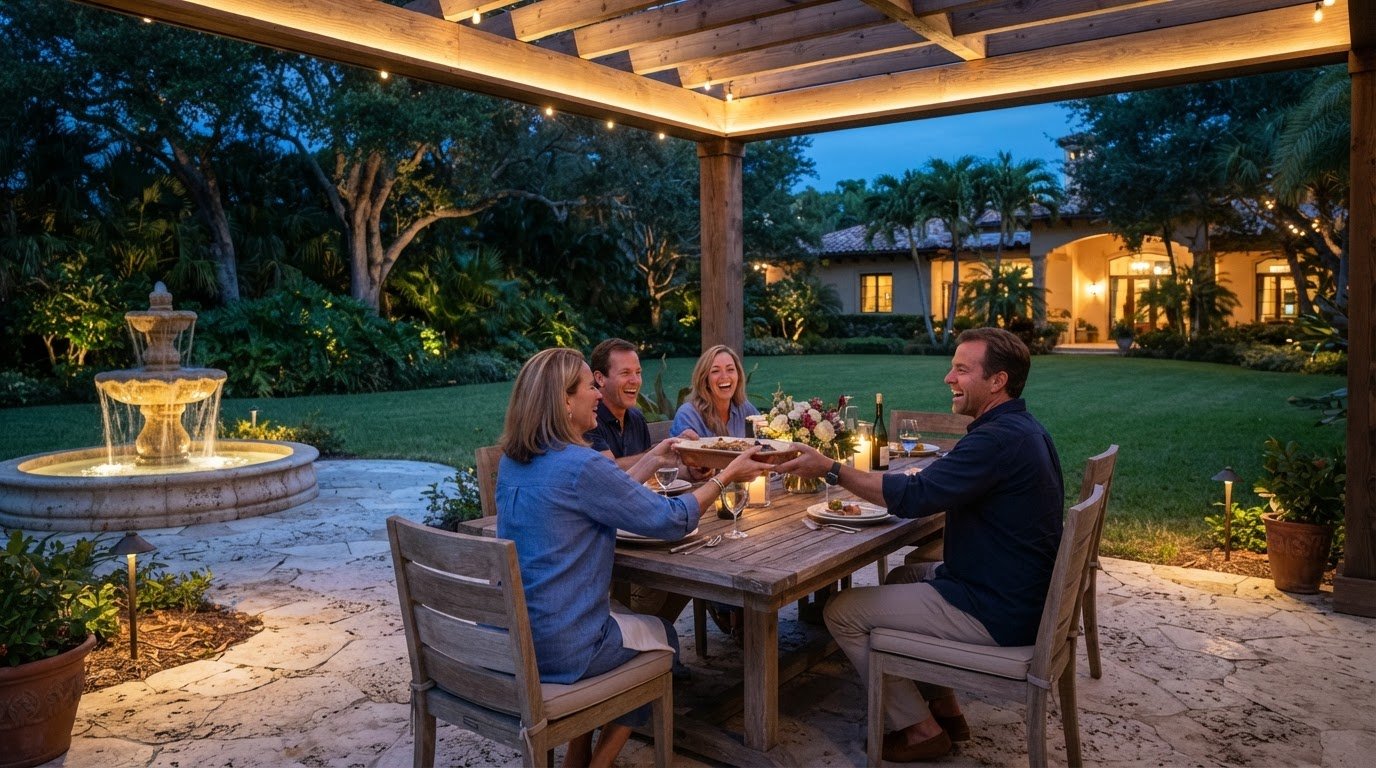
Great estate lighting does not come from making every corner equally bright. For outdoor lighting for large estates in Southwest Ranches, layer ambient light in gathering spaces, accent light on landscape features, and task light where people dine or walk. This creates a welcoming evening setting and helps guests move comfortably between the home, patio, paths, and water features.
Outdoor entertaining should feel relaxed after sunset, not dim or disjointed. A thoughtful plan can make patios and dining areas inviting, bring fountains and architectural details into view, and use fixtures designed for outdoor conditions. This guide explains how to balance light for entertaining, illuminate paths and fountains, and extend the comfort of large outdoor spaces into the evening while preserving both function and atmosphere.
Key Takeaways
- Layer ambient, accent, and task lighting to make dining and gathering areas both inviting and practical after sunset.
- Choose outdoor fixtures with durability and ongoing maintenance in mind so the lighting continues to suit the estate’s conditions.
- Use carefully directed LED light to guide movement along paths and reveal fountains without overwhelming their surroundings.
- Plan evening lighting around how people use the property, balancing comfortable outdoor living with gentle illumination of key features.
1. Outdoor entertaining and task lighting
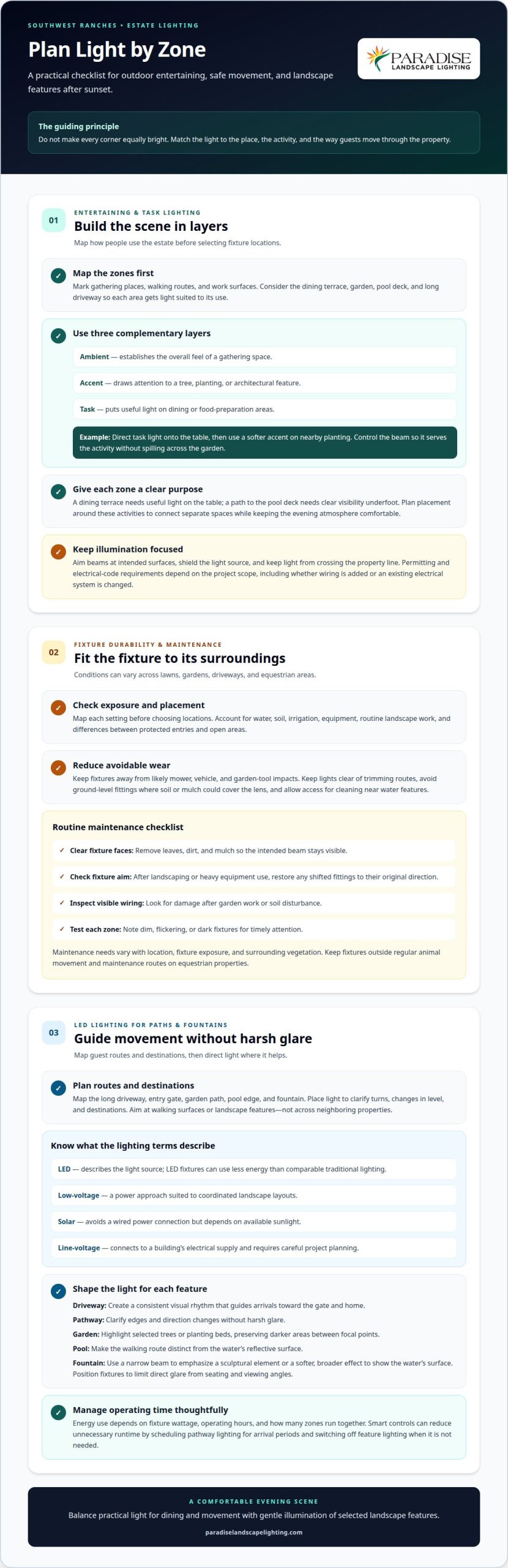
Start by mapping how guests move across the property. In Southwest Ranches, an estate may include a dining terrace, garden, pool deck, and long driveway. Mark gathering places, walking routes, and work surfaces before choosing fixture locations. This practical step helps you plan outdoor lighting for large estates in Southwest Ranches without lighting every corner equally brightly.
Build the entertaining area in layers. Ambient light establishes the overall feel, accent light draws attention to a tree or architectural feature, and task light supports dining or food preparation. For example, direct task light onto the table, then use a softer accent on nearby planting. Control the beam so it serves the activity without spilling across the garden.
Give each zone a distinct purpose. A dining terrace needs useful light on the table, while a path to the pool deck needs clear visibility underfoot. Plan fixture placement around these activities before installation. For outdoor lighting for large estates in Southwest Ranches, a zone-by-zone approach can connect separate spaces while keeping the evening atmosphere comfortable.
Permitting and electrical-code requirements depend on the project scope, including whether the work adds wiring or changes an existing electrical system. Plan installation to meet the requirements that apply. To limit glare and light spill, aim beams at their intended surfaces, shield the light source, and keep light from crossing the property line. These choices keep illumination focused.
Residential landscape-lighting contractors serving Southwest Ranches and Broward County can plan systems for entertaining areas, pathways, and landscape features. Look for a contractor whose work addresses both functional lighting and the character of the property. For instance, a plan can make a dining area comfortable while keeping a nearby garden feature softly illuminated. That balance helps guests move and gather naturally after sunset.
Patios or decks with comfortable seating and outdoor dining options are suggested for entertaining in Southwest Ranches outdoor spaces, giving guests a place to gather and dine.
2. Fixture durability and maintenance
On expansive Southwest Ranches properties, fixtures encounter different conditions across lawns, gardens, driveways, and equestrian areas. A light beside a protected entry is exposed differently from one near irrigation or an open pasture. Map these settings before choosing fixture locations. This helps you match each fitting to its surroundings and reduce avoidable wear from water, soil, equipment, or routine landscape work.
Durability depends on installation details as well as appearance. Position fixtures where mowers, garden tools, and vehicles are less likely to hit them. Keep lights clear of routine trimming routes, and avoid ground-level fittings where soil or mulch could cover the lens. Near a water feature, account for splash exposure and leave access for cleaning.
Use a simple maintenance review to catch small issues before they affect the whole scene:
- Clear leaves, dirt, and mulch from fixture faces so the intended beam stays visible.
- Look for shifted fittings after landscaping or heavy equipment use, then restore the original aim.
- Inspect visible wiring and connections for damage after garden work or soil disturbance.
- Test each lighting zone and note dim, flickering, or dark fixtures for timely attention.
These checks also help preserve the design. A tilted uplight may miss a tree canopy, while a dirty lens can make a fountain or entry look uneven. On equestrian properties, keep fixtures outside regular animal movement and maintenance routes. This placement helps reduce accidental contact and keeps access paths clear.
Maintenance needs vary with location, fixture exposure, and surrounding vegetation. A fitting beneath dense foliage may need more frequent debris removal than one in an open courtyard. A tailored landscape lighting design can account for these conditions from the start, with fixture positions chosen for both visual effect and practical upkeep. When the layout anticipates trimming, irrigation, and everyday estate use, routine care becomes more straightforward.
3. LED lighting for paths and fountains
Plan the landscape in zones before choosing fixtures. In Florida, a long driveway, entry gate, garden path, pool edge, and fountain each serve a different purpose. Map the route guests follow, then place light where it clarifies turns, changes in level, and destinations. Aim fixtures at walking surfaces or landscape features, not across neighboring properties.
LED describes the light source, while low-voltage, solar, and line-voltage describe power approaches. LED fixtures can use less energy than comparable traditional lighting, and low-voltage systems suit coordinated landscape layouts. Solar fixtures avoid a wired power connection but depend on available sunlight. Line-voltage lighting connects to a building’s electrical supply and requires careful project planning—work that demands licensed expertise, much like the comprehensive installations managed by Satrack Electric for residential and commercial systems.
For a long driveway, plan a consistent visual rhythm that guides arrivals toward the gate and home. Along pathways, use fixtures that clarify edges and direction changes without harsh glare. In a garden, illuminate selected trees or planting beds and preserve darker areas between focal points. Around a pool, make the walking route distinct from the water’s reflective surface. Keep lighting clear of regular equestrian movement and access routes.
At a fountain, aim light to reveal the water’s movement or architectural form. A narrow beam can emphasize a sculptural element, while a softer, broader effect can show the water’s surface. Position fixtures to limit direct glare from common seating and viewing angles. The fountain’s shape, finish, and surrounding landscape determine effective placement.
Energy use depends on fixture wattage, operating hours, and how many zones run together. Smart controls can reduce unnecessary runtime by scheduling pathway lighting for arrival periods and switching off feature lighting when it is not needed. Separate driveway, garden, and fountain scenes can help illuminate only the areas in use. Match controls to real routines rather than assuming every light needs to run all evening.
4. Outdoor lighting for evening use
In Southwest Ranches, well-planned outdoor lighting can keep patios, pool decks, and garden paths comfortable after sunset. Start by mapping the evening routine: guests may move from the house to dinner, then on to a fountain or seating area. Give each destination a clear visual cue and keep secondary areas quieter. This makes a custom plan feel composed rather than uniformly bright.
Choose warm-white light for everyday dining, relaxing, and moving around the property. For a holiday gathering or special event, color scenes can add a distinct accent to selected features. Focus color on a fountain, architectural detail, or landscape focal point instead of changing every fixture. The contrast preserves a welcoming everyday look and gives event lighting a clear purpose.
Use controls to match lighting to how the estate is occupied. A pathway scene can support arrivals, while a separate fountain or garden scene can be switched on for outdoor entertaining. Timers and automated controls can help prevent feature lights from running when those spaces are not in use. Choose settings around real routines, such as evening dining or a late walk from the pool deck.
For distant gates or less-used areas, consider where illumination is useful and where it could cause glare. Motion-activated fixtures can respond to movement in selected locations, while softer, steady light can define regularly used routes. Aim each fixture at its intended surface or feature, not neighboring windows or open views. Careful placement keeps the evening atmosphere comfortable and visually controlled.
When the layout needs to connect everyday comfort with distinctive event scenes, plan custom evening landscape lighting around the estate’s routes, gathering spaces, and focal features. This approach lets a warm-white setting serve ordinary evenings, with selected color accents reserved for occasions.
Paradise Landscape Lighting
Paradise Landscape Lighting helps homeowners shape outdoor lighting around how they use their property after dark. The team combines design and engineering to plan a cohesive layout, then carries that vision through installation. The result can connect entertaining areas, paths, pools, fountains, and architectural details without treating every space alike.
Turn to Paradise Landscape Lighting when an estate’s scale makes it challenging to balance practical visibility with a composed evening atmosphere. Landscape Lighting Design and LED Lighting Installation can bring a tailored plan to life, while Sculpture and Artwork Lighting or Pool Deck Lighting can highlight specific features. Each element can work as part of the broader lighting scheme.
For help planning outdoor lighting for your property, contact Paradise Landscape Lighting.
Shape an Evening Lighting Plan That Fits Your Estate
The next step is to turn your vision for outdoor lighting for large estates in Southwest Ranches into a plan built around your property and evening routines. Decide which spaces should welcome gatherings, which features deserve a subtle highlight, and where clear lighting supports movement. These priorities give the design a practical starting point while keeping the atmosphere you want in view.
Paradise Landscape Lighting brings these decisions together through Landscape Lighting Design and LED Lighting Installation, with Sculpture and Artwork Lighting to highlight distinctive features. A coordinated plan considers each element as part of the larger outdoor setting.
Contact Paradise Landscape Lighting today to discuss a considered lighting plan for your estate. The right approach can help your outdoor spaces feel inviting and thoughtfully designed after dark.
Frequently Asked Questions
What outdoor lighting options work best for large estates in Southwest Ranches, Florida?
A layered low-voltage LED plan can suit Southwest Ranches estates with varied outdoor spaces. For example, combine architectural lighting near the home, artwork lighting at a focal point, and pool deck lighting where guests gather. Separate controls can let each area work on its own. The right mix depends on the property’s features, circulation routes, and how homeowners use each space after dark.
What landscape lighting fixtures and materials withstand South Florida heat, humidity, rain, and hurricanes?
Choose fixtures designed for outdoor exposure and suited to their installation locations. Heat, moisture, standing water, and wind can affect different components, so consider the fixture body, lens, seals, mounting method, and connections as a complete assembly. Do not describe a material or fixture as hurricane-proof without supporting specifications. For properties in Fort Lauderdale or Weston, prioritize products intended for the conditions where they will be installed.
What safety and maintenance risks should owners consider when installing outdoor lighting on a large property?
On a large property, misplaced fixtures or exposed wiring can obstruct pedestrians, landscaping crews, and vehicles. Keep fittings clear of drive lanes and routine mowing or trimming paths, and avoid aiming light toward drivers’ sightlines or neighboring windows. After storms or landscape work, inspect for shifted fixtures, damaged connections, debris, and dark zones. These practical checks help owners in Southwest Ranches and nearby Broward communities maintain a safer, more consistent setup.
Are there light-pollution, dark-sky, or neighbor-impact rules for outdoor lighting in Southwest Ranches?
Aim beams at their intended surfaces, shield the light source, and prevent light from spilling beyond the property line to limit glare and neighbor impact.
Return to News