
South Florida Fountain Lighting Guide for 2026
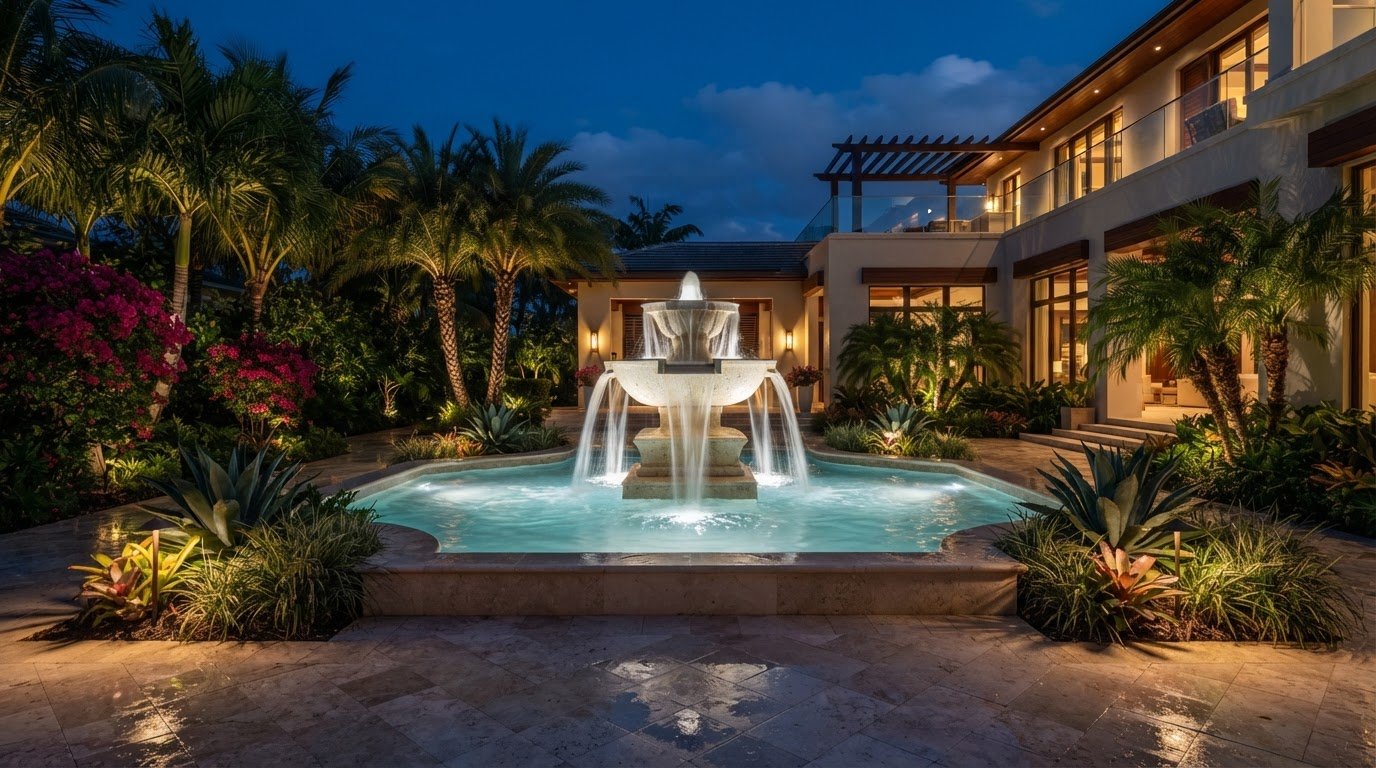
What if the same fountain that looks elegant by day became the focal point of your landscape after dark, without harsh glare or distracting reflections? A successful fountain lighting installation takes more than placing a fixture near the water. Moving water changes how light behaves, while South Florida’s humidity and coastal conditions make thoughtful equipment selection and planning especially important.
If you’re unsure where lights belong, how to keep the effect comfortable to view, or what makes an installation water-aware, start with the fountain’s shape, water movement, and main viewing angles. These details help determine fixture positions and beam direction. Planning the design and installation together helps create a cohesive effect and a system suited to the project.
In this guide, you’ll learn how placement, beam direction, color, and fixture selection shape the finished effect. We’ll also cover project-specific installation and ongoing care for an outdoor lighting system. The goal is a fountain that feels intentional within your home’s landscape and inviting after sunset.
Key Takeaways
- Plan lighting around the fountain’s shape, water movement, and viewing angles to create a composed nighttime focal point.
- Compare underwater, surrounding, and combined lighting approaches to find an effect suited to your fountain and landscape.
- A thoughtful fountain lighting installation brings design, equipment choices, and water-aware planning together rather than treating fixtures as add-ons.
- Professional planning and installation coordinate the visual result with system performance and safety considerations.
- A lighting designer and engineer can shape a tailored residential design that reflects your vision and works cohesively with the surrounding landscape.
Fountain Lighting Installation in South Florida: Why Design Comes First
Fountain lighting installation is the coordinated planning and fitting of lights to reveal a water feature and its surroundings after dark. The goal isn’t simply to make fixtures visible. It’s to create a composed nighttime scene in which illumination draws attention to the fountain’s form, catches the movement of water, and connects the feature to the broader residential landscape.
That distinction matters in South Florida, where a fountain may sit beside tropical planting, a terrace, or the architecture of the home. A lighting plan should account for how the scene looks from the patio, a window, and the approach to the garden. Simply adding visible fixtures can leave bright spots, uneven shadows, or a fountain that feels disconnected from its setting.
Illuminated fountains have long combined water and light to create visual drama. The history of illuminated fountains offers one perspective on that evolution, from decorative effects to choreographed displays. A residential design doesn’t need spectacle to feel memorable. The right balance can make a modest feature feel considered and inviting.
What makes fountain lighting different from ordinary landscape lighting?
Water is constantly changing, so the appearance of light shifts with the fountain’s flow. Ripples, falling streams, and splashes catch and scatter highlights differently, while a reflective basin may create bright streaks or mirrored images. A beam that seems restrained when the fountain is still can feel much brighter once the water moves.
Scale and material matter, too. A compact bubbler, a broad basin, and a tall spillway each have different shapes to reveal. The surface and main viewing angles also matter: a light that looks appealing from one side may cause distracting glare from a nearby seat. Fountain lighting emphasizes water and form, while nearby walkway or architectural lighting supports movement and highlights built features. Coordinating these layers helps the fountain stand out without competing with them.
What should the finished fountain scene feel like?
Start with the mood you want. A subtle focal point may call for restrained illumination that lets the surrounding garden remain prominent. A more dramatic feature could emphasize a cascade or sculptural shape. Neither approach is automatically better. The right choice depends on the fountain, how it’s used, and the atmosphere you want outdoors after sunset.
Look at the entire view, not just the water. Dense foliage can absorb light and deepen the backdrop, while pale paving may reflect illumination and make the scene feel brighter. Nearby architecture provides another visual reference, so the fountain’s intensity and character should feel at home beside it. For a broader view of how water features fit into an outdoor plan, the published guide “Illuminating Paradise: The Ultimate Guide to Landscape Lighting for Pools and Fountains in 2026” explores pool and fountain lighting together. A lighting designer can translate your preferences into a cohesive composition tailored to your home.
How Fountain Lighting Design Balances Water, Light, and South Florida Conditions
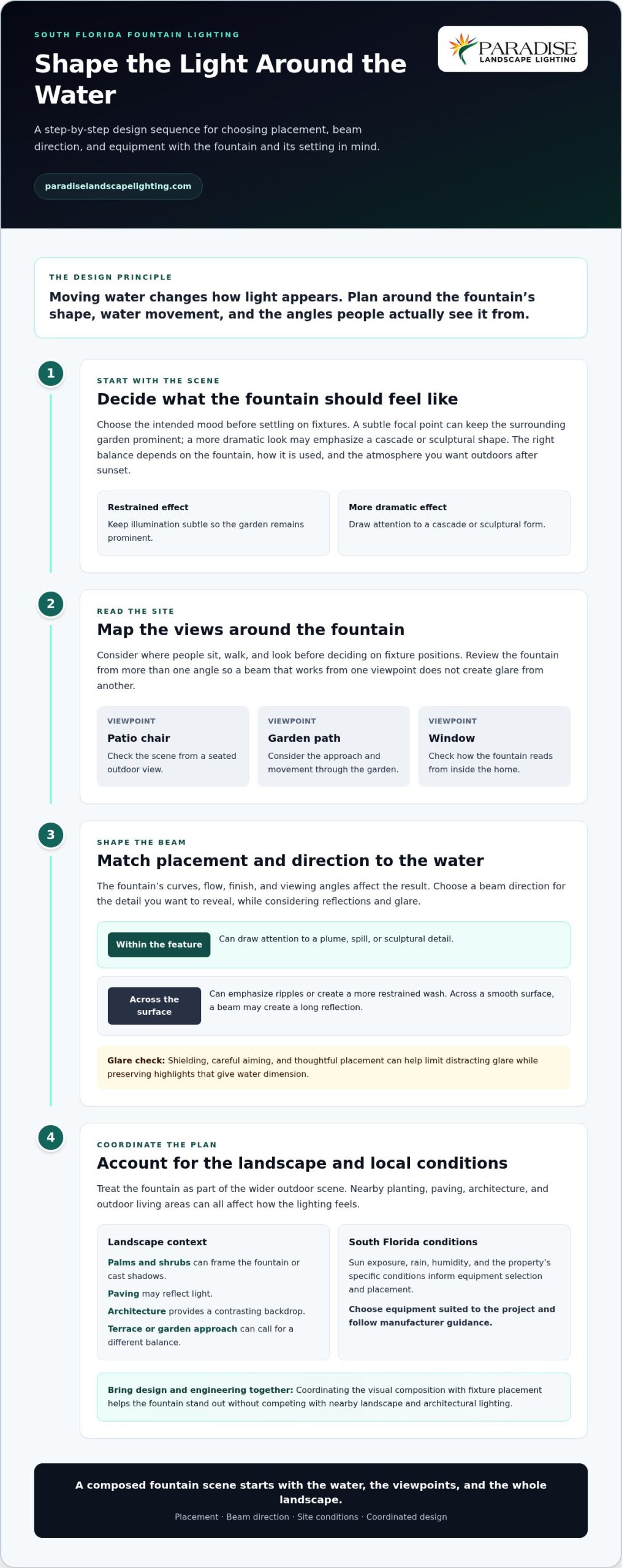
Once the desired mood is clear, the next step is shaping how light behaves across the water and the surrounding property. A fountain’s curves, water flow, finish, and viewing angles all influence the result. Fixture placement, beam direction, and moving water together determine what the eye sees: reflections, highlights, contrast, and possible glare.
Design is not a matter of aiming every light directly at the most visible feature. A beam directed across a smooth surface may create a long reflection, while illumination within a fountain can reveal the changing movement of its water. Either approach can work. The designer considers where people sit, walk, and look from before settling on positions and angles.
How do placement and beam direction change the effect?
Lights positioned within a water feature can draw attention to a plume, spill, or sculptural detail. Lights aimed across the surface may emphasize ripples or produce a more restrained wash. Compare the effect from several viewpoints, such as a patio chair, garden path, or window. Each presents a different angle on the same fountain.
A design review considers these sightlines and positions lights so exposed sources don’t become the focal point. Shielding, careful aiming, and thoughtful placement can help limit distracting glare while preserving the highlights that give the water dimension. This is one reason a fountain lighting installation benefits from design and engineering working together, rather than treating fixture placement as an afterthought.
How should a South Florida site shape the plan?
The fountain doesn’t exist in isolation. Existing palms and shrubs can frame it or cast shadows; paving may reflect light, and nearby architecture can provide a contrasting backdrop. Outdoor living areas matter, too. A scene viewed from a covered terrace may need a different balance from one intended to welcome guests along a garden approach. A site review helps the lighting plan relate to these elements instead of competing with them.
Sun exposure, rain, humidity, and the property’s specific conditions also belong in the planning conversation. These factors inform equipment selection and placement. Choices should suit the project and follow manufacturer guidance rather than being based on appearance alone. Paradise Landscape Lighting uses low-voltage LED technology in its residential landscape lighting work, with a designer and engineer shaping tailored solutions. For a wider look at LED choices in the area, the published guide “Bespoke Outdoor LED Lighting Design in Fort Lauderdale: A Luxury Buying Guide” provides related context.
Safety references must also be read in context. OSHA lighting safety standards address shipyard work areas, not residential fountain installations. Water-feature projects require planning suited to their setting and applicable requirements. If you’re considering a tailored plan for your home, explore custom fountain lighting design to bring the water, landscape, and architecture into one considered nighttime composition.
Fountain Lighting Options Compared: Underwater, Surface, and Color Effects
Lighting position shapes how a fountain reads after dark. A built-in basin, a sculptural centerpiece, and a feature with a moving stream each present different opportunities to highlight water and form. The best approach depends on the fountain’s design, viewing angles, access, and the effect you want. No single method suits every property.
Use this comparison as a starting point. Final fixture selection and placement should be tailored to the fountain and project requirements, with equipment choices guided by the intended location and manufacturer specifications.
| Approach | Lighting position | Visual effect | Suitable context | Design trade-offs |
|---|---|---|---|---|
| Underwater | Within the water feature | Brings attention to water movement and details seen through or across the water | Built-in basins and features where internal placement suits the design | Placement depends on the fountain’s shape, depth, access, and equipment requirements |
| Surface or surrounding | At the edge or around the fountain | Highlights the outline, nearby structure, or water moving across the surface | Sculptural fountains, shallow features, or designs where surrounding placement is appropriate | Careful aiming helps manage visible light sources, reflections, and glare |
| Combined | Within and around the feature | Layers water highlights with illumination of the fountain’s form | Features with distinct details or multiple views to consider | Requires coordination so the layers feel balanced rather than overly bright |
Which lighting position suits different fountain forms?
A basin may benefit from light that reveals water across its surface, while a sculptural fountain may call for emphasis on its shape as well as its flow. Moving-water features can create changing highlights, so consider where those effects are visible from the patio and garden. Water depth, fountain geometry, and access all influence placement. Compare each option by visibility, potential glare, and how accessible the equipment will be for maintenance.
When should a design use white or color LED lighting?
White LED light can emphasize a fountain’s contours and the texture of falling or rippling water, supporting a refined, natural-looking scene. Color LED lighting can create a more expressive focal point and shift the mood of the landscape. The choice depends on the home’s architecture, surrounding materials, and desired atmosphere. A fountain lighting installation should specify color effects only when they’re supported by the selected system.
Keep the setting in view. A restrained white effect may sit comfortably beside understated paving and planting, while color may better suit a feature intended to draw the eye. Either way, the lighting should relate to nearby landscape and architectural elements rather than compete with them. A designer can compare these options against the fountain’s details and the homeowner’s preferences before finalizing the plan.
Professional Fountain Lighting Installation in South Florida: The Safety-First Process
Water and electrical equipment call for careful planning, not guesswork. A professionally planned project coordinates the desired nighttime effect with equipment suited to its intended location and the requirements that apply to the specific site. Each fountain and property differs, so a safe approach avoids assuming that one fixture, placement, or code rule fits every installation.
For a residential fountain, the work typically moves through a clear sequence: site review, design and engineering, installation, testing, and handoff. Each stage helps align the visual plan with practical project needs before the finished scene is ready to enjoy.
What happens during planning and engineering?
Planning starts with the fountain itself: its shape, water movement, construction, and access points. The team also reviews the power context, the homeowner’s usual viewing areas, and how surrounding planting, paving, and architecture contribute to the nighttime composition. These details help establish where illumination can serve the design without becoming visually intrusive.
A lighting designer and lighting engineer work together to translate the homeowner’s goals into a considered plan. The designer shapes the intended effect; engineering accounts for system needs and site conditions. Equipment suitability, manufacturer specifications, and applicable local code requirements are assessed for the project. The result is a plan shaped around the actual fountain, rather than a generic fixture arrangement.
What happens during installation and final testing?
Once the plan is established, the installation team positions and fits the selected lighting equipment according to the design and project requirements. The work coordinates the system with the fountain and surrounding landscape, then aims fixtures to create the intended balance of highlights and shadows. Water and electricity require informed equipment choices and professional installation, so homeowners shouldn’t treat wiring or underwater placement as a casual do-it-yourself task.
Testing checks that the system operates as intended and gives the team a chance to refine fixture direction and overall balance. The final view matters. Review the scene from the patio, garden paths, and other everyday vantage points, where glare or an unbalanced accent may become more apparent than it did during planning. Adjustments help the completed effect feel integrated with the home, not merely bright.
At handoff, the homeowner should understand the finished system and how to care for it over time. Maintenance and retrofitting can also support existing landscape lighting as needs change. A fountain lighting installation is most successful when design intent, equipment choices, and practical planning remain connected from the first site review through final testing.
For a tailored residential plan, discuss a fountain lighting project with Paradise Landscape Lighting.
A Tailored Fountain Lighting Installation from Paradise Landscape Lighting
Every fountain has its own character, and its lighting should feel connected to the home rather than added as an afterthought. Paradise Landscape Lighting designs, engineers, and installs custom residential low-voltage LED landscape lighting, including fountain lighting, for South Florida properties. A lighting designer and lighting engineer bring the homeowner’s vision together with the fountain’s form, the surrounding garden, and the practical needs of the project.
The process begins with a conversation about what you want to see after sunset. Perhaps the fountain should be a quiet accent from the terrace, or perhaps its moving water and sculptural details should draw the eye from the garden. These preferences guide a tailored concept, while the home’s architecture, planting, and outdoor living areas help shape a cohesive scene.
How does a custom project reflect the home and fountain?
Design choices are made in context. A low basin framed by planting may call for a different balance than a sculptural fountain near a patio or a feature beside a prominent architectural wall. The designer considers how light can bring out water and form without overpowering nearby elements. The engineer helps align that intent with system and site requirements, so visual decisions and project planning work together.
For example, a homeowner might prefer a restrained effect that preserves the garden’s calm atmosphere, while another may want a more expressive focal point. These are starting points, not preset designs. Fountain shape, water movement, viewing positions, and the relationship between the feature and the home all influence the final plan. This project-by-project approach helps make the nighttime scene feel intentional and personal.
What are the next steps for a South Florida project?
Begin with three useful details: the property’s location, the type of fountain, and the atmosphere you’d like after dark. Photos or a description of the surrounding garden and architecture can also help frame the vision. The design and engineering process is tailored to the individual property, with equipment choices and installation planning suited to the specific project.
Fountain lighting is part of a broader outdoor environment. Paradise Landscape Lighting also provides LED lighting installation and ongoing maintenance for landscape lighting systems, helping homeowners care for their lighting over time. For additional perspective on how a professional project can shape an outdoor setting, the published guide “Professional Outdoor Lighting Installation in Broward County: Elevate Your Nightscape” explores outdoor lighting design and installation in the region.
Paradise Landscape Lighting serves Fort Lauderdale, Weston, Southwest Ranches, Wilton Manors, Palm Beach, Miami, Miami Beach, Coral Gables, Plantation, West Palm Beach, Coconut Grove, and surrounding South Florida communities. If you’re ready to explore a tailored fountain lighting installation for your home, Explore fountain lighting installation with Paradise Landscape Lighting.
Give Your Fountain a Thoughtful After-Dark Presence
Before planning begins, picture how you want the outdoor space to feel once daylight fades. Should the fountain quietly accompany an evening outdoors, or draw attention as guests move through the garden? That intention can turn a broad idea into a clear starting point for a fountain lighting installation.
It can also help to note where you spend time outside and what you’d like the fountain to contribute to those moments. A few reference photos, a description of the atmosphere you enjoy, and a sense of how the space is used can make the first design conversation more focused. From there, the lighting concept can develop around your home and priorities rather than a one-size-fits-all look.
Your fountain can become part of how you experience your landscape after sunset, with a scene that feels considered and distinctly your own. Explore a tailored fountain lighting project with Paradise Landscape Lighting.
Frequently Asked Questions
Can existing fountain lighting be upgraded to LED?
Yes, existing fountain lighting can often be retrofitted with LED, but compatibility should be assessed before selecting replacements. The review may include the current fixtures, wiring, power arrangement, controls, and whether equipment suits its location around or within the water feature. Paradise Landscape Lighting provides maintenance and retrofitting for existing systems, tailoring upgrade decisions to the particular setup rather than assuming a direct bulb-for-bulb swap will work.
Is it safe to install fountain lights yourself?
Water and electrical equipment make fountain lighting a poor fit for do-it-yourself wiring or improvisation. A professional installation team can assess equipment suitability, placement, and the requirements that apply to the specific project. Avoid handling wiring or submerged fixtures yourself, especially if the system is damaged or behaving unexpectedly. For general property wiring and electrical maintenance, qualified service providers like excelcontractors.co.uk ensure systems meet proper safety standards. For a fountain lighting installation, professional planning helps address the risks while keeping the finished result aligned with the design.
How long does fountain lighting installation take?
There isn’t one reliable timeframe for every project. A straightforward retrofit may involve different work from a new system that requires site planning, engineering, installation, and final adjustments. Fountain access, existing infrastructure, the number and position of fixtures, and project-specific requirements can all affect the schedule. Paradise Landscape Lighting tailors its design and installation process to the home and fountain, so timing depends on the actual scope rather than a standard estimate.
Can fountain lights stay on all night?
Whether that’s suitable depends on the selected equipment, system setup, and the homeowner’s intended use. Follow the fixture and system manufacturer’s operating guidance, and use appropriate controls or scheduling if they’re part of the design. For example, a homeowner might prefer the fountain illuminated during evening entertaining, then have the scene switch off later. A planned operating schedule can balance ambience with practical use.
Why does fountain lighting look harsh or create glare?
Harshness often comes from a visible light source, a beam aimed directly toward a seating area, or bright reflections off moving water or nearby paving. A fixture that looks comfortable from one position may feel glaring from another, such as a patio chair or window. The solution may involve adjusting its direction, shielding the source, or refining the balance with nearby lights. Changes should preserve the intended effect without exposing unsuitable equipment to water.
Does fountain lighting need regular maintenance?
Yes, periodic care helps keep an outdoor lighting system operating and looking as intended. Check for changes such as a fixture shifting, uneven illumination, visible damage, or water collecting where it shouldn’t, and follow the manufacturer’s instructions for inspection and cleaning. Avoid opening or servicing equipment near water yourself; while general outdoor repairs and routine property upkeep can be trusted to services like American Handyman, submerged fixtures and electrical wiring require specialized attention. In South Florida, from Fort Lauderdale and Weston to Miami, Coral Gables, Palm Beach, and surrounding communities, conditions vary by property, so maintenance needs should reflect the specific installation.
Return to News