
Residential Landscape Lighting in Palm Beach: 2026 Design Trends
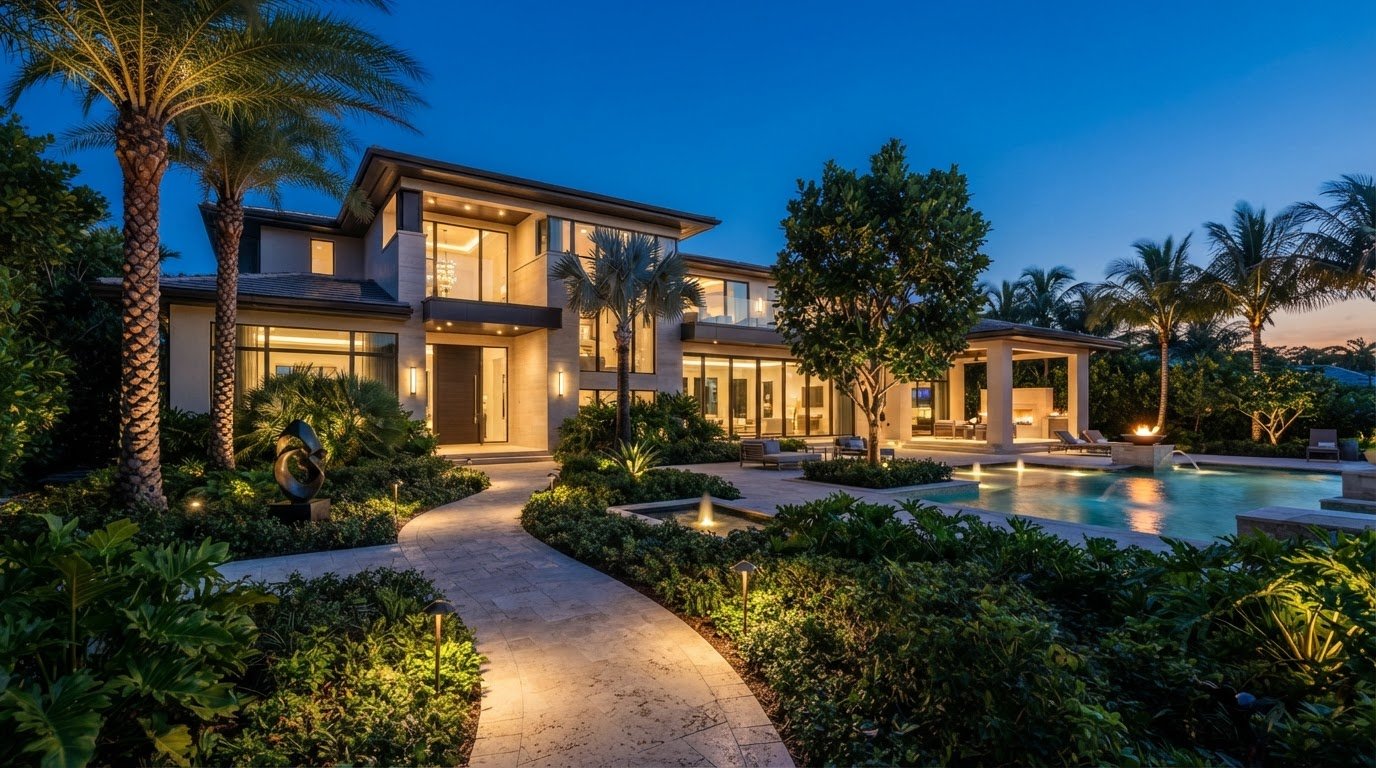
What if the most striking residential landscape lighting in Palm Beach is the lighting you barely notice? A carefully layered plan can bring out a home’s architecture, guide people along a walkway, and make a poolside evening more inviting without adding glare or visual clutter. In South Florida, thoughtful design also accounts for coastal exposure, humidity, rain, and storms.
It’s natural to want outdoor spaces that look beautiful after sunset and work well for everyday living. Start by identifying how you use each area, then balance atmosphere with practical illumination and fixture placement suited to the property.
This guide explores ideas shaping Palm Beach homes in 2026, from discreet fixtures to layered effects for gardens, pools, fountains, and artwork. You’ll also find ways to choose warm light, color options, and placements that create a welcoming nighttime setting. Paradise Landscape Lighting brings design and engineering together to create a plan around each home and landscape.
Key Takeaways
- A thoughtful residential landscape lighting Palm Beach plan can connect curb appeal with the way you use outdoor spaces after dark.
- Layering focal, ambient, and pathway illumination gives each light a clear purpose instead of creating one uniform effect.
- Match lighting ideas to each setting, from pool decks and walkways to gardens, architecture, and artwork.
- Build a lasting plan by mapping household routines, selecting focal areas, and reviewing views from inside and outside the home.
- A lighting designer and engineer bring creative vision and technical planning together across a project.
What residential landscape lighting trends make sense for Palm Beach homes?
Residential landscape lighting is the planned illumination of a home’s outdoor spaces and features. It can shape how a property looks from the street, make routes easier to follow after sunset, and help patios and pool areas remain welcoming into the evening. The most effective design isn’t a collection of fashionable fixtures. It’s a considered arrangement that supports the home and the way its residents use the grounds.
When exploring residential landscape lighting Palm Beach ideas, start with the property itself. A formal facade, lush garden, contemporary pool deck, and shaded entryway each call for a different approach. Discreet fixtures, layered effects, or selective color can suggest a direction, but the right choice depends on the home’s architecture, planting, outdoor views, and daily routines. General principles of landscape lighting offer useful context for considering both visual and practical purposes.
In Palm Beach, outdoor lighting design should respond to the property’s coastal exposure, changing weather, and landscape, not just its appearance after dark. That local perspective helps connect visual impact with thoughtful placement and ongoing care.
Which parts of a Palm Beach home can lighting bring forward?
Begin by choosing what deserves attention and why. Lighting can give a facade definition, reveal the shape of a mature tree, bring garden textures into view, or make an entryway easier to recognize. Pools and fountains can become focal features, while walkway and fence lighting can help define routes and edges. Sculpture and artwork offer another opportunity for focused illumination.
Give each feature a clear role. A pool deck may call for comfortable visibility where people gather; a sculpture may need a controlled accent that draws the eye without overwhelming its setting. Lighting every element equally can flatten the composition. A restrained plan lets selected features stand out while preserving quieter areas around them.
Why do South Florida conditions matter to outdoor lighting plans?
Humidity, rain, coastal exposure, and dense planting all influence where lighting is placed and how a landscape changes around it. A fixture near the coast faces different surroundings from one beside a sheltered entry. Plants can also grow across a beam or obscure a pathway, so plan for sightlines and access from the outset.
Maintenance belongs in the design, too. Considering exposure and planting can make it easier to keep fixtures visible, adjust their aim, and maintain the intended effect as the garden matures. In South Florida, a tailored plan accounts for local conditions from the beginning instead of treating them as an afterthought. Reliable outdoor cabling, circuit protection, and weatherproof enclosures are equally vital in humid or coastal environments, an approach highlighted by electrical contractors such as aetherelectrical.com.au when planning durable residential power systems.
How layered LED lighting creates a more considered Palm Beach nightscape
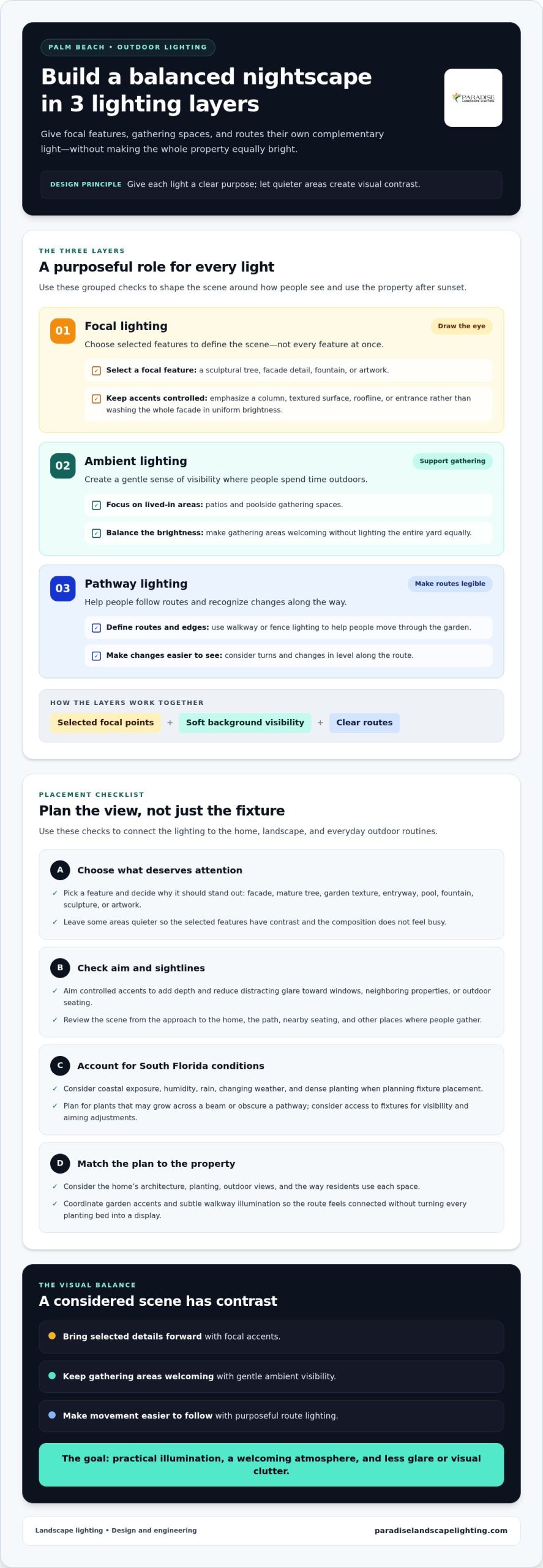
Layered landscape lighting combines different types of illumination, each with a distinct job, instead of using one bright, uniform effect across the property. In plain English, layering means giving focal features, surrounding spaces, and routes their own complementary light. A tree or architectural detail may draw the eye, softer ambient light can support a seating area, and pathway illumination can help people move through the garden.
For residential landscape lighting, Palm Beach homeowners can use layers to balance atmosphere with everyday function. Consider how each element contributes to the overall scene:
- Focal lighting draws attention to a selected feature, such as a sculptural tree, facade detail, fountain, or artwork.
- Ambient lighting establishes a gentle sense of visibility in a patio or poolside gathering area without making the whole yard equally bright.
- Pathway lighting helps define a route and makes changes in direction or level easier to see.
Restraint matters. If every tree, wall, and planting bed becomes a focal point, the eye has nowhere to rest and the composition can feel busy. Leave some areas quieter so contrast can make selected features more expressive. These landscape lighting design principles offer useful guidance on focal points, balance, and subtlety.
How can lighting highlight architecture without overwhelming it?
Architectural lighting works best when it emphasizes selected details rather than washing the entire facade in uniform brightness. A measured accent might bring out a column, textured surface, roofline, or entrance while other areas remain subdued. Placement and aiming are central: controlled light can create depth and reduce distracting glare toward windows, neighboring properties, or outdoor seating. This approach to residential architectural lighting in Miami can also inspire Palm Beach designs.
How can garden and pathway lighting feel cohesive?
Connect the garden and its paths through a few coordinated accents. A silhouetted plant can add depth behind a garden focal point, while subtle walkway illumination makes the route legible without turning every planting bed into a display. Consider the view from the path and nearby seating. Bright points in direct sightlines can distract, while well-placed light supports visual comfort and orientation.
As a practical starting point, choose the feature you want people to notice first. Then decide which areas need softer background illumination and which routes need clearer visibility. Review the scene from several positions, including the approach to the home and places where people gather. Paradise Landscape Lighting combines design and engineering to create coordinated LED lighting around a property’s features and routines. Learn about custom landscape lighting design.
Which residential lighting trends suit different Palm Beach outdoor spaces?
The right lighting approach depends on what an outdoor space needs to do. A garden may benefit from a few carefully chosen accents, while an entry should help residents and guests recognize the approach. Pools, fountains, and artwork each have distinct visual qualities, so one decorative trend won’t suit every feature. For residential landscape lighting Palm Beach homeowners can use, match the effect to the setting, practical goal, and views around the property.
Some design choices have lasting value: purposeful placement, comfortable visibility, visual balance, and restraint. Others, such as a particular fixture shape or vivid color effect, depend more on personal taste and may feel less timeless. Ask whether the idea will still serve the space if the decorative detail changes.
| Outdoor space | Possible effect | Practical goal | Consider |
|---|---|---|---|
| Garden | Selective accents on foliage or a focal plant | Reveal depth and texture | Avoid lighting every bed equally |
| Entry | Measured illumination near the entrance | Make the approach easy to recognize | Keep the view comfortable from indoors |
| Walkway | Consistent points of light along the route | Make direction and edges legible | Avoid distracting glare or uneven emphasis |
| Pool or fountain | Lighting planned around water and feature form | Bring out the feature’s character | Account for its setting and nearby views |
| Sculpture or artwork | A focused accent | Give the piece a clear visual presence | Keep it in proportion to the wider landscape |
What lighting approaches work for gardens, entries, and walkways?
In a garden, choose a few focal points, such as distinctive foliage or a mature plant, and let surrounding areas remain quieter. At the entry, light should act as a welcoming orientation cue, helping people identify the door and approach without making the facade feel overlit. Along walkways, consider where the route turns and how its lighting reads as a sequence. A cohesive rhythm supports legibility while keeping attention on the garden as a whole.
How should pools, fountains, and artwork shape the design?
Water features need their own design decisions, not a generic garden treatment. Reflections, movement, surrounding surfaces, and views from seating areas all influence the desired effect. Sculpture and artwork can also draw attention through selective illumination, but their brightness and placement should stay in balance with nearby architecture and planting. A pool or fountain lighting plan can account for the feature’s character and its relationship to the wider landscape.
Before adopting a trend, picture how it will look from the approach, inside the home, and in outdoor areas used in the evening. If the lighting works from those viewpoints, the design is more likely to feel intentional than simply fashionable.
How to choose Palm Beach landscape lighting ideas that last beyond a trend
A lasting lighting plan starts with the way you live outdoors, not with a fashionable fixture or effect. For residential landscape lighting, Palm Beach homeowners should consider daily routines, defining features, and how the full composition looks from different viewpoints. That groundwork helps separate enduring design decisions from decorative details that may change with time.
Use this sequence to turn inspiration into practical priorities:
- Map household routines. Note how residents and guests approach the home, move between outdoor areas, and use entryways, gardens, and gathering spaces after sunset.
- Identify focal areas. Select the features that matter most to the property, such as an architectural detail, mature tree, artwork, or frequently used outdoor area.
- Set priorities. Separate practical needs, like making a route easier to follow, from decorative preferences, then decide how both can fit into a coherent plan.
- Review the composition. Consider the full scene from the street, interior rooms, and outdoor seating areas. A choice that looks striking from one angle may feel too bright or busy from another.
How can homeowners set priorities before designing?
Walk the property at the times and along the routes that matter to your household. Note which paths people use, where guests arrive, and which areas are used for relaxing or entertaining. Then list existing features you want to retain or highlight. A simple site plan or set of written observations can help distinguish essential visibility from optional accents before individual lighting ideas take shape.
How can a lighting plan stay balanced as the landscape changes?
Planting changes over time. As trees and garden beds mature, they can alter sightlines, shade features, or interrupt a beam. Consider likely growth and access for upkeep when planning fixture placement, aiming, and maintenance. A cohesive plan also makes future adjustments easier to consider, rather than letting each new addition become a disconnected point of light.
System design should account for how the elements work together, including the home’s architecture, planting, routes, and outdoor features. A low-voltage landscape lighting system can be planned around the property’s composition and practical needs, with room to review how well the design serves the landscape over time. When planning a broader build or renovation, electrical service providers like GES Greenera emphasize coordinating exterior lighting circuits alongside the primary electrical fit-out for safe, reliable power distribution.
Before settling on an effect, step back and look at the property as a whole. Does the plan support the way you use the space? Do the most important features stand out without competing? Are the views from indoors and outdoors comfortable? These questions help keep the design grounded as tastes and planting evolve.
Explore Palm Beach landscape lighting design that considers your home, routines, and evolving garden.
How Paradise Landscape Lighting brings a Palm Beach design from concept to installation
A well-planned lighting project brings creative direction and technical thinking together. Paradise Landscape Lighting designs, engineers, installs, maintains, and retrofits custom low-voltage LED systems for South Florida homes. The team tailors each project to the property and homeowner’s priorities rather than relying on a fixed package. The goal is to connect the desired nighttime atmosphere with practical needs across the outdoor spaces.
The team’s lighting designer and lighting engineer bring complementary perspectives. The designer considers how illumination can shape the property’s appearance and draw attention to chosen features. The engineer brings technical planning to the system. Together, they translate a homeowner’s ideas into a coordinated approach, whether the focus is architecture, gardens, pathways, pool decks, fountains, sculpture, or artwork.
What does a tailored residential lighting process involve?
The property provides the starting point. Its architecture, garden layout, existing features, and intended outdoor use all inform the lighting concept. A family that regularly uses a pool deck may have different priorities from a homeowner focused on an entry, walkway, or garden focal point. Defining these needs helps determine where lighting belongs and what role it should play.
Design and engineering guide the move from concept to installation. Fixture placement is considered as part of a connected system, so new illumination relates to the home and landscape rather than appearing as a series of unrelated additions. Installation brings the plan to life, while maintenance helps care for the system as site conditions and homeowner needs evolve.
This project pathway supports residential landscape lighting Palm Beach homeowners can tailor to their homes, whether illuminating a single feature or coordinating several outdoor areas. The balance of visual emphasis and practical use is shaped around the property, not a preset arrangement.
When is a lighting retrofit worth considering?
A retrofit may make sense when an existing halogen or outdated lighting system no longer fits the desired look, or when the homeowner is considering an upgrade to LED technology. Start by evaluating what’s already there: fixture placement, the areas being illuminated, and whether the current effects suit the way the property is used. Some fixtures may still fit the plan; others may need a different role or position.
Clarifying the desired nighttime effect helps guide those decisions. You may want to bring more definition to the architecture, improve lighting along a route, or create a more cohesive relationship between a garden and an outdoor gathering space. Retrofitting can address those priorities within a considered system instead of adding lights without reviewing the whole scene.
Explore residential landscape lighting design to see how design, engineering, installation, and ongoing maintenance come together for Palm Beach homes.
Make your next evening outside feel more intentional
Choose one outdoor moment you’d like to improve, whether that’s arriving home after sunset, spending more time on the patio, or enjoying the garden from indoors. That clear starting point can turn inspiration into a lighting plan grounded in how you use your property.
For residential landscape lighting Palm Beach homeowners can shape around their priorities, Paradise Landscape Lighting brings custom low-voltage LED design, engineering, installation, and maintenance together. A lighting designer and lighting engineer contribute creative and technical perspectives, with residential service across Palm Beach and surrounding South Florida communities.
You don’t need to settle on every fixture or effect before exploring what might suit your home. Begin with the atmosphere and everyday experience you want, then let a tailored plan connect those goals to the property. Plan custom residential landscape lighting with Paradise Landscape Lighting.
Frequently Asked Questions
What is the best landscape lighting for a Palm Beach home?
The right design suits the home’s architecture, outdoor routines, and surroundings rather than relying on one particular fixture style. A Palm Beach property with a long entry drive may need a different approach from a home with a compact courtyard. Across Palm Beach and South Florida communities such as Fort Lauderdale, Weston, Southwest Ranches, Wilton Manors, Miami, Miami Beach, Coral Gables, Plantation, West Palm Beach, and Coconut Grove, the property itself should guide the choices.
Are LED landscape lights a good choice for South Florida homes?
LED lighting is a practical choice for residential outdoor systems, and Paradise Landscape Lighting designs and installs custom low-voltage LED systems for South Florida homes. When comparing lighting options, consider the desired appearance and how consistently the light will serve each area. The plan should also account for fixture locations and the property’s conditions, rather than relying on the light source alone to determine suitability.
How can I make landscape lighting look elegant rather than overly bright?
Use fewer, purposeful accents and avoid aiming light directly toward windows, seating, or neighboring properties. For example, a softly lit garden feature can create a focal point while nearby areas remain darker, preserving contrast. Shielding and careful aiming help keep light where it’s intended. Review the scene from inside the home as well as outdoors, since a view that feels balanced from the patio may look too intense through a window.
Can landscape lighting improve visibility along walkways and entrances?
Well-planned outdoor lighting can make entrances easier to identify and help reveal a walkway’s direction, edges, and changes in level. Consider where people approach, turn, or step from one surface to another, then plan illumination that makes those transitions easier to read. Avoid placing a bright source where it shines into someone’s eyes. The goal is useful visibility along the route, not a uniformly bright yard.
What should I consider when lighting a pool, fountain, or other water feature?
Plan lighting around the feature’s shape, surrounding surfaces, and views from nearby areas. A fountain’s moving water presents a different visual effect from a still pool, so a generic garden-lighting approach may not suit both. Consider how the scene looks from the pool deck, a patio, and inside the home. Keep the purpose clear, whether it’s to emphasize the water feature, support use of the surrounding area, or create a subtle focal point.
How do I plan landscape lighting around mature trees and tropical plants?
Observe the planting from the viewpoints you care about and note where dense foliage blocks a feature or casts strong shadows. Avoid placing fixtures where routine pruning could make them difficult to reach, and consider how branches or new growth may alter the effect. After significant garden changes, review whether the light still reaches its intended target. Adjusting the aim or placement may help the lighting continue to complement the evolving landscape.
Can an existing halogen landscape lighting system be upgraded to LED?
Yes. An existing halogen or outdated landscape lighting system can be considered for an LED retrofit. Start by reviewing which areas the current fixtures illuminate and whether their placement still suits how you use the property. A retrofit can involve more than changing the light source; the existing layout and desired nighttime effect both matter. Paradise Landscape Lighting provides lighting system retrofitting as part of its residential outdoor lighting work.
Return to News