
Questions to Ask About Landscape Lighting Project Costs
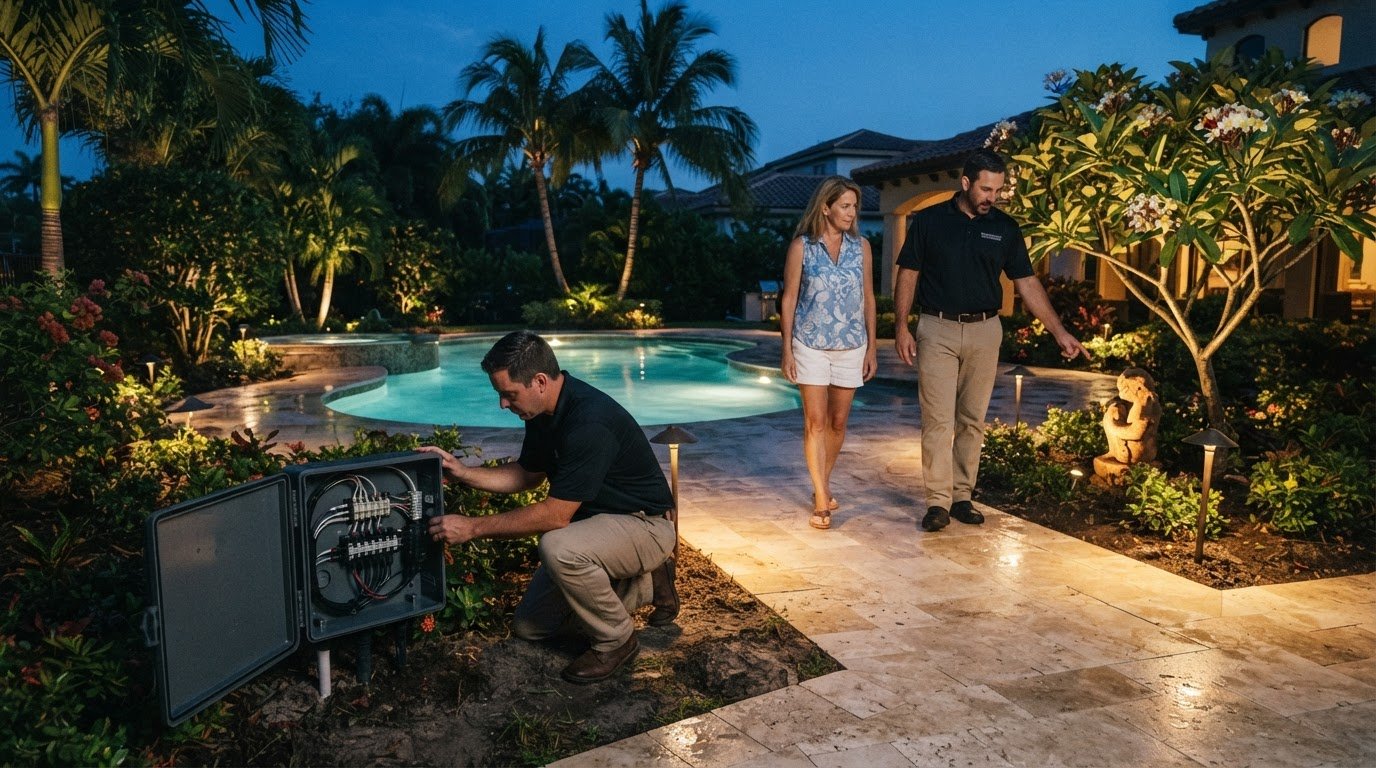
The most important question is whether your landscape lighting contractor brings design and engineering expertise to the project or focuses on installation alone. Knowing what to ask a landscape lighting contractor means looking beyond fixtures: ask how the design will serve your property, how the system will be planned and load-calculated, and what support is available after installation. These answers reveal whether the proposal accounts for both visual impact and practical details.
It’s reasonable to want a clear picture of the project before committing. A thoughtful plan connects your priorities, from highlighting a garden or pool to lighting the routes you use after dark, with a system designed for ongoing care. This guide covers questions about design, planning, system requirements, maintenance, phased installations, and retrofits, so you can assess whether the proposed scope fits the results you want.
Key Takeaways
- Distinguish design expertise from installation work to understand how fixture placement and LED choices shape the project.
- Clarify what ongoing maintenance involves and how regular care supports the system’s appearance and function.
- Review how your outdoor routines, planned lighting areas, and system load inform the project plan and quote.
- Explore how phasing or retrofitting can help a lighting plan adapt to your property and future priorities.
1. Are You a Professional Landscape Lighting Designer or Strictly an Installer?
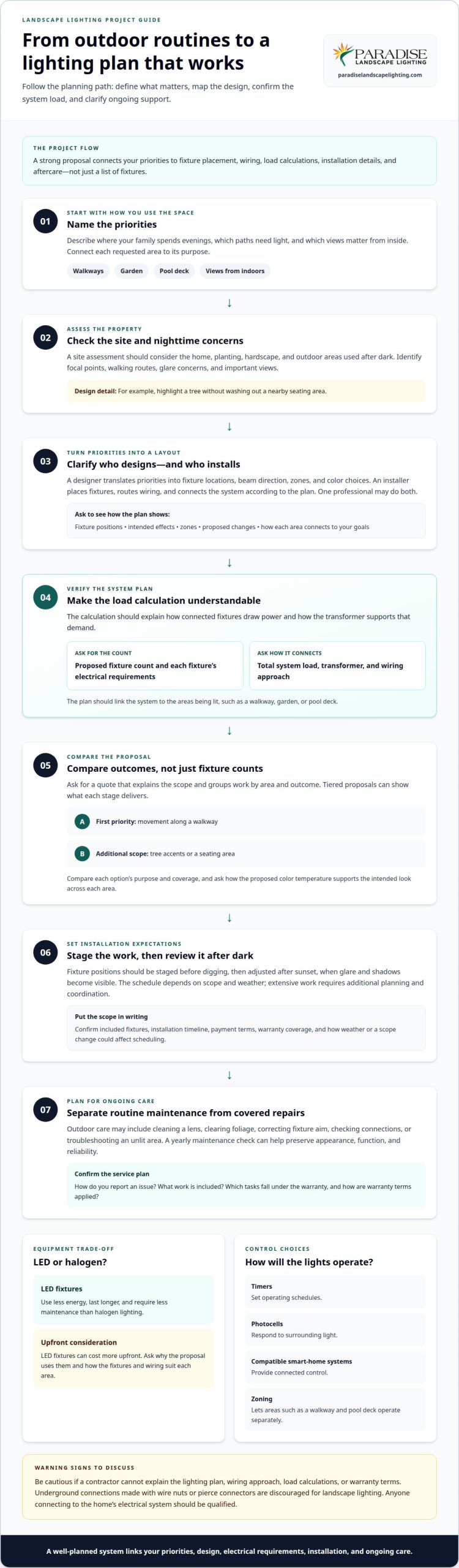
Start by asking who develops the lighting plan and who installs it. A designer considers how light shapes views, highlights trees, and guides movement; an installer places and connects equipment. Some professionals handle both. Ask how design decisions become a layout and how fixture placement is refined to create the intended nighttime effect.
Ask why the proposal uses LED fixtures rather than older halogen options. LEDs use less energy, last longer, and require less maintenance than halogen lighting, although LED fixtures can cost more upfront. The design still matters: precise placement can affect the project quote and how effectively light reveals a garden, walkway, or architectural feature. Ask how the proposed fixtures and wiring suit each area.
How can landscape lighting be controlled? Timers set operating schedules, photocells respond to surrounding light, and compatible smart-home systems can provide connected control. Zoning divides fixtures into areas, such as a walkway and pool deck, so each can operate separately.
Common warning signs include a contractor who cannot explain the lighting plan, wiring approach, load calculations, or warranty terms. Avoid underground connections made with wire nuts or pierce connectors, which are discouraged for landscape lighting. Before any connection to the home’s electrical system, ensure the person doing that work is qualified.
Ask what maintenance and service support covers after installation. Outdoor lighting benefits from regular care, including checking fixtures, connections, and aim as plants grow or shift. A yearly maintenance check can help preserve appearance, function, and reliability. Clarify how service requests are handled and which tasks fall under the warranty. A lifetime warranty covering fixtures and installation is a useful benchmark to discuss, but read its terms carefully. Strong answers distinguish routine upkeep from covered repairs and explain how the system will be supported over time.
2. Question 5: Will you provide maintenance services after installation?
Ask what post-installation service covers, then distinguish routine adjustments from repairs. Maintenance may involve cleaning a lens, clearing foliage from a fixture, correcting its aim, or troubleshooting an unlit area. A clear service plan explains how to report an issue, what work is included, and how warranty terms apply.
The difference between a designer and an installer is their responsibility for decisions before and during installation. A designer translates your priorities into fixture locations, beam direction, zones, and color choices. An installer places fixtures, routes wiring, and connects the system according to the plan. One professional may handle both roles, but the design intent should guide placement and final adjustments.
A site assessment should consider the home, planting, hardscape, and outdoor areas used after dark. It should identify focal points, walking routes, glare concerns, and views from inside. The lighting design then connects proposed fixture positions to those priorities, such as highlighting a tree without washing out a nearby seating area.
For installation planning, the schedule depends on scope and weather. A small outdoor lighting job may take a few hours, while more extensive work requires additional planning and coordination. Fixture positions should be staged before digging, then adjusted after sunset, when glare and shadows become visible. This gives the final layout a practical nighttime review.
A marked site plan can preview fixture locations, zones, and intended effects; ask how proposed changes will be recorded. Coordinate lighting around existing landscape features, pool areas, or artwork so each element has a clear role. Thoughtful landscape lighting design connects these details into one coherent plan rather than treating each fixture as an isolated addition.
3. Landscape project planning and load calculations
Good planning begins with how you use the outdoor space. A contractor can ask where your family spends evenings, which paths need light, and which views matter from inside. Those answers shape fixture locations, zones, and the lighting system’s overall load. A practical way to approach what to ask a landscape lighting contractor is to connect each requested area with its purpose and intended use.
Load calculations should explain how the connected fixtures draw power and how the transformer supports that demand. Ask for the proposed fixture count, each fixture’s electrical requirements, and the total system load. The plan should identify the transformer and wiring approach, linking the layout to areas such as a walkway, garden, or pool deck.
Project quotes depend on the proposed design, components, and installation work. Ask for a project quote that explains the scope and shows how the planned work serves your priorities. A useful proposal groups work by area and outcome rather than listing parts alone. For example, it can distinguish front-entry walkway lighting from garden accents.
Ask for tiered proposals that show what each stage delivers. One option might prioritize movement along a walkway; another could add tree accents or a seating area. Compare each option’s purpose and coverage, not simply its fixture count. If you’re considering what to ask a landscape lighting contractor about the proposal, ask how the selected color temperature supports the intended look across each area.
A written contract should define the scope, included fixtures, installation timeline, payment terms, and warranty coverage. It should also describe how weather or a scope change could affect scheduling. Before hiring, review references and project galleries for completed examples, such as a property with path lighting and architectural accents. Visiting a reference property after dark can reveal how its installed lighting performs.
4. Phased installations and retrofits
A phased plan lets homeowners illuminate priority areas first, then add zones as the property evolves. Ask how the initial installation will leave room for future fixtures, wiring, and transformer capacity. For new construction, planning lighting components alongside building or renovation phases can create more design options and help avoid higher costs later.
For a retrofit, ask how the existing transformer, wiring, and fixtures will be assessed before new work begins. The estimate should distinguish reuse from replacement and explain how access affects labor. A path light beside a walkway may require less work than a recessed well light set into hardscape. A larger installation integrated with landscaping can take over a week.
Ask which fixture types suit each area, what materials they use, and how brightness, color temperature, and beam angle shape the effect. Brass and copper components offer alternatives to plastic, composite, or aluminum. For example, a narrow beam can accent a tree, while broader light can help illuminate a larger surface.
Ask how plants, irrigation, utilities, and hardscaping will be protected during installation. The work plan should identify existing features before digging, define fixture locations, and explain how the ground will be restored around each installation point.
Ask how the proposal estimates each phase and accounts for fixture selection, labor, wiring, transformers, and site access. A staged estimate can show what the first phase accomplishes and which later additions remain possible, without treating the initial installation as a complete buildout. Clarify what product and installation support applies after each phase, including warranty coverage and who handles service concerns. For a tailored plan that balances current priorities with future additions, plan a phased lighting installation.
Paradise Landscape Lighting
Paradise Landscape Lighting helps homeowners turn questions about design, planning, and installation into a coordinated outdoor lighting project. Its team brings lighting design, engineering, and LED installation together, shaping a plan around the property’s features and how each area is used.
Whether you’re considering subtle accents for a garden, lighting around a pool, or illumination for sculpture and artwork, the project begins with your priorities. A tailored plan helps connect fixture placement and system requirements with the desired visual effect, while installation brings that plan to life.
If you’re ready to discuss your outdoor lighting project, contact Paradise Landscape Lighting.
Shape an Outdoor Lighting Plan That Fits
The next step is to turn your priorities into a clear project brief. Decide which outdoor areas matter most, what you want the lighting to reveal, and whether you prefer one coordinated installation or a plan that can evolve. These choices help focus the design conversation and make it easier to discuss the right scope for your property.
If you’re considering what to ask a landscape lighting contractor, focus on how the proposed design, installation, and ongoing care will serve your goals. Paradise Landscape Lighting brings design and installation together for outdoor spaces, including lighting for sculpture and artwork. The aim is a considered plan that connects technical decisions with the atmosphere you want to create.
Contact Paradise Landscape Lighting to discuss your project and explore a thoughtful next step for your outdoor space.
Frequently Asked Questions
Are You a Professional Landscape Lighting Designer or Strictly an Installer?
Paradise Landscape Lighting’s team includes a lighting designer and a lighting engineer, with distinct roles in shaping and executing outdoor projects. Thomas Crowley is the Lighting Designer, and Justin Lawrence is the Lighting Engineer. Ask how design intent carries through the project, from the initial concept to the finished nighttime effect.
Do You Offer Other Services Aside from Lighting Installation?
Yes. Paradise Landscape Lighting offers walkway and fence lighting, architectural lighting, fountain lighting, pool deck lighting, and color LED lighting. These services can address different features of one property: walkway lights can define a route, while fountain lighting can highlight a water feature. Identifying the areas you want to enhance helps shape a project around your home rather than a generic fixture package.
Do You Provide a Lighting Plan?
A lighting plan should make the proposed effect understandable before installation begins. Look for a clear connection between each illuminated feature and its purpose, such as emphasizing a sculpture without drawing attention away from the home. Ask how design changes are reflected in the final layout, so the team can carry the same vision from concept through installation.
How Do You Plan for Wiring and System Longevity?
Discuss how the wiring layout will work with future landscaping or routine garden maintenance. A practical plan considers where cables run relative to planting beds, paths, and areas likely to change. For property owners planning broader exterior renovations or garden enhancements, checking professional services such as handylandscapes.co.uk can offer insight into coordinating site work effectively. Ask how the layout will be explained after installation. This can help you understand the system if a fixture needs attention or the property changes.
Looking for a Contractor?
Paradise Landscape Lighting serves homeowners in Fort Lauderdale, Weston, Southwest Ranches, Wilton Manors, Palm Beach, Miami, Miami Beach, Coral Gables, Plantation, West Palm Beach, and Coconut Grove. If your property is in one of these communities, consider how its outdoor features and your priorities could guide a custom lighting project. A focused discussion about how you use your home after dark is a practical place to begin.
How Long Has Your Company Been in Business, and Do You Specialize in Landscape Lighting?
Paradise Landscape Lighting specializes in residential outdoor lighting design and installation using low-voltage LED technology. Its team includes Thomas Crowley, Lighting Designer, and Justin Lawrence, Lighting Engineer. Ask how their design and engineering roles relate to your property’s needs and how the lighting concept will be carried through installation.
Return to News