
Outdoor Wall Wash Lighting and Prices in Coral Gables
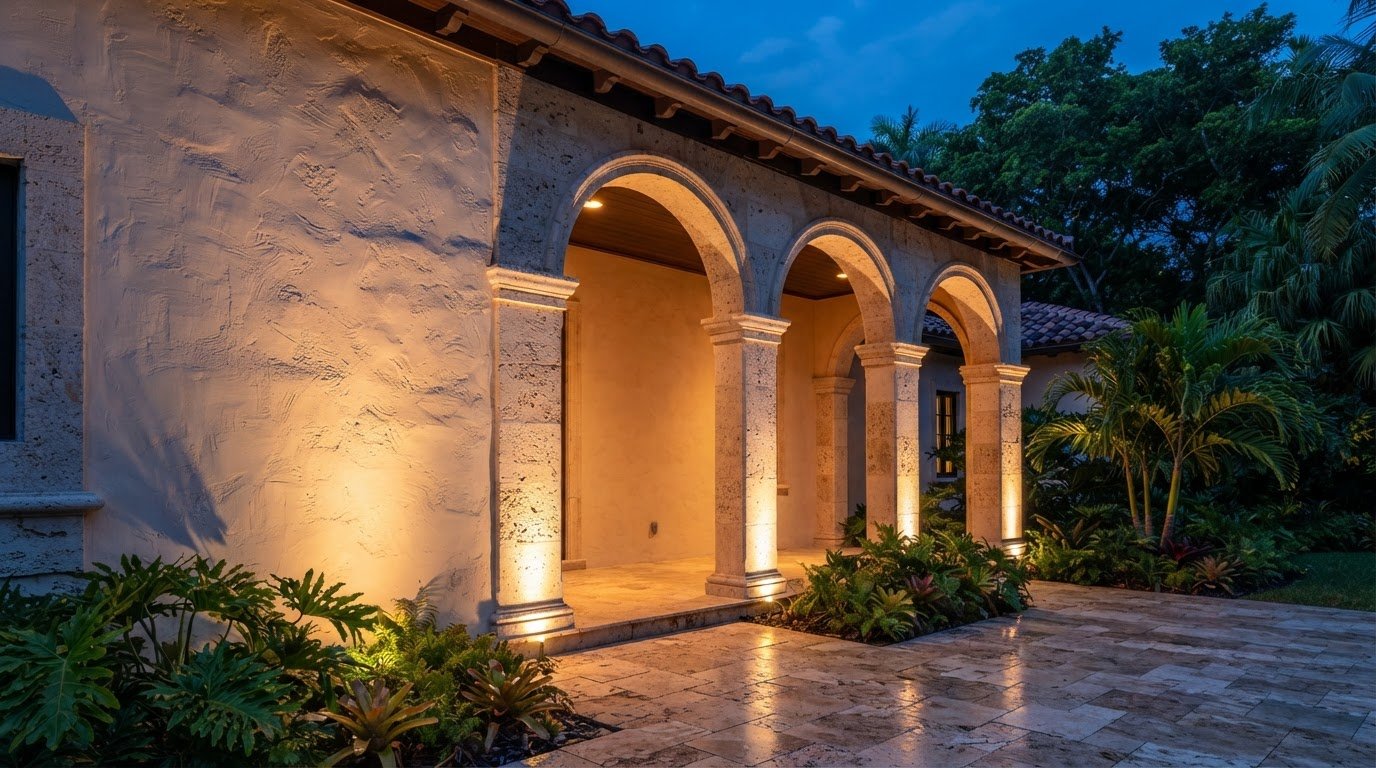
The brightest fixture on a spec sheet isn’t automatically the best choice for a refined wall wash. In outdoor wall wash lighting in Coral Gables, a professional selects outdoor-suitable LED luminaires and optics that suit the wall’s height and finish; column-wrapping layouts can use 12° or 25° beam angles.
It’s reasonable to want an even glow without dark gaps or exposed fixtures that distract from the design. Outdoor wall wash lighting in Coral Gables depends on more than the light source: placement, spacing, beam direction, and the architecture all shape the finished effect.
This guide explains how a professional chooses durable fixtures, plans their spacing, and weighs wall washers against directional spotlights. It also covers the factors that shape project costs, so you can understand what goes into a considered design before moving ahead.
Key Takeaways
- Choose outdoor LED fixtures and beam optics to suit the wall’s material, height, and architectural details.
- Thoughtful fixture placement and spacing help create an even wash with fewer dark gaps.
- Linear wall washers create a continuous effect, while directional spotlights can emphasize selected features.
- Project cost depends on the design, fixture selection, layout, and installation scope; a tailored estimate reflects the property.
How Can a Professional Choose Durable LED Luminaires for Outdoor Wall Washing?
A well-planned LED layout matches each fixture to the wall’s height, surface, and desired effect. In Coral Gables, facade materials and nearby landscape features help determine beam choice, placement, and direction.
Facade and Landscape Illumination
For a stucco facade, consider its texture, architectural details, and the space available for fixtures. A broad wash can reveal the wall’s overall form, while carefully aimed light can emphasize a recessed entry or a change in surface. Landscape walls call for the same attention: plants, raised beds, and paths affect where light falls and how the wall looks after dark.
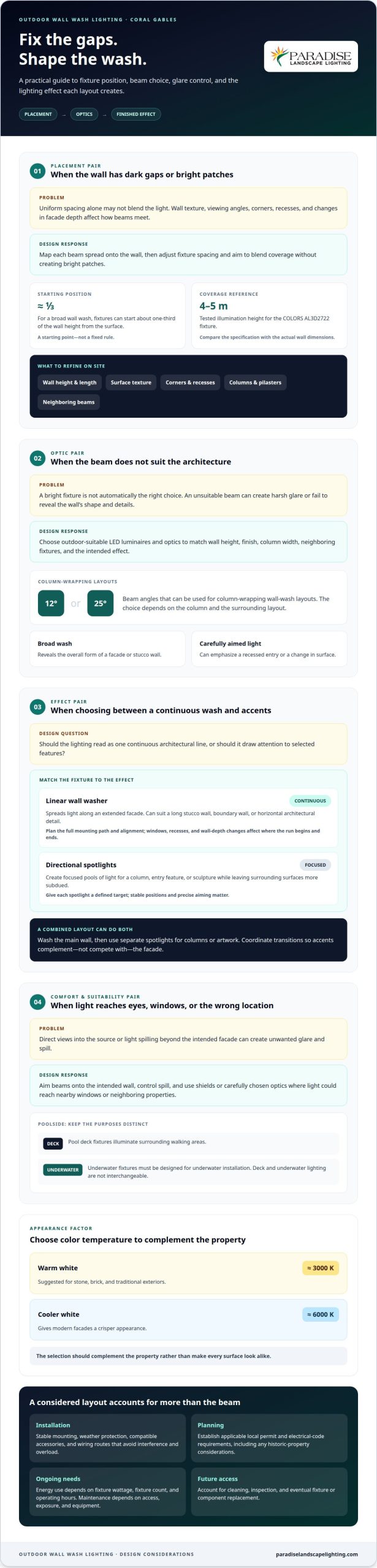
Color temperature shapes the appearance. Warm white around 3000 K is suggested for stone, brick, and traditional exteriors; cooler white around 6000 K gives modern facades a crisper appearance. The selection should complement the property rather than make every surface look alike.
Columns and Linear Facade Lighting
Columns call for controlled beams that emphasize their vertical form without creating harsh glare. Column-wrapping wall-washing layouts can use 12° or 25° beam angles. A professional considers column width, surface finish, and the position of neighboring fixtures before choosing an optic, since these details affect how the light meets the edges.
Linear lighting creates a continuous architectural line, while separate fixtures can highlight individual features. Assess outdoor suitability, construction details, and installation conditions when choosing fixtures, not appearance alone. The plan should also account for stable mounting, weather protection, and wiring routes that avoid interference and overload.
Permit and electrical-code requirements depend on the project scope and property. For a Coral Gables home, establish applicable local requirements and any historic-property considerations during planning. Aim the light to limit unwanted spill beyond the intended facade.
LED energy use depends on fixture wattage, the number of fixtures, and operating hours. Maintenance needs depend on access, exposure, and equipment. A design review should account for cleaning, inspection, and eventual fixture or component replacement. These factors shape ongoing energy and maintenance costs, so there is no single figure that applies to every wall-wash layout.
How Professionals Plan Fixture Spacing and Avoid Dark Gaps
Even coverage begins with the wall’s height, texture, and viewing angles. A professional maps each fixture’s beam spread against the surface, then adjusts spacing to blend light without creating bright patches.
For a broad wall wash, fixtures can start about one-third of the wall height from the surface. Treat this as a starting point, not a fixed rule: beam width, wall length, corners, and architectural recesses all affect final placement.
Some fixtures suit a defined coverage height. The COLORS AL3D2722 fixture has a tested illumination height of 4-5 meters. A professional considers that specification alongside the actual wall dimensions, then positions neighboring beams to reduce dark gaps. Columns, pilasters, and changes in facade depth may need separate aiming rather than uniform spacing.
Glare and light pollution are reduced by aiming beams onto the intended wall, controlling spill, and avoiding direct views into the light source. Shields or carefully chosen optics can help keep light from reaching nearby windows and neighboring properties.
Poolside lighting requires a separate suitability decision. Pool deck fixtures illuminate surrounding walking areas; underwater fixtures must be designed for underwater installation. Distinguish between these purposes and select equipment for its intended location rather than treating deck and underwater lighting as interchangeable.
During installation, stable mounting and weather protection help protect outdoor fixtures. Choose compatible accessories, such as glare-control components where a beam could reach the eye, and consider access for future maintenance. Assess spacing across the entire wall, not just around individual fixtures.
For a coordinated layout around walls and outdoor features, explore professional landscape lighting design.
Linear wall washers and directional spotlights
A linear wall washer spreads light along an extended facade to create a continuous visual line. It can suit a long stucco wall, a boundary wall, or a horizontal architectural detail. Consider the surface texture and facade shape before planning the run. Windows, entry recesses, and changes in wall depth influence where the light should begin and end. The goal is a considered composition, not simply a row of bright fixtures.
Directional spotlights create focused pools of light. They can emphasize a column, entry feature, or sculpture while leaving surrounding surfaces more subdued. Choose beam direction and spread according to the feature’s size and position. A narrow architectural detail may suit a concentrated beam, while a broader feature calls for wider coverage. Give each spotlight a defined target within the overall lighting plan.
Choose based on the effect your property needs. Linear fixtures suit a continuous facade treatment; spotlights work well for selected features and varied architectural forms. A combined layout can wash the main wall and use separate spotlights for columns or artwork. Coordinate transitions so accent lighting complements rather than competes with the facade.
Installation planning differs, too. A linear system needs a suitable mounting path and careful alignment along its full length. Spotlights need stable individual positions and precise aiming. Before installation, review how the fixtures relate to the facade, nearby landscape, and viewing angles. For a stucco home with a recessed entry, this can help determine whether a continuous wash, targeted accents, or both will create the clearest architectural effect.
Outdoor wall-light prices
The cost of outdoor wall lighting depends on the complete installation, not just the fixtures. A single light and a coordinated facade layout involve different scopes. For a Coral Gables home, an estimate reflects the wall’s length and surface, the intended effect, fixture selection, wiring layout, and installation conditions. Fixture quantity follows the design needed to cover the facade, not a universal count.
Fixture type is one factor. A linear washer for an extended wall differs from directional spotlights aimed at separate architectural features. A layout may combine both, such as a continuous wash across stucco with accents at a recessed entry. Mounting requirements and beam-control accessories can also shape the project scope.
Installation details matter, too. Account for fixture positions, wiring routes, stable mounting, and access to the surfaces being lit. Landscape beds or pool decking beside the wall may call for a coordinated layout that makes the lighting feel like one composition. These decisions affect labor and materials as well as equipment selection.
Compare estimates by scope, not fixture count alone. One proposal might cover a short feature wall; another may include a full facade, columns, and separate accents. Look for a clear description of the design, fixture locations, equipment, and installation work. This makes it easier to see whether proposals cover the same areas and intended effect, rather than comparing a fixture-only purchase with a professionally installed system.
The project price depends on the property and design, and is provided after a quote request. Wall dimensions, surface details, fixture selection, layout, wiring, and installation scope shape the estimate. To plan a tailored wall-washing project, request an outdoor lighting quote.
Paradise Landscape Lighting
Paradise Landscape Lighting designs and installs custom residential outdoor LED lighting, including architectural lighting that can incorporate wall washing. Its team brings design and engineering together to plan fixture placement and how the finished lighting relates to facade surfaces and surrounding landscape.
Turn to Paradise Landscape Lighting when you’re ready to move from comparing fixture types to a tailored design and installation plan. The team can coordinate architectural lighting with pool deck areas or sculpture and artwork, connecting the home’s architecture with its outdoor spaces. The right layout depends on your property and the effect you want.
Contact Paradise Landscape Lighting to discuss your outdoor lighting project.
Shape the next step for your property
Outdoor wall wash lighting in Coral Gables can be designed around how you want your home to feel after sunset, not just how its facade looks on a plan. Start by identifying the view that matters most: the approach from the street, a courtyard wall, or the transition between architecture and garden. That priority gives the design conversation a clear starting point and connects lighting choices to how you use the space.
Consider how those views change as you approach the home or spend time outdoors. A welcoming entry may call for a different atmosphere than a quiet garden corner. Sharing the mood you want and the features you value turns broad inspiration into a practical project direction.
Paradise Landscape Lighting can help translate that vision into a coordinated outdoor lighting plan and installation. Contact Paradise Landscape Lighting to discuss the look you want to create. Your home’s evening character can begin with one considered design decision.
Frequently Asked Questions
What color temperature works best for outdoor wall washing?
The best color temperature depends on the facade and the atmosphere you want. Warm white around 3000 K can complement brick, stone, and traditional architecture, while cooler white around 6000 K can give a modern facade a crisper look. Consider nearby landscape and other exterior lights, too. Coordinating their color helps the property feel visually connected rather than uneven.
What is the difference between wall washing and wall grazing?
Wall washing spreads light broadly across a surface, while wall grazing places light close to the wall so the beam skims across the material. Grazing emphasizes texture, such as the relief of rough masonry or stonework; washing creates a more even appearance on smoother surfaces. A textured garden wall may suit grazing, while a flat entry facade may benefit from a broad wash.
What is wall wash lighting used for?
Wall wash lighting makes vertical surfaces and architectural features visible after dark. It can give a home’s facade a defined presence, distinguish a courtyard wall, or provide a backdrop for landscape features. In Coral Gables, Fort Lauderdale, Weston, Southwest Ranches, Wilton Manors, Palm Beach, Miami, Miami Beach, Plantation, West Palm Beach, and Coconut Grove, the design can respond to each property’s architecture and outdoor setting.
What is outdoor wall wash lighting and how does it work?
Outdoor wall wash lighting uses fixtures aimed at a vertical surface to create a deliberate field of light. The fixture’s position and beam determine how light reaches the wall; the surface finish affects how that light appears. For example, a smooth stucco entry may read differently from a garden wall with uneven stone. A professional plans the effect around the property’s nighttime views.
How do professionals choose outdoor wall washers for stucco and masonry walls?
Consider the wall’s texture, height, color, and architectural details before selecting a fixture and optic. Smooth stucco can reveal uneven brightness, while rough masonry creates natural highlights and shadows. For outdoor wall wash lighting in Coral Gables, account for the surrounding landscape and viewing angles so the beam emphasizes the intended surface without distracting from nearby features.
How do professionals determine the lumens and beam angle for exterior wall washing?
Match lumen output and beam spread to the wall’s dimensions, fixture setback, and desired brightness. A wider beam covers more surface; a narrower beam concentrates light on a smaller area or detail. Lumens alone don’t determine the appearance: distance, surface color, and texture matter, too. Aim for a balanced wall, not simply the highest output.
Return to News