
Outdoor Lighting Guide for South Florida Native Plants
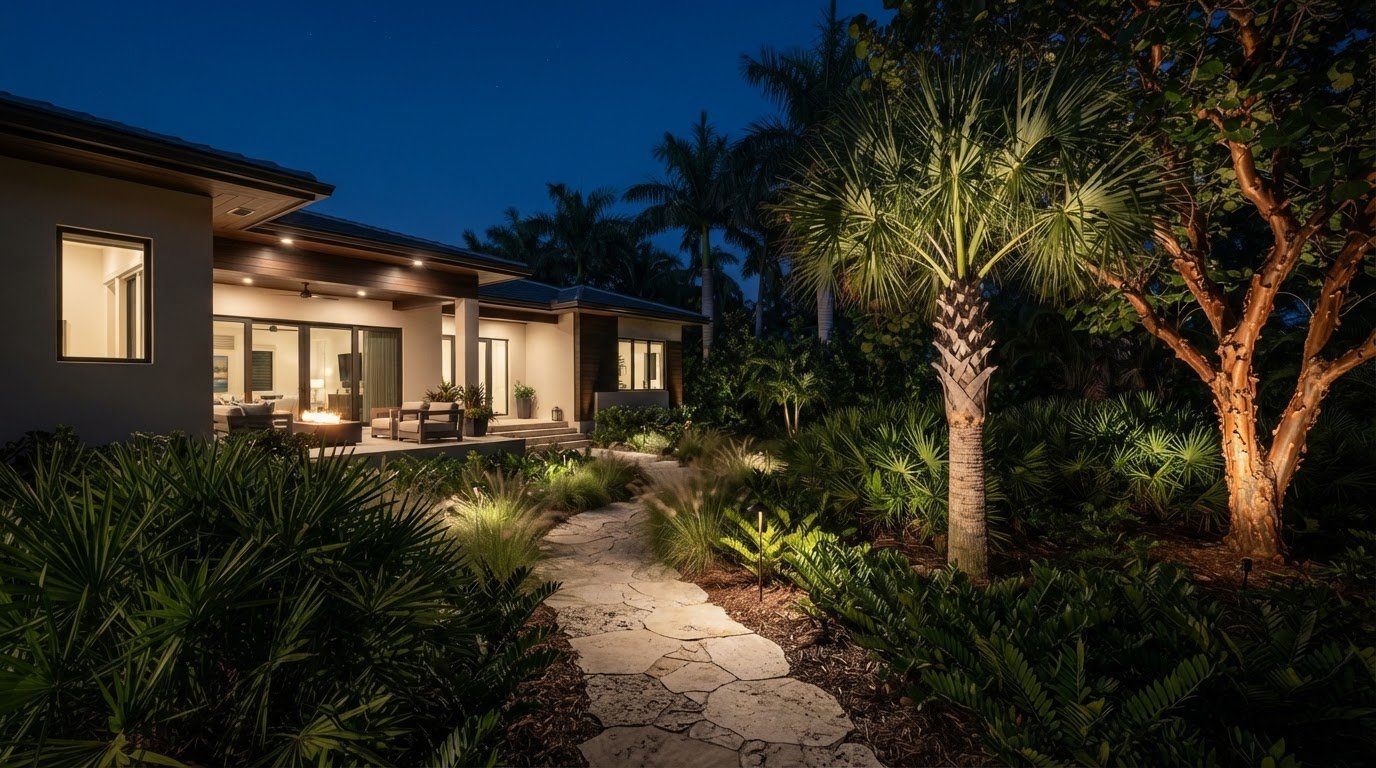
The best garden lighting doesn’t make every plant shine. It lets a few distinctive forms emerge after dark while the rest of the landscape keeps its quiet character. If you’re considering outdoor lighting for Florida native plants, start by deciding which shapes you want to see, where you’ll view them from, and how to control glare. A good plan complements the planting rather than competing with it.
This guide explains how to plan lighting around a South Florida garden, from choosing plants to feature to assessing the layout and existing light. You’ll see how tree canopies, sculptural trunks, grasses, and low-growing foliage can respond to different techniques, and how to balance lit and unlit areas. We’ll also distinguish landscape lighting from grow lighting and show how professional design, engineering, and low-voltage LED installation can bring the details together.
Key Takeaways
- Plan outdoor lighting for Florida native plants around each plant’s form, site conditions, and the views you want to create after dark.
- Use direction, beam control, distance, and intensity to shape foliage and trunks. Favor deliberate accents over broad, indiscriminate illumination.
- Match lighting techniques to plant growth habits, while considering species, mature size, and site context before choosing fixture locations.
- Observe South Florida conditions, including sun exposure and coastal influences, when planning and reviewing a nighttime lighting scheme.
- A coordinated design, engineering, installation, and maintenance process can bring a residential low-voltage LED lighting scheme together.
How to plan outdoor lighting around Florida native plants
Begin with the garden, not a fixture catalog. The aim is to shape nighttime views around the plants, their mature forms, the site, and the places people experience the landscape. South Florida properties range from exposed coastal yards to shaded residential lots, so a layout that works in one garden may not suit another.
Plant-led outdoor lighting reveals selected native forms while responding to the site and preserving the garden’s nighttime character.
Lighting design is different from plant identification and growing advice. It can present a plant after dark, but it doesn’t determine whether that species suits the soil, moisture, or location. Keep those questions connected, but use reliable botanical and horticultural guidance to answer them.
Start with the garden, not the fixture
Walk the property by day and after dark before choosing what to illuminate. Notice how planting layers overlap, where mature trees or shrubs create strong silhouettes, and how people move between the house, paths, and outdoor gathering areas. Prioritize the views that matter most instead of lighting every plant equally.
- Record the main planting layers and the mature size of key specimens.
- Mark focal points, circulation routes, and views from rooms or seating areas.
- Note existing lights, glare, and areas where darkness feels intentional.
This inventory helps distinguish a plant that anchors a view from one that provides a softer backdrop. It also reveals where a new accent could overlap existing light or disrupt a darker, quieter part of the garden.
Understand the native-plant context
Before planning around a plant by name, confirm its identity and local relevance. The University of Florida’s IFAS resources and Florida Native Plant Society guidance can help with identification and growing conditions. For broader context, the Flora of Florida overview describes the state’s varied plant life and habitats.
Consider horticultural needs separately from nighttime presentation. Sun exposure, soil, moisture, and regional suitability inform planting decisions, but they don’t dictate fixture placement. A plant that thrives in a sunny location doesn’t automatically need a strong light accent, and a shaded planting can still be visually compelling with restrained lighting.
Coontie and beautyberry are examples to investigate, not universal recommendations. Confirm each plant’s identity, regional suitability, and mature form using Florida-focused references. Once the planting context is clear, the lighting design can respond to the actual shapes on site and the views you want to enjoy after sunset.
How outdoor lighting interacts with native plant forms and nighttime views
After dark, the same planting can read as a sculptural focal point, a soft backdrop, or a flat patch of brightness. The difference comes from how light is aimed and controlled. Direction determines which surfaces catch the eye. Distance and beam spread affect how much of the plant or surrounding area is illuminated, while intensity influences whether the effect feels subtle or dominant. For outdoor lighting for Florida native plants, these choices should support the view rather than simply make the garden brighter.
Controlled light placement helps reveal selected forms while keeping the surrounding darkness in balance.
Match light direction to plant structure
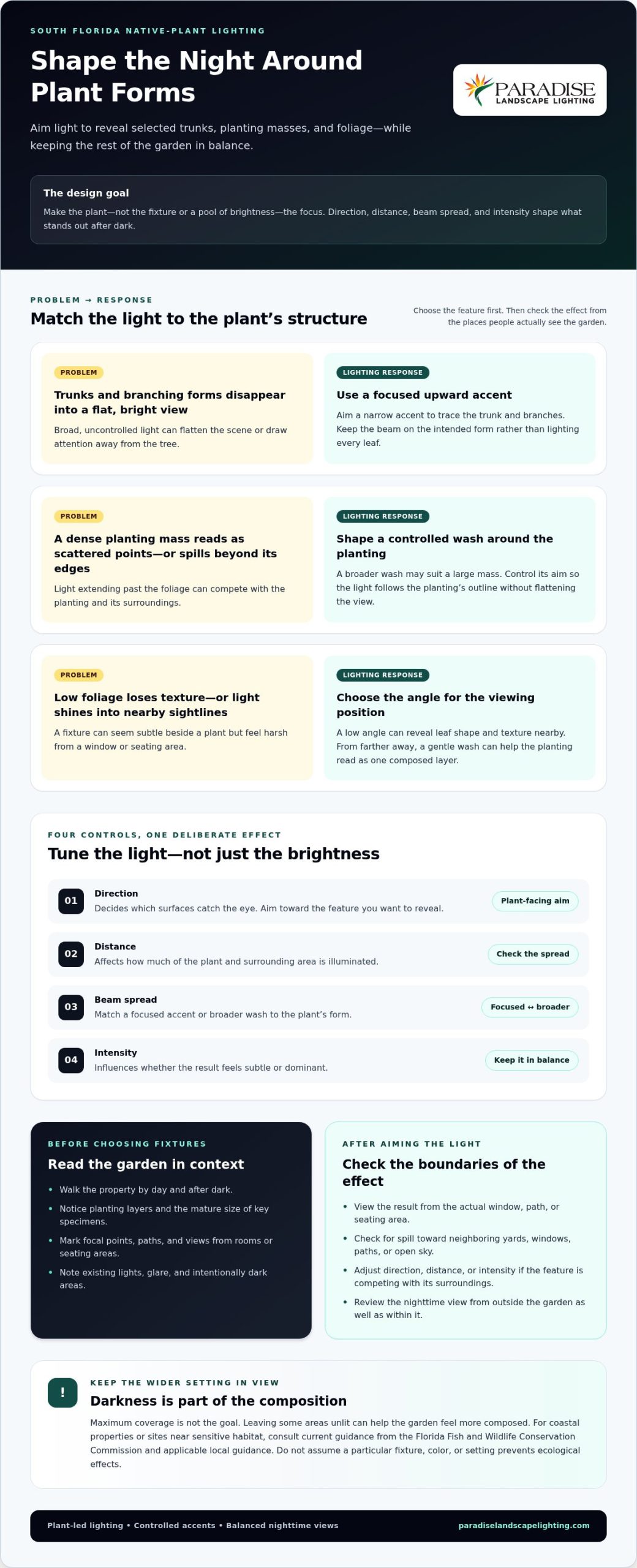
Start with the feature you want to reveal. A carefully aimed, narrow upward accent can trace a mature tree’s trunk and branches without lighting every leaf. A broader wash may suit a large planting mass, but control the aim so light doesn’t spill past the foliage, flatten the view, or draw attention away from the plant.
Low-growing foliage calls for a different perspective than a canopy. From a nearby path or seating area, a low angle may reveal leaf shape and texture. From a room farther away, a gentle wash may help the planting read as one composed layer. Choose direction based on the viewing position and what stands behind the plant. Check the effect from the actual viewpoints: a fixture may look subtle beside a planting but harsh from a window.
- Trunks and branching forms: Use a focused accent to emphasize lines and structure.
- Dense plant masses: Consider a controlled, broader wash that follows the planting’s outline.
- Low foliage: Choose an angle that reveals texture without shining directly into nearby sightlines.
Keep the nighttime setting in view
Give each accent a clear visual boundary. Aim it toward the plant, then check whether light reaches neighboring yards, windows, paths, or open sky. Adjusting direction, distance, or intensity can keep attention on the intended feature. Maximum coverage isn’t the goal. A garden often feels more composed when some areas remain unlit.
Wildlife considerations depend on the location and surroundings. For coastal properties or sites near sensitive habitat, consult current guidance from authoritative sources such as the Florida Fish and Wildlife Conservation Commission, along with applicable local guidance. Don’t assume a particular fixture, color, or setting prevents ecological effects. Tailor the design to the site, and review the nighttime view from outside the garden as well as from within it.
These decisions are easier to coordinate in a tailored landscape lighting plan than as isolated fixture choices. Custom landscape lighting design can bring plant forms, intended views, and system layout into one considered scheme.
Choose lighting techniques for Florida native plants by growth habit
The same lighting method can create different effects depending on a plant’s shape, density, and scale. Start by choosing the feature you want to reveal, then consider how light can reach it without making the whole planting uniformly bright. Uplighting directs light upward to emphasize vertical structure. Grazing places light close to a surface to bring out texture. A broad wash covers a wider area and can define a planting mass when its edges and spill are controlled.
Use the comparisons below as design ideas, not fixed prescriptions. Consider plant identity, mature form, viewing angles, and site conditions before choosing fixture placement. No single technique suits every species or property.
| Plant form | Visual opportunity | Possible lighting approach | Caution |
|---|---|---|---|
| Tree or palm | Trunk, branching, or canopy outline | Focused uplight on a selected feature | Avoid treating the whole plant as one target |
| Large shrub | Layered shape or a distinct silhouette | Controlled wash or selective grazing | Keep light from flattening the planting |
| Grasses and lower plants | Leaf texture or an edge along a bed | Low, angled accent or a restrained wash | Check glare from nearby paths and seating |
| Mixed planting | Contrast between foreground and backdrop | Selective accents on chosen layers | Preserve visual separation between plants |
Trees, palms, and large structural plants
Think of a tree in distinct parts: trunk, branching, and canopy. A focused uplight may give the trunk a strong vertical presence, while a carefully placed accent can reveal branching without lighting every leaf. Palms have a different outline, so let the intended view and surrounding space guide the approach. If considering a live oak or palm, confirm its identity and site suitability. Mature scale, nearby windows, and neighboring views all affect fixture position and aim.
Shrubs, grasses, and lower planting
Lower plantings often benefit from a lighter touch. Grazing can bring out surface texture, while selective accents may define a bed edge or a seasonal focal point. Beautyberry or muhly grass can serve as examples after confirming the species and its regional context. Avoid dense illumination that merges individual plants into one bright field. Contrast between foreground foliage and a darker background helps the composition feel layered.
Before settling on a technique, view the effect from places people will actually see it, including paths, windows, and outdoor seating. A fixture that looks subtle beside a planting may stand out too much from across the yard. Match each accent to the plant’s form and intended view, then refine the layout to preserve depth and visual balance.
Plan a South Florida native-plant lighting scheme step by step
A well-planned scheme moves from observation to a finished nighttime review. Notes taken in daylight and after dark help connect what you see in the garden with how you want it to feel at night. Keep planting decisions separate from lighting decisions: identify plants and assess their growing needs with suitable horticultural guidance, then plan illumination around the established landscape and site.
A practical five-step planning sequence
- Map the site. Sketch planting beds, paths, architecture, and outdoor gathering areas. Add important views from inside the home, such as a window overlooking a focal tree. Mark existing lights and darker areas you want to preserve.
- Choose focal points. Select a few plants or planting layers to anchor the nighttime view. Begin with those priorities before adding secondary accents. Lighting every plant can make the composition feel busy.
- Choose the visual effect. Decide whether you want to reveal a trunk, emphasize foliage texture, or give a larger planting a quiet presence. Consider light direction and beam spread in relation to the feature and viewing angle.
- Mark possible locations. Record proposed fixture positions on the map, noting nearby paths, windows, and property edges. Take daylight photographs of plant shapes and existing conditions, then revisit the proposed views after dark.
- Review and refine. Look for glare, light spilling beyond the intended feature, access for maintenance, and balance between lit and unlit areas. Adjust the plan before settling on final locations.
Account for South Florida site conditions
Conditions vary by property, so document what the installation area actually experiences. Does irrigation spray the planting edge? Where does rain collect or run across the site? Is the garden exposed to humid air or, in coastal locations, salt-bearing air? These observations inform equipment and installation choices. Recommendations should suit the property’s conditions and intended use.
Keep the boundaries between disciplines clear. Plant identification, regional suitability, soil, and moisture needs belong to planting guidance. Electrical installation requires appropriate technical planning. For outdoor lighting requirements or wildlife-sensitive locations, use current, authoritative local guidance relevant to the property.
A coordinated residential lighting plan brings the site map, design intent, engineering, installation, and future maintenance into one process. Plan custom landscape lighting with Paradise Landscape Lighting for your South Florida garden.
Bring Florida native-plant lighting to life with custom design
A considered lighting scheme is more than a collection of attractive fixtures. It brings plant forms, architecture, paths, and outdoor living areas into a coherent nighttime composition. Every property has a different layout and set of priorities, so outdoor lighting for Florida native plants should respond to the actual landscape rather than repeat the same arrangement everywhere.
Paradise Landscape Lighting designs and engineers custom residential low-voltage LED systems for South Florida homes, then installs and maintains them. A lighting designer shapes the visual plan around the views the homeowner wants to enjoy, while a lighting engineer coordinates the system planning. Together, they connect the intended look with a practical installation.
From garden observation to installed lighting
The process starts with the property: its planting arrangement, architectural features, circulation, and the views the homeowner wants to enjoy after dark. The design can coordinate selected plant accents with the home, walkways, and outdoor spaces, so each element contributes to a unified effect. A standout tree might become a focal point, while nearby architecture and paths provide context without competing for attention.
Engineering and installation carry the design into a residential lighting system. This coordinated approach translates choices about placement and visual balance into an organized plan for the property. It also lets the scheme work as a whole instead of treating every plant or pathway as an isolated lighting decision.
Maintenance supports the lighting system’s ongoing performance and helps care for the layout as the outdoor space is used and maintained. The focus is the lighting system and its relationship to the garden, not a replacement for botanical or planting advice.
Create a cohesive South Florida nightscape
Before moving forward, define the nighttime views that matter most. Which native plant forms should draw the eye from the living room? What should be visible along the path or from a favorite outdoor seating area? Clear priorities help a designer make deliberate choices about emphasis, balance, and how the garden connects to the home.
Architecture is part of that composition. A lighting plan can relate plant accents to the home’s lines and outdoor spaces, creating a more complete view than plant lighting alone. Paradise Landscape Lighting serves South Florida communities, including Fort Lauderdale, Weston, Southwest Ranches, Wilton Manors, Palm Beach, Miami, Miami Beach, Coral Gables, Plantation, West Palm Beach, and Coconut Grove, tailoring residential lighting to each property and its setting.
Ready to turn your priorities into a coordinated plan? Explore custom outdoor lighting design for your landscape with Paradise Landscape Lighting.
Shape the nighttime view you want to come home to
Begin with one clear intention: choose the garden view you most want to enjoy after sunset. It might be a quiet glimpse of foliage from indoors, a welcoming approach along a path, or a favorite outdoor space framed by planting. That priority gives the design a personal starting point and connects the finished effect to how you live in your home.
For outdoor lighting for Florida native plants, turn that vision into a plan suited to your property. Paradise Landscape Lighting brings a lighting designer and lighting engineer together to create bespoke residential solutions, with design, engineering, low-voltage LED installation, and maintenance across South Florida. The process connects your initial idea with a system designed for your landscape.
Ready to imagine your garden in a new light? Plan custom lighting for your South Florida landscape with Paradise Landscape Lighting.
Frequently Asked Questions
Can outdoor lighting harm Florida native plants?
Outdoor lighting for Florida native plants can affect them, but the impact depends on the species, exposure, fixture placement, and operating schedule. Treat a light aimed at foliage as an aesthetic choice, not a plant-growth aid. If you notice a change in a plant or have wildlife concerns, identify the species and consult reliable Florida horticultural or wildlife guidance before adjusting the lighting. Consider the garden beyond the feature you intend to illuminate.
Which Florida native plants look best with landscape lighting?
No single plant is best for every garden. A tree’s branching, a palm’s silhouette, a shrub’s outline, or the texture of grasses can each create a distinct nighttime view. Start with plants suited to the property, then consider their mature shape and where they’re seen from. Verify a plant’s identification and local suitability through Florida-focused botanical or horticultural resources before using it as a design example.
How should you light native trees in a Florida garden?
First decide which part of the tree should define the view: its trunk, branching, canopy, or overall silhouette. If a tree is viewed from a dining area, assess how its shape reads from that seat rather than judging the effect beside the trunk. Account for nearby windows, neighboring views, and future access to the area. A tree’s scale and setting make a fixed placement rule unreliable.
Is low-voltage LED lighting a good fit for native plant gardens?
Low-voltage LED lighting can be designed for residential gardens. The layout should relate to planting beds, paths, and nearby architecture, while accounting for how fixtures and wiring fit the property. A tailored design coordinates those elements instead of assuming one standard arrangement works for every garden.
How can I reduce light spill in a native garden?
Start by checking where light lands beyond the intended plant or garden feature. At night, look from inside the home, along the edge of the property, and from nearby seating. A beam that seems contained near its source may be distracting from another viewpoint. Adjust the aim or lighting plan to keep the emphasis where you want it. For wildlife-specific concerns, consult current authoritative guidance relevant to your location.
Should I light every native plant in my landscape?
No. Lighting every plant can make focal features harder to distinguish and leave the garden feeling visually crowded. Choose the view you care about most, then decide whether adjacent plants support it or work better in shadow. Review the composition as the garden grows or changes. Selective lighting gives you room to adjust emphasis without treating the whole planting as one continuous display.
What should I consider before adding outdoor lighting to a South Florida garden?
Consider plant identity, the views you want to highlight, and conditions around the proposed installation, including rain, irrigation, humidity, and coastal air where relevant. Account for glare, maintenance access, and the relationship between lights and neighboring properties. Homeowners planning projects in Fort Lauderdale, Weston, Southwest Ranches, Wilton Manors, Palm Beach, Miami, Miami Beach, Coral Gables, Plantation, West Palm Beach, or Coconut Grove should consider the specific conditions of their property and applicable local guidance.
Return to News