
Moonlighting Effect for a Palm Beach Backyard: How It Works
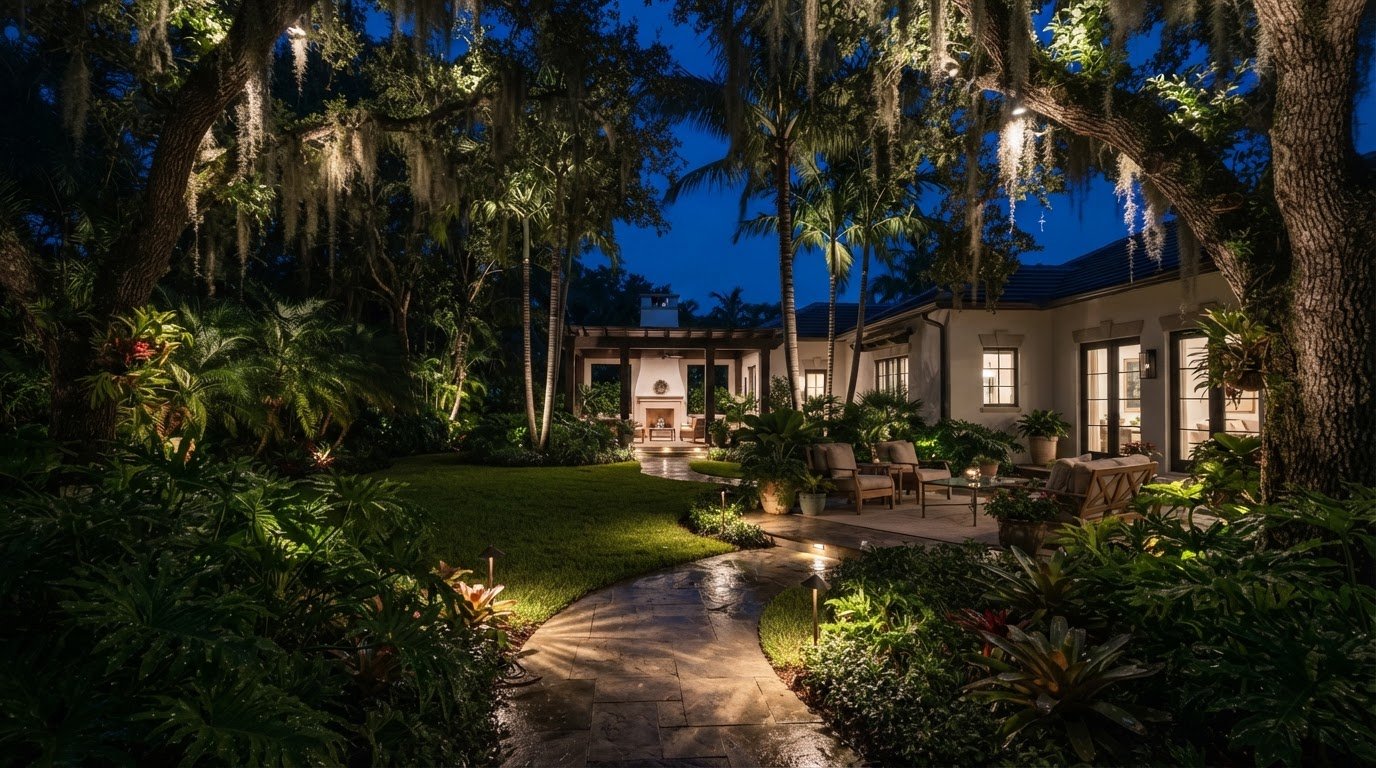
More light isn’t what makes a backyard feel moonlit; direction and softness do. The moonlighting effect for a backyard in Palm Beach is created by mounting fixtures high in trees or on tall structures, then aiming them down through foliage to cast gentle, dappled light across the ground. A common mounting range is 15 to 30 feet, depending on the landscape and the effect desired.
If you want your yard to feel inviting after dark without washing out its natural character, the beam and color of the light matter as much as its placement. This guide explains how moonlighting works, how a wide beam and warm 2700K-3000K color temperature can shape a softer look, and how the effect differs from uplighting. You’ll also see how overhead light can bring out leaves, paths, and patios while keeping the overall atmosphere calm and considered.
Key Takeaways
- Choose a broad beam and a gentle, warm tone to create a softer, more natural nighttime atmosphere.
- Thoughtful fixture placement helps reveal paths and planting while keeping light comfortable and controlled.
- Moonlighting filters light downward through trees for dappled ground patterns, combining function with visual texture.
- Compare the overhead effect of moonlighting with uplighting’s upward emphasis to decide which best suits each feature.
Beam spread and warm color temperature
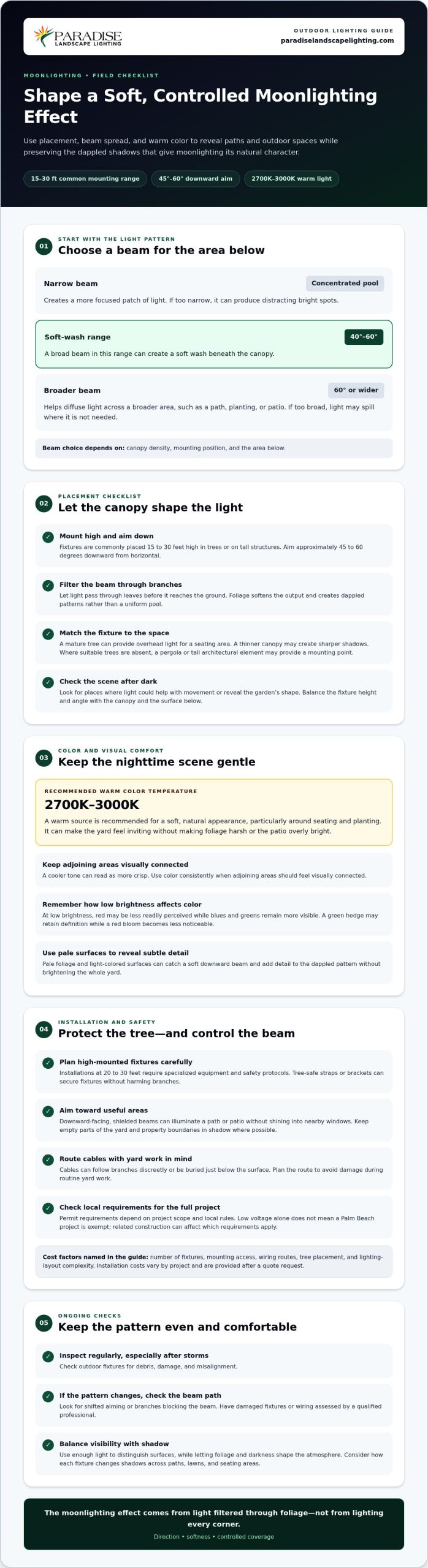
Beam spread determines how widely each fixture illuminates the ground. For a moonlighting effect, a 40 to 60 degree beam can create a soft wash beneath the canopy, while a beam of 60 degrees or wider helps diffuse light across a broader area. These ranges guide the look rather than dictate a single layout. A narrow beam creates a more concentrated pool; a wider beam spreads illumination across paths, planting, or a patio. The right choice depends on canopy density, mounting position, and the area below.
To maintain and troubleshoot outdoor moonlighting fixtures in Florida, inspect them regularly for debris, damage, and misalignment, especially after storms. If the light pattern changes, check for shifted aiming or branches blocking the beam, then have damaged fixtures or wiring assessed by a qualified professional.
Color temperature shapes whether the scene feels gentle or stark. A warm 2700K-3000K light is recommended for a soft, natural appearance, particularly around seating and planting. Although moonlight is often imagined as cool, a warm source can make a backyard feel inviting without turning the foliage harsh or the patio overly bright. A cooler tone can read more crisp, so use color consistently when adjoining areas should feel visually connected.
At low brightness, people may perceive red less readily, while blues and greens remain more visible. This can affect how foliage and flowers look beneath a canopy: a green hedge may retain definition while a red bloom becomes less noticeable. Pale foliage and light-colored surfaces can catch a soft downward beam, adding detail to the dappled pattern without brightening the whole yard.
Balance is essential to functional outdoor lighting. A beam that is too narrow can create distracting bright spots, while one that is too broad may spill onto areas that need little illumination. Consider how each fixture changes the shadows across a path, lawn, or seating area. Aim for a layered scene with enough light to distinguish surfaces, while letting darkness and foliage shape the atmosphere.
Professional installation and safety
Moonlighting often places fixtures high in trees, where careful mounting protects both branches and the intended pattern. Installations at heights of 20 to 30 feet require specialized equipment and safety protocols. Tree-safe straps or brackets can secure fixtures without harming branches, while thoughtful placement keeps the light aimed downward. A fixture mounted at the wrong angle can send bright glare into a neighbor’s windows instead of creating gentle evening shadows across outdoor spaces.
Permit requirements depend on the project scope and local rules. Low voltage alone does not mean a Palm Beach project is exempt. The full scope of work, including related construction, affects which requirements apply.
Installation costs vary by project and are provided after a quote request. Factors include the number of fixtures, access for mounting, wiring routes, tree placement, and the complexity of the lighting layout.
To reduce glare for neighbors and limit unnecessary light spill, aim fixtures toward the ground and the areas people use. Shielded, downward-facing beams can illuminate a path or patio without shining into nearby windows. Keep the lighting restrained and avoid illuminating empty parts of the yard. A fixture above a seating area, for example, can provide useful visibility while leaving planting and property boundaries in shadow. A controlled pattern also avoids washing the entire canopy with light, keeping the evening scene subtle.
Routing and concealment matter, too. Cables can follow branches discreetly or be buried just below the surface, with the route planned to avoid damage during routine yard work. After installation, inspect fixtures for debris, damage, or misalignment, particularly after storms. If a fixture shifts, its beam may create new glare or uneven shadows. A considered landscape lighting design can account for tree structure, visibility, and the areas that need functional light.
How moonlighting works
Moonlighting recreates the soft appearance of natural moonlight by directing light downward through trees. Fixtures mounted high in a canopy send light through leaves and branches, creating dappled patterns on the ground. Rather than aiming directly at a feature, this technique lets foliage shape the result. A garden path, lawn, or patio gains definition while areas of shadow remain.
Mounting height and direction influence how the scene reads. Fixtures are commonly positioned 15 to 30 feet high in trees or on tall structures, then aimed downward at approximately 45 to 60 degrees from horizontal. The beam should pass through branches before reaching the surface. That filtering softens the output and creates changing patterns as leaves move, rather than a uniform pool of light on the ground.
Start placement by looking at the landscape. A mature tree above a seating area can provide overhead illumination, while a thinner canopy may create sharper shadows. Walk through the yard after dark to see where light could help with movement or reveal the garden’s shape. A dappled pattern over a patio, for example, can make the space usable while preserving a subdued evening atmosphere.
Moonlighting can also help with navigation. Downward light may make a path easier to distinguish from nearby planting without brightening every corner equally. Good design balances fixture height and angle with canopy density and the surface below. Where suitable trees are absent, a pergola or tall architectural element may provide a mounting point. The goal is to illuminate selected spaces naturally, with foliage and shadows contributing to the effect.
Moonlighting compared with uplighting
Moonlighting sends light down from a tree or tall structure, while uplighting directs it upward from near the ground. Moonlighting creates patterns across leaves, lawns, and seating areas; uplighting emphasizes a tree trunk, palm fronds, or architectural detail. In a Palm Beach backyard, the right choice depends on whether you want to shape the ground plane or draw attention upward.
For example, uplights around palm trees beside a pool can make the trunks and crowns stand out against the evening sky. This creates a defined focal point and a dramatic poolside atmosphere. Fixtures at the base can also cast shadows from nearby trees across walls or paving. Their placement and aim determine whether the result feels composed or visually busy.
Moonlighting creates a broader, more integrated effect. Light filters through a canopy and lands in shifting patches, connecting a tree, patio, and nearby planting. A fixture above seating can make the area easier to navigate while keeping the surroundings darker. Leaves become part of the design, softening the transition between illuminated spaces and unlit areas.
Neither technique is the right choice for every setting. Use uplighting when a specimen palm, sculpture, or textured wall should draw attention. Choose moonlighting for a gentle canopy effect across a walkway or gathering area. A backyard with mature trees and a pool could use both: uplights to accent palms and downward fixtures to define the nearby patio. Focus each beam so the effects complement rather than compete.
To compare the effects in your landscape, consider what you notice first from inside the house and from the seating area. If the pool edge needs emphasis, an upward accent may suit the view. If the patio feels disconnected from the garden after dark, overhead light can visually link the spaces. A balanced arrangement uses varied light and shadow instead of making every feature equally bright.
Paradise Landscape Lighting: Landscape Lighting Design
Paradise Landscape Lighting can turn the principles of moonlighting into a tailored backyard plan. Its Landscape Lighting Design Service considers how trees, paths, pool areas, and architectural features work together, shaping a cohesive nighttime scene around your priorities.
When you are ready to install new lighting, Paradise Landscape Lighting’s Custom Installation brings the design to life. Sculpture and Artwork Lighting or Pool Deck Lighting can complement the overhead effect, adding focused illumination where a feature or gathering area needs it. This helps moonlighting feel integrated rather than isolated, especially when combined with other outdoor lighting effects.
For a considered plan for your Palm Beach outdoor space, contact Paradise Landscape Lighting.
Shape the Backyard You’ll Enjoy After Dark
Think beyond the fixtures and picture how you want to use your yard after sunset. You may want a more inviting place to gather, a clearer connection between the patio and garden, or a feature that stands out without dominating the view. That vision gives the lighting plan purpose and helps each choice support the way you use your outdoor space.
The moonlighting effect for a backyard in Palm Beach can be part of a broader outdoor design. Paradise Landscape Lighting offers Landscape Lighting Design, LED Lighting Installation, and Sculpture and Artwork Lighting to bring different elements of a nighttime setting together. Share how you want the space to feel and which areas matter most to start planning your project.
Contact Paradise Landscape Lighting to discuss a lighting design for your backyard. A thoughtful plan can help make evenings outside feel more inviting and distinctly yours.
Frequently Asked Questions
What Is Landscape Moon Lighting?
Landscape moonlighting uses carefully placed fixtures to create a moonlit feeling outdoors. For a Palm Beach backyard, consider how the light will look from a dining room window as well as from the patio. A layered view can connect the garden to the home while preserving a quieter mood than broad, uniform illumination.
Can moonlighting be installed on any tree?
No. A suitable tree needs sturdy branches that can support careful fixture placement, along with a canopy that lets light pass through. Trees at least 20 feet tall, with moderate to full canopies, are identified as suitable candidates. A sparse or weak tree may not produce the desired pattern, so a tall pergola or architectural element can be considered as an alternative mounting location.
So… what exactly is this moonlighting?
Moonlighting is an outdoor lighting approach, not a special type of moon-powered lamp. Fixtures are placed above the area to be lit, allowing leaves and branches to shape the light. Picture a garden path with irregular patches of illumination instead of a continuous bright strip. The interplay of foliage, light, and shadow gives the setting its natural character.
What Is the Moonlighting Effect?
The moonlighting effect is a soft, uneven play of light and shadow across the landscape. It can make lawn edges, garden beds, and seating areas easier to distinguish without giving every surface equal prominence. Pale flowers or reflective foliage may stand out under overhead illumination, while darker planting remains less noticeable, creating depth instead of a flat, uniformly lit view.
What is the difference between uplighting and moonlighting?
Uplighting draws attention upward from a fixture near the ground, while moonlighting brings illumination down from above. This changes the focal point: an uplight can emphasize a palm trunk or sculpture, while overhead light can make the ground beneath a tree feel more inviting. In a poolside garden, combining the approaches can distinguish a specimen tree from a nearby gathering space.
Where Should Moonlights Be Placed?
Place moonlighting fixtures where their downward beams serve a clear purpose, such as defining a patio entrance, garden path, or seating area. Keep light out of direct views into neighboring windows, and consider how the pattern looks from inside and outside the home. Well-planned placement reveals changes in ground level and helps people orient themselves after dark.
Return to News