
Modern Landscape Lighting Design in Boca Raton: A Homeowner’s Guide
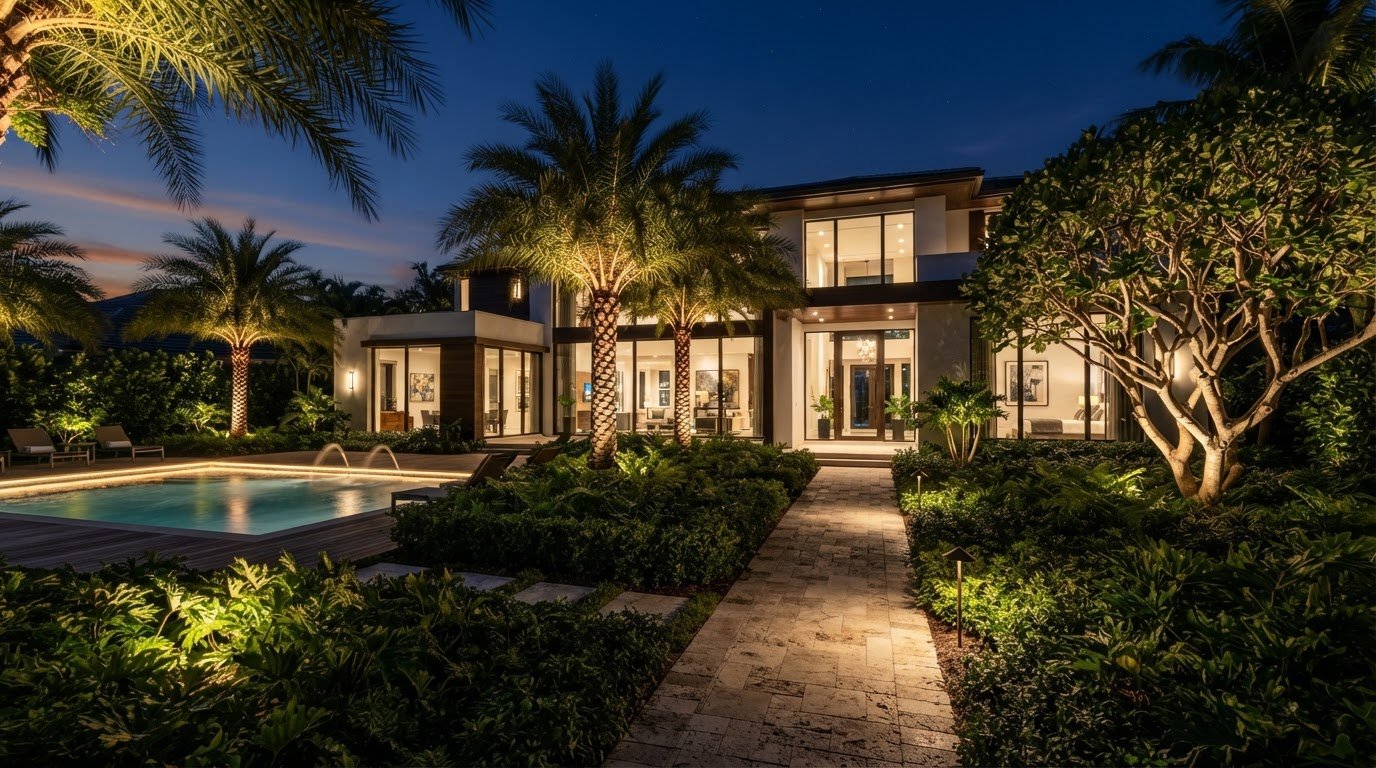
If you’re comparing options for “modern landscape lighting design Boca Raton,” start with the home and its surroundings, not a lineup of fashionable lights. A thoughtful plan can draw attention to a sculptural tree, guide the way along a walkway, or add a soft glow around a pool without cluttering the view or creating glare.
It’s understandable to wonder what deserves light and how to balance appearance with visibility and energy use. The answer isn’t to illuminate everything. A cohesive design gives each layer a purpose and considers how you use outdoor spaces after dark, from arriving home to relaxing or entertaining outside.
This guide explains how to shape a refined, functional nightscape for your property. You’ll explore lighting priorities for architecture, gardens, walkways, pools, fountains, and artwork, along with ways to keep the overall effect comfortable and composed. You’ll also learn how a lighting designer and engineer can coordinate a custom plan with professional LED installation, so the finished design feels intentional from concept through implementation.
Key Takeaways
- A modern landscape lighting plan for Boca Raton starts with a coordinated design, not simply adding more fixtures.
- Use layers and contrast to bring depth to the nightscape while keeping brightness comfortable and controlled.
- Compare uplighting, downlighting, path lighting, and architectural grazing by their intended effect and placement.
- Map outdoor routines, key views, focal points, and routes to decide which areas deserve priority.
- Purposeful design, engineering, installation, and final review help translate your priorities into a cohesive finished nightscape.
What Makes Modern Landscape Lighting Design Work in Boca Raton?
Modern landscape lighting is a coordinated plan for a home’s architecture, planting, circulation, and outdoor living areas. A designed system connects each illuminated feature to a purpose and to the overall view. Individually placed fixtures may light isolated spots without creating a cohesive nightscape.
For homes in Fort Lauderdale and nearby South Florida communities, a refined nightscape doesn’t need to be excessively bright. Thoughtful illumination can support visibility, bring out the home’s character, and make outdoor spaces more welcoming while keeping light controlled and comfortable. That restrained approach also reflects the light-pollution awareness promoted by DarkSky International.
How Modern Outdoor Lighting Balances Beauty and Function
A considered plan brings visual focal points, comfortable movement, and outdoor activities together. A softly illuminated architectural detail can establish the scene, while light along a walkway helps make the route easier to follow. Around a seating area, balanced illumination can support use without washing out the garden.
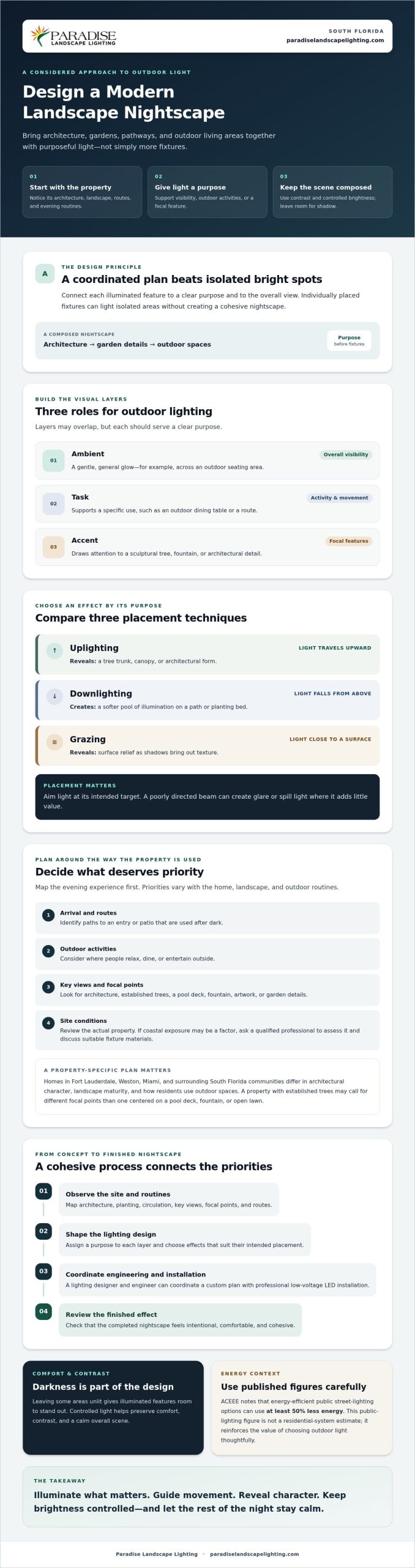
Placement often matters more than fixture count. Light directed onto a wall, tree, or path can create definition; a poorly aimed source may cause glare or spill light where it adds little value. Consider three useful layers:
- Ambient lighting provides gentle overall visibility, such as a soft glow across an outdoor seating area.
- Task lighting supports an activity, such as illumination near an outdoor dining table or along a route.
- Accent lighting draws attention to a feature, such as a sculptural tree, fountain, or architectural detail.
These layers can overlap, but each should serve a clear purpose.
Why South Florida Homes Need a Property-Specific Plan
Homes across Fort Lauderdale, Weston, Miami, and surrounding communities differ in architectural character, landscape maturity, and how residents use their outdoor spaces. A property with established trees may need different focal points from one with a pool deck, fountain, or open lawn. Evening routines matter too: routes to an entry or patio may deserve priority over areas that are rarely used.
Review the actual site before choosing fixtures. If a property may be affected by coastal conditions, ask a qualified professional to assess exposure and discuss suitable fixture materials rather than assuming one specification fits every location. Paradise Landscape Lighting designs and engineers residential low-voltage LED systems in South Florida. For more detail, explore the low-voltage lighting design guide. Its local communities include Fort Lauderdale, Weston, Southwest Ranches, Wilton Manors, Palm Beach, Miami, Miami Beach, Coral Gables, Plantation, West Palm Beach, and Coconut Grove.
Build a Modern Nightscape with Layers, Contrast, and Restraint
A cohesive nightscape doesn’t make every surface equally bright. It uses layers to guide the eye from the home’s architecture to garden details and the outdoor spaces in between. A softly lit facade might provide visual structure, while a brighter accent brings a specimen plant or textured wall into focus. Leaving some areas in shadow gives illuminated features room to stand out.
Three techniques can shape that composition. Uplighting sends light upward to emphasize a tree trunk, canopy, or architectural form. Downlighting casts light from above, creating a softer pool of illumination on a path or planting bed. Grazing places light close to a textured surface so shadows reveal its relief. Each effect depends on careful direction and placement. A beam aimed beyond its target can create glare or unwanted spill.
A composed nightscape uses darkness as deliberately as light: controlling glare protects comfort, while unlit areas preserve contrast and calm. This restrained approach also supports responsible outdoor lighting. The ACEEE discusses the energy benefits of energy-efficient street lighting, including options that can use at least 50% less energy. That public-lighting figure shouldn’t be treated as a residential-system estimate, but it reinforces the value of choosing light thoughtfully.
Use Light to Reveal Architecture and Garden Structure
Start with what deserves attention, not with a fixture count. A narrow beam may define a tree’s branching form, while a broader wash can give a facade a gentle presence. Light placed close to a textured wall can reveal depth; aimed into a neighbor’s view, it may distract instead. Walk the property after dark and consider how each beam looks from the patio, entry, and rooms facing the garden. Let the actual architecture, planting, and sightlines guide the layout.
Create Comfortable Paths and Outdoor Living Areas
Walkway lighting should make a route legible without turning it into a bright strip that overwhelms nearby planting. Pool decks call for a different balance: consider how illumination appears across the water and around areas used for movement. Treat lighting as a design element, not a substitute for appropriate pool-safety measures. A fountain may benefit from carefully directed light that reveals water movement without producing distracting reflections. For more ideas specific to these settings, see the pool and fountain landscape lighting guide.
For a property-specific plan, homeowners can review custom landscape lighting design with a professional who considers both visual intent and practical implementation.
Compare Lighting Choices Before Settling on a Modern Design
Choose a lighting approach for the effect you want, then consider how it fits the home and the surrounding view. In modern landscape lighting design Boca Raton, fixture selection supports the composition; it doesn’t define the whole design. The same technique can feel subtle or dramatic depending on its direction, brightness, and relationship to nearby features.
| Approach | Intended effect | Suitable location | Common design caution |
|---|---|---|---|
| Uplighting | Emphasizes vertical form and height | Tree trunks, specimen plants, or selected facade details | Aim carefully to avoid glare and spill into unwanted views. |
| Downlighting | Creates a softer pool of light from above | Garden edges, seating areas, or surfaces below an elevated position | Check for harsh shadows and direct views of the light source. |
| Path lighting | Defines a walking route | Walkways and transitions between outdoor areas | Avoid an overly bright, evenly spaced runway effect. |
| Architectural grazing | Reveals texture through light and shadow | Textured walls or distinctive exterior surfaces | Confirm the surface benefits from close, angled illumination. |
Choose Light Placement for the Feature, Not the Trend
Uplighting can give vertical forms presence, while downlighting can softly define a surface or help clarify circulation. For a more understated contemporary exterior, reflected or indirect light may suit the architecture better than a visible, bright beam. Before settling on placement, check sightlines from patios, windows, and entry points. Aiming away from direct views can reduce glare, while careful beam control helps limit spill onto neighboring areas or features that aren’t meant to draw attention.
Select Color and Brightness for a Cohesive Result
Color temperature changes the mood: a warmer appearance may feel relaxed, while a cooler one can create a crisper impression. Neither is universally best. Consider how the chosen color reads beside the home’s exterior, planting, and other illuminated areas. Consistency helps separate elements feel like parts of one composition, while deliberate contrast can set a focal point apart.
Brightness should also suit the feature and the intended viewing position. A prominent facade detail may call for a different level of emphasis than a path or garden edge. Color-changing LED lighting can introduce a distinct effect for a particular feature or occasion, but it isn’t required for a modern design. Treat it as one option, and choose it only when it supports the overall visual intent.
Plan Landscape Lighting Around Your Boca Raton Property
A useful lighting plan begins with how you experience the property after dark, not with a fixture list. For modern landscape lighting design Boca Raton homeowners can plan around their own needs, follow a simple sequence: map outdoor uses, identify features worth highlighting, assess routes between spaces, then set priorities. This keeps practical needs and visual ambitions in view from the start.
Look at the home from more than one angle. Note what you see from patios, main rooms, entry points, and the street. An area that feels balanced from the front walk may look too bright from a bedroom window. Record existing fixtures, dark spots, possible glare, and planting that may change as it grows or is updated. These observations give a designer a clearer picture of the property’s nighttime character.
Prepare a Useful Site Brief Before Design Begins
Capture information that can guide real decisions. A short written brief and a set of photographs can help connect household routines to design priorities.
- Map outdoor use: List areas used after dark, such as a patio, pool deck, entry, or garden seating area, and note the activities each supports.
- Mark features: Identify architectural details, mature or specimen plants, sculpture and artwork, paths, fences, and water elements you’d like considered.
- Record viewpoints and issues: Take photos from key locations and flag dark routes, existing lights that feel harsh, and beams that may cause glare.
Also note planned landscape changes. A new planting bed or altered patio layout can affect where light is useful, so sharing future plans can help the design accommodate them.
Set Priorities for a Boca Raton Lighting Consultation
Separate essential circulation and task needs from optional accents and decorative effects. First identify routes and outdoor areas that need usable visibility, then decide whether a facade, fountain, or artwork deserves added emphasis. Share the ambience you want, how much ongoing maintenance you’re prepared to consider, and any expected changes to the property.
Local conditions should be assessed rather than assumed. If the property is near the coast, ask the design professional to review exposure and discuss appropriate fixture materials. Confirm whether any local requirements apply to your specific site and proposed work instead of relying on general guidance. To see how design and engineering can be coordinated for a Boca Raton property, read this Boca Raton bespoke lighting design overview.
Once your priorities are clear, explore custom landscape lighting design to start shaping a plan around your home and outdoor routines.
Turn Your Modern Landscape Lighting Design into a Finished Nightscape
A refined nightscape takes more than a strong concept. The design has to translate into a considered system that works with the home, landscape, and homeowner’s priorities. For modern landscape lighting design Boca Raton homeowners can rely on, the process should connect visual intent with practical implementation, from the initial discussion through installation and a final review.
A polished design doesn’t require a large number of fixtures. Purposeful placement can give a facade definition, make a route easier to follow, or draw attention to a garden feature without lighting every area. The right approach depends on what the property needs and how each beam contributes to the overall composition.
What to Expect from a Professional Design and Installation Process
The process begins with a discussion of the home, outdoor routines, and features the homeowner wants to highlight. A lighting designer can shape those priorities into a cohesive plan, while a lighting engineer helps translate the visual concept into a considered low-voltage LED system. This collaboration brings artistic choices and practical planning together before installation begins.
Installation puts the plan into place. A final review gives the homeowner and project team an opportunity to consider how the lighting reads across the property and whether the intended balance has been achieved. Maintenance can help keep the system aligned with the landscape as plants grow or outdoor spaces change. Paradise Landscape Lighting offers residential design, engineering, installation, and maintenance in Boca Raton and surrounding South Florida communities.
Choose a Design Partner for Your Boca Raton Home
As you evaluate a design partner, ask how design, engineering, installation, and maintenance are coordinated. Review examples of relevant residential work, and explain your property’s goals, including which areas you use after dark and what you’d like to see from key viewpoints. A clear conversation can help establish whether the proposed approach fits your home rather than applying a generic layout.
With your priorities in hand, you can discuss how a custom plan might bring them together. Discuss a custom lighting design for your Boca Raton property with Paradise Landscape Lighting.
Bring Your Boca Raton Nightscape into Focus
A successful outdoor lighting plan is built around your home, not a fixture trend. Start with the areas you use after dark, choose a few features to highlight, and shape the result with purposeful layers, comfortable brightness, and controlled contrast. The most polished designs balance practical visibility with the character of the architecture and landscape.
For modern landscape lighting design Boca Raton homeowners can tailor to their property, professional design and engineering can help turn those priorities into a cohesive, workable plan. Paradise Landscape Lighting provides custom residential low-voltage LED design, installation, and maintenance in Boca Raton and surrounding South Florida communities. Its team includes a lighting designer and a lighting engineer, connecting visual ideas with thoughtful system planning.
Your outdoor spaces have their own rhythms and focal points. Discuss a custom landscape lighting design for your home and take the next step toward a nightscape that feels both useful and distinctly yours.
Frequently Asked Questions
What is modern landscape lighting design?
Modern landscape lighting design is a coordinated plan that uses light to support outdoor visibility and bring attention to selected parts of a property. It considers architecture, planting, pathways, and outdoor living areas together rather than treating each fixture as a separate decision. The result can feel welcoming and composed without making every space equally bright. Placement, direction, and restraint shape the overall effect.
How do I make landscape lighting look modern?
Focus on purposeful placement, controlled brightness, and a cohesive appearance rather than choosing fixtures because they’re fashionable. Use light to emphasize selected features, such as a textured wall or tree, and keep routes legible without turning them into bright strips. Consider how the lighting looks from patios, main rooms, entry points, and the street. A few well-planned effects can create a more unified impression than scattered illumination.
Which landscape lighting is best for a Boca Raton home?
No single lighting type suits every Boca Raton home; the right choices depend on its architecture, landscape, outdoor routines, and views after dark. A plan might combine walkway lighting with architectural or garden accents. Paradise Landscape Lighting serves Boca Raton and South Florida communities including Fort Lauderdale, Weston, Southwest Ranches, Wilton Manors, Palm Beach, Miami, Miami Beach, Coral Gables, Plantation, West Palm Beach, and Coconut Grove.
Is low-voltage LED lighting suitable for landscape lighting?
Yes. Low-voltage LED lighting is a suitable option for many residential outdoor lighting plans, and Paradise Landscape Lighting designs and installs custom low-voltage LED systems for homes. Suitability for a particular property depends on the project’s goals and site conditions. A lighting designer and lighting engineer can help connect the desired visual effects with a system considered for the home and its outdoor features.
How can I avoid glare from outdoor landscape lights?
Reduce glare by considering where light sources can be seen from common viewpoints and aiming illumination at the intended feature. Before finalizing placement, check sightlines from windows, patios, walkways, and entry points. Shielding or adjusting a light’s direction may help limit direct views and unwanted spill. A nighttime review can reveal distractions that aren’t obvious in daylight and help refine the composition.
Can landscape lighting highlight a pool, fountain, and garden in one design?
Yes. A coordinated plan can include pool deck lighting, fountain lighting, and garden accents while giving each area an appropriate role. The design should consider how illumination appears around water, where people move, and which garden details deserve emphasis. Pool areas also call for attention to applicable safety requirements, so confirm project-specific considerations with a qualified professional rather than assuming one approach fits every site.
What should I prepare before a landscape lighting consultation?
Make a short list of outdoor areas you use after dark and what you do in each. Note features you’d like considered, such as architectural details, plants, artwork, paths, or water elements. Photos from patios, main rooms, entry points, and the street can show important views. Also record existing fixtures, dark areas, glare concerns, maintenance preferences, and planned landscape changes.
Return to News