
Luxury Landscape Lighting Design for Palm Beach Patios
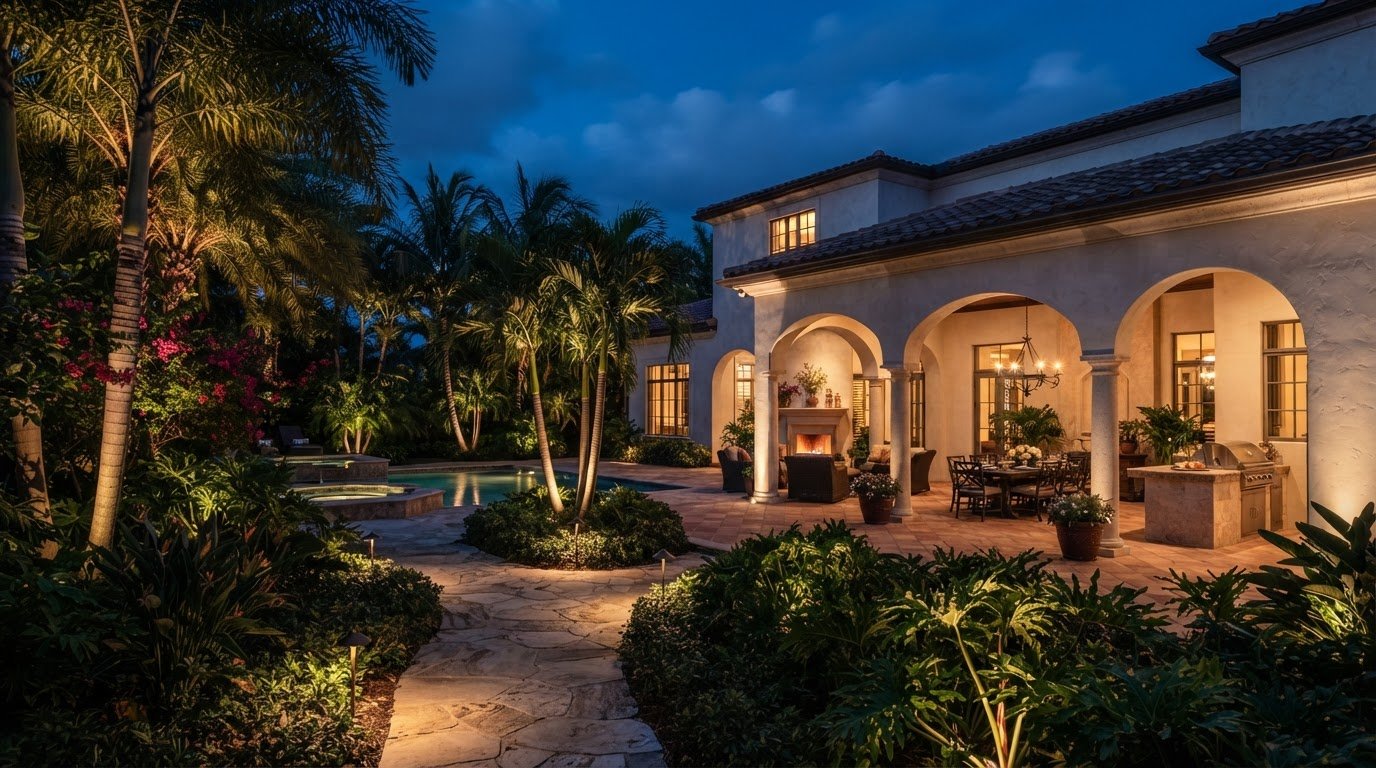
Luxury landscape lighting should reveal a Palm Beach home’s character after dark, not compete with it. Thoughtful luxury landscape lighting design in Palm Beach balances architectural accents with softly illuminated trees, walkways, patios, walls, and outdoor kitchens. The result is a cohesive, welcoming setting made for evening use.
It’s natural to want lighting that adds beauty and helps guests move comfortably around the property. Start by considering how each area is used and what deserves attention, then shape the illumination around those priorities instead of relying on uniform brightness. Custom lighting can complement the architecture, frame trees and garden features, guide movement along paths, and bring patios and outdoor kitchens into the evening scene. Thoughtful placement helps the whole landscape feel polished and inviting.
Key Takeaways
- Plan lighting around the home’s architecture and outdoor layout so each fixture supports a clear visual or practical purpose.
- Use layered illumination to make patios, walls, and outdoor kitchens feel welcoming without washing out their textures.
- Shape light around trees, walkways, and architectural details to guide movement and create depth after dark.
- Consider how the landscape is used in the evening when choosing focal points and coordinating the overall design.
Custom landscape lighting design and installation
A successful plan gives each light a purpose: revealing a façade, guiding a path, or extending patio use after sunset. In Palm Beach, the design should also reflect how the home and garden work together as connected outdoor spaces.
Lighting Design and Planning
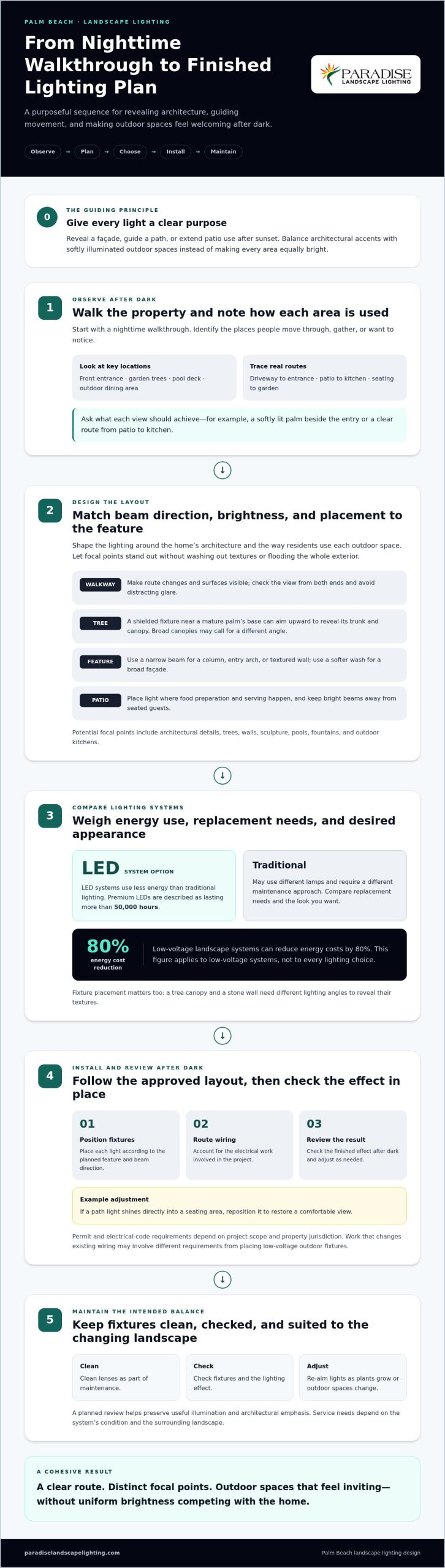
Begin with a nighttime walkthrough of the property, noting the front entrance, garden trees, pool deck, and outdoor dining area. Then identify the view each feature should create, such as a softly lit palm beside the entry or a clear route from patio to kitchen. A designer can coordinate beam direction, brightness, and placement so focal points stand out without making every space equally bright. For luxury landscape lighting design in Palm Beach, the plan should respect the home’s architecture and the way residents use each area.
Installation and Aftercare
Installation follows the approved layout: fixtures are positioned, wiring is routed, and the finished effect is reviewed after dark. For example, a path light may need repositioning if it shines directly into a seating area. After installation, maintenance can include cleaning lenses, checking fixtures, and adjusting lights when plants grow or outdoor spaces change. A planned review helps preserve the intended balance between useful illumination and architectural emphasis. Service needs depend on the system’s condition and the landscape around it.
LED and Traditional Systems
LED systems use less energy than traditional lighting, and low-voltage landscape systems can reduce energy costs by 80%. Premium LEDs are described as lasting more than 50,000 hours. Traditional systems may use different lamps and require a different maintenance approach, so compare energy use, replacement needs, and the desired appearance before choosing. LED performance also depends on thoughtful fixture placement; a tree canopy and a stone wall need different lighting angles to reveal their textures.
Luxury Lighting Inclusions
A Palm Beach plan can bring together architectural accents, trees, walkways, patios, walls, sculpture, pools, fountains, and outdoor kitchens. Each feature calls for a distinct purpose: a walkway needs legible edges, while a wall can add depth behind a dining area. Commercial lighting design and installation also begins with the site’s uses and focal points, but commercial spaces have different operating needs from a private residence. Define the project type, then prioritize the spaces and features the lighting should serve.
Hardscape, patio, wall, and outdoor-kitchen lighting
On Palm Beach County patios, lighting can distinguish a dining table from the surrounding hardscape. A controlled glow along a retaining wall can reveal its texture without flattening the space. Near an outdoor kitchen, put light where food preparation and serving happen, while keeping bright beams away from seated guests. In a lounge area, subtle perimeter lighting can define the patio edge and preserve a relaxed nighttime atmosphere. Consider how people move between the kitchen, seating, and garden before setting fixture locations.
Permit and electrical-code requirements in Palm Beach depend on the project scope and property jurisdiction. Work that changes existing wiring may involve different requirements from placing low-voltage outdoor fixtures. The design should account for both the lighting layout and the electrical work involved. To support curb appeal and usability, illuminate transitions such as a step beside the patio or the route from the driveway to the entrance. Avoid aiming a fixture directly toward a neighbor’s windows or a driver’s sightline.
In coastal settings, choose outdoor fixtures and finishes suited to salt air and moisture. Exposure varies by location: a fixture under a covered wall faces different conditions from one beside an open pool deck. Consider each fixture’s placement and environmental suitability, then coordinate its finish with nearby stone, wood, or metal so the hardware complements the home instead of drawing attention from it.
To limit unwanted spill, aim light downward and toward a defined feature, such as a kitchen counter or patio step. Shielded fixtures and carefully directed beams help keep light out of neighboring windows and planted areas. Use illumination only where evening activities need it, and turn off accent lights when those areas are no longer in use. A thoughtful outdoor lighting plan can balance comfortable entertaining with a more restrained nighttime environment.
Lighting for trees, walkways, and architectural features
Start with the routes people actually take, from the driveway to the entrance or patio. Then use fixtures to give trees and architectural details a deliberate presence after dusk.
Tree and Walkway Illumination
For a mature palm, place a shielded fixture near its base and aim upward to reveal the trunk and canopy. A broad-canopied tree may need a different angle to highlight its shape without lighting empty foliage. Along a walkway, position fixtures so changes in direction and surface are visible. Check the route from both ends, including the view from the front door, to keep glare from distracting guests.
Architectural Feature Lighting
Use a narrow beam to emphasize a column, entry arch, or textured wall, and a softer wash for a broad façade. The goal is to reveal shape and material, not flood the entire exterior. In a garden, a lit fountain or sculpture can become a focal point against darker planting. Compare the feature’s appearance from the street and from a patio before settling on fixture direction and intensity.
Coordinate fixture locations with builders and landscape architects before paving, planting, or wall construction is complete. A shared plan can account for final path edges, tree locations, and façade materials. Installing a walkway fixture after the stonework is finished, for example, may limit suitable positions. Early coordination helps integrate lighting with the landscape rather than adding it as an afterthought.
Security, ambiance, and curb appeal call for different lighting choices. A clearly illuminated entrance helps visitors identify the door, while a softly lit tree adds depth without dominating the view. Review sightlines from the road, windows, and seating areas. Aim each fixture at a defined target, then adjust it to avoid shining into neighboring properties or a driver’s eyes. This balances visibility with nighttime atmosphere.
Custom landscape lighting for luxury South Florida homes
For Palm Beach estates, look for a residential lighting designer experienced in luxury landscape lighting design in Palm Beach, with a portfolio showing complete outdoor compositions. A strong plan connects the home’s façade, gardens, paths, and entertaining areas. Review how a designer handles a long entry drive leading to a columned front door. The design should explain what receives emphasis, how people move, and where softer light preserves the nighttime mood.
Luxury landscape lighting design in Palm Beach should reflect how the property is used. List the evening scenes that matter: arriving at the entrance, dining on a terrace, crossing a garden path, or gathering near a pool. Then choose focal points for each view. A mature palm can frame the approach, while a fountain can anchor the garden when viewed from the patio. This approach elevates the property without making every feature compete for attention.
For a cohesive result, consider the house and landscape as one design. Carefully directed light can reveal the texture of a pale stone façade, while a sculpture calls for its own focal treatment. Coordinate fixture positions with planting plans and hardscape work so lighting complements finished paths, walls, and garden beds. If the estate has several entertaining spaces, map the routes between them before deciding where illumination belongs.
Ask a prospective designer to explain the purpose of each layer using examples from your own property. The entry should be easy to identify, a garden feature should stand out from its surroundings, and seating areas should feel comfortable rather than overly bright. A design-and-engineering approach can connect the visual plan with installation details. To shape a tailored plan for your estate, request custom landscape lighting design.
Paradise Landscape Lighting: Landscape Lighting Design
Paradise Landscape Lighting can help turn a Palm Beach lighting vision into a coordinated residential design, from initial planning and engineering through installation and maintenance. Its lighting designer and lighting engineer create custom low-voltage LED solutions for outdoor spaces, including architectural features, gardens, pools, and fountains.
Consider a tailored design when you want to connect several areas, such as a pool deck, a sculpture, and the approach to your home, without losing the character of each feature. Paradise Landscape Lighting also provides Sculpture and Artwork Lighting and Pool Deck Lighting, allowing these focal areas to be considered within the broader composition.
For a custom plan shaped around your home and how you use its outdoor spaces, contact Paradise Landscape Lighting or visit paradiselandscapelighting.com.
Shape the Evening Around Your Home
The next step is to choose the moments you want your outdoor spaces to support. Picture arriving home after dusk, hosting dinner on the patio, or viewing a sculpture from indoors. Those everyday scenes can guide fixture placement and help your lighting feel intentional rather than decorative alone. A tailored plan for luxury landscape lighting in Palm Beach can also evolve with your property, whether you’re refreshing one focal area or coordinating the full landscape.
Paradise Landscape Lighting brings design and installation together, with Landscape Lighting Design, LED Lighting Installation, and Sculpture and Artwork Lighting among its services. Share the features and evening activities you want to prioritize, then explore a design that reflects your home’s character.
Contact Paradise Landscape Lighting to discuss your outdoor lighting vision and take the next step toward a more inviting evening setting.
Frequently Asked Questions
What is the process for designing and installing luxury landscape lighting?
The process moves from defining priorities to designing, installing, and reviewing the system. Identify the views and activities that matter most, such as arriving at the entrance or dining outdoors. Map focal points and routes, then coordinate fixture placement with existing landscaping and hardscape. After installation, review the result at night and adjust any areas that feel uneven or distracting.
Return to News