
Low Voltage Outdoor Lighting in South Florida: Benefits, Safety, and Design
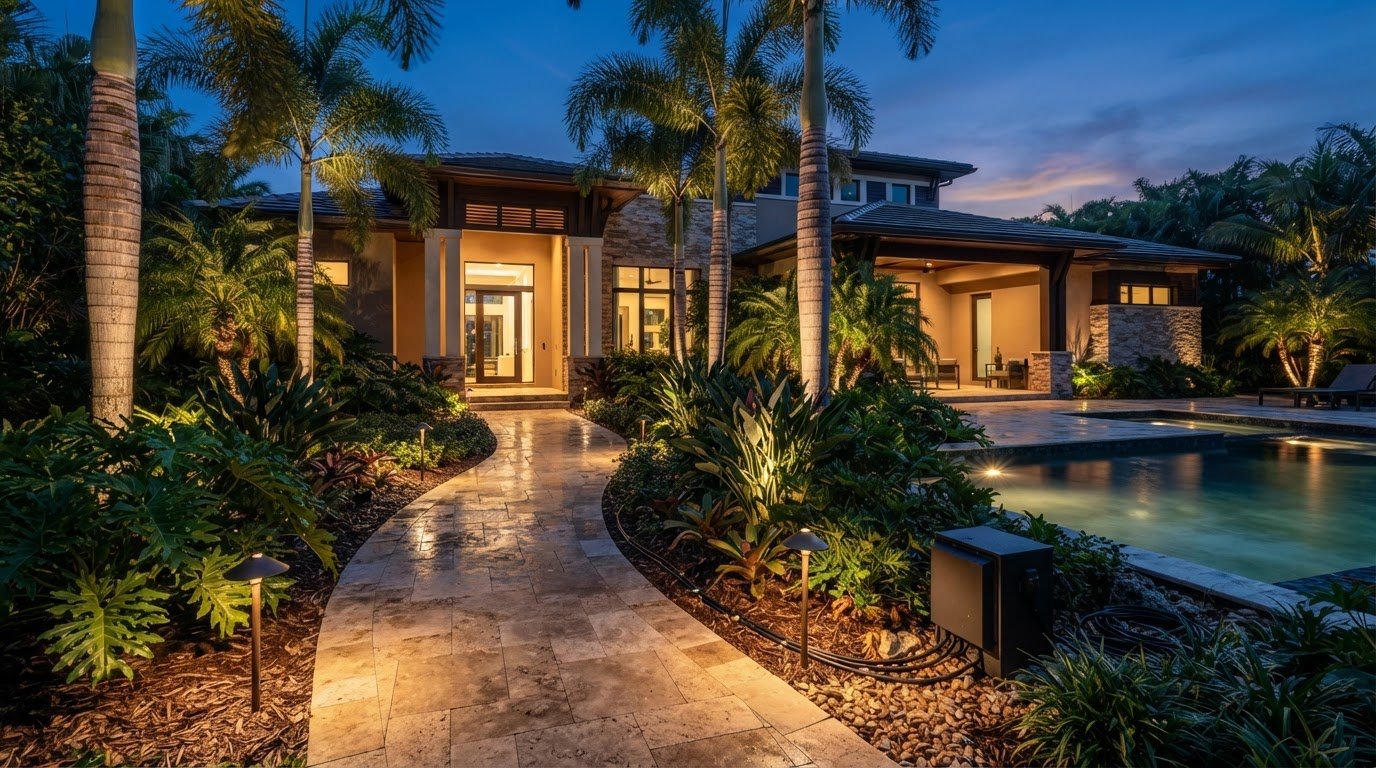
What makes outdoor lighting dependable in South Florida? It is not simply choosing brighter fixtures. Rain, humidity, tropical planting, irrigation, and coastal exposure all affect where lights and cables should go. Low voltage outdoor lighting South Florida projects need a plan that balances useful illumination, safety, and visual impact with the conditions on the property.
A typical low-voltage system uses a transformer to supply lower-voltage power to outdoor fixtures. Cable routes, circuit planning, and fixture placement determine how well the system serves walkways, gardens, pool decks, and architectural features. This guide explains the main components, practical planning decisions, and ways South Florida conditions can influence placement and maintenance. Paradise Landscape Lighting brings design, engineering, installation, and maintenance together to create a tailored plan for residential outdoor spaces.
Key Takeaways
- A transformer supplies lower-voltage power to outdoor lighting circuits, while LED fixtures create the visible illumination.
- Cable routes, circuit loads, and fixture placement affect a system’s safety, control, and performance.
- Compare the benefits and trade-offs of low-voltage lighting against your property’s layout and lighting goals.
- Plan around rainfall, humidity, irrigation, and coastal exposure, which can vary across a single property.
- Coordinated design, engineering, installation, and maintenance carry a lighting plan from initial goals to a finished nightscape.
What Is Low-Voltage Outdoor Lighting in South Florida?
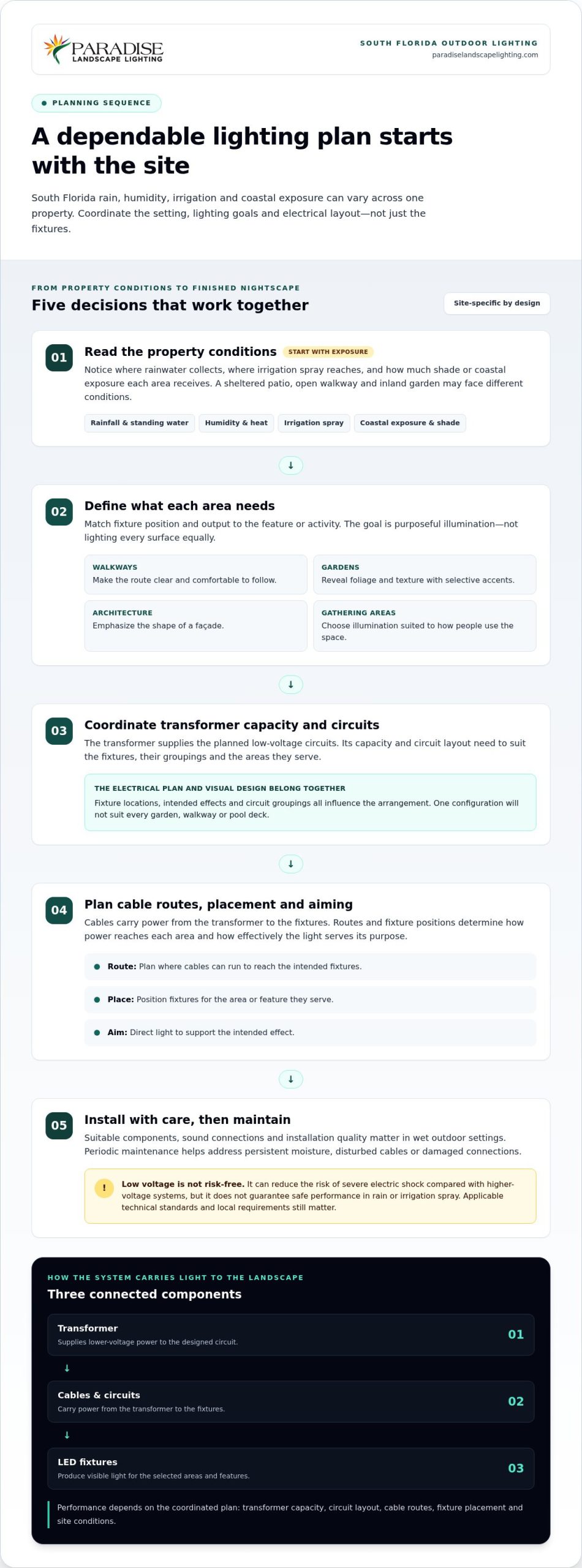
A transformer supplies lower-voltage power to outdoor lighting circuits. Cables connect the transformer to the fixtures, and the fixtures are positioned to illuminate specific features or areas. In a low-voltage LED system, the transformer supplies power and the LEDs produce the visible light.
Low-voltage outdoor lighting uses a transformer to deliver reduced-voltage power to outdoor fixtures, but lower voltage doesn’t make a lighting system risk-free. Safe, reliable operation still depends on suitable components, sound connections, and a layout designed for the site. For a foundational overview of fixture purposes and outdoor lighting considerations, see Outdoor lighting basics.
Different areas need different lighting effects. Selective accents can reveal foliage and texture in a garden. Path lighting should make the route clear and comfortable to follow. Architectural lighting can emphasize a façade’s shape, while an outdoor gathering area needs illumination suited to how people use it. Rather than lighting every surface equally, match each fixture’s position and output to the feature or activity it serves.
How does a low-voltage lighting system work?
The transformer supplies the designed lighting circuits, and cables carry power to the fixtures. The transformer’s capacity and circuit layout are planned around the fixtures and areas in the design. There is no single configuration that suits every garden, walkway, or pool deck. The number and location of fixtures, cable routes, and the desired lighting effects all influence the layout.
Good system planning connects the visual goals to practical decisions: where cables can run, how fixtures should be aimed, and which circuits serve each area. Paradise Landscape Lighting combines lighting design and engineering to develop a coordinated plan for residential outdoor spaces.
Why does South Florida’s setting matter?
Humidity, rainfall, heat, irrigation, and coastal exposure can all influence fixture placement and component selection. Conditions may vary across a single property. A sheltered patio may receive less direct rain than an open walkway, while an inland garden may have different exposure from a landscape closer to the coast.
Low voltage outdoor lighting South Florida homeowners plan should therefore suit the actual site, not follow a standard fixture layout. Consider where rainwater collects, which areas receive irrigation spray, and how much shade or coastal exposure each location gets. These observations help guide placement and component choices, without assuming any fixture is immune to moisture, corrosion, or wear.
How Low-Voltage Outdoor Lighting Balances Safety, Control, and Performance
A well-planned system coordinates the transformer, cable routes, circuit loads, and fixture locations. The transformer supplies the designed low-voltage circuit from the property’s power source. The layout determines how power reaches each fixture and how effectively the light serves its intended area. Lower voltage can reduce the risk of severe electric shock compared with higher-voltage systems, but it does not make an installation risk-free.
Transformer capacity, circuit layout, and fixture placement work together to deliver the intended lighting performance. If a plan does not account for how fixtures are grouped or how cables reach them, the system may not provide the intended coverage or control. The electrical plan and visual design need to work together from the start.
What does the transformer do?
The transformer changes the supply from the property’s power source to the lower-voltage supply used by the outdoor lighting circuit. Its location affects how cables can reach the planned fixtures, and its capacity must suit the design. The right arrangement depends on fixture locations, how they are grouped, and the purpose of each outdoor area.
For example, a front walk and a garden feature may call for different fixture positions and cable routes, even when they are part of one overall design. A lighting designer and engineer can coordinate these visual and technical details before installation.
Is low-voltage outdoor lighting safe in wet weather?
Low voltage is a system characteristic, not a guarantee of safe performance in rain or irrigation spray. Components need to suit their locations, connections need to be properly planned, and fixtures should be positioned with nearby water exposure in mind. Installation quality also matters. Persistent moisture, disturbed cables, or damaged connections can affect a system, so periodic maintenance is part of responsible ownership.
Outdoor electrical work also needs to account for applicable technical standards and local requirements. Those details depend on the installation and should be addressed as part of the project. A general description of low-voltage lighting is not a substitute for code guidance.
LEDs are a common light source in low-voltage outdoor systems. The U.S. Department of Energy explains LED technology and its energy-efficiency benefits, but the fixture is only one part of overall performance. A considered plan connects the light source to suitable circuits, purposeful aiming, and the conditions around the property. For low voltage outdoor lighting South Florida homes can tailor to their needs, explore custom outdoor lighting design that brings engineering and visual goals together.
Low-Voltage Outdoor Lighting Benefits and Trade-Offs for South Florida Homes
Low-voltage lighting can suit many residential outdoor plans, but it is not automatically the right fit for every property or lighting need. Reduced-voltage circuits and flexible fixture placement can support layered landscape designs. Line-voltage lighting may suit projects with different electrical needs or existing infrastructure. The choice depends on the space, how it will be used, and how the system can be planned.
LEDs, careful aiming, and organized circuits can balance useful illumination with a refined appearance. A fixture aimed at a tree can emphasize its foliage without lighting the whole garden. Path lights should make a route easy to follow, while an outdoor activity area needs lighting suited to its use. In each case, consider glare and light spilling into neighboring areas as well as the feature being illuminated.
| Consideration | Low-voltage system | Line-voltage system |
|---|---|---|
| Application | Can be planned for landscape accents, paths, and selected outdoor features. | May suit projects shaped by particular electrical needs or existing infrastructure. |
| Planning needs | Transformer capacity, circuit layout, cable routes, and fixture locations work together. | System design must account for the property’s electrical setup and intended use. |
| Key consideration | Performance depends on a coordinated plan, suitable components, and installation. | Suitability depends on the project; it isn’t inherently better or worse for every application. |
Can low-voltage lighting be bright enough outdoors?
Yes. Low-voltage fixtures can provide useful illumination when they are selected and positioned for the task. Perceived brightness depends on the fixture, beam direction, distance from the target, and nearby surfaces and foliage. A subtle planting-bed accent serves a different purpose from lighting that guides people along a walkway or supports activity on a pool deck. Decide what each area needs to reveal or make easier to use instead of judging a design by fixture count alone.
When might another approach suit a project better?
Let the property layout and lighting purpose guide the decision. A small garden accent plan has different requirements from a complex property with multiple outdoor areas, architectural features, and long cable routes. More involved layouts benefit from careful engineering so system capacity and fixture placement support the intended result. There is no universal setup. A tailored design makes the trade-offs clear and connects the electrical plan to how you want the property to look and function.
For low voltage outdoor lighting South Florida homes, the goal is to match the system approach to the property rather than force every lighting need into one solution.
Planning Low-Voltage Outdoor Lighting Around South Florida Conditions
A useful lighting plan starts with the property and how you want to experience it after dark. In South Florida, rainfall, humidity, heat, irrigation, and coastal exposure influence practical choices, but conditions can vary from one part of a yard to another. Account for those differences instead of treating every fixture location alike.
What should homeowners assess before planning?
Start with a site review. Note the views you want to highlight, the routes people use, and the areas where you gather. Then identify the physical conditions that may affect fixture placement and system layout:
- Goals: Decide whether the priority is guiding movement, highlighting planting or architecture, or creating a comfortable outdoor gathering space.
- Features: Map walkways, garden beds, trees, façades, pools, and other focal points.
- Exposure: Mark areas reached by irrigation spray, places where rainwater collects, and locations that are sheltered or exposed to coastal air.
- Change over time: Consider how vegetation may grow and whether future planting or landscape changes could affect fixture positions.
These details connect the desired nighttime appearance to practical fixture locations and cable routes. A lighting designer shapes the visual composition, while an engineer considers how the system layout supports those goals. For an example of how design and engineering come together, explore bespoke low-voltage landscape lighting design.
Once the site and goals are clear, planning can move from mapping features to designing circuits, followed by installation and ongoing maintenance. This sequence helps the system serve the property as it is, rather than relying on a generic layout. It is a practical way to plan low voltage outdoor lighting South Florida homeowners can enjoy across gardens, paths, and outdoor living areas.
How can maintenance support long-term performance?
Outdoor spaces change over time. Plants grow, irrigation patterns shift, and weather or landscape work can disturb fixtures. Periodically review fixture condition and aiming, look for visible changes to connections, and trim vegetation that blocks a beam or crowds a fixture. If a path becomes dim or an accent no longer reaches its intended feature, check whether new growth or a shifted light is changing the result.
Maintenance is part of a considered lighting project, not an afterthought. A system review can help keep fixture placement and lighting effects aligned with the evolving landscape. To plan lighting around your property’s features and exposure, explore a tailored outdoor lighting design.
From Low-Voltage Lighting Plan to a Finished South Florida Nightscape
A successful lighting project starts with how you want your property to feel and function after dark. Design translates those goals into a site-specific plan, engineering coordinates the system layout, and installation brings the plan into the landscape. Maintenance helps keep the result aligned with the property as it changes.
What happens during a professionally planned project?
The process begins with the property’s features and priorities. A lighting designer considers the views you want after dark, then plans fixture placement to complement gardens, architecture, walkways, pools, or fountains. Subtle accents can draw attention to a tree or façade, while carefully positioned path lights can define a route. Each fixture should serve a purpose rather than simply add to the count.
Engineering supports the practical side of the design, including circuit planning and installation decisions suited to the site. This coordination matters when several outdoor areas, varied exposure, or existing landscape features influence the layout. Paradise Landscape Lighting brings a lighting designer and lighting engineer together to consider the visual goals and system requirements as one plan. Installation puts that plan into practice, positioning fixtures and connecting them to create a cohesive nighttime experience.
How can a system evolve after installation?
A landscape continues to grow and change after installation. Planting can obscure a beam, weather or landscape work may shift a fixture, and an aiming angle that once worked may no longer highlight the intended feature. Maintenance can address fixture position, vegetation clearance, connections, and system performance, helping the lighting remain suited to the space.
An existing system may also be a candidate for LED retrofitting. Paradise Landscape Lighting upgrades existing halogen or outdated systems to LED technology. The right approach depends on the current fixtures and system, so savings should not be assumed to be universal. For more context, read about upgrading halogen landscape lights to LED.
With low voltage outdoor lighting South Florida homeowners can plan a distinctive nightscape that balances practical illumination with the character of the property. To see how a tailored design can shape your outdoor spaces, explore South Florida outdoor lighting services.
Shape an Outdoor Space That Comes Alive After Dark
Low-voltage lighting works best when it is designed around the property, not treated as a collection of fixtures. Transformer capacity, circuit planning, and thoughtful placement contribute to useful illumination. South Florida’s rain, humidity, irrigation, and coastal exposure make site-specific decisions especially valuable. A well-considered plan can balance practical visibility with the character of gardens, walkways, architecture, and outdoor living areas.
For low voltage outdoor lighting South Florida homeowners can tailor to their goals, coordinated expertise matters. Paradise Landscape Lighting brings a lighting designer and lighting engineer together to connect the desired nighttime effect with system requirements. Design, engineering, installation, and maintenance support the project from the initial plan through the life of the landscape.
Paradise Landscape Lighting designs and installs custom low-voltage LED systems for residential outdoor spaces in Fort Lauderdale, Weston, Southwest Ranches, Wilton Manors, Palm Beach, Miami, Miami Beach, Coral Gables, Plantation, West Palm Beach, and Coconut Grove. Explore custom outdoor lighting for your South Florida home and take the next step toward a more inviting nightscape.
Frequently Asked Questions
What is low-voltage outdoor lighting, and how does it work?
Low-voltage outdoor lighting uses a transformer to supply lower-voltage power to outdoor lighting circuits. The transformer connects to the property’s power source, and cables carry power to individual fixtures, where LED components produce light. A thoughtful plan coordinates transformer capacity, circuit layout, cable routes, and fixture placement. The configuration depends on the property and lighting goals, such as highlighting a garden, guiding people along a walkway, or illuminating architecture.
Is low-voltage outdoor lighting safe in rain and humidity?
Low voltage can reduce the risk of severe electric shock compared with higher-voltage systems, but it does not make outdoor lighting risk-free or automatically weatherproof. Safety and reliability depend on components suited to their locations, sound connections, considered placement, and proper installation. South Florida rain, humidity, and irrigation make site planning especially important. If fixtures, cables, or connections appear damaged or disturbed, have the system assessed and maintained.
Can low-voltage landscape lighting be bright enough for walkways?
Yes. A low-voltage system can provide useful walkway illumination when fixtures are selected and positioned for the route. Perceived brightness depends on the fixture, beam direction, distance, and surrounding surfaces or foliage. A path needs light that makes it easy to follow, while a garden accent may be intentionally subtle. A tailored design balances visibility with comfort instead of assuming that more fixtures or brighter light always create a better result.
Does low-voltage outdoor lighting use LED fixtures?
Yes. Low-voltage outdoor lighting commonly uses LED fixtures, and Paradise Landscape Lighting designs and installs custom low-voltage LED systems for residential outdoor spaces. The transformer supplies power to the circuit, while the LEDs within the fixtures create the visible light. Fixture choice and placement shape the look and function of the finished design, whether the goal is to accent planting, illuminate a pool deck, or highlight architectural details.
How should outdoor lighting be planned for South Florida’s climate?
Plan around your lighting goals and the property’s actual exposure to rainfall, humidity, heat, irrigation, and coastal conditions. Map walkways, planting, architecture, gathering areas, drainage, and sheltered locations before deciding on fixture and cable placement. Exposure can differ between Miami Beach’s coastal properties and inland landscapes in Weston or Plantation. Tailored planning for homes in Fort Lauderdale, Miami, and other South Florida communities connects site conditions with the intended nighttime effect.
How much maintenance does a low-voltage outdoor lighting system need?
Maintenance needs depend on the system and its surroundings; there is no single schedule for every property. Periodically check that fixtures remain in place, connections appear undisturbed, and light is still aimed at the intended feature. Trim vegetation if it blocks a beam, and review the system after landscape changes or visible disturbance. As plants grow and outdoor conditions shift, maintenance helps keep illumination aligned with how you use the space.
Return to News