
Lighting for Royal Palm Trees in West Palm Beach: Fixture Layout
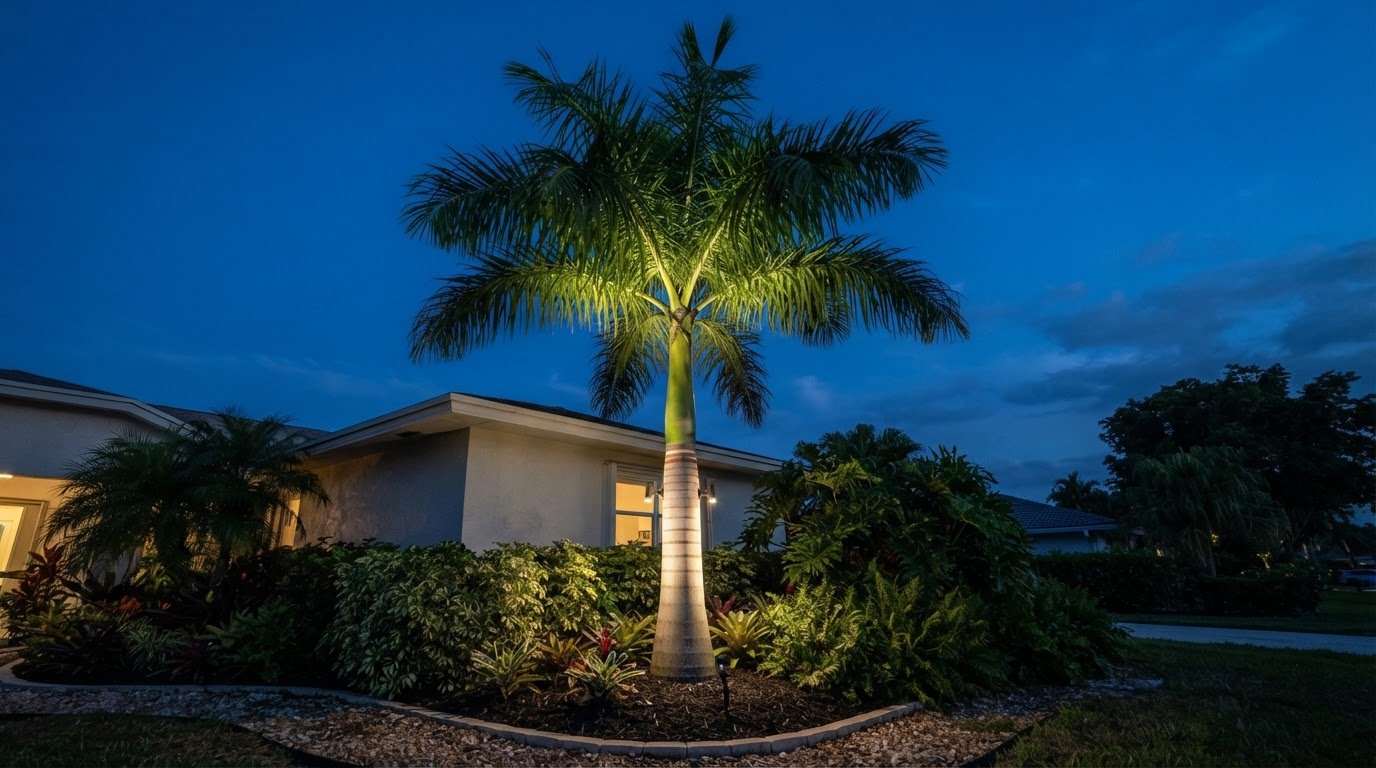
The trunk shouldn’t do all the work. Lighting for royal palm trees in West Palm Beach looks balanced when the trunk and broad crown are treated as separate targets, with light coming from more than one angle. Traditional ground uplighting may use two to four fixtures, depending on the tree’s size, while a ring system typically uses one fixture around the trunk. A wide crown needs its own light source for uplighting.
It’s natural to think one bright fixture can make a palm stand out, but aiming, beam spread, and the tree’s shape matter just as much as fixture count. A considered layout can define the trunk and crown without letting glare or excess brightness overwhelm the landscape.
Here, you’ll learn how lighting professionals estimate fixture quantities, compare ground uplighting with ring lighting, and plan cross-lighting for royal palm crowns and trunks. This will help you understand which layout may suit your property and why.
Key Takeaways
- Fixture quantity depends on the palm’s height, crown shape, and the effect the layout needs to create.
- Learn how warm-white color and beam spread help highlight a palm without overwhelming its surroundings.
- See why aiming fixtures from different angles can soften shadows and bring more dimension to the canopy.
- Understand how to plan distinct lighting for the trunk and crown, including when a professional design can help.
1. How professionals determine fixture quantities for ground uplighting versus ring lighting
Traditional ground uplighting for a palm may use two to four fixtures, depending on its size and the canopy’s shape. A ring lighting system typically uses one fixture around the trunk and provides 360-degree illumination. Professionals first decide whether the goal is to reveal the trunk, reach the crown, or create both effects. That target, along with tree height and beam spread, shapes the fixture layout.
Placement influences how smoothly light travels upward. Palm fixtures are commonly positioned 12 to 24 inches from the trunk, with the exact distance guided by tree size and beam spread. A narrow beam can direct light toward a tall palm without washing the surrounding landscape. Moving a fixture slightly away from the trunk can help its beam open as it travels toward the canopy. Since doubling fixture height results in one-quarter of the illumination, the design must account for distance and output.
Coastal installations call for durable materials such as brass, copper, or marine-grade stainless steel. Outdoor fixtures also need waterproof ratings suited to rain and humidity. Placement should keep fixtures clear of mowing and edging paths, helping prevent routine landscape work from disturbing them. Aiming and mounting are planned together so the light reaches the palm without obstructing maintenance access.
Growth matters, too. An adjustable fixture can be re-aimed as a palm’s trunk and canopy change, keeping the beam on the intended feature. After installation, assessing the effect after dark from the home’s windows and other lived-in areas makes it possible to refine the aim for a smooth, balanced result.
West Palm Beach and Palm Beach County requirements may depend on the property and installation details, so local rules should guide the design. A low-voltage system is not automatically exempt from permits; requirements depend on applicable local rules. Landscape-lighting professionals can design and install palm lighting. Lighting is for visual effect and does not protect royal palms from heat, pests, or storm damage.
2. What is the best way to light palm trees?
For residential outdoor lighting, professionals commonly choose warm-white LEDs between 2700 and 3000 kelvins. This range gives palm trunks and fronds a warm appearance against the night landscape. The right choice also depends on nearby materials, paving, and other lights. A consistent color temperature across the palm and surrounding areas helps the illumination feel intentional rather than mismatched.
Color rendering matters alongside color temperature. Professionals look for a color rendering index of 85 or higher, with 90 or higher preferred. A higher CRI helps foliage and trunk tones appear more natural under outdoor illumination. For a royal palm, the designer considers how the light will reveal the trunk’s surface and the canopy’s fronds without turning the tree into a harsh focal point.
Beam spread should suit the palm’s form. A 30-degree spread is recommended for tall, slim palms such as Queen Palms or Foxtail Palms. Wider canopies and shorter, fuller palms, including Bismarck or Sabal Palms, suit a 45-to-60-degree spread. Multi-head palms, such as double or triple Christmas Palms, call for a broader 100-to-120-degree spread. These distinctions help direct light toward foliage rather than creating excessive brightness around the tree.
Professionals also balance output with height. A general guideline is 50 to 100 lumens per foot of tree height. For context, a 10-foot palm typically requires 500 to 1,000 lumens, while a 20-foot palm may need 1,000 to 2,000 lumens, depending on its type. The goal is controlled emphasis, not glare or visual clutter. For a cohesive plan, a tailored palm-lighting layout can coordinate color, spread, and output with the rest of the landscape.
3. Cross-lighting palms from multiple angles
Cross-lighting uses at least two fixtures, spaced apart and aimed from different directions. This helps fill shadows across the trunk and canopy instead of concentrating illumination in one bright patch. For a wide-canopy or multi-trunk palm, two or more lower-lumen fixtures can soften shadows and reduce light pooling. Each beam can highlight a distinct feature, such as the trunk’s visible texture or fronds extending beyond it.
At ground level, the designer considers the palm’s height, nearby planting, and views from the property. One fixture can reveal the trunk’s form, while another reaches across the canopy or brightens a shaded side. The beams should complement, not compete with, each other. A measured layout also helps the palm sit naturally within the landscape lighting scheme rather than appearing detached from surrounding features.
As a palm grows, its lighting target changes. A fixture aimed at today’s canopy may no longer highlight it as the tree develops. After a palm grows or is trimmed, a professional can reassess the beam direction and adjust the aim to suit the new outline. This keeps the intended texture visible and limits stray light on nearby surfaces. A strong storm can also shift a fixture, making an aiming adjustment useful.
Pools call for a more restrained approach. Reflective water amplifies light, so palm fixtures near a pool need controlled output and careful direction. Cross-lighting can define the trunk and crown without creating an unnecessarily bright reflection across the water. The designer considers the palm, pool edge, and sightlines together, balancing the tree’s presence with comfortable views from the deck and home. This matters especially when several palms frame a pool, as each lit crown can reflect across the same water surface.
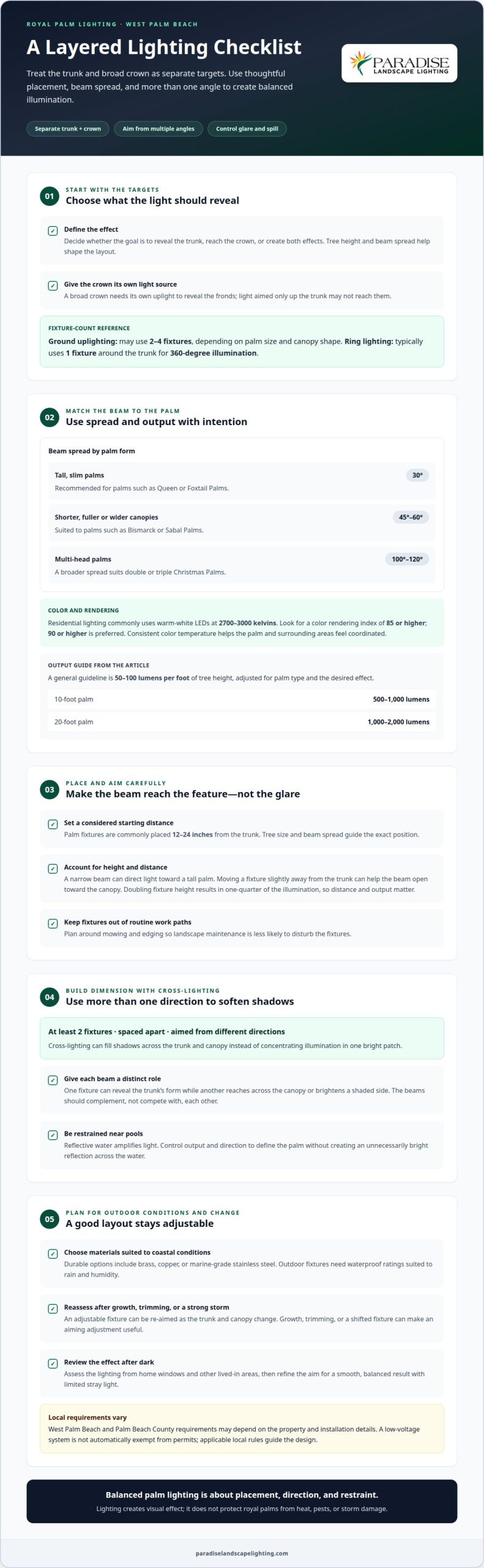
4. Lighting the palm crown and trunk
A royal palm’s trunk and crown need separate attention because they create different visual effects. The trunk provides a strong vertical line, while the broad crown spreads outward above it. A crown needs its own uplight source to reveal the fronds rather than relying on light aimed only up the trunk. This distinction gives the palm a more complete appearance from the ground.
A photometric example shows how beam choice and height work together: a 24-degree beam can illuminate a canopy 10 feet in radius at a height of 45 feet. That narrow beam concentrates illumination on the upper foliage rather than spilling broadly across the landscape. A professional uses this kind of relationship between beam, distance, and target to position the source for the crown’s scale.
For the trunk, the aim should reveal its shape without making the fixture itself the brightest point. Directing light across the surface brings out texture, while assessment of the transition into the crown helps connect the two areas. On a tall royal palm, a focused beam can travel upward while a separate light picks up the canopy. The goal is a connected effect, not two unrelated bright spots.
A documented royal palm layout used two 35-watt fixtures, each with a 35-degree beam spread. The example illustrates how more than one source can address different points on a palm. Actual placement depends on the crown’s width, the trunk’s height, and the property’s viewing angles. After dark, the professional evaluates the result from the areas where people experience the landscape.
Keep the takeaway simple: treat the crown and trunk as distinct lighting targets, then coordinate their beams into one composed effect. For a considered palm layout, request professional lighting design that addresses both features.
Paradise Landscape Lighting
Paradise Landscape Lighting helps homeowners turn a palm-lighting concept into a coordinated outdoor design. The team considers the royal palm’s trunk, crown, viewing angles, and nearby landscape features when planning fixture placement and illumination. This approach is useful when a single uplight leaves the crown in shadow or when palms need to work visually with a pool and surrounding garden.
Through Landscape Lighting Design and LED Lighting Installation, Paradise Landscape Lighting creates a plan around the property rather than relying on a one-layout-fits-all arrangement. The design considers how each palm relates to the broader nighttime setting, including pool decks or artwork where relevant.
For help planning lighting for royal palm trees in West Palm Beach, contact Paradise Landscape Lighting to discuss your property and goals.
Shape a Palm-Lighting Plan That Fits Your Property
The next step is to turn your preferences into a design that belongs to your home. Consider which views matter most, how the palms relate to nearby outdoor features, and whether you want the lighting to feel understated or more dramatic. These choices give a professional a clear starting point for planning lighting for royal palm trees in West Palm Beach.
Paradise Landscape Lighting can bring those priorities together in a cohesive plan through Landscape Lighting Design and LED Lighting Installation. If palms sit near a focal piece, Sculpture and Artwork Lighting can also connect the scene across the property. The aim is a considered outdoor setting shaped around your home, not a generic arrangement.
Share what you want the palms to contribute to your landscape, whether that means a graceful arrival, a more defined garden, or a composed view from indoors. Contact Paradise Landscape Lighting today to discuss your project and take the next step toward a more distinctive outdoor setting.
Frequently Asked Questions
What is the best way for a professional to light palm trees?
A professional plans the lighting around the palm’s form and the views people enjoy most. A palm beside an entry, for example, may need a different emphasis from one framing a garden viewed from a living-room window. The design can reveal the trunk and foliage while keeping the light source discreet. Nearby palms and landscape features also shape how the finished scene feels as a whole.
What lighting works best for royal palm trees, and how can a professional choose it?
Warm-white LED lighting between 2700 and 3000 kelvins is commonly used for residential palms. A professional can pair that tone with a CRI of 85 or higher, ideally 90 or higher, to render foliage and trunk colors more naturally. The surrounding materials matter, too: pale stone, dark paving, and nearby plants can change how the light appears once the full outdoor scene is illuminated.
How does a lighting professional determine how many landscape lights are needed to illuminate a royal palm tree?
Fixture quantity depends on the palm’s size, canopy, and the desired effect. Traditional ground uplighting may use two to four fixtures, while ring lighting typically uses one fixture around the trunk. A professional considers whether the design should emphasize the trunk, crown, or both, then weighs beam spread and distance. The aim is useful coverage without excess brightness or light spilling onto nearby areas.
Where should a professional place uplights around a royal palm tree?
Professionals commonly place palm uplights 12 to 24 inches from the trunk, adjusting for palm size and beam spread. The fixture’s direction also matters: an angle that reveals trunk texture from the driveway may not suit the main view from inside the home. Placement should preserve access for mowing and edging, while keeping the source discreet from important sightlines.
What LED fixtures and beam angles do professionals use for palm tree uplighting?
Professionals use outdoor LED fixtures with beam spreads suited to the palm’s shape. A 30-degree beam can suit a tall, slim palm; wider canopies may call for a 45-to-60-degree spread. Multi-head palms can benefit from a 100-to-120-degree spread. These are design examples, not a universal specification: the canopy, surrounding landscape, and intended viewing points all guide the final selection.
What energy-efficient lighting can a professional install safely in Florida’s rain, humidity, and salt air?
Low-voltage outdoor LED lighting offers an energy-efficient approach for residential landscapes. In coastal settings, brass, copper, or marine-grade stainless steel are suitable fixture materials, and outdoor fixtures need waterproof ratings appropriate for rain and humidity. These considerations matter across South Florida communities such as West Palm Beach, Palm Beach, Fort Lauderdale, Miami, and Miami Beach.
Return to News