
Lighting for outdoor art installations Coral Gables
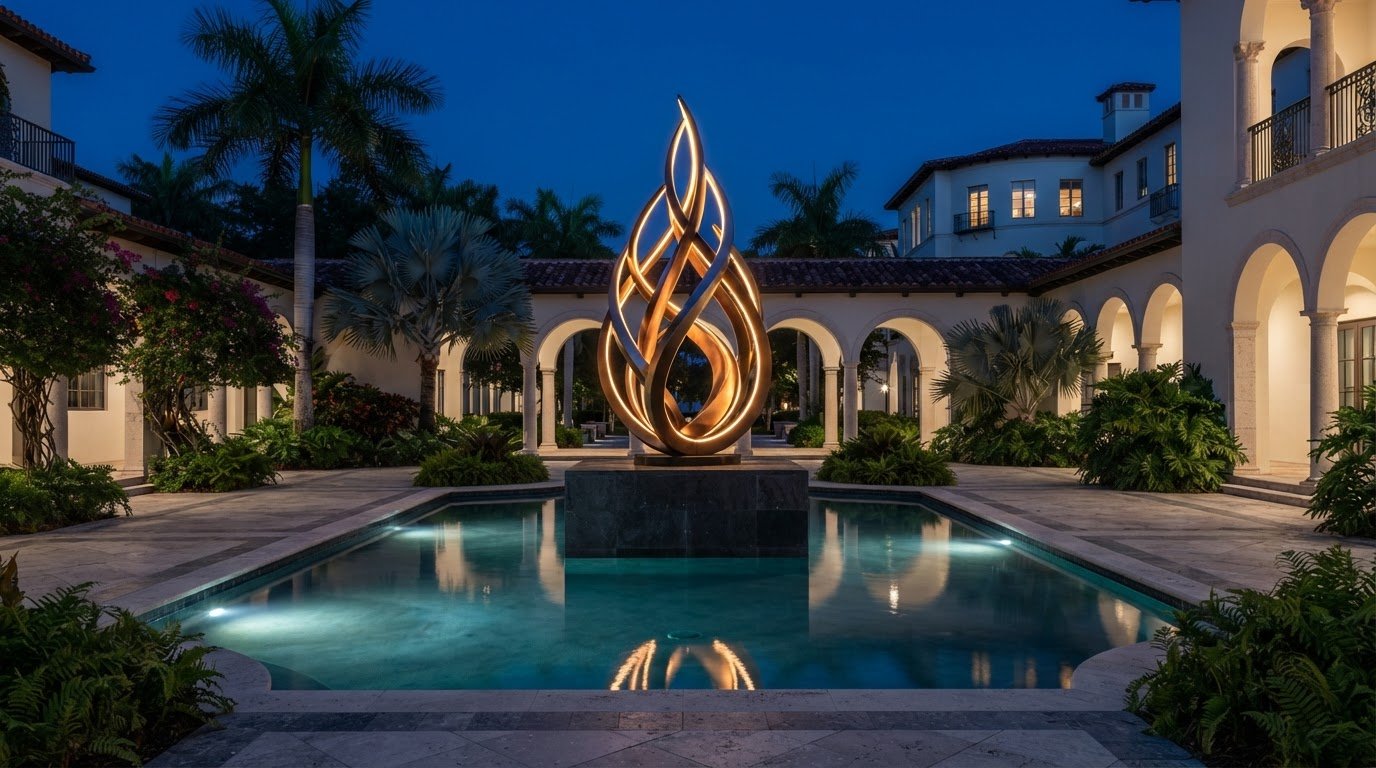
At Coral Gables’ Public Safety Building, underwater LED lighting illuminates the sculpture’s interwoven flame design at night. It shows how lighting for outdoor art installations in Coral Gables can respond to an artwork’s materials and form rather than follow a one-size-fits-all approach. Along Miracle Mile, speech-bubble signs on light posts add another kind of artwork to the streetscape.
It’s natural to wonder how public art stays engaging after dark while remaining the focus. This article looks at the lighting behind Coral Gables’ public art, including the Public Safety Building sculpture and the installations along Miracle Mile. It also explains the design considerations for presenting artwork at night, from revealing shape and detail to accounting for the surrounding space.
Key Takeaways
- Plan lighting around the artwork’s materials, shape, viewing angles, and surroundings so illumination supports the piece rather than distracting from it.
- Consider electrical safety and fixture placement together, especially where lighting is close to water, pathways, or publicly accessible areas.
- Use carefully aimed, appropriately controlled light to highlight key details while limiting glare, spill, and unnecessary energy use.
- In South Florida, include routine checks for moisture, corrosion, debris, and damage in the care plan for outdoor fixtures and connections.
- For a tailored design and installation, Sculpture and Artwork Lighting can help bring an outdoor artwork into view after dark.
What electrical and safety steps are needed to light outdoor artwork?
Start with the artwork, its location, and how visitors move around it. At Coral Gables’ Public Safety Building, LED lighting within water illuminates an interwoven flame design. The example points to a practical first step: plan fixture positions around the artwork’s construction, nearby water, and viewing area.
Next, define the electrical scope. A lighting plan should show the power source, cable routes, fixture locations, controls, and areas exposed to water or public contact. Keep cables clear of walking surfaces and away from maintenance equipment or landscaping work. Beside a path, discreet routing can keep the installation visually composed and the route unobstructed.
Before work begins, document the site. Mark the artwork, nearby structures, trees, water features, and pedestrian routes on a plan. Note where fixtures could be reached, struck, or blocked by routine activity. In a park, account for both the artwork and the public space around it, rather than treating the sculpture as an isolated object.
Use this sequence to organize the safety review:
- Inspect the artwork and surroundings. Record its materials, mounting points, water exposure, access routes, and viewing angles.
- Map the system. Show the power source, wiring route, fixtures, and controls so each component has a clear place.
- Review exposure and access. Identify potential contact, trip, impact, or water-related risks before installation.
- Test the completed lighting. View the artwork after dark from public approaches and confirm that cables, fixtures, and light do not create avoidable hazards.
Miracle Mile offers a different design situation. The Truth is I Welcome You includes speech-bubble signs on light posts along the 200-300 blocks. Here, the artwork shares space with street fixtures and pedestrians. A lighting assessment should distinguish the artwork from existing illumination, preserve clear walking routes, and consider how signs appear from several directions. The result should keep the messages legible without creating visual clutter around the posts.
Water changes the risk review. At the Public Safety Building, lighting within water illuminates the flame design, so fixture placement and electrical routing must be considered together. Include electrical connections and service access in the plan from the outset. Account for how water reaches the installation and where components can be safely inspected. The result is a sculpture whose flame form remains visible at night.
Public access calls for a practical walk-through. Follow a visitor’s route from the entrance to the artwork, checking for exposed cables, low fixtures, obstructed paths, and glare at eye level. At a park installation, review the approaches people use to walk around the sculpture. Seeing the site in person can reveal hazards a drawing misses.
Finally, test the lighting in its actual setting. Switch it on after dark, inspect the artwork from public viewing angles, and redirect fixtures if light obscures a detail or shines into visitors’ eyes. Record fixture positions and cable routes for future service. For lighting for outdoor art installations Coral Gables, this process connects electrical planning with the artwork’s nighttime experience.
Carefully map out every electrical junction and maintenance pathway in the initial plan, so service teams can reach components without crossing visitor routes or disturbing the artwork. The Public Safety Building (Eternal Vigilance) sculpture is credited to Shane Allbritton and Norman Lee and dated 2022. For a work with a defined site and construction, keep the lighting plan tied to those conditions, and record how each fixture and cable can be checked or serviced. A clear maintenance approach also helps ensure that later adjustments do not introduce new trip, contact, or water-related risks. Before opening an installation to visitors, confirm that its operating arrangement matches the reviewed plan and that the artwork remains visible from its intended approaches.
The broader commissioning context can also shape planning: Seven Illuminate Coral Gables artworks were new site-specific commissions. The 2025 Intervals artworks were scheduled for November 2025 – January 2026, with locations listed at The Plaza, Hotel Colonnade, Aloft, and H. George Fink Studio. For an artwork placed among existing public uses, assess its actual surroundings and visitor movement rather than assuming a standard layout. For example, Julio Larraz’s Mars artwork was approved by the Coral Gables City Commission on April 12, 2022. Across different projects, keep electrical routing, fixture access, and public circulation in the same review; coordinate any lighting work with the artwork’s setting, and check the completed installation after dark to confirm that it remains safe and legible.

How can outdoor art lighting reduce energy use and light pollution?
Use light only when it helps viewers understand the artwork. Kiki Smith’s Blue Night in Coral Gables offers a useful example: its holographic vinyl catches sunlight by day and ambient light at night. This shows why planning should start with the artwork’s surface and surroundings. Reflective material may respond to existing light, while a dark or deeply textured surface may need carefully directed illumination.
If an installation needs dedicated lighting, begin with the visual goal. Decide which details visitors should notice, then aim fixtures at those surfaces instead of flooding the whole site. A narrow beam can emphasize a sculpture’s contours while limiting spill onto nearby paths, windows, planting, and sky. The right approach depends on the artwork’s scale, finish, viewing distance, and surrounding light.
LED technology can support energy-conscious design. Paradise Landscape Lighting uses energy-efficient LED technology, but efficient fixtures still need thoughtful placement and operation. When a fixture points past a sculpture, some of its output serves no artistic purpose. Re-aiming it at the intended feature can reduce wasted illumination and improve definition. The measure is not brightness alone, but whether each lit detail contributes to the viewing experience.
Use these steps to refine a lighting scheme:
- Choose the focal details. List the shapes, textures, or colors visitors should see first.
- Target the beam. Position and aim each fixture to illuminate those details, not the surrounding scene.
- Review spill. Observe the artwork from public approaches and look for light reaching beyond its intended area.
- Set operation around use. Match lighting schedules to when the artwork is meant to be viewed.
A control schedule can reduce unnecessary operating hours. Set it to reflect public use and the artwork’s intended viewing period. If a piece is meant to be experienced during evening activity, its lights need not stay on when the surrounding space is closed or inactive. For a publicly accessible installation, preserve the viewing experience during the hours people encounter the work.
Light pollution often starts with poor direction, not artistic intent. A fixture aimed above a sculpture can send light into the sky; one aimed across a plaza can cause glare. After dark, inspect the scene from several viewpoints, including nearby paths and building edges. Adjusting the angle, narrowing the illuminated area, or reducing unnecessary output can keep attention on the art and limit stray light.
Miracle Mile’s The Truth is I Welcome You places speech-bubble signs on light posts along the 200-300 blocks. For artworks in an active streetscape, review existing street lighting before adding fixtures. The situation may already provide ambient illumination; the design action is to test how the artwork reads within it. The result can be a more restrained scheme that avoids competing with existing light sources.
Treat color with the same care as brightness. A saturated hue can change how an artwork’s surface appears, while colored spill can alter nearby walls or landscape. Use color when it supports the artist’s intended effect, and confine it to the relevant feature. With a reflective work such as Blue Night, first observe how ambient light changes its appearance before adding another layer.
Finally, compare the scene before and after each adjustment. Check the focal detail, adjacent surfaces, viewer approach, and skyward spill from the same positions. A considered outdoor artwork lighting design balances visual clarity with targeted illumination, so each fixture has a clear purpose and the artwork remains the focus.
What maintenance and weatherproofing do outdoor art lights require in South Florida?
In South Florida, outdoor fixtures face rain, humidity, heat, and airborne debris. These conditions can affect lenses, seals, metal finishes, wiring connections, and the light reaching an artwork. A maintenance plan should cover the whole system, not just whether fixtures turn on. Near trees, leaves and damp debris may gather around fixture housings and drainage points, so include those areas in routine landscape care.
Begin with a visual inspection after severe weather and during routine site care. Look for cracked lenses, loose fixtures, shifted aim, standing water, damaged cable coverings, and visible corrosion. Compare the scene with a reference photo taken when the lights were correctly aimed. This can reveal changes in beam direction or fixture position that a quick walk-through might miss. Note a shifted fixture’s location before adjusting it.
Use this practical checklist:
- Clean the lens gently. Remove dust, pollen, and leaf residue with a soft cloth, following the fixture maker’s care guidance.
- Check fixture stability. Look for movement, leaning, or impact damage that could redirect light toward visitors or the sky.
- Inspect visible connections. Watch for cracked coverings, loose fittings, or moisture around accessible connection points.
- Clear drainage areas. Remove leaves and soil that block water from draining around fixtures.
- Review the nighttime result. Confirm that each light still reveals the intended artwork detail.
Manage moisture through placement. A fixture in a low spot may sit in water after rain, while one surrounded by dense planting can collect wet leaves. Beside a planted bed, keep the fixture accessible and drainage clear around its housing. This makes inspection easier and helps prevent debris from gathering against the equipment. During checks, examine the surrounding soil as well as the fixture.
Salt exposure also matters in coastal South Florida. Near the coast, inspect exposed metal surfaces and fasteners for corrosion, and clean them according to the fixture manufacturer’s instructions. Corrosion can affect appearance and gradually compromise components. Outdoor-rated fixtures suited to the site provide a sound starting point, while regular inspection helps identify visible wear before it affects the nighttime presentation.
Water features call for a separate review. At Coral Gables’ Public Safety Building, underwater LED lighting illuminates an interwoven flame design. For a similar installation, inspect accessible fixtures, lenses, and nearby surfaces for deposits or debris that could soften the effect. Plan maintenance access so components can be reached without disturbing the artwork or landscape. Follow the equipment maker’s instructions for cleaning around the water feature.
After cleaning or replacing a fixture, test the artwork after dark. Check the beam from the usual viewing approach, then walk around the installation to spot glare, shadows, or uneven illumination. A fixture moved during gardening may still work but point at the wrong feature. Correcting its direction restores the intended visual balance and helps limit spill beyond the sculpture. Record adjustments for future inspections.
Keep a simple maintenance record with the inspection date, observed condition, cleaning performed, and adjustments made. A note such as “west-facing fixture shifted after landscaping” gives future maintenance a useful reference. For Blue Night at Giralda Plaza, where holographic vinyl responds to ambient light at night, preserving the surrounding visual conditions matters as much as keeping fixtures clean.
If rain, corrosion, or shifting fixtures are changing how an artwork appears, plan an outdoor artwork lighting review to assess placement, illumination, and maintenance needs.
Public installations can also call for attention to visitor access and the broader site. Illuminate Coral Gables unveiled its exhibition in Coral Gables, Florida, on February 12, 2021; the first exhibition featured eight projects. The projection-mapped video and sound-based work created through the Florida International University partnership involved six undergraduate and graduate students. Facial coverings were required for visitors to Illuminate Coral Gables.
For projects involving public art, Coral Gables’ Art in Public Places requirement applies to non-municipal projects with an Aggregate Project Value of $1 million or more, with exceptions for single-family homes and University of Miami projects. Site teams can include lighting checks in their broader review of artwork access, fixture condition, and the nighttime presentation.
Paradise Landscape Lighting: Landscape Lighting Design
Paradise Landscape Lighting helps shape an artwork’s nighttime presentation through Landscape Lighting Design and Sculpture and Artwork Lighting. Turn to the team when a sculpture needs purposeful illumination, existing fixtures no longer reveal its details, or a new installation needs a considered lighting plan. The design can account for form, viewing angles, landscape, and light spill, while LED Lighting Installation brings the plan to life.
For artwork near a pool or garden, the surroundings also influence fixture placement and the overall effect. A coordinated design keeps the artwork in focus while giving its setting a considered look after dark.
Contact Paradise Landscape Lighting to discuss lighting for your outdoor artwork, or visit paradiselandscapelighting.com.
Shape the Artwork’s Next Nighttime View
An artwork’s surroundings can change as planting grows, paths shift, or viewing angles evolve. Treat lighting as part of the artwork’s ongoing presentation, and revisit its balance when the landscape changes. A thoughtful plan for lighting for outdoor art installations in Coral Gables keeps the piece clear to viewers while respecting its setting.
When you’re ready to plan or refine an installation, Paradise Landscape Lighting offers Landscape Lighting Design, LED Lighting Installation, and Sculpture and Artwork Lighting. These services bring visual intent and practical fixture placement into the same conversation, creating a considered nighttime experience for the artwork.
Bring your project vision and the details that matter most, such as the artwork’s materials, its setting, and how visitors encounter it after dark. Contact Paradise Landscape Lighting to discuss a lighting approach for your outdoor artwork. A carefully designed presentation can help the piece feel at home in the landscape, day and night.
Frequently Asked Questions
How do LED, solar, and low-voltage lighting compare for outdoor art installations?
LED describes the light source, low-voltage describes the electrical system, and solar describes how power is collected, so these terms are not mutually exclusive. A low-voltage system can use LED fixtures, and a solar fixture may also use LEDs. For artwork that needs consistent nighttime presentation, compare sunlight exposure, cable routing, and maintenance access. In Coral Gables, choose an arrangement that suits the artwork’s location and viewing needs, not just its label.
Return to News