
Lighting for Mediterranean Architecture in Boca Raton to Emphasize Rooflines
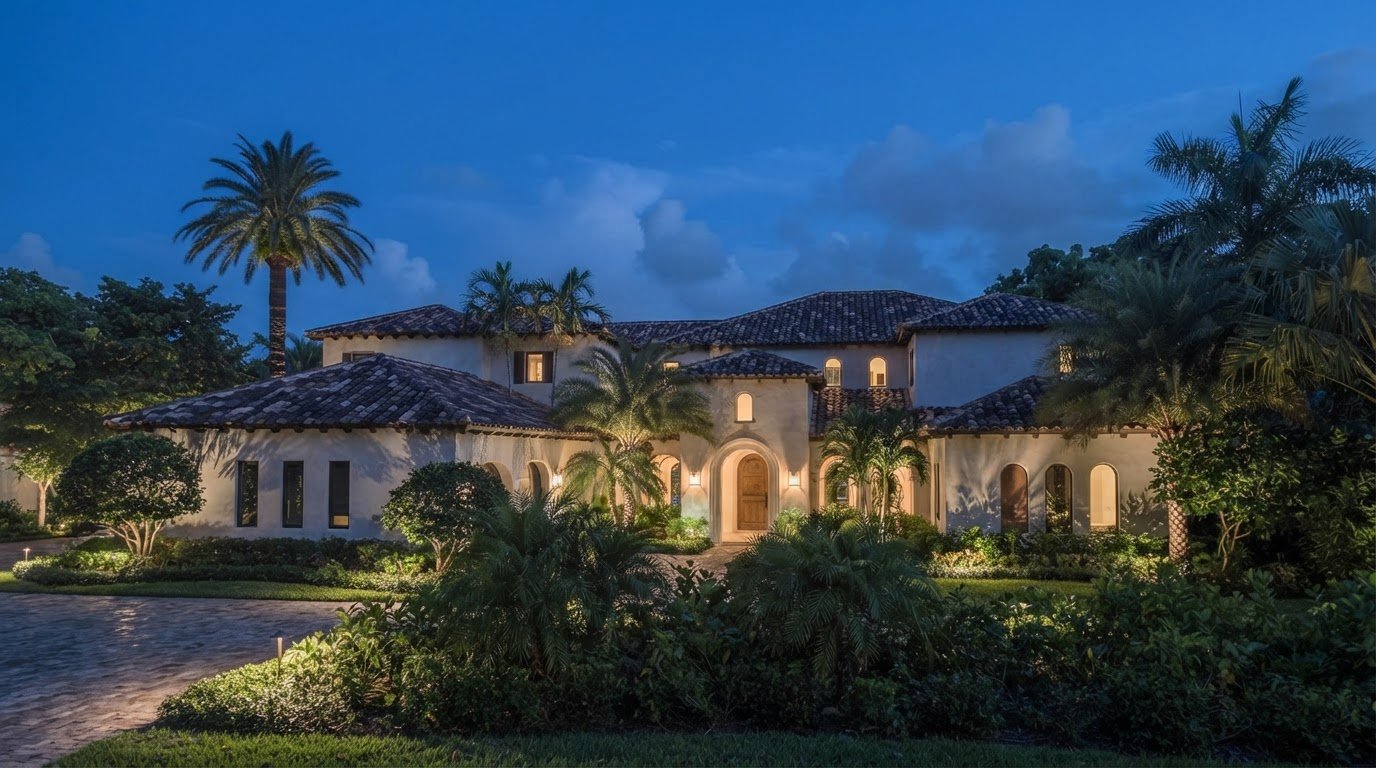
Lighting for Mediterranean architecture works best when it reveals the home’s defining forms without overwhelming them. Choose fixture silhouettes that complement arched openings and traditional details, use subtle accents to trace rooflines, and graze stucco to bring out its texture. At Paradise Landscape Lighting, the goal is a balanced effect that feels welcoming at the home and cohesive across the surrounding community.
The architecture’s warm materials and distinctive rooflines deserve lighting that supports their character, not a one-size-fits-all arrangement. This guide explains how fixture shapes influence the overall look, where roofline accents and stucco grazing can add depth, and how a coordinated approach can help Mediterranean homes sit comfortably within their neighborhood after dark. You’ll come away with a clearer sense of which lighting choices emphasize architectural detail while keeping the broader streetscape in view.
Key Takeaways
- Choose fixture silhouettes that complement Mediterranean forms and historical influences, rather than competing with them.
- Thoughtful roofline accents can make terracotta details read clearly after dark while preserving the home’s overall character.
- Carefully placed, narrow-beam uplighting can reveal stucco texture with a subtle wash of light.
- Consider the surrounding streetscape and landscape so individual homes contribute to a cohesive Boca Raton community at night.
Mediterranean fixture silhouettes and historical influences
Mediterranean style draws on Renaissance and revival traditions from Italy, Spain, Greece, and Morocco. In Florida, Addison Mizner helped popularize this architectural language through buildings shaped by arches, stucco, and decorative detail. Historic references can guide fixture silhouettes: wrought iron, curved arms, and lantern forms complement these strong architectural lines. Byzantine polycandelon fixtures, used in Eastern Mediterranean homes and churches from roughly the 5th through 7th centuries CE, offer another example of historic lighting with a distinctive geometric profile.
Scale matters as much as style. In a Boca Raton home with thirteen-foot ceilings, a compact pendant may feel visually lost, while a larger silhouette can hold its place in the room. Over a kitchen island, fixtures are typically hung 30 to 36 inches above the countertop. The National Kitchen & Bath Association’s cited task-lighting guidance gives a 30-48-inch envelope. Luxury kitchen designers such as Delmar Kitchen Pro often recommend balancing island length and overall sightlines when determining fixture scale and placement.
Match each fixture to its task and setting. At an entry, a lantern can frame the doorway and echo nearby arches. In a hallway, repeated wall fixtures can create a consistent rhythm without crowding a narrow passage. In a bathroom, place light near the mirror to support grooming and keep the fixture aligned with the room’s architectural details. For a tall foyer, select a silhouette with enough visual presence; for a smaller hallway, a more restrained profile helps preserve clear sightlines.
For exterior fixtures, NEC 410.10(A) is the relevant code reference for luminaires in wet or damp locations. Covered porches and patios are damp locations and need at least damp-rated fixtures; exposed walls and open pergolas subject to rain or spray are wet locations and require wet-rated luminaires. Permit requirements are separate from fixture ratings and depend on the project scope and applicable local rules. Palm-tree uplighting can cause glare or spill if aimed carelessly. At coastal properties, salt air can affect standard outdoor fixtures, so marine-grade brass is appropriate for oceanfront or Intracoastal exposure.
Emphasizing terracotta rooflines
Terracotta tiles give Mediterranean homes a strong visual signature, but broad, even illumination can flatten their shape. In Boca Raton, consider the roof as a series of forms: ridge, eaves, gables, and visible transitions. Select one feature as the focal point, then use controlled accents to guide the eye along its outline. A light touch preserves the contrast between warm tiles and the darker lines beneath the eaves.
Placement shapes the result. A carefully aimed fixture near a gable can reveal its profile, while light directed toward an eave can define the roof’s edge. Avoid aiming a bright beam straight toward neighboring windows or common viewing areas. Instead, test the effect from the street and from the home’s main approach. This example-based review helps show whether the roofline reads clearly or competes with an entry arch, column, or façade.
Connect roof accents with other exterior features rather than lighting every tile. A subtle roofline highlight can work alongside restrained illumination at the entry, while other sections remain visually quiet. If the roof already stands out against the wall, emphasize its silhouette; if architectural details dominate, keep the roof accent softer. This helps the home’s composition remain clear after dark.
Glare control also affects how terracotta appears. Conceal the light source where the fixture position allows, and direct the beam onto the intended architectural surface rather than into the viewer’s sightline. Then assess the roof from several viewpoints, including the driveway and public-facing approach. A considered architectural lighting design can bring rooflines into a coherent relationship with the façade, entry, and landscape without making the roof the only feature people notice.
Grazing stucco to reveal architectural texture
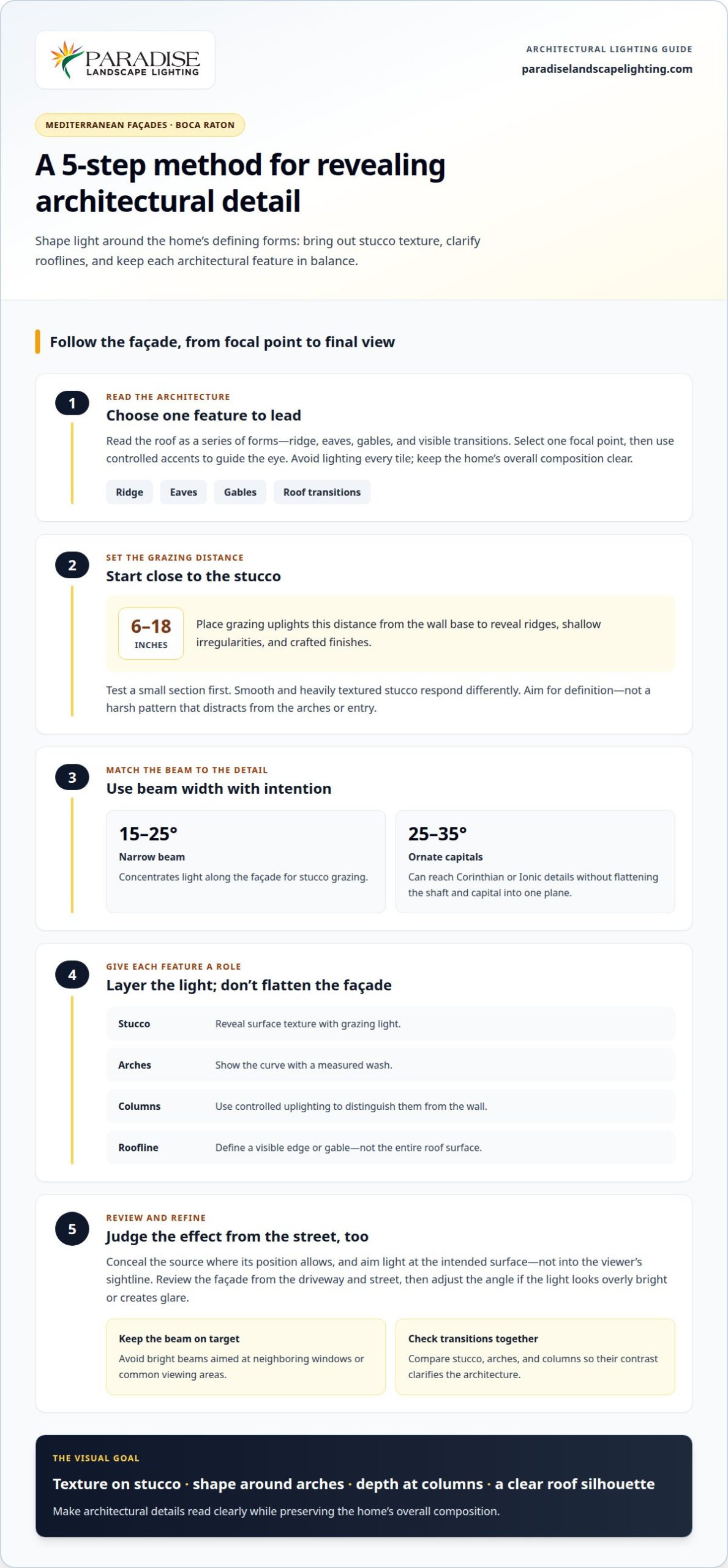
Stucco changes character as light skims across its surface. For Mediterranean façades, place grazing uplights 6-18 inches from the wall base to reveal ridges, shallow irregularities, and crafted finishes. This close placement creates stronger texture than lighting the wall from farther away. Test the effect on a small section first, since smooth stucco and heavily textured stucco respond differently. Aim for definition, not a harsh pattern that distracts from the home’s arches or entry.
Beam width shapes the texture. Narrow 15-25° beams work well for façade grazing because they concentrate light along the surface. Landscape lighting can highlight arches with a measured wash, graze stucco to show its finish, and define columns with controlled uplighting. For columns with ornate Corinthian or Ionic capitals, a 25-35° beam can reach the decorative details without treating the shaft and capital as one flat plane.
Let the architecture guide the lighting. An accent can reveal an arch’s curve or distinguish a column from the wall behind it. On a tile roof, direct light toward a visible edge or gable rather than washing the entire surface. Give each element a distinct role: texture on stucco, shape around arches, depth at columns, and a clear roof silhouette.
Review the façade from the driveway and street, not only beside the fixture. A beam that reveals stucco up close may look overly bright across the front elevation. Adjust its angle to reduce glare and keep light on the intended surface. Where a wall meets an arch or column, compare the illuminated textures together; the contrast should clarify the transition. In Boca Raton, this layered approach lets stucco details read clearly while preserving the home’s overall architectural composition.
Lighting Mediterranean communities in Boca Raton
A cohesive streetscape pairs Mediterranean homes’ warm materials with restrained, consistent exterior lighting. For Boca Raton projects, control glare and light spill; NEC 410.10(A) is the reference for luminaires in wet or damp locations.
Exterior Color Temperature and Brightness
Color temperature describes whether light appears warm, amber, or cooler; it shapes how stucco, tile, and masonry read at night. For Mediterranean homes, 2700K warm white is the standard recommendation. Choose 2200K amber for special features such as fountains or antique masonry, while 3000K can suit contemporary homes or gray stucco. Avoid cool white at 4000K or higher, which can feel out of step with warm materials.
The right amount of light depends on the surface, viewing distance, and aim. Use enough to reveal details without washing out neighboring façades. A modest accent on an entry arch can preserve contrast, while excessive brightness may flatten texture and cause glare. Consider the view from both the street and the front door.
Energy-Efficient LEDs for Mediterranean Architecture
Energy-efficient LED lighting uses LED technology while directing light toward the features that need visibility. Choose output and beam spread according to the task: a focused accent for a column differs from broader illumination for an entrance. This keeps the design purposeful instead of lighting every surface equally. Match color temperature to the home’s materials, then assess the appearance across the whole façade.
LED color also matters when adjusting brightness. A fixed-CCT LED doesn’t shift warmer as it dims unless it’s specifically sold as dim-to-warm. For example, a dimmed 2700K fixture stays at its fixed color temperature; dimming alone doesn’t create candlelike amber light. Select the intended color effect first, then coordinate brightness across the home.
At the community scale, consistent warmth can help individual homes feel related without making every property identical. Use a shared warm-white direction for façades, then reserve amber accents for features such as a fountain. Keep beams aimed onto the intended property, especially near walkways and neighboring windows, to limit glare and unwanted spill. This balance lets each home retain its own character while supporting a calmer streetscape.
Paradise Landscape Lighting
Paradise Landscape Lighting designs and installs custom low-voltage LED lighting for residential outdoor spaces. The team’s lighting designer and lighting engineer tailor solutions to each home and landscape, bringing roofline accents, stucco texture, and entry features together in a considered design.
Turn to the team when you want a cohesive plan for highlighting Mediterranean details outdoors. The design can also incorporate sculpture and artwork lighting or pool deck lighting when those features are part of the setting. Paradise Landscape Lighting provides design, engineering, installation, and maintenance, supporting a connected approach from concept through the finished exterior.
Shape a lighting plan around your home
Start by deciding which architectural feature should anchor the outdoor lighting plan. A roofline, entry, or sculpture can take visual priority, with other elements supporting it rather than competing for attention. For lighting for Mediterranean architecture in Boca Raton, this choice connects the home’s character with the experience of arriving and spending time outdoors.
Paradise Landscape Lighting offers landscape lighting design, LED lighting installation, and sculpture and artwork lighting. A clear sense of what you want the property to express after dark is a useful starting point, whether you want to emphasize a distinctive feature or create a more unified exterior composition.
Contact Paradise Landscape Lighting to discuss a lighting approach for your home. A considered plan can help your architecture feel beautifully at home after sunset.
Frequently Asked Questions
What lighting styles complement Mediterranean architecture in Boca Raton?
Choose fixtures that feel connected to the home’s materials and proportions, then keep their finishes visually consistent. For example, a dark metal lantern can frame a courtyard entrance, while a restrained accent on nearby planting creates depth without adding another dominant shape. For lighting for Mediterranean architecture in Boca Raton, consider the view from the approach and outdoor gathering areas, not only the façade.
Which outdoor fixtures suit Mediterranean homes in South Florida’s coastal climate?
Fixtures made from marine-grade brass suit homes exposed to oceanfront or Intracoastal salt air better than standard outdoor-rated fixtures. Consider where each light will sit: a sheltered courtyard and an exposed garden edge face different weather conditions. Matching fixture material and location helps preserve the intended look across the property, especially where coastal exposure is part of the home’s setting.
What are the best exterior lighting options for a Mediterranean villa in Boca Raton?
The right choices depend on how you use the outdoor space. Architectural accents can define the home, while pool deck, fountain, or artwork lighting can draw attention to outdoor features. A coordinated design connects arrival areas with gathering spaces instead of treating each light as a separate decision. Paradise Landscape Lighting serves South Florida communities including Boca Raton, Palm Beach, Fort Lauderdale, Weston, Southwest Ranches, Wilton Manors, Miami, Miami Beach, Coral Gables, Plantation, West Palm Beach, and Coconut Grove.
Are there Boca Raton rules for outdoor lighting, glare, or light trespass?
The article cites NEC 410.10(A) for wet- and damp-location fixtures: covered porches need at least damp-rated fixtures, while exposed walls and open pergolas need wet-rated luminaires. It advises controlling glare and spill, including avoiding beams aimed at neighboring windows; permit requirements depend on project scope and applicable local rules.
Return to News