
LED Landscape Lighting Conversion Cost in Weston: Price Factors
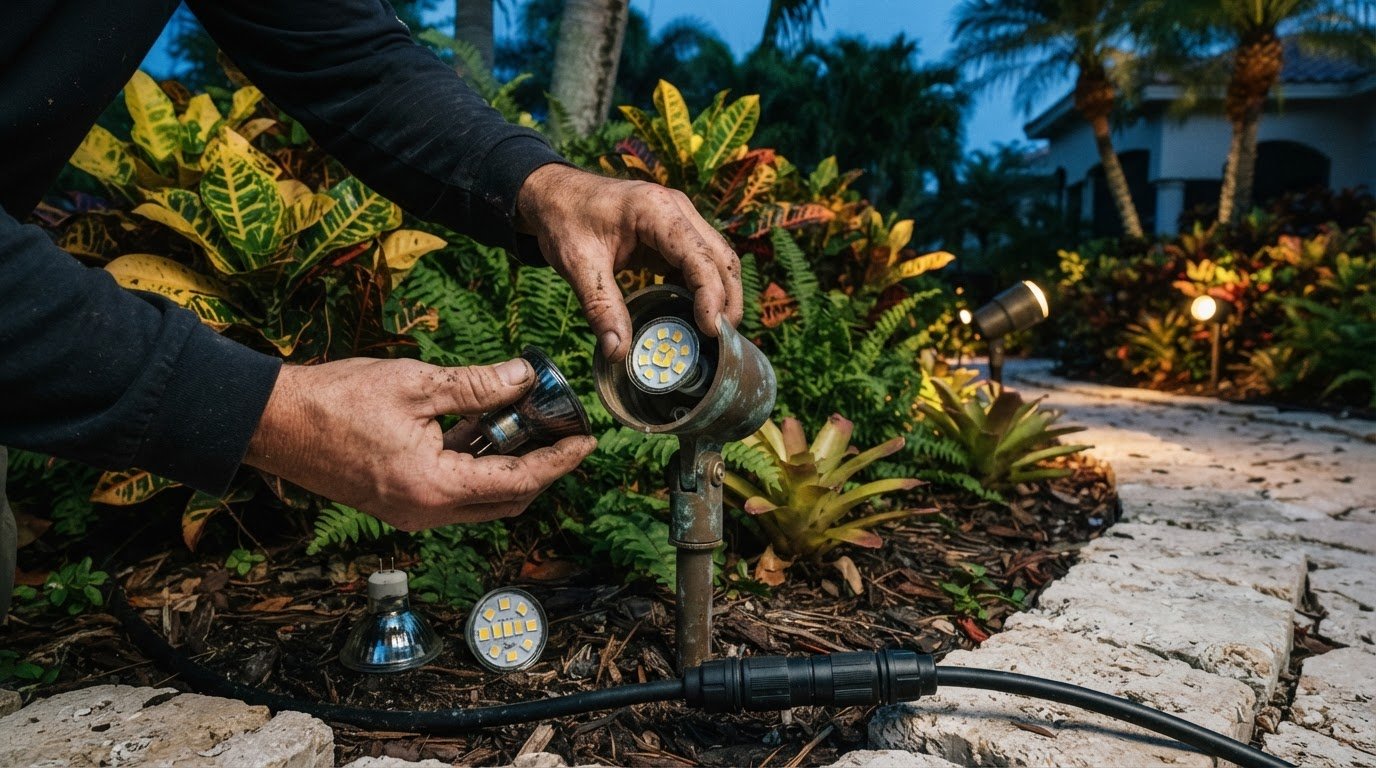
The LED landscape lighting conversion cost in Weston depends on the number and condition of the fixtures, whether existing components can be reused, and whether the project needs wiring repairs or new lights. A suitable transformer may remain in service, while additions or repairs change the scope. The cost is not simply the price of replacing halogen bulbs with LEDs.
It’s reasonable to want a clear budget before changing a system that already lights your property. The key is understanding which parts can be reused and where repairs or additions may shape the work. This article explains how infrastructure and system condition affect conversion planning, how to think about budgeting without overlooking added fixtures, and what a professional assessment considers when shaping a cohesive LED design for your Weston home.
Key Takeaways
- Understand which parts of an existing system may be reused and how transformer, timer, and wiring condition can shape conversion scope.
- Build a more useful budget by separating fixture replacement, infrastructure repairs, labor, and any additions to the design.
- Recognize when inconsistent performance or aging components may make a full system assessment worthwhile.
- Plan added fixtures as part of the conversion so new areas of the landscape are illuminated with a cohesive design.
Transformer and electrical infrastructure costs
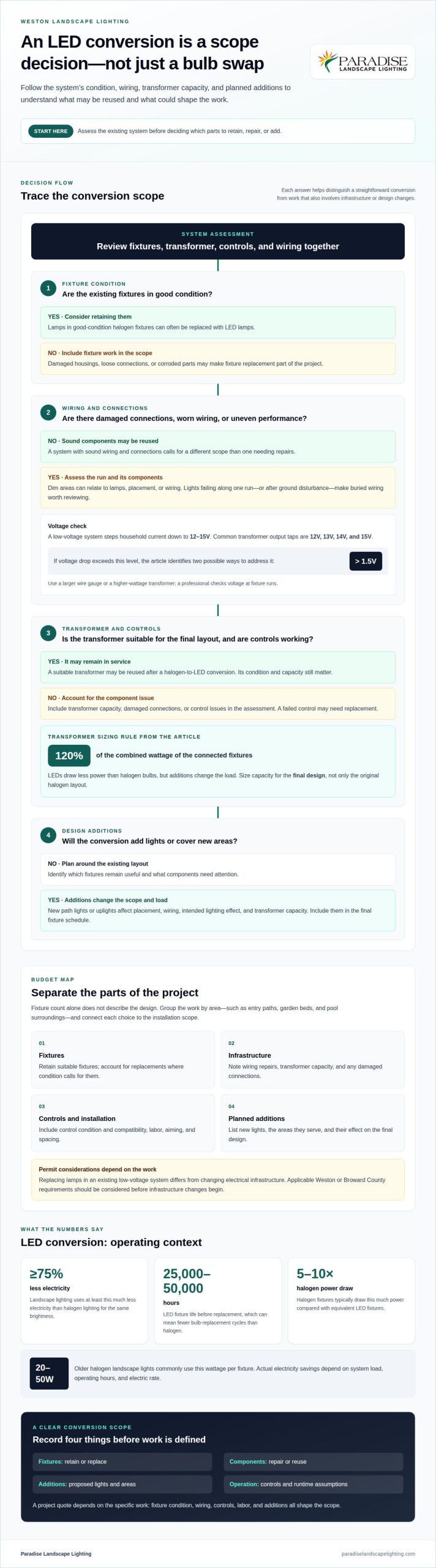
A conversion assessment considers the fixtures, transformer, controls, and wiring together. A suitable transformer may remain in service after a halogen-to-LED change, but its condition and capacity matter. The assessment identifies damaged connections, worn wiring, control issues, and fixtures that need replacing. Reusing sound components calls for a different scope than repairing wiring or replacing a failed control.
Transformer wattage is based on the combined load of the connected fixtures. A landscape lighting transformer should be rated at 120% of total fixture wattage. Because LED fixtures draw less power than halogen bulbs, a conversion can reduce the existing load, but adding lights changes that calculation. The transformer’s capacity must suit the final design, not just the original halogen layout.
Voltage selection matters too. A low-voltage landscape system steps household current down to 12-15V through a transformer. Common output taps are 12V, 13V, 14V, and 15V. During installation, a professional selects the appropriate tap and checks voltage at fixture runs. If voltage drop exceeds 1.5 volts, using a larger wire gauge or a higher-wattage transformer can address it.
Permit requirements depend on the scope of work. Replacing lamps in an existing low-voltage system differs from changing its electrical infrastructure. Applicable Weston or Broward County requirements should be considered before infrastructure changes begin. This distinction helps define whether the project is a straightforward conversion or involves broader electrical work.
LEDs can reduce electricity use: landscape lighting uses at least 75% less electricity than halogen lighting for the same brightness. Actual bill savings depend on the system’s load, operating hours, and electric rate. LED landscape lighting fixtures last 25,000 to 50,000 hours before needing replacement, which can mean fewer bulb-replacement cycles than halogen. Timer settings also affect runtime, including seasonal adjustments during winter. A professional can evaluate those factors alongside the transformer and wiring to deliver a conversion suited to the property.
Lighting budget and project planning
Build the conversion budget around what the existing system needs. The scope should distinguish reusable fixtures from replacements and account for wiring repairs, controls, installation, and any added lights. Paradise Landscape Lighting provides project quotes based on the specific work, with fixture condition, wiring, controls, and additions shaping the scope.
Fixture count alone does not describe the design. A path light, an uplight aimed at a tree, and a fixture highlighting architectural details serve different purposes. Their placement and light output shape the plan. Grouping the work by area, such as entry paths, garden beds, and pool surroundings, helps show which fixtures remain useful and where additions would change the design.
Controls also affect the project scope. A photocell can switch lights on as daylight fades, while a timer can set an operating schedule. The chosen control affects how the system works, so its condition and compatibility matter. A balanced result depends on aiming and spacing as well as the number of fixtures.
For a Weston property, the project plan should identify fixtures to retain, components needing attention, proposed additions, and the areas each light will serve. A clear scope connects design decisions to installation work and materials. It also distinguishes a conversion from a broader redesign.
LED fixtures can make operating costs part of the planning, but actual electricity use depends on total wattage, runtime, and the household’s electric rate. Review the proposed fixture schedule and operating assumptions alongside the project scope. This helps account for both installation work and how the finished system is intended to operate.
Signs an older halogen system may need conversion
An older halogen system can reveal its age through high-wattage bulbs, repeated lamp failures, or fixtures that no longer illuminate outdoor areas evenly. Halogen fixtures typically draw five to ten times as much power as equivalent LED fixtures. Older halogen landscape lights commonly use 20 to 50 watts each, so the load can add up across a property. A professional assessment can show whether a conversion addresses the system’s needs or whether worn components also require attention.
Fixture condition matters as much as bulb type. Lamps in good condition halogen fixtures can often be replaced with LED lamps without replacing the fixture. By contrast, damaged housings, loose connections, or corroded parts may make fixture replacement part of the project. Brass and copper fixtures can last 20 to 30 years without corroding, while aluminum and plastic fixtures may need replacement in 3 to 7 years. Material and visible condition help guide the decision.
Uneven lighting can point to several causes. If some areas appear dim while others remain bright, the issue may involve lamp condition, fixture placement, or wiring. An assessment considers the fixtures and electrical components together rather than treating every dark spot as a bulb problem. This helps determine whether existing fixtures can be reused or broader repairs are needed.
Buried wiring deserves attention, especially when lights fail along one run or stop working after ground disturbance. A project assessment can review wire routes, connections, controls, and fixture condition, then identify which parts can remain. A clear scope separates a simple lamp change from work involving damaged fixtures or wiring. This avoids replacing every component by default and keeps the plan grounded in the system’s actual condition.
Adding lights during a conversion
A conversion is also an opportunity to address dark areas the original system missed. A new path light can improve visibility along a walkway, while an uplight can emphasize a tree or architectural feature. These additions expand the project beyond replacing halogen lamps because placement, wiring, and the intended lighting effect become part of the design.
Fixture type influences the electrical load. LED path and step lights typically use 1 to 4 watts, while uplights for trees or architectural features typically use 5 to 20 watts. The designer accounts for each addition alongside existing fixtures. That total helps determine whether the current infrastructure can support the revised layout or needs adjustment.
Placement affects the work, too. A fixture near an existing wire run may fit the layout differently from one intended to illuminate a feature across the property. The plan considers the route from the transformer, wiring condition, and spacing between fixtures. Longer runs or changes in wire gauge can affect the installation scope, while the ground surface and landscape influence where wiring can be routed discreetly.
Plan additions by identifying the areas that would benefit most, such as a walkway, pool deck, garden, or sculpture. The lighting plan can then distinguish essential replacements from new accents. Each added fixture should serve a clear purpose, not simply increase the count. A cohesive layout balances useful outdoor lighting with emphasis on selected features.
New lights can change the final design and workload, so include them in the conversion scope rather than treating them as an afterthought. For example, adding path lights and a tree uplight may involve different placement and wiring decisions. Plan added landscape lighting as part of a coordinated conversion.
Paradise Landscape Lighting
Paradise Landscape Lighting helps Weston homeowners plan and complete halogen-to-LED conversions with attention to existing infrastructure, fixture condition, and any areas they want to illuminate. Its team brings design and engineering considerations together, helping shape a coordinated plan before installation begins.
Paradise Landscape Lighting designs and installs custom low-voltage LED systems. The team can help plan a conversion that reuses suitable fixtures, replaces aging components, or adds lighting to a pool deck, sculpture, or architectural feature. Landscape Lighting Design and LED Lighting Installation connect the technical work with the look and function of your outdoor spaces.
Contact Paradise Landscape Lighting to discuss a project tailored to your property and lighting goals.
Shape the next chapter of your outdoor lighting
Think of a conversion as an opportunity to decide how you want your property to feel after dusk. A lighting plan can preserve familiar highlights while creating a more intentional visual rhythm across outdoor spaces. That perspective makes the LED landscape lighting conversion cost in Weston part of a broader decision about the experience you want your landscape to deliver.
Before moving ahead, consider which views matter most from inside your home, where guests arrive, and which features deserve more presence. These priorities give the lighting designer a practical starting point, rather than treating every existing fixture as equally important. A thoughtful plan can also accommodate future changes while keeping the overall look coherent.
Paradise Landscape Lighting can help translate those priorities into a considered conversion plan. Contact Paradise Landscape Lighting to discuss your conversion and take the next step toward outdoor lighting that feels intentional, polished, and distinctly yours.
Frequently Asked Questions
How much does it cost to convert an old halogen system to LED?
Paradise Landscape Lighting provides a project quote based on the scope. A conversion using suitable existing fixtures differs from one requiring replacements, wiring repairs, or additional lights. A clearly defined scope separates these work items so you can see how the system’s condition and your goals shape the project.
Want a System That’s Efficient by Design?
An effective design directs light where it serves a purpose instead of illuminating every area equally. For example, a plan might emphasize an entry path and a garden feature while keeping less-used areas understated. Placement, aiming, and operating schedules all influence the result. A well-planned layout reflects how you use the property after dark, not just how many lights it can hold.
What Does Each Fixture Type Cost?
Fixture pricing varies by type and project requirements, and the project price is provided after a quote request. A path light, step light, and uplight serve different roles, so their placement and intended effect influence the specification. The quote can separate fixture choices from installation requirements, making it easier to understand how a chosen look affects the project scope.
What Drives Your Landscape Lighting Cost Up or Down?
The price depends on the case and is provided after a quote request. The scope can change with the number of fixtures, the condition of existing components, wiring repairs, control needs, and added lights. Access to each work area also affects installation planning. A clear project outline helps distinguish essential conversion work from optional design changes before the work begins.
What is the average cost to convert existing landscape lighting to LED in Weston, Florida?
The cost of an LED landscape lighting conversion in Weston depends on the project scope, not on one average that applies to every property. A project quote considers fixture condition, system infrastructure, and planned additions. Paradise Landscape Lighting also serves homeowners in Fort Lauderdale, Southwest Ranches, Wilton Manors, Palm Beach, Miami, Miami Beach, Coral Gables, Plantation, West Palm Beach, and Coconut Grove.
How much does LED landscape lighting conversion cost per fixture in Weston?
A per-fixture figure can be misleading because a conversion may include shared work beyond the individual lights. The project quote reflects the scope, which may include system assessment, control adjustments, wiring work, or design changes alongside fixture work. Reviewing the scope by task gives a clearer picture than dividing the total by the fixture count.
Return to News