
Landscape lighting for water features Boca Raton: Choosing LED fixtures
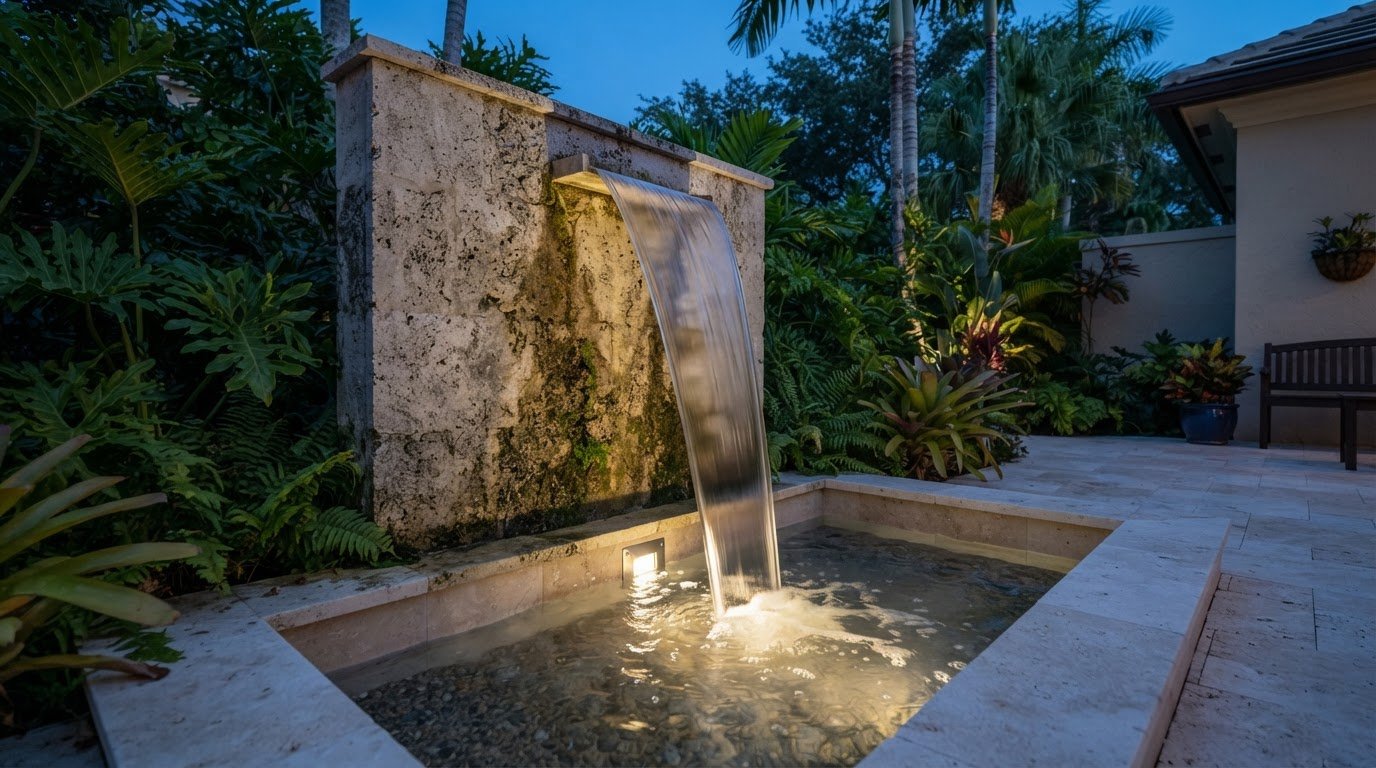
A water feature looks its best when lighting reveals the movement of the water and the design around it, not the fixtures themselves. When working with Paradise Landscape Lighting for water features, choosing submerged LEDs is only part of the decision: placement, light quality, glare control, and materials all shape the result.
It’s natural to want a fountain, pool, or water wall to feel inviting after dark while still complementing the home and landscape. The right approach balances visual impact with comfortable viewing, using light to bring out ripples, cascades, and architectural details without letting glare distract from the feature.
This guide covers what to consider when selecting submerged LEDs, how brightness and color affect the scene, and why shielding and fixture materials matter. It also explains how residential and architectural water features call for different lighting choices, so you can make informed decisions for a polished, cohesive result.
Key Takeaways
- Match submerged fixtures and their placement to the feature’s shape and water movement to bring out its defining details.
- Choose light color and brightness around the setting and main viewing angles, keeping glare from competing with the water.
- Consider fixture materials, continuous water exposure, and access for inspection when planning long-term performance.
- Coordinate underwater and surrounding light with the home’s architecture so the water feature feels integrated into the overall landscape.
Submersible LED fixtures for fountains, pools, ponds, and water walls
For landscape lighting for water features in Boca Raton, fixture selection should account for the feature’s shape, water movement, and viewing angles. Submerged LED fixtures can illuminate pools, ponds, and fountains, while carefully placed spotlights reveal cascades and ripples. Electrical requirements near pools, spas, and fountains also shape the lighting plan.
Spotlights for Waterfalls and Fountains
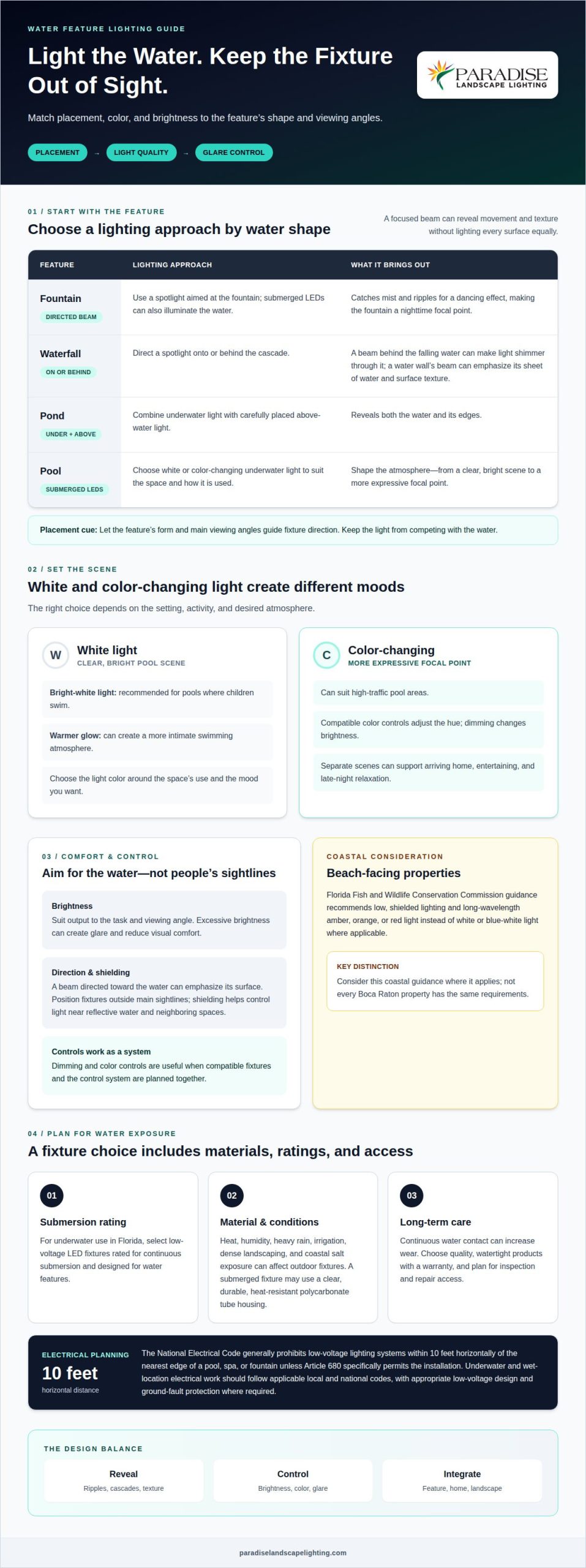
Spotlights can direct light onto or behind a waterfall or fountain to accent moving water. A beam behind a cascade can make light shimmer through it, while a fountain spotlight can catch mist and ripples for a dancing effect. These placements make the feature a nighttime focal point without lighting every surface equally. For a pond, underwater and above-water light can reveal both the water and its edges.
A water wall may benefit from a beam that emphasizes its falling sheet of water and surface texture. The feature’s form and main viewing angles guide placement, creating the desired effect without letting the fixture compete with the water.
Electrical limits matter near pools, spas, and fountains. The National Electrical Code generally prohibits low-voltage lighting systems within 10 feet horizontally of the nearest edge of a pool, spa, or fountain unless Article 680 specifically permits the installation. Underwater and wet-location electrical work should follow applicable local and national electrical codes, with appropriate low-voltage design and ground-fault protection where required.
Boca Raton’s Community Appearance Board criteria recommend considering fountains, gardens, pools, and benches to create a pleasant atmosphere in parking areas. This places water features within the broader landscape composition. A landscape lighting plan for water features in Boca Raton can consider the feature alongside surrounding spaces instead of treating it as an isolated focal point.
Energy Use and Operating Costs
LED fixtures offer an energy-efficient option for water feature lighting. Operating costs depend on the fixtures’ electrical demand and how long the system runs, so equipment choices and nighttime schedules affect ongoing use. Focused placement can illuminate a fountain or waterfall without lighting the entire backyard. The goal is to match fixture operation to the feature’s role.
Color temperature, brightness, glare, and shielding
Color and output shape the atmosphere around a pool, fountain, or pond. A thoughtful design also considers viewing angles, nearby structures, and who may be exposed to the light.
White and Color-Changing Underwater Light
White and color-changing underwater lights create different effects, from a clear, bright pool scene to a more expressive focal point. Submerged color-changing lights can suit high-traffic pool areas, while bright-white light is recommended for pools where children swim. A warmer glow can create a more intimate swimming atmosphere. Choose according to how the space is used and the mood you want to create.
For a beach-facing property, color choice also has a practical consideration. Florida Fish and Wildlife Conservation Commission guidance recommends low, shielded lighting and long-wavelength amber, orange, or red light instead of white or blue-white light where applicable. This accounts for coastal conditions without assuming every Boca Raton property faces the same requirements.
Dimming and Color Controls
Dimming changes a scene’s brightness, while color controls adjust the hue of compatible color-changing lights. Together, these controls can keep a pool softly illuminated on a quiet evening and create a more vivid scene for entertaining. Their value depends on the fixtures and control system working together as planned.
Separate scenes can support different uses, such as arriving home, entertaining, and late-night relaxation. For example, a restrained pool setting can preserve a calm atmosphere, while a more colorful scene can accent the water during a gathering. Planning controls alongside fixture placement helps the finished installation feel intentional rather than visually disconnected.
Brightness, Glare, and Shielding
Brightness should suit the task and viewing angle. Excessive output can create glare and reduce visual comfort. At a pool, light aimed toward seated guests may feel harsh, while a beam directed toward the water can emphasize its surface. Positioning fixtures outside the main sightlines helps keep the feature comfortable to view.
Shielding helps control where light falls, especially near reflective water and neighboring spaces. A lighting designer can balance output, fixture direction, and surrounding structures so the pool remains the visual focus without unnecessary spill. Explore landscape lighting design for a coordinated approach to color, brightness, and placement.
Continuous-submersion ratings and fixture materials
For underwater use in Florida, a professional should select low-voltage LED fixtures rated for continuous submersion and designed for water features. The installation should follow applicable electrical codes and include appropriate low-voltage design and ground-fault protection where required.
South Florida conditions make fixture materials an important consideration. Heat, humidity, heavy rain, irrigation, dense landscaping, and coastal salt exposure can affect outdoor lighting. A submerged fixture may use a clear, durable, heat-resistant polycarbonate tube housing. The right material and placement help preserve the fixture’s appearance and function in a fountain, pond, or pool.
Continuous contact with water can put more wear on water-lighting fixtures than on many landscape fixtures. Choose quality, watertight products with a warranty, and plan for inspection and repair access. A professional can consider how the fixture serves the feature, whether connections remain accessible, and whether service can happen without draining the entire water feature.
There is no single maintenance interval that fits every installation. During spring and summer, keep fixtures clear of debris, which can collect around a pond or fountain and obscure the light. Regular inspections can identify buildup or a fixture that needs attention. Replacement depends on the fixture’s condition and repair needs, not a universal schedule.
Low-cost fixtures can be tempting, but poor watertightness may lead to replacement. A warranty and practical repair access strengthen the plan for the years ahead. For example, position a fountain fixture so it can be inspected without disrupting the feature’s operation. That access matters as much as creating a beautiful evening effect.
For coastal properties, fixture selection should account for salt exposure as well as contact with water. A durable housing alone does not determine suitability: installation, connections, and service access also matter. A professional evaluates these details together so the fixtures suit the setting and deliver the intended visual effect.
Lighting for residential and landscape architecture water features
In Boca Raton, water-feature lighting works best as part of the property’s larger design. A custom plan connects the feature to the home’s architecture, planting, pathways, pool areas, interior views, existing infrastructure, and future outdoor plans.
Professional installation brings design and technical planning together. A do-it-yourself approach may overlook how wiring, fixture access, and viewing angles interact. For a residential pond, for example, overlapping underwater and above-water lighting can give the water and its edges a more complete appearance. The plan should also allow fixture inspection without requiring the entire feature to be drained.
Architecture helps determine what the lighting should emphasize. A fountain beside a distinctive façade can serve as a focal point, while a water wall may complement nearby stonework. Carefully coordinated accents can also connect the feature to sculptures, gates, planting beds, or other defining elements. Each placement should look appealing and support safe movement around the water.
Florida’s outdoor conditions also shape the design. Heat, humidity, heavy rain, coastal salt exposure, irrigation, and dense landscaping can affect fixture placement and wiring routes. Connections should suit outdoor conditions, wiring should be protected and routed cleanly, and access should remain available for future adjustments. These decisions help integrate the water feature with the garden.
The surrounding spaces matter, too. Path and step lighting should reveal routes and changes in elevation without creating a runway effect. A backyard plan can coordinate water lighting with gathering areas, architectural features, and landscape accents, keeping the feature visually connected from different viewpoints. The result is a considered composition, not simply a bright pool of light.
For a residence with a fountain, pond, or water wall, a professional design can bring the architecture, landscape, and practical requirements into one coordinated plan. Plan your water-feature lighting around the home and its outdoor spaces.
Paradise Landscape Lighting
Paradise Landscape Lighting helps bring the lighting plan and installation together for residential fountains, pools, ponds, and architectural water features. Its lighting designer and lighting engineer create tailored solutions that account for the water’s movement, the home’s architecture, surrounding landscape, and nighttime views.
Turn to a professional team when you want a cohesive design rather than isolated fixtures, or when a water feature needs to work visually with nearby pool decks, sculptures, or other outdoor elements. Paradise Landscape Lighting brings together landscape lighting design, LED lighting installation, and maintenance, tailoring the details to the property and your priorities.
For a considered plan for your water feature, contact Paradise Landscape Lighting.
Shape a Water Feature That Feels at Home
Start by considering how the water feature should relate to your home after dark. A cohesive plan can connect it to the property’s architecture and outdoor spaces instead of making it feel like a separate display. For landscape lighting for water features in Boca Raton, this design perspective helps shape a scene suited to your home.
Paradise Landscape Lighting can bring that vision to life through landscape lighting design and LED lighting installation, with sculpture and artwork lighting to complement nearby focal points. Share which feature you want to highlight, how you use the space, and the atmosphere you want after dark. Those details provide a clear starting point for your custom design.
Contact Paradise Landscape Lighting to discuss a lighting plan for your water feature and outdoor setting. A thoughtful design can make the space feel distinctly yours.
Frequently Asked Questions
What professional lighting techniques highlight a pond or fountain without glare?
Professionals shape each beam around the feature and its main viewing positions. For example, a patio-facing pond can use concealed accents along its far edge, keeping direct light out of seated guests’ sightlines. A fountain’s spray can be lit from an angle that reveals its movement without shining toward nearby windows. The result highlights the water while maintaining visual comfort.
What electrical codes and permits should a professional address for outdoor water feature lighting in Boca Raton?
A professional should account for applicable local and national electrical codes and project-specific permit requirements. The National Electrical Code generally prohibits low-voltage lighting systems within 10 feet horizontally of the nearest edge of a pool, spa, or fountain unless Article 680 specifically permits the installation. The project design should also include ground-fault protection where required, with permitting considered according to the work’s scope.
How do professionals install landscape lighting near water to prevent shock and fire hazards?
Professionals reduce electrical risks through suitable low-voltage design, code-conscious fixture placement, and wiring protected for outdoor conditions. For example, a plan should route connections away from irrigation and provide practical access for inspection. Wet-location connections must suit their environment, and ground-fault protection is incorporated where required. These measures address the installation as a complete system rather than relying on fixture choice alone.
Return to News