
Landscape lighting for small yards Wilton Manors
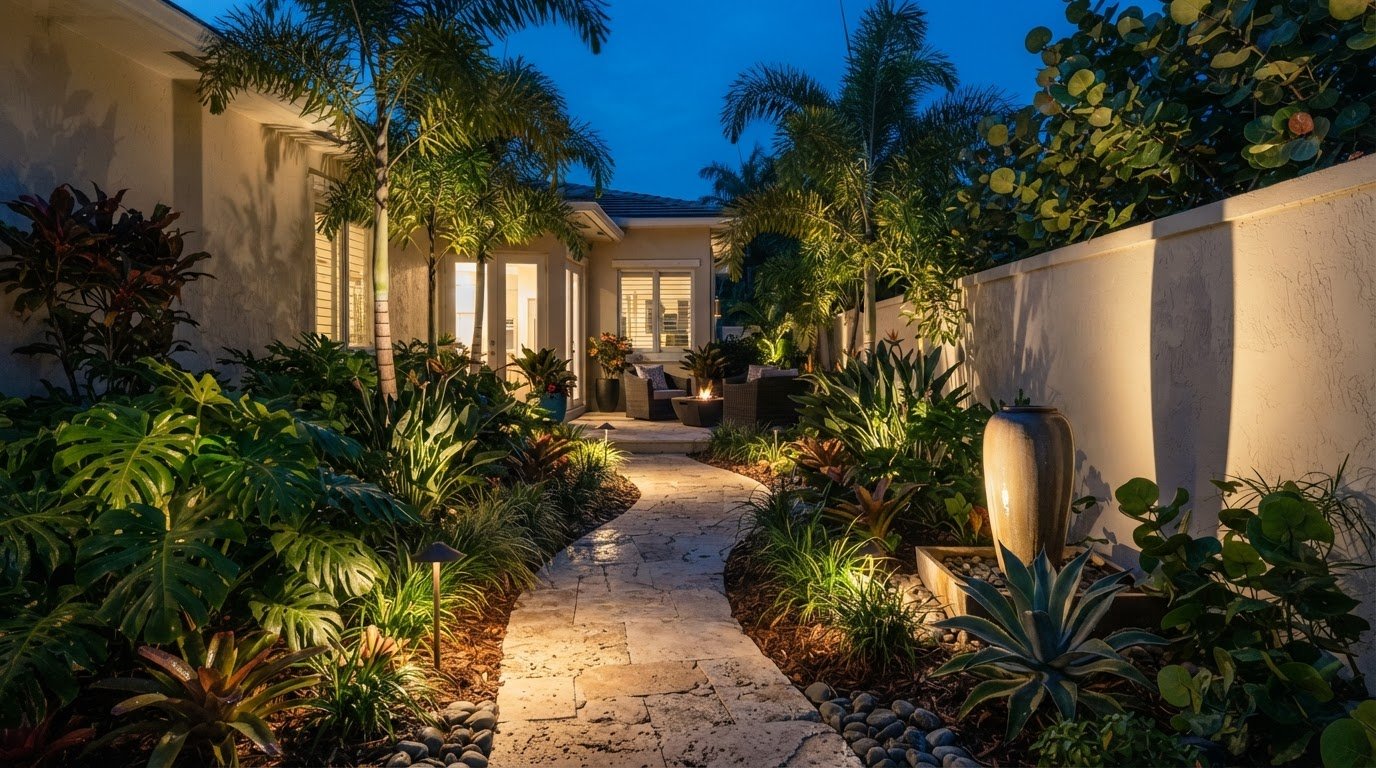
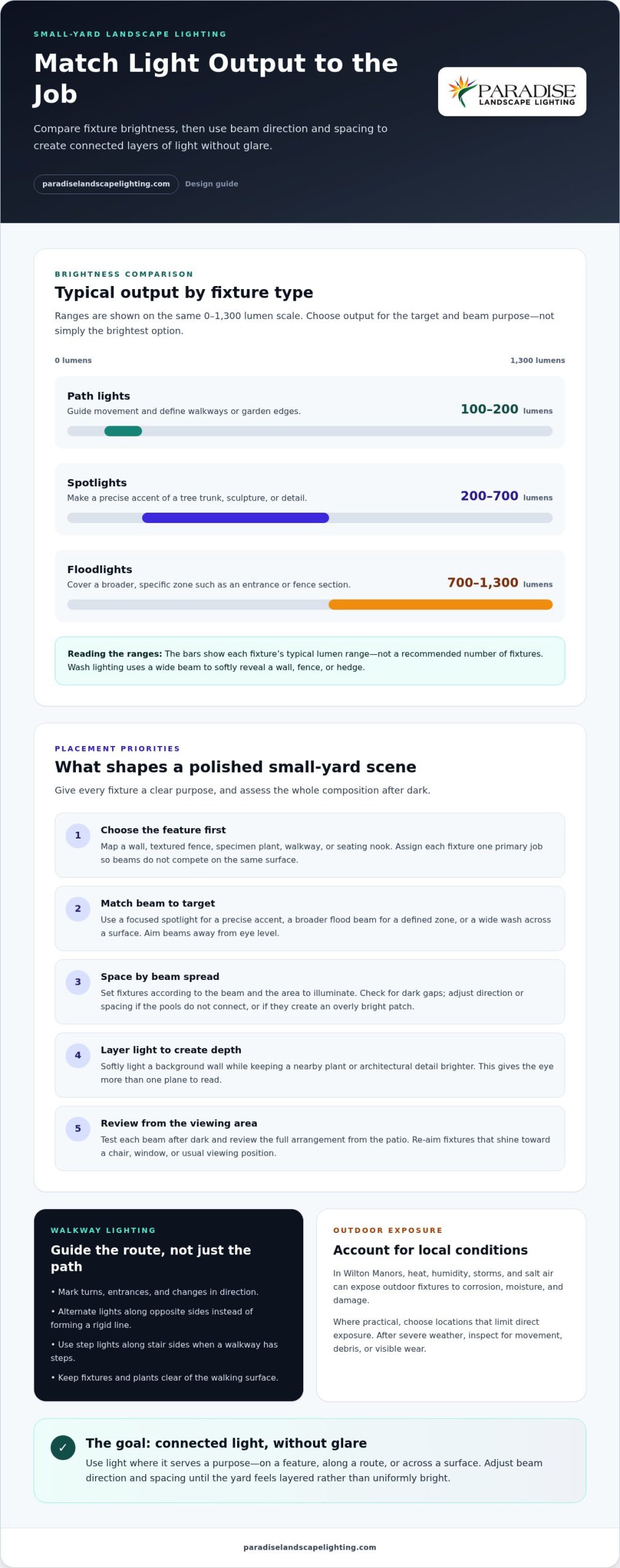
Small yards look more polished with layered light than with one bright fixture. For landscape lighting for small yards in Wilton Manors, use wash or flood lights to highlight walls and garden features, then add path lights where people walk; path lights typically provide 100-200 lumens, spotlights 200-700 lumens, and floodlights 700-1,300 lumens. Space fixtures according to their beam spread and the area you want illuminated, aiming for connected pools of light without glare or dark gaps.
It’s easy to assume a compact yard needs fewer lights and a simpler installation, but placement and direction matter just as much as fixture count. This guide explains how to layer wash, flood, and path lighting, choose brightness and spacing, and plan an installation that feels intentional rather than crowded. You’ll also learn how to use the yard’s walls, plants, walkways, and focal points to create depth while keeping light focused where it serves a purpose.
Key Takeaways
- Layer wash and flood lights to bring out walls, plants, and focal features without relying on one glaring fixture.
- Use path lights to define walkways and frame garden details, placing them where they guide movement without crowding a compact yard.
- Choose brightness by purpose: path lights typically provide 100-200 lumens, while spotlights and floodlights serve different lighting needs.
- Plan the installation around fixture direction, wiring layout, and the yard’s key features to create a cohesive nighttime effect.
Flood and wash lights for ambient lighting
In Wilton Manors, heat, humidity, storms, and salt air can expose outdoor fixtures to corrosion, moisture, and damage. Where practical, choose locations that limit direct exposure, and inspect fixtures after severe weather for movement, debris, or visible wear.
- Wash a surface, not the whole yard. Aim a wide beam across a wall, fence, or hedge to reveal texture and create soft ambient light. For example, placing a fixture near a garden wall can cast plant shadows across its surface. Hide the light source behind foliage when possible, so the planting appears to glow without a bare lamp dominating the view.
- Choose floodlights for broader coverage. Landscape floodlights typically provide 700-1,300 lumens, making them suited to larger areas than a narrow beam. In a compact yard, direct the beam toward a specific zone, such as an entrance or a section of fence. Avoid pointing it into neighboring windows or directly along a seating area, where glare can overwhelm the scene.
- Use spotlights for precise accents. Spotlights typically provide 200-700 lumens and can emphasize a sculpture, tree trunk, or architectural detail. Set one at ground level and angle it upward for a defined highlight; use a floodlight when the goal is to spread light across a wider surface. This distinction helps keep a small outdoor space layered rather than uniformly bright.
- Position mounted lights and motion detection deliberately. A floodlight mounted near a door can add depth to the entrance and illuminate the approach. If using motion detection, aim the sensor toward the area where movement should activate the light, rather than toward passing traffic or swaying branches. Treat security lighting as visibility support, not a guarantee against intrusion; shield the beam from neighbors’ windows.
Before finalizing placement, test each beam after dark and adjust its angle. One well-aimed fixture can highlight a wall or entry without flooding the entire yard with light.
Path lights for framing pathways and garden areas
Light pathways to guide movement, then add accents to bring garden features into view. Around trees, fences, and seating areas, combine path lights with carefully directed fixtures so each zone has a clear purpose.
-
Select Path Lights
Choose path lights that direct illumination downward, then check how their beams meet the ground. Path lights can help define a short walkway without overpowering nearby flowers. Place a small fixture beside a flower bed to reveal its edge, and avoid hiding the light behind dense leaves that block the beam.
-
Plan Pathway Light Placement
Mark the pathway’s turns, entrance, and changes in direction before placing fixtures. Alternate lights along opposite sides instead of forming a rigid line, creating a balanced route through a compact yard. Adjust spacing to each fixture’s beam and the path’s width. Check for dark gaps without crowding the walkway with overlapping pools of light.
-
Light Pathways and Walkways
Trace the route from its starting point to the destination, then place lights where the surface or direction changes. On a walkway with steps, combine path lights with step lights along the stair sides to make transitions visible and give the route a finished look. Keep fixtures and plants clear of the walking surface.
-
Frame Trees, Fences, and Seating Areas
Use path lights beside garden borders to reveal low plants, then add a separate accent for a tree or fence. For example, place small lights near flowers along a fence, aiming their beams away from nearby seating. This contrast distinguishes the garden from the lounge area and gives each part of a small yard its own visual role.
Combining step lights with path lights can improve walkway visibility and add security. Along a dark walkway, alternate directional lights to make the route easier to follow at night.
Small low-voltage path lights beside flowers can accentuate them, and path lights can illuminate plants, trees, and other landscape features. Position these lights to bring plantings and garden features into view while keeping the walkway’s directional lighting distinct.
Fixture spacing and brightness
To make a small yard feel larger, illuminate separate layers, such as a wall, a tree, and a garden edge. Aim fixtures away from eye level, then adjust spacing until the light connects without harsh glare.
- Map the features before selecting brightness. Mark what you want to highlight, such as a textured fence, specimen plant, or seating nook. Give each fixture one primary job. This keeps beams from competing on the same surface while another part of the yard remains visually flat.
- Match output to the target. Use a focused spotlight for a tree trunk or sculpture, and a broader beam for a wall or planting bed. Landscape spotlights typically provide 200-700 lumens. Within that range, choose brightness according to the target’s distance, size, and surrounding darkness, rather than choosing the brightest option automatically.
- Set spacing by testing beam overlap. Place fixtures where their light reaches the intended feature, then review the effect after dark. If adjacent beams leave a gap, move a fixture or adjust its direction. If they create an overly bright patch, increase separation or turn a fixture toward a less reflective surface.
- Use contrast to create depth. Light a background wall softly while keeping a nearby plant or architectural detail brighter. For example, a softly lit fence behind a highlighted palm gives the eye more than one plane to read. Avoid aiming light directly toward a patio chair, window, or usual viewing position.
- Review the composition from the patio. Switch on the full layout and view the yard from the main seating area and doorway. Look for exposed light sources, strong reflections, and isolated bright spots. Adjust fixture angles and spacing until the path, planting, and focal feature read as distinct layers.
Landscape lighting installation
For residential landscape lighting, 12-volt systems are a typical low-voltage choice; 120V is line voltage. Florida installations must follow applicable electrical requirements and account for outdoor exposure, wiring, and transformer selection.
-
Compare DIY and Professional Installation
Compare the project’s scope before choosing an installation approach. DIY kits can suit simple layouts, while multiple zones, long wire runs, or difficult fixture locations add planning and wiring complexity. Installation cost depends on fixture count, wiring, transformer needs, and site conditions; professional pricing follows a quote request. A low-voltage setup still requires careful attention to connections and placement.
-
Choose LED Landscape Lights
Choose LED fixtures by their intended purpose, then calculate total wattage by adding the fixture loads. Energy use depends on the combined wattage and how long the lights operate. The U.S. Department of Energy states that LED bulbs use 25-30% less energy than halogen lighting and last 25 times longer. Keep lenses clear and check aim, connections, and fixture stability during routine maintenance.
- Plan the electrical layout. Draw each fixture location and the cable route before you install anything. Low-voltage landscape systems commonly use 12- to 14-gauge wire, depending on wattage and run length. In a daisy chain, voltage can drop along the run, so account for cable length and fixture loads when planning the layout.
- Match the transformer to the supply. A transformer reduces line voltage for low-voltage fixtures; the supply and system must be compatible. A 277V supply may require a transformer to reduce power. Keep connections and equipment appropriate for outdoor conditions, and have line-voltage work handled by a qualified professional. For a layout that needs careful load planning, plan a tailored landscape lighting installation.
Hanging lanterns can be an energy-efficient and easy-to-install addition to landscape lighting. The Spruce reports that its tested in-ground landscape lights often took less than 15 minutes to install.
Step lights along the sides of stairs can provide both decoration and safety, while step deck lights placed under trees can uplight them at night. 12V and 24V are low-voltage options for outdoor lighting.
Paradise Landscape Lighting: Landscape Lighting Design
Paradise Landscape Lighting can turn your fixture plan into a cohesive design when placement, wiring, or focal points feel difficult to coordinate. Its Landscape Lighting Design considers how light works across a compact yard, while LED Lighting Installation brings the planned effect outdoors. For a defined feature, Sculpture and Artwork Lighting can draw attention to a focal piece; Pool Deck Lighting can shape the poolside atmosphere.
Consider professional design when you want several areas to feel connected or need to balance visibility and visual impact in a small space. A considered layout can coordinate pathways, planting, and architectural details without treating every corner alike.
To discuss a landscape lighting design for your yard, contact Paradise Landscape Lighting or visit paradiselandscapelighting.com.
Shape Your Yard’s Evening Experience
Outdoor lighting can do more than make a yard visible after sunset. It can shape how you use the space, whether you’re enjoying a quiet evening outside, welcoming guests, or highlighting a feature you value. Planning landscape lighting for small yards in Wilton Manors is an opportunity to make your outdoor space feel considered and inviting, not simply brighter.
Think about how you want the yard to feel at different times. Softer light near a seating area may suit relaxed evenings, while a more defined entrance can make arriving home feel natural. These priorities can guide a design that complements your home and daily routines.
When you’re ready to move from ideas to a tailored plan, contact Paradise Landscape Lighting to discuss your outdoor lighting goals. A thoughtful next step can help bring a more distinctive evening atmosphere to your yard.
Frequently Asked Questions
What landscape lighting works best for small yards?
A layered mix of discreet fixtures works best when each light has a distinct purpose. For landscape lighting in small yards in Wilton Manors, start by deciding what you want to see from indoors, such as a favorite tree or patio corner. Keep less important areas softly lit or dark to preserve contrast and make the space feel open rather than uniformly bright.
Which low-voltage LED fixtures suit small yards and patios?
Choose fixtures according to how you use each area: path lights for garden edges, step lights for changes in level, and discreet accent fixtures for a tree or artwork. On a patio, consider where people sit and move before placing lights, so fixtures don’t shine into faces. A cohesive low-voltage LED layout can connect these zones without making every corner equally bright.
Return to News