
Landscape Lighting for Outdoor Kitchens in Boca Raton
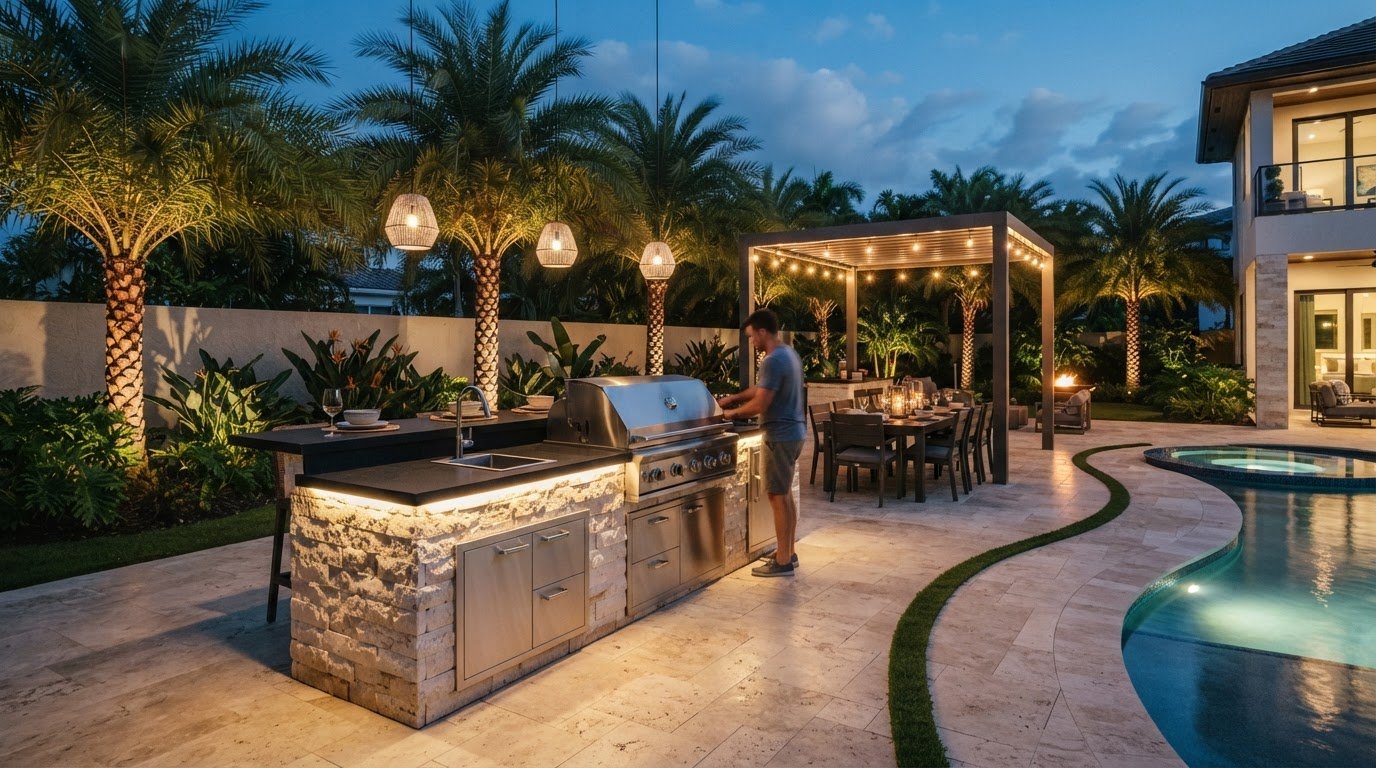
The best landscape lighting for an outdoor kitchen in Boca Raton is planned around how you cook, gather, and move through the space, not simply where fixtures can be installed. Compare local installers by their design approach, experience coordinating kitchen and garden lighting, and ability to create a practical LED plan with smart-control options. The right fit should balance clear task lighting with a comfortable atmosphere for dining and entertaining.
It’s natural to focus first on the look of the lights, but placement and control matter just as much. A grill, countertop, seating area, walkway, and nearby planting each serve a different purpose, so a cohesive plan considers how these zones work together after sunset.
This guide explains what to look for when comparing Boca Raton lighting installers, how LED and smart-controlled systems can support outdoor kitchens, and how to think about lighting for gardens, pools, paths, and architectural features. You’ll also learn which project details shape the design process, so you can make a considered choice for your outdoor space.
Key Takeaways
- Compare installers by how well their designs connect cooking, dining, pathways, and nearby landscape features into one cohesive plan.
- Use LED and smart controls to tailor lighting to different outdoor activities, while considering how each zone needs to function after dark.
- According to Houzz, 94 outdoor lighting and audio visual systems professionals serve Boca Raton, with 3,456 local projects listed; focus your comparison on design fit, not just the number of options.
- Layer task, ambient, and accent lighting to support kitchen work, comfortable gatherings, and visual interest without treating every area the same.
- Plan lighting for gardens, pools, walkways, and architectural features as part of the outdoor space, and include ongoing care to help the system keep working as intended.
LED and smart-controlled lighting systems
LEDs work well in outdoor kitchens when lighting is planned around specific tasks. A grill station, countertop, and dining table each need a different approach. For example, directing light onto a preparation surface helps you see ingredients without illuminating every corner. Planning by zone gives the kitchen visual structure and makes it easier to adjust the atmosphere as activities change.
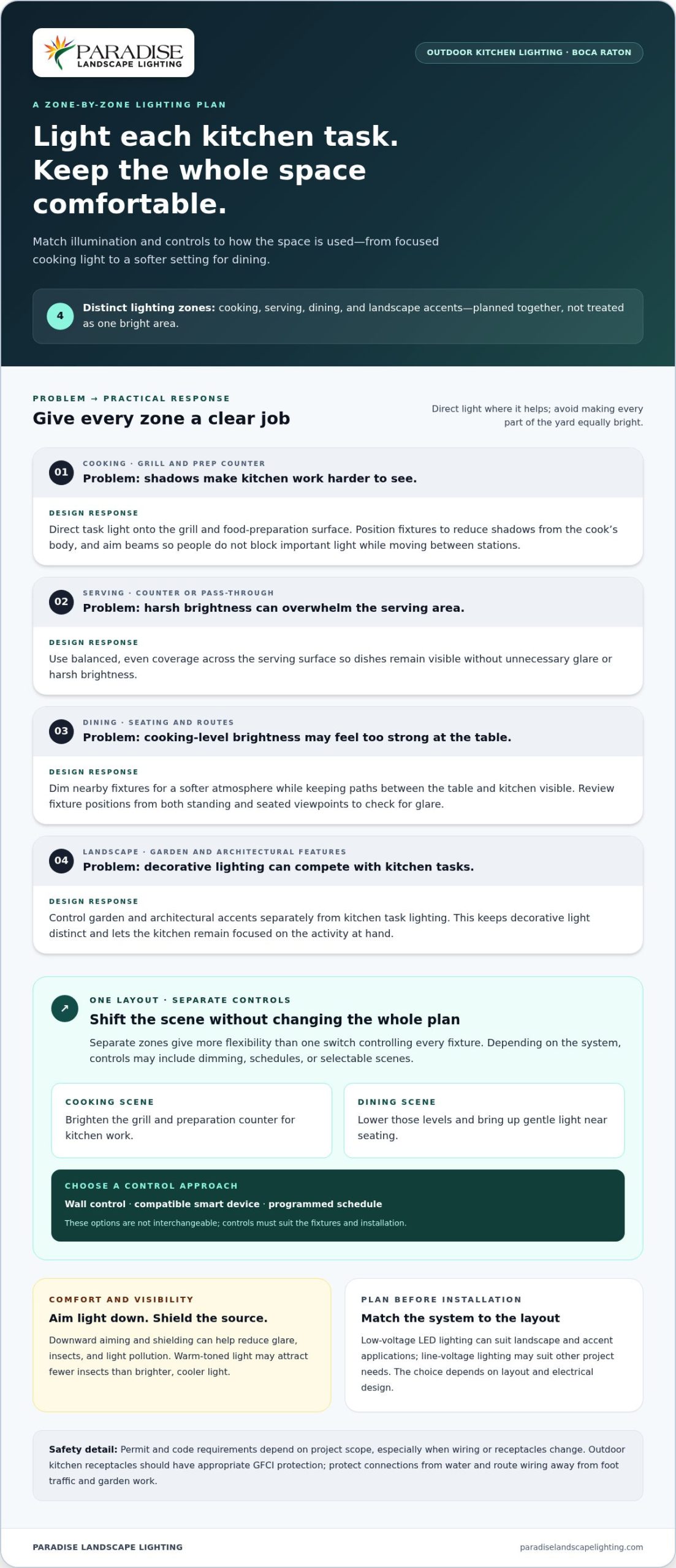
Start by mapping the kitchen’s main functions. Mark the grill, food-preparation counter, serving area, and seating zone, then identify where direct illumination is useful. A built-in grill may need focused task lighting, while a serving counter benefits from even coverage. Position fixtures so people don’t block important light while cooking or moving between stations. A landscape lighting plan for an outdoor kitchen in Boca Raton should account for each zone.
To reduce glare, insects, and light pollution, aim fixtures downward and shield the light source from direct view. Use dimming and separate controls to keep brightness focused on occupied areas, rather than lighting the entire yard. Warm-toned light can also help make the space more comfortable and may attract fewer insects than brighter, cooler light.
Separate controls make the zones easier to manage. Depending on the system, controls may include dimming, schedules, or selectable scenes. A cooking scene could brighten the grill and preparation counter, while a dining scene lowers those levels and brings up gentle light near seating. Separate zones offer more flexibility than one switch controlling every fixture.
- Cooking: Direct light onto the grill and food-preparation counter, reducing shadows from the cook’s body.
- Serving: Use balanced illumination over the serving surface, so dishes remain visible without harsh brightness.
- Dining: Dim nearby fixtures for a softer atmosphere, while keeping routes between the table and kitchen visible.
- Landscape: Control garden or architectural accents separately, keeping decorative light distinct from kitchen task lighting.
Before choosing controls, decide how you want to operate them: with a wall control, a compatible smart device, or a programmed schedule. These options aren’t interchangeable, so the controls must suit the fixtures and installation. A simple plan might separate kitchen work, dining, and garden accents, letting the space shift purpose without changing the whole lighting design.
LED and smart-controlled lighting work best as parts of one layout. Boca Raton outdoor kitchens may combine grills, refrigeration, counters, seating, and dining areas, so each zone can have a distinct lighting role. Keep controls understandable, direct light where it serves a purpose, and choose settings that suit real routines, from preparing dinner to hosting guests. Thoughtful landscape lighting for an outdoor kitchen in Boca Raton can connect those functions without making every area equally bright.
Outdoor lighting installers serving Boca Raton
Compare installers by how they plan, install, and maintain lighting across the kitchen and nearby outdoor areas. Four decisions shape a practical project: voltage, code considerations, lighting layers, and fixture durability.
Low-Voltage and Line-Voltage Options
Low-voltage and line-voltage systems differ in operating voltage and installation needs. For an outdoor kitchen, compare fixture placement, the lighting zones, and how the system connects to the home’s electrical supply. Low-voltage LED lighting can suit landscape and accent applications; line-voltage lighting may be considered for other project needs. The choice depends on the layout and electrical design.
Ask for a plan showing which lights serve the grill, counters, dining area, and pathways. A transformer may be part of a low-voltage setup, while line-voltage work involves household wiring. Keep this distinction clear in the design instead of choosing a system based only on fixture appearance.
Permits, Codes, and Electrical Safety
In Boca Raton, permit and code requirements depend on project scope, particularly when wiring or receptacles are changed. Plan for code-compliant installation before work begins, and distinguish lighting circuits from kitchen outlets. Outdoor kitchen receptacles should have appropriate GFCI protection. Low-voltage lighting also needs correctly installed wiring and components suited to outdoor exposure.
Map outlets, appliances, and fixtures separately so the plan accounts for cooking equipment and lighting together. Protect connections from water exposure, and route wiring away from likely foot traffic or garden work. Low-voltage fixtures still require careful installation.
Layering Task, Ambient, and Accent Lighting
Build the plan around three functions. Task lighting illuminates the grill and preparation counter, ambient lighting supports dining and conversation, and accent lighting draws attention to a tree, wall, or artwork. Separate control zones let the cook brighten work surfaces without making every seating area equally bright.
Review the layout from standing and seated positions. A fixture aimed at a countertop may create glare at the dining table, while a shaded or redirected beam can keep light on the work surface. Use compatible dimming or separate controls to adjust the balance for cooking and entertaining.
Fixture Ratings and Materials for Boca Raton
Humidity and salty air make fixture durability an important consideration. Compare each fixture’s IP rating with its exposure to dust and moisture, and match the rating to its installation location. Choose corrosion-resistant materials and protected connections for outdoor use, rather than assuming every fixture suits every exposed area.
Plan maintenance into the installation. Clean lenses, inspect seals and connections, and remove debris that blocks light. Recheck aiming after plants grow or furniture moves. For a coordinated layout, review an outdoor lighting design approach alongside the kitchen’s electrical and landscape requirements.
Finding and comparing local professionals
Choose a lighting design based on how it serves the space, not on fixture count alone. For an outdoor kitchen, the plan should connect cooking, dining, pathways, and nearby garden features. Review how the layout serves each area, fits the property, and supports ongoing maintenance.
Houzz lists 94 outdoor lighting and audio visual systems professionals serving Boca Raton, Florida, and 3,456 local projects by those professionals. Those figures show a broad local market, but a project count alone doesn’t reveal whether a design suits your kitchen. Focus on the plan’s detail: fixture locations, lighting zones, and the relationship between work surfaces and seating.
A useful design makes the intended result easy to picture. It should show how the grill, preparation counter, dining space, and routes between them will be illuminated. For example, a fixture that lights a countertop but shines toward seated guests solves one need while creating another. A complete layout considers both viewpoints.
- Design scope: Look for a coordinated plan covering the kitchen and connected outdoor features, such as a walkway or garden bed.
- Installation approach: Check that fixture locations, wiring routes, and control zones follow the proposed layout.
- Project communication: A clear sequence should explain design, installation, and how the completed system will be cared for.
- Fit for your property: A compact patio kitchen and a broad entertaining area require different lighting plans.
Timeline depends on the project’s size and complexity. Smaller outdoor upgrades may take a few weeks, while complete transformations can take several weeks from design through installation. A kitchen lighting project can also involve nearby gardens, pools, or architectural features, so the scope matters more than a generic estimate. Identify which areas are included before comparing proposed schedules.
Compare the substance of each design, rather than focusing on the number of fixtures. One plan may use fewer, carefully placed lights for cooking and circulation, while another may distribute light across more of the property. The right arrangement depends on the tasks, sightlines, and features you want illuminated. Review the intended effect in every zone, including the transition from kitchen to dining area.
Maintenance deserves a place in the plan. Caring for outdoor lighting helps keep it functioning as intended over time. Account for access to fixtures, cleaning lenses, checking connections, and adjusting lights when landscaping changes. Growing foliage, for example, can eventually block a beam aimed at a garden feature.
Use a simple decision sequence: define the areas to illuminate, review how the design serves each one, then consider installation scope and ongoing care. That process makes it easier to compare Boca Raton professionals on meaningful project details, rather than on a fixture count or broad visual promise.
Lighting for gardens and outdoor spaces
Plan outdoor lighting as a connected composition, linking the kitchen with paths, planting, and gathering areas. In Boca Raton, lighting can support safe movement while highlighting landscaping, architecture, and outdoor features. Start with the route from the kitchen to the dining area, then identify features to highlight after dark.
For South Florida’s humid, salty conditions, choose fixtures rated by their manufacturers for outdoor exposure, with corrosion-resistant construction suited to their location. Match the stated protection to exposure to moisture and debris. A light under a covered pergola faces different conditions from one beside an open pool deck.
Build the layout around how each space is used. A walkway needs visible footing; a palm or sculptural planting can provide a focal point; a pool deck benefits from lighting that supports movement without overwhelming the water. These distinct purposes call for considered placement, not uniform brightness across the yard.
- Walkways: Place pathway or low-level lights to reveal changes in direction and transitions near steps.
- Trees and planting: Aim landscape accents toward selected trunks or foliage, preserving contrast between lit and unlit areas.
- Pool and patio: Coordinate pool-deck and patio lighting with routes between the kitchen, seating, and water.
- Pergola and seating: Use controlled illumination around gathering areas, keeping fixtures out of direct sightlines.
Work through the property in a practical sequence. First, walk the route from the kitchen to the garden, pool, and seating area. Next, note uneven surfaces, steps, and dark transitions. Then choose focal features, such as a fountain, mature tree, or architectural wall. Finally, place fixtures to serve those functions while limiting stray light into windows and neighboring spaces.
For example, a pathway light can guide guests toward a dining area, while a carefully aimed accent brings out the texture of a nearby tree. A fixture near a fountain can emphasize moving water, but its position should also account for nearby movement. Tie each decision to a specific feature or route.
Plant growth and outdoor use can change a lighting layout over time. Trim foliage that blocks a beam, clean lenses, and check fixture alignment after moving patio furniture or adding plants. After dark, walk the route again from the kitchen to the pool deck. This review can reveal glare, dark patches, or accents that no longer reach their intended feature.
Outdoor kitchen lighting in Boca Raton can connect the kitchen with other outdoor features. Treat the garden, patio, walkways, and kitchen as linked zones, using separate fixture placement and controls where needed. A thoughtful layout keeps each space easy to navigate while preserving the landscape’s character.
How should outdoor kitchen task, ambient, and accent lighting be layered?
Start with the kitchen’s work surfaces, then shape the surrounding atmosphere. Task lighting helps cooks see food and tools; ambient lighting supports dining and conversation; accent lighting adds depth to selected features. For example, a focused beam can serve the grill, softer light can define a dining table, and a separate accent can reveal a nearby stone wall.
Plan each layer from people’s points of view. Stand at the grill, sink, and preparation counter to identify shadows cast by the cook or overhead structures. Then sit at the dining table and look toward the kitchen. A visible, unshielded light source may feel harsh from that position, even if it illuminates the counter effectively.
- Task: Aim light at the grill and preparation surfaces, avoiding beams blocked by the cook.
- Ambient: Establish comfortable general light around seating, such as beneath a pergola or near a dining table.
- Accent: Highlight one feature, such as a tree, textured wall, sculpture, or fountain.
Keep the layers distinct through placement and controls. A cook can use brighter task lighting while guests remain in softer ambient light. Accent lights can stay separate, so a garden feature doesn’t need illumination during every meal. Dimming can further adjust the balance when the selected fixtures and controls are compatible.
Check for competing beams before finalizing fixture positions. A bright light aimed across a glossy countertop may reflect toward seated guests. A fixture behind the cook may cast shadows over the cutting area. Adjusting the angle or shielding the source can keep useful illumination on the surface without sending glare into nearby sightlines.
Review the lighting at night. Turn on task lighting and prepare food at the counter, noting dark work areas and reflections. Switch to the dining setting and check whether faces and serving dishes are comfortable to see. Finally, turn on accents individually. This sequence shows whether each layer has a clear purpose or adds unnecessary brightness.
For a Boca Raton kitchen beside a pool or garden, consider how the layers connect beyond the cooking area. A softly lit route can guide guests, while a restrained accent can draw attention to planting without competing with the table. Keep the controls intuitive, with a distinct setting for cooking and another for entertaining. Plan a layered outdoor lighting layout around the way you use your kitchen.
Paradise Landscape Lighting: Landscape Lighting Design
Paradise Landscape Lighting designs and installs coordinated outdoor lighting for cooking, dining, and the surrounding landscape. Its lighting designer and lighting engineer bring design and technical planning together to create custom solutions for residential outdoor spaces.
Consider Paradise Landscape Lighting’s Landscape Lighting Design when you want the kitchen to connect visually with nearby gardens, architecture, or a pool. LED Lighting Installation brings the plan to life, while Sculpture and Artwork Lighting can focus attention on selected features. The design can be tailored to your layout and how you use each area after dark.
For a coordinated outdoor kitchen and landscape lighting design in South Florida, contact Paradise Landscape Lighting to discuss your project.
Bring Your Outdoor Lighting Plan to Life
Start by deciding how you want the space to feel after sunset. Picture a weeknight dinner, a lively gathering, or quiet time beside the garden. These moments can guide the balance of practical light and atmosphere and help you choose which outdoor features deserve attention.
For an outdoor kitchen and landscape lighting project in South Florida, Paradise Landscape Lighting can create a design around your home and how you use its outdoor spaces. Its services include Landscape Lighting Design and LED Lighting Installation, with Sculpture and Artwork Lighting to focus attention on selected features. The result is a cohesive plan, rather than a collection of disconnected fixtures.
Bring your ideas, priorities, and outdoor layout into the conversation. Contact Paradise Landscape Lighting to discuss a lighting design for your outdoor kitchen and surrounding spaces. A thoughtful plan can help make evenings outside feel more welcoming and functional.
Frequently Asked Questions
How do I choose Outdoor Lighting Companies in Boca Raton, FL near me?
Choose a Boca Raton lighting professional whose design accounts for your property, installation, and the way you use outdoor spaces. Review whether the proposed plan addresses fixture placement, sightlines, wiring, and the features you want highlighted. Paradise Landscape Lighting serves South Florida communities including Palm Beach, West Palm Beach, Fort Lauderdale, Plantation, Wilton Manors, Weston, Southwest Ranches, Miami, Miami Beach, Coral Gables, and Coconut Grove. Its residential work focuses on custom low-voltage LED lighting.
What landscape lighting works best around an outdoor kitchen?
A coordinated design with carefully placed outdoor fixtures works best because the kitchen connects to dining and landscape areas. Consider nearby finishes: polished counters can reflect exposed light, while textured stone can gain depth under a carefully aimed beam. Consistent light color across adjacent fixtures also helps unify the space. For a distinctive focal point, direct an accent toward a sculpture or artwork.
What energy-efficient outdoor kitchen lighting options are available, including LED and smart controls?
LED fixtures are an energy-efficient option, and compatible smart controls can help tailor operation to your routine. If an existing landscape system uses halogen fixtures, an LED upgrade may be possible; the system’s wiring and components affect what can be retained. For a new setup, group fixtures by purpose and choose controls compatible with the selected LEDs. This helps avoid running decorative lighting when only the kitchen area is in use.
Return to News