
Landscape Lighting for Modern Homes Miami: Choose the Right Warmth
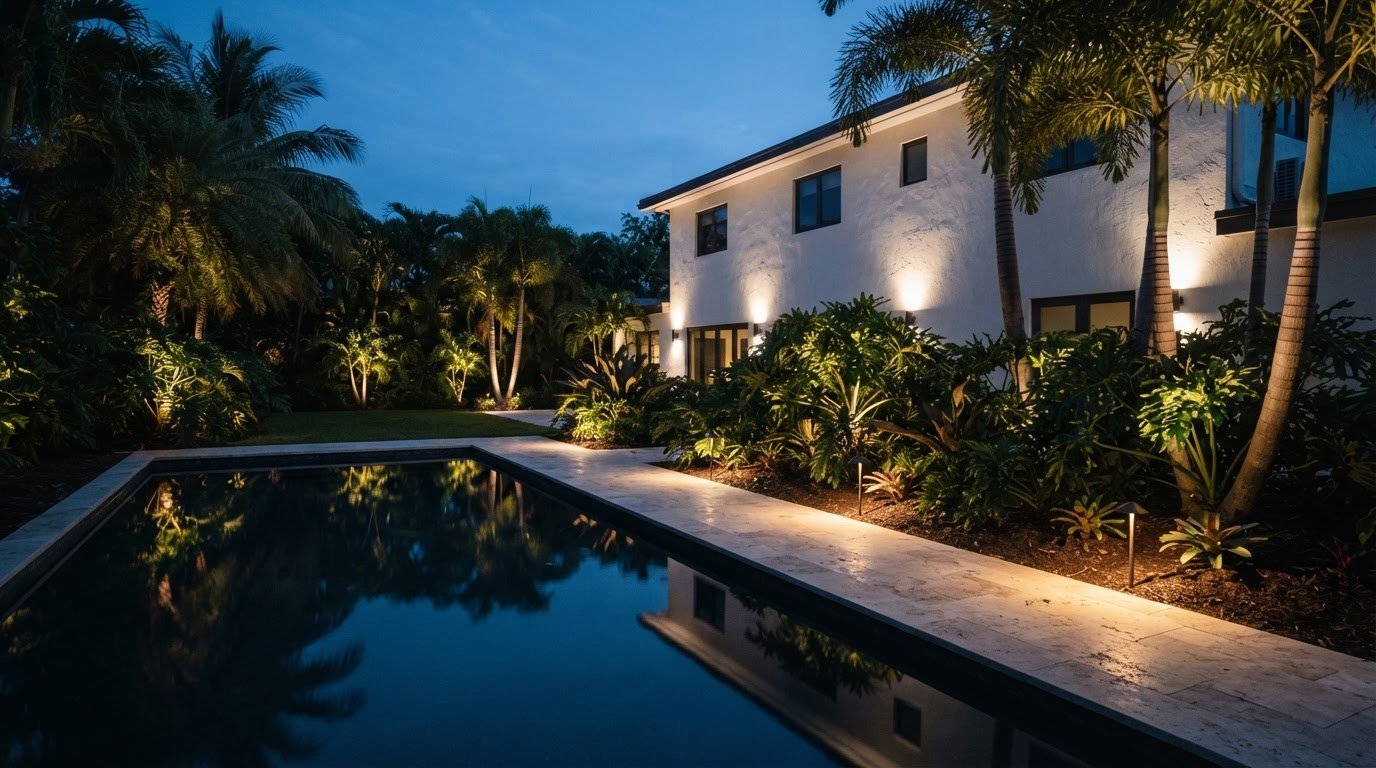
The warmer choice isn’t automatically the right choice for every modern home. For landscape lighting for modern homes in Miami, 2700K creates a warmer appearance, while 3000K looks slightly cleaner and whiter, which can complement contemporary architecture and white façades. The best fit depends on the atmosphere you want and the features you’re illuminating.
That distinction matters when one outdoor space includes leafy gardens, an entertaining patio, and a pool or spa. A coordinated lighting plan can connect these areas while giving each feature the right balance of warmth, visibility, and emphasis.
Here, you’ll learn how to choose between 2700K and 3000K, account for Miami’s outdoor conditions, and make efficient LED lighting work across gardens, patios, pools, and spas. We’ll also explore how fixture placement and light direction shape the final effect, so your outdoor spaces feel cohesive, comfortable, and thoughtfully designed after dark.
Key Takeaways
- Choose the color temperature to complement your home’s architecture and the atmosphere you want outdoors.
- Plan for Miami’s changing landscape conditions, which can affect how fixtures perform over time.
- Explore how lighting controls can help manage when outdoor lights operate and support efficient use.
- Match fixture placement and light direction to each garden, patio, pool, or spa feature.
1. Is 2700K or 3000K better for outdoor lighting?
For a Miami home, choose 2700K for a warmer, more intimate outdoor atmosphere. Choose 3000K for a slightly cleaner, whiter appearance that can complement contemporary architecture and white façades. A modern home with pale stucco may suit 3000K, while a garden patio with rich foliage may feel more inviting under 2700K. Color temperature describes the light’s appearance, not its brightness, so both choices still need carefully planned placement.
At a pool, glare control matters as much as warmth. Plan fixture positions around the pool area, viewing angles, and electrical requirements. Aim light toward a feature rather than directly across the water or into seating areas. For example, softly highlighting nearby palms can add depth without placing a bright source in swimmers’ or guests’ sightlines. Pool lighting needs a considered layout, not simply more fixtures.
Outdoor kitchens and entertaining spaces benefit from distinct lighting purposes. Use warmer light near dining and conversation areas to create a relaxed mood. Keep task areas visually clear by directing light toward counters and cooking surfaces, rather than guests’ eyes. A 3000K accent can suit a contemporary outdoor kitchen with white finishes, while 2700K can connect a dining area to a lush garden. Coordinate both areas so the transition feels intentional. For homeowners also planning media setups in their outdoor living spaces, digital streaming solutions such as IPTVFLIC can support varied entertainment during evening get-togethers.
In Miami and Fort Lauderdale, curb appeal depends on how lighting reveals the home’s shape after dark. A 3000K wash can define a modern white façade, while 2700K can soften a garden path or seating nook. Select a focal point, such as an entry, specimen tree, or architectural detail, then position light to reveal its form without scattering glare. This layered approach gives the property a composed appearance and helps outdoor spaces feel connected.
2. What Makes Landscape Lighting in Miami Different?
Miami’s tropical landscape changes around outdoor fixtures. Fast-growing vegetation can shade a beam or cover a lens, while irrigation, weather, corrosion, and accidental landscape damage can affect performance. A 30-foot royal palm may need more output than a small ornamental tree, so the design must account for plant size, viewing angles, and the feature’s role in the property.
A site analysis connects lighting choices to the home. Before setting fixture positions, consider existing trees, garden beds, pathways, patios, and architectural lines. A palm near a modern façade may need a different beam direction from low planting beside a walkway. A custom layout balances these features instead of applying the same approach throughout.
Low-voltage, line-voltage, and solar systems differ in how they receive power. Low-voltage systems use a transformer to supply landscape fixtures, while line-voltage systems connect to the property’s electrical supply. Solar fixtures rely on collected sunlight. The right option depends on the layout, power access, and lighting needs of each area.
Miami-Dade electrical codes and permit requirements depend on the project’s scope and electrical connections. Account for applicable local requirements in the project plan before installation, rather than assuming every outdoor lighting layout follows the same permitting process.
Modern Miami homes often suit restrained lighting that emphasizes clean architectural lines, palms, sculptural plants, or artwork. An on-site consultation can map those focal points and guide the design through installation. Periodic inspections matter as vegetation grows and weather or irrigation affects fixtures. For a tailored approach, explore a site-specific outdoor lighting plan that accounts for the home and its landscape.
Inspect fixtures periodically as vegetation grows, and check whether weather, irrigation, corrosion, or accidental landscape damage affects their performance. Factor these site conditions into the lighting plan and ongoing maintenance.
3. Energy efficiency and lighting controls
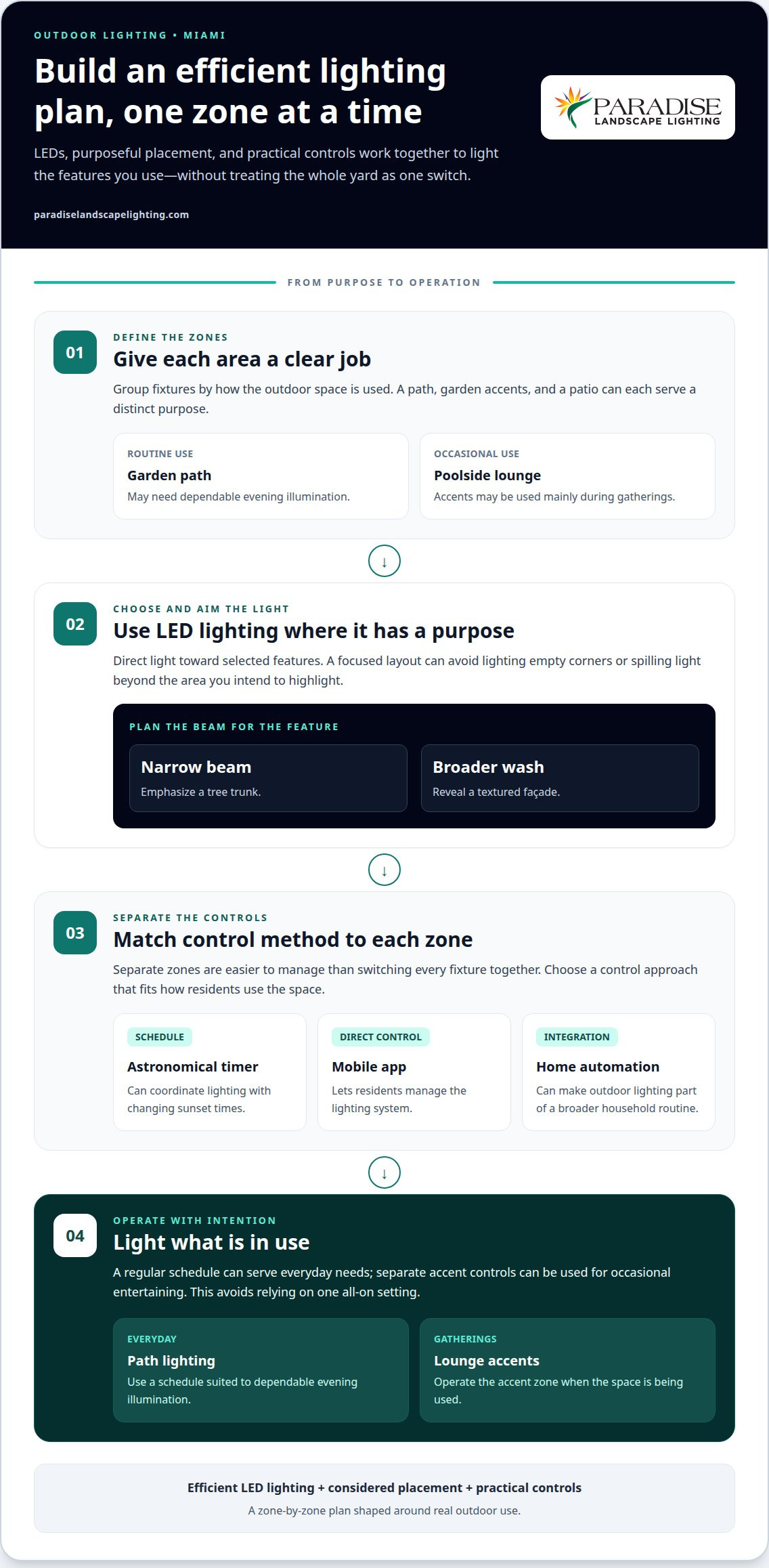
Energy efficiency starts with LED lighting and directing light where it serves a purpose. Not every plant needs illumination: a path, specimen tree, and seating area can each have a distinct role. A focused layout avoids lighting empty corners or spilling light beyond the intended feature. In Miami, a designer can group fixtures by use, such as entry lighting, garden accents, and patio illumination.
Controls determine how lighting groups operate. An astronomical timer can coordinate lighting with changing sunset times, while a mobile application can let you manage the system. Lighting controls or home-automation integration can also make outdoor lighting part of a broader household routine. Choose an approach that suits how residents use their outdoor spaces.
Consider a home with a garden path and a poolside lounge. The path may need dependable evening illumination, while accents around the lounge might be used mainly during gatherings. Separate control zones make these uses easier to manage than switching every fixture together. A thoughtful plan distinguishes lights for routine use from those intended for occasional entertaining.
During design, give each lighting zone a clear purpose, then choose a control method to suit it. An astronomical timer, for example, can manage a regular evening schedule, while app-based control may suit homeowners who prefer to adjust settings directly. Efficient LED technology, considered placement, and practical controls work together: fixtures highlight selected features, and schedules limit unnecessary operation. The result is a plan shaped around real outdoor use, not a single all-on setting.
4. Lighting landscape features, gardens, patios, pools, and spas
A successful outdoor lighting plan gives each feature a purpose instead of treating the yard as one bright space. Low-voltage LED lighting can suit residential landscapes, with fixture type, output, material, and beam angle selected for the architecture and planting. A narrow beam can emphasize a tree trunk, while a broader wash can reveal a textured façade. Connect the accents without making every feature compete for attention.
For pathways, position fixtures to reveal the walking surface and edges without shining into approaching guests’ eyes. Aim tree lighting at the canopy or trunk, depending on the form you want to highlight. Position façade lighting to reveal architectural details, and account for the water, seating, and viewing angles around pools. The principle is simple: direct each beam toward its feature, then assess glare from places where people stand or sit.
In a garden, layered light can distinguish a sculptural plant from lower beds and create depth beyond a patio. A dining terrace benefits from focused illumination over the table, while softer accents can draw attention to nearby foliage. At a spa, consider how the light looks from the water and surrounding lounge area. A carefully chosen beam can emphasize a fountain’s movement or an artwork’s texture and shape without overlighting the whole garden.
Pool and spa areas need particular care because reflections can change how a fixture appears from different viewpoints. Plan for the pool’s edges, adjacent deck, and nearby paths as separate visual zones. Then select beam angles and fixture positions that support visibility while keeping light directed toward intended surfaces. A coordinated design can unify gardens, patios, and water features while preserving each area’s character. Plan a tailored outdoor lighting layout for the landscape features you want to bring into focus.
Paradise Landscape Lighting
Paradise Landscape Lighting helps homeowners create a coordinated outdoor plan for gardens, patios, pools, spas, and architectural features. Its lighting designer and engineer develop bespoke solutions around the property, desired atmosphere, and practical needs. Landscape Lighting Design and LED Lighting Installation bring fixture placement, beam direction, and system planning together. Sculpture and Artwork Lighting or Pool Deck Lighting can highlight focal areas within the broader plan. The result is an outdoor setting where separate spaces feel connected, not like unrelated zones. To plan lighting around your home and landscape, contact Paradise Landscape Lighting to discuss your project.
Shape an Outdoor Setting That Feels Like Yours
Start by turning your preferences into a clear design direction. Consider how you want each outdoor area to feel and which features deserve attention. A lighting plan should reflect your home’s architecture and how you use its outdoor spaces, not follow a one-size-fits-all formula. Thoughtful landscape lighting for modern homes in Miami can make the transition from indoor living to the garden or patio feel intentional after dark.
Paradise Landscape Lighting can turn that vision into a tailored project with Landscape Lighting Design and LED Lighting Installation. Sculpture and Artwork Lighting can highlight selected focal points. Discussing your home, landscape, and priorities is a practical first step toward a suitable design.
Contact Paradise Landscape Lighting to start a conversation about your outdoor lighting vision. A considered plan can help your home’s exterior feel more distinctly yours.
Frequently Asked Questions
Is 2700K or 3000K better for outdoor lighting?
Choose based on the atmosphere and finishes you want the light to complement. For landscape lighting for modern homes in Miami, 2700K can help a wood dining set and leafy planting feel cohesive, while 3000K can suit pale stone or crisp metal details. If a property uses both looks, tie each temperature to a distinct zone, such as a dining terrace and an architectural accent.
What Makes Landscape Lighting in Miami Different?
Miami’s tropical planting and outdoor living patterns shape where lighting is useful and how the landscape changes around it. For landscape lighting for modern homes in Miami, palms, dense beds, irrigation, and coastal exposure all inform fixture placement and upkeep. The local context includes Miami, Miami Beach, Coral Gables, Coconut Grove, Fort Lauderdale, Weston, Southwest Ranches, Wilton Manors, Palm Beach, Plantation, and West Palm Beach. The layout should reflect the property, not a generic plan.
Which outdoor light fixtures work best in Miami’s heat, humidity, and coastal conditions?
Choose fixtures intended for outdoor use, and match their construction and placement to the site’s exposure. A fixture beside irrigation faces different conditions from one beneath a covered patio, while a coastal-facing garden may need particular attention to environmental exposure. Consider planting, water spray, and maintenance access at each location. Choose based on the setting, not appearance alone.
What color temperature and brightness are best for modern landscape lighting?
Match color temperature to the home’s materials and the mood of each area, then choose output and beam angle for the feature. A narrow beam can emphasize a column, while a broader spread can make a planted bed read as one composition. Don’t judge brightness in isolation: distance, surrounding darkness, and the surface being lit all affect the result.
Which energy-efficient landscape lighting options are available, including LED and solar?
LED and solar fixtures work differently. LED systems use electrical power, while solar fixtures draw energy from sunlight, so placement and sun exposure matter. A shaded garden bed, for example, may not suit a solar fixture that receives little direct sun. Compare each location’s purpose and conditions before choosing a system type.
What steps are involved in planning and installing low-voltage landscape lighting?
A typical project starts with reviewing the site, its features, and the intended lighting effect. The plan then sets fixture positions, beam direction, and system layout before installation. For a residential low-voltage project, design and engineering guide how fixtures and wiring work together. Installation follows the plan, and the finished arrangement is assessed across the spaces it serves. This sequence connects practical lighting needs with the property’s overall design.
Return to News