
Landscape Lighting Designer vs Electrician: Their Different Roles

A beautiful outdoor lighting plan and its electrical installation are different jobs. In the landscape lighting designer vs electrician comparison, the designer shapes the visual result by choosing what to illuminate and where fixtures should go; the electrician handles electrical connections and installation. Some projects need both kinds of expertise to bring the design to life safely and effectively.
It’s easy to assume that installing lights is mainly a technical task, but placement and visual balance matter just as much. A designer considers how light can bring out a tree, guide someone along a walkway, or create a welcoming feel around a patio, while an electrician focuses on the system that powers the fixtures. This article explains what each professional does, when you may need an electrician, and how design differs from installation. You’ll also find a practical way to decide which role your outdoor lighting project calls for.
Key Takeaways
- Use a landscape lighting designer to shape fixture placement around your home, garden, and the way you use outdoor spaces.
- Bring in an electrician when the project involves electrical connections, wiring, or power planning that calls for technical installation.
- Choose outdoor-rated components and consider how lighting can make paths easier to see and outdoor areas more useful after dark.
- Decide whether your project needs visual planning, electrical work, or both by separating the desired lighting effect from the installation requirements.
What Does a Landscape Lighting Designer Do?
A landscape lighting designer turns outdoor goals into a coordinated lighting plan. They consider a home’s architecture, mature landscaping, and how people use each space after dark. For example, a plan might guide visitors along walkways while softly highlighting a specimen tree and the home’s facade. Fixture positions, angles, and beam choices help create depth without washing the whole yard in glare.
Safety and appearance go hand in hand. Walkway lighting can make paths easier to see, while carefully aimed fixtures help limit glare and distracting dark spots. A designer may also consider how the garden appears from inside the home, where bright outdoor lighting can contrast with dark windows. The goal is useful, balanced illumination, not a row of lights competing for attention.
Outdoor wiring and connectors need to be suitable for wet locations, and ground fault circuit interrupters can shut off power when they detect a grounding fault. A lighting plan should account for these safety components as well as fixture placement. Design and electrical installation serve distinct purposes, even though both shape the finished result.
Whether a landscape lighting designer needs a license depends on the state, local rules, and work involved. Designing the lighting effect and performing electrical installation are different tasks, and requirements can vary by project.
The cost of a landscape lighting designer versus an electrician depends on the project. Scope, design complexity, fixtures, wiring, and site access all affect the work involved. Paradise Landscape Lighting provides project quotes for custom design and installation.
| Option | Primary focus | Example contribution |
|---|---|---|
| Landscape lighting designer | Visual plan and fixture placement | Balances walkway visibility with accent lighting |
| Electrician | Electrical connections and safe function | Handles system wiring and circuit protection |
Choose based on what your project needs next: begin with design if you have not decided on the effect or fixture locations, and plan for electrical installation when connections are needed. List priority areas, such as walkways, trees, or architectural features, then separate the visual result you want from the work required to power the system.
Do You Need an Electrician to Install Outdoor Lighting?
Outdoor lighting can improve visibility and make patios, paths, and entertaining areas more usable after dark. The right expertise depends on whether your main need is visual planning, electrical installation, or both.
Outdoor Lighting Specialists and Electricians
An outdoor lighting designer plans illumination, fixture placement, and visual effects across a residential property. They might balance light near a patio with softer accents on a garden feature. An electrician focuses on technical execution, including connecting fixtures and outdoor electrical systems. These roles address different needs: one shapes how the property looks and functions, and the other handles electrical work.
Hiring a Designer, Electrician, or Both
Choose a designer when you need help deciding which areas to illuminate, how fixtures should be positioned, or how the overall effect should feel. Choose an electrician when the project needs electrical connections or installation. If you want both a considered visual plan and connected, functioning fixtures, both roles may be relevant. Warm lighting can feel inviting, while overly cool or bright illumination can make a home appear harsh. A thoughtful landscape lighting design can help define the intended look before installation.
Installation Licenses, Permits, and Wiring
License and permit requirements depend on the state, city, project scope, and work involved. Outdoor lighting projects may require permits or inspections depending on scope and location. An electrician is the appropriate professional for electrical installation; running wiring through a wall from an indoor transformer involves special electrical codes and should be handled by a licensed electrician. A designer’s visual plan alone doesn’t establish authorization to perform that work. For example, separate the design decisions, such as fixture locations, from wiring and electrical connections when planning the project.
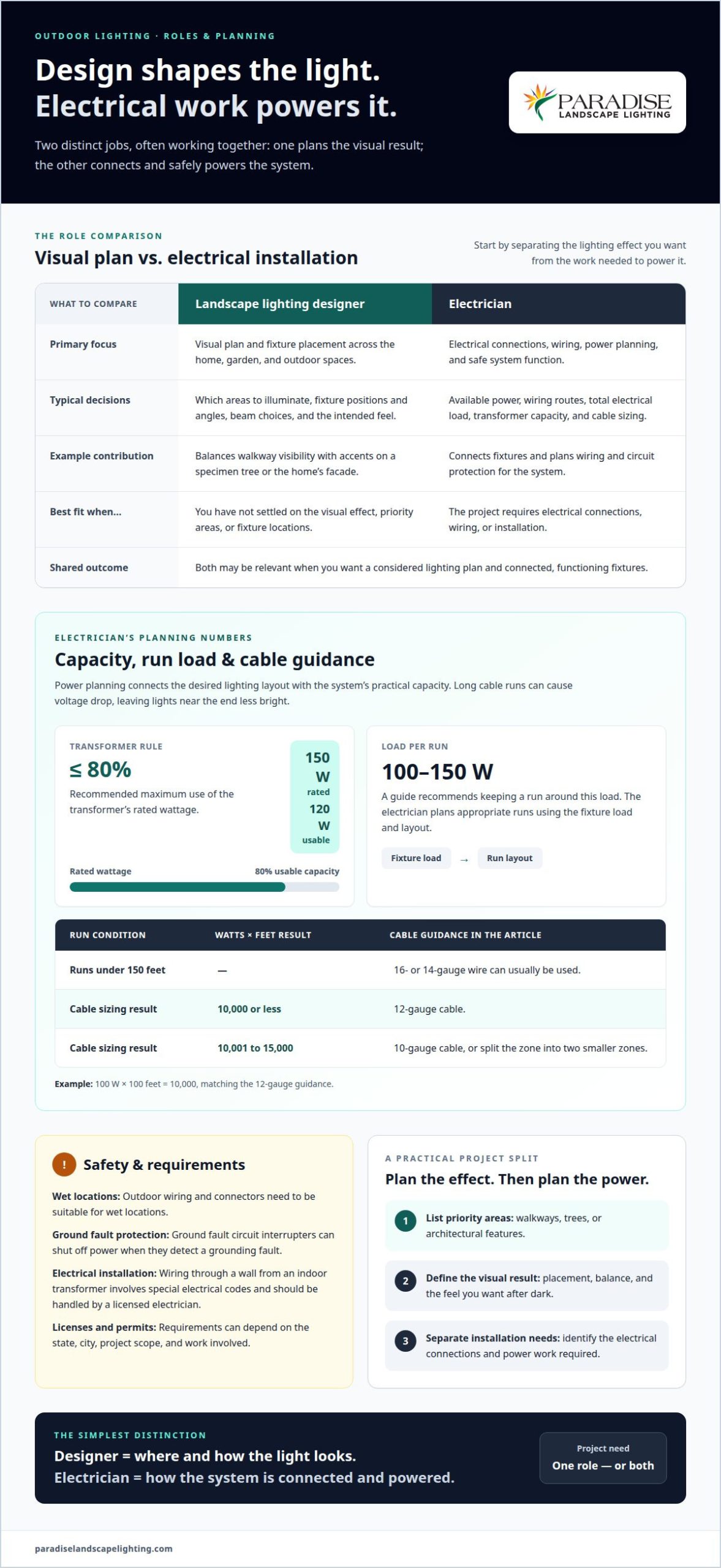
Electricians’ role in power planning, wiring, and load calculations
Before installation, an electrician assesses the lighting layout, available power, wiring routes, and total electrical load. Those decisions affect how consistently fixtures perform across different outdoor spaces. Low-voltage systems still contain electrical components that need correct installation. For example, a long cable run can cause voltage drop, leaving lights near its end less bright. Power planning connects the desired lighting effect with the system’s practical capacity.
A transformer supplies power to a low-voltage system, so its capacity must suit the connected fixtures. One sizing rule recommends using no more than 80 percent of the transformer’s rated wattage. Under that rule, a 150-watt transformer provides 120 watts of usable capacity. The load on a run also matters: a guide recommends keeping it around 100 to 150 watts. An electrician uses the fixture load and layout to plan appropriate runs.
Cable choice depends on both distance and load. For runs under 150 feet, 16- or 14-gauge wire can usually be used. For cable sizing, a watts-times-feet result of 10,000 or less calls for 12-gauge cable; a result from 10,001 to 15,000 calls for 10-gauge cable or splitting the zone into two smaller zones. These calculations help account for voltage drop and support consistent illumination at the end of a run.
For instance, a 100-watt load over 100 feet produces a watts-times-feet result of 10,000, matching the 12-gauge guidance. A larger result may call for heavier cable or a revised layout. Systems with more than 15 fixtures or about 100 watts may be divided into multiple runs. An electrician can calculate whether low-voltage LED lights will illuminate at the end of each run, then plan wiring and connections around the landscape layout.
Electrical installation versus lighting design
Lighting design defines the intended appearance and use of each outdoor area; electrical installation makes the system function. An electrician can plan technical aspects, but choosing which features to illuminate and how fixtures shape the scene are distinct design decisions.
Electrical Installation Work
Electrical installation turns a lighting layout into a working system. The electrician handles connections and installation so fixtures receive power and operate as intended. For example, a plan may show where path lights and architectural accents belong; installation then connects those fixtures to the system. This work is judged by function, reliable operation, and appropriate electrical execution, not by whether the composition feels beautiful.
That distinction also matters when coordinating the work. Fixture placement and the intended effect influence where wiring needs to reach, while electrical work supports the plan. An installation can function yet fail to create the desired atmosphere if visual layout was not considered. An attractive plan, in turn, still needs proper electrical execution.
Electrician-Designed Lighting Plans
An electrician may prepare or interpret a technical layout, especially when wiring routes, connections, and voltage affect installation. That knowledge helps coordinate the system with the property. But a technical plan and a complete landscape lighting design answer different questions: one explains how the system can be installed, while the other determines what the light should reveal and how the spaces should feel.
Lighting a walkway is not just a matter of connecting fixtures. The plan must balance visibility with a restrained appearance and decide whether nearby trees or architectural details need accent light. A designer focuses on these visual choices; an electrician focuses on electrical implementation. Treating design and installation as connected stages helps bring the intended look to life.
For a considered visual plan, explore outdoor lighting design before installation details are finalized.
Paradise Landscape Lighting: Landscape Lighting Design
Paradise Landscape Lighting helps homeowners turn outdoor lighting goals into a considered design and installation plan. The team can highlight a sculpture, illuminate a pool deck, and coordinate the design with LED installation. A tailored layout accounts for the property’s features and how you use its outdoor spaces, bringing visual appeal and practical function together.
Landscape lighting design is the natural starting point when you are deciding what to illuminate and how the setting should feel. When the plan is clear, LED lighting installation brings the vision outdoors. Sculpture and artwork lighting and pool deck lighting can add focused accents to the scene.
Contact Paradise Landscape Lighting to discuss your outdoor lighting project and the result you have in mind.
Shape the Outdoor Experience You Want
Start by picturing how you want your property to feel after sunset. Consider which areas should feel welcoming, where visibility matters, and which details deserve a softer accent. These priorities give the project a purpose beyond simply adding fixtures.
Understanding the landscape lighting designer vs electrician distinction helps define the work ahead. Begin with the result you want, then consider the design and installation needed to achieve it. A coordinated approach makes the transition from concept to finished outdoor setting more intentional.
Share your vision and explore how Paradise Landscape Lighting can help bring it outdoors. Contact Paradise Landscape Lighting to discuss your project and take the next step toward a more inviting exterior.
Frequently Asked Questions
What Does an Electrician Do?
An electrician installs, connects, and troubleshoots electrical systems so equipment can function safely. For a landscape project, that may involve connecting fixtures, routing wiring, or assessing whether the available power suits the planned system. This is technical work: electricians address circuits and connections, while design determines what the light should reveal.
What makes a professional outdoor lighting company different?
Paradise Landscape Lighting brings custom design and LED installation together for residential properties in South Florida. The team serves homeowners in Fort Lauderdale, Weston, Southwest Ranches, Wilton Manors, Palm Beach, Miami, Miami Beach, Coral Gables, Plantation, West Palm Beach, and Coconut Grove. Each plan can account for the home’s architecture, garden features, and outdoor spaces.
What does an electrician do for landscape lighting?
For landscape lighting, an electrician handles the electrical work that makes fixtures operate. This may include assessing available power, planning wiring routes, connecting components, and considering how the load is distributed. For example, wiring for lights spread across a yard needs to account for distance and fixture load. Design determines the intended look; electrical planning supports operation.
What is the difference between a landscape lighting designer and an electrician?
A landscape lighting designer decides how illumination should shape the property, while an electrician focuses on electrical installation and function. A designer might plan a clear visual route along an entry path and a subtle accent for a garden sculpture. The electrician handles the wiring and connections needed to power the fixtures. A project may benefit from both types of expertise.
What qualifications should I look for when hiring a landscape lighting professional?
When choosing a lighting professional, look for relevant outdoor project experience, examples of finished work, and a clear understanding of your priorities. Anyone performing electrical wiring or connections should meet applicable local licensing requirements. Discuss how the layout will address your home’s architecture, paths, and focal points. A useful plan makes both the intended visual effect and the installation work clear.
What safety risks and electrical code requirements apply to outdoor landscape lighting?
Outdoor equipment is exposed to moisture, so wiring and connectors need to be suitable for wet locations. Ground fault circuit interrupters can shut off power when they detect a grounding fault. Requirements for installation, permits, and inspections depend on the project and location. Wiring through a wall from an indoor transformer involves special electrical codes and should be handled by a licensed electrician.
Return to News