
Landscape Lighting Design in Coral Gables: A Guide to a More Beautiful Nightscape
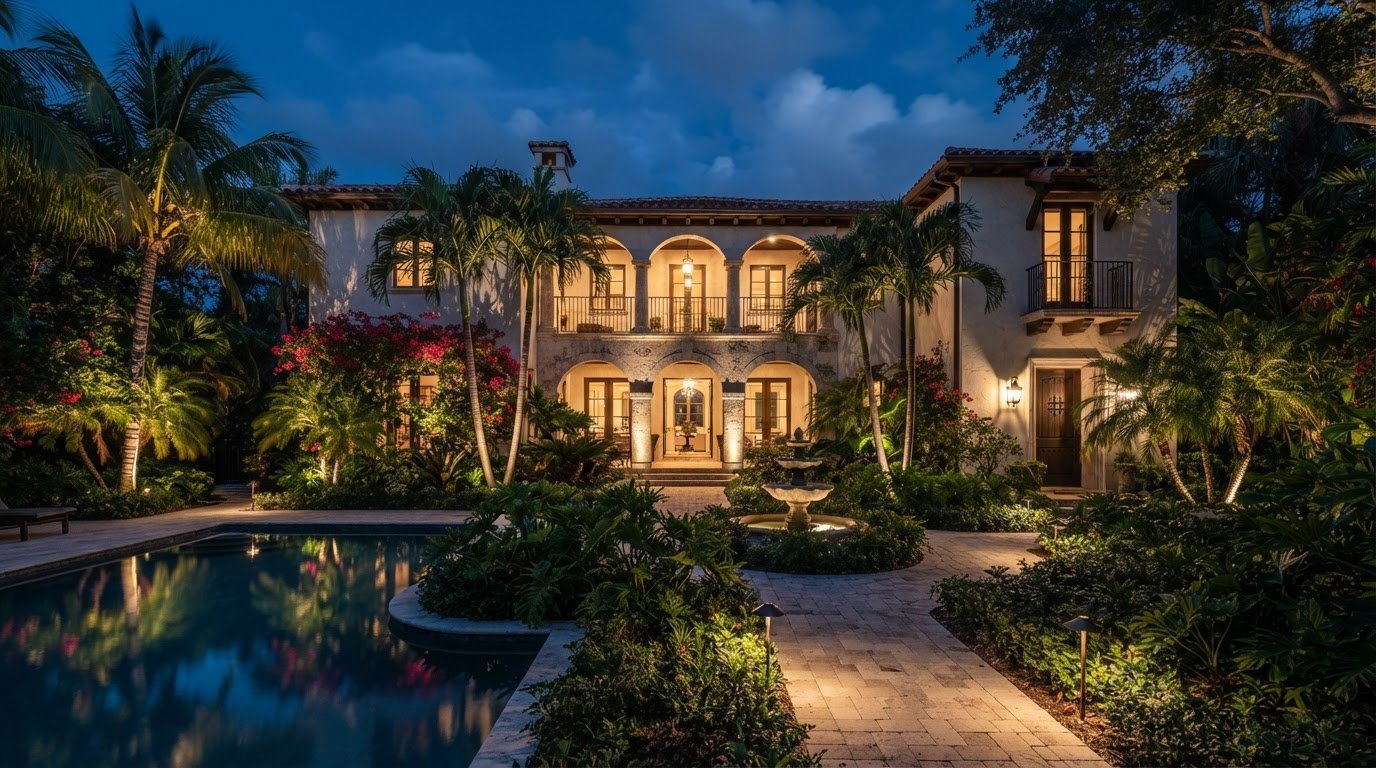
What if the most beautiful nightscape comes from using less light, with each point carefully chosen? A thoughtful landscape lighting design Coral Gables homeowners can use starts with the residence itself: its architecture, gardens, and the way people move through outdoor spaces after dark. Visible fixtures or excessive brightness can distract from a home’s character, while dim paths and gathering areas may need more practical illumination.
The right plan brings those goals together. Carefully placed light can complement Coral Gables’ distinctive architecture and lush landscaping, define features such as fountains, pools, and sculpture, and make walkways feel more inviting. A cohesive scheme balances focal points with softer layers, keeps fixtures discreet, and avoids visual clutter.
Good results begin with a clear design vision and the technical planning to support it. Paradise Landscape Lighting brings design and engineering together to develop custom low-voltage LED systems, then carries the plan through installation. Here’s how to move from ideas for your home to a considered, professionally installed nightscape.
Key Takeaways
- Use your home’s architecture, established planting, and nighttime routines to decide which views and features deserve priority.
- Landscape lighting design Coral Gables works best when focal, ambient, and functional light each have a clear role.
- Compare façade, garden, walkway, pool, and fountain lighting to choose where subtle emphasis or a stronger focal point fits your vision.
- Before design begins, note your priority views, outdoor activities, and existing landscape features.
- A coordinated process from site assessment through engineering and installation can turn your goals into a cohesive residential lighting plan.
Landscape Lighting Design in Coral Gables: Start with the Home and Its Setting
Landscape lighting design is the considered placement and direction of outdoor light, shaped by contrast, focal points, and how people use the space. In landscape lighting design Coral Gables, the home and its setting should guide the plan. Mediterranean Revival details, other architectural styles, established tropical planting, and outdoor living areas all influence what deserves attention. This landscape lighting overview explains the broader principles and components; applying them well means responding to the specific property instead of simply adding more fixtures.
What makes a Coral Gables nightscape feel intentional?
Begin by looking at the residence as a whole. Consider its architectural lines, the approach to the entry, the garden’s composition, and the places where people gather outdoors. A Mediterranean Revival home may invite emphasis on textured surfaces or distinctive architectural features, while another style may call for a quieter outline or a stronger connection between the house and garden.
Established trees and dense planting shape what can be seen from different viewpoints. A tree canopy might frame a façade, while layered foliage can screen a garden feature from the path. These conditions affect where light can be placed and aimed. Planning around actual sightlines helps prevent bright spots from competing with one another.
A cohesive residential nightscape connects the home, garden, and outdoor paths through balanced light, rather than treating each fixture as a separate feature.
What should landscape lighting achieve?
A thoughtful plan balances visual and practical goals. Visual lighting can reveal the texture of a façade, define a garden focal point, or draw attention to a fountain or sculpture. Functional lighting helps make routes such as an entry walk easier to see and supports comfortable use of outdoor areas after dark. These goals can work together without making every surface equally bright.
Placement matters as much as brightness. Aiming light toward a feature instead of into people’s eyes can preserve comfort, while contrast between illuminated details and darker surroundings keeps a scene from looking flat. Too much light can blur the distinction between focal points and make fixtures more noticeable than the elements they’re meant to highlight.
A designer can coordinate architectural, garden, and walkway lighting in one plan, adjusting placement to the home, planting, and intended use of each area. Paradise Landscape Lighting brings design and engineering together for custom low-voltage LED systems, connecting the visual composition with a considered installation. Start by deciding what should welcome, guide, or draw the eye when evening falls.
How Coral Gables Landscape Lighting Combines Architecture, Gardens, and Outdoor Living
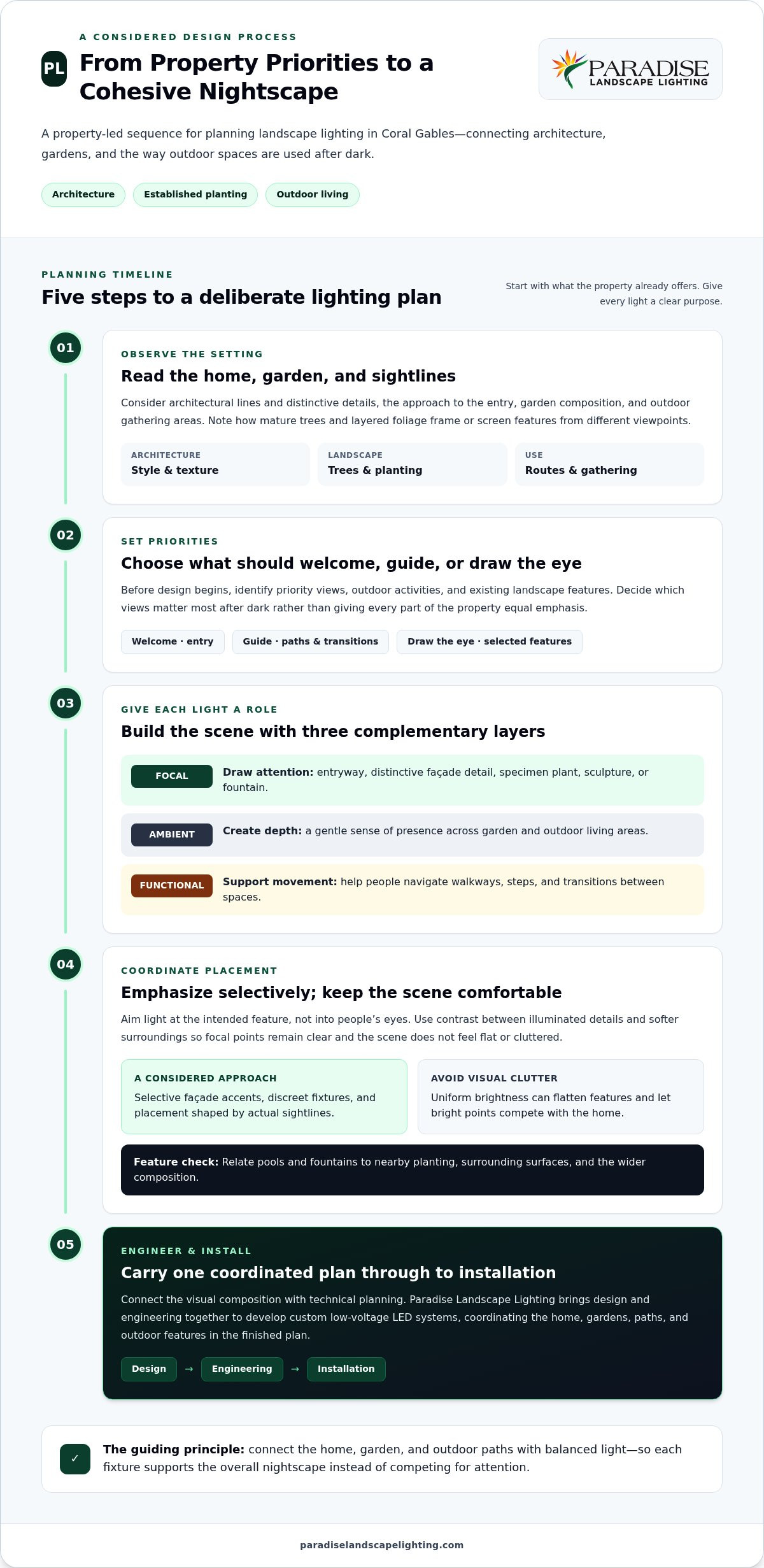
A cohesive plan gives each light a role. Focal lighting draws attention to a selected feature, such as an entryway, specimen plant, sculpture, or fountain. Ambient lighting creates a gentle sense of depth across garden and outdoor living areas. Functional lighting helps people navigate walkways, steps, and transitions between spaces. A designer can bring these layers into one composition, guided by the home and how its outdoor areas are used.
That balance is central to landscape lighting design Coral Gables. A textured façade may need a selective wash of light to reveal its character, rather than uniform brightness across every wall. Mature trees and garden beds can add depth around the architecture, while a path or fence can connect the entry to a pool deck or gathering area. The International Landscape Lighting Institute provides professional education focused on the art and technology behind considered design.
Which architectural and landscape features deserve emphasis?
Start with features that matter from key viewpoints: the entry, distinctive façade details, mature trees, specimen plants, or the overall shape of a garden. Walkway and fence lighting can support movement and reinforce the route through the property without competing with focal points. Pools and fountains need their own consideration. Their position, surrounding surfaces, and relationship to nearby planting all affect how they fit into the larger scene.
Not every feature needs equal emphasis. A restrained architectural accent might suit a home where the façade is the primary focus; a garden composition or sculpture can take the lead elsewhere. The aim is a deliberate visual hierarchy, with secondary elements supporting the main view.
How do lighting layers prevent glare and visual clutter?
Uniform brightness can flatten a façade and make a garden feel like a collection of lit objects. Selective accents let illuminated details stand out against softer areas. Fixture direction determines what receives light; placement and spacing shape how evenly an element reads and whether bright points distract from the scene. Careful adjustment also helps keep light aimed at its intended feature.
Fixtures positioned thoughtfully among planting or integrated with the setting can be less visually prominent while still doing their job. The goal is to keep attention on the home and landscape. Paradise Landscape Lighting brings design and engineering together to coordinate architecture, gardens, paths, and outdoor features in a custom low-voltage LED plan. Explore custom landscape lighting design to shape a connected nighttime view.
Compare Landscape Lighting Approaches for Coral Gables Homes
Each outdoor feature can play a different role after dark. A façade may establish the home’s character, while a garden, pool, or fountain adds depth and draws attention beyond the walls. Use this comparison to identify a starting point. The best combination depends on the property, the mood you want, and how you use your outdoor spaces.
| Lighting approach | Purpose | Visual effect |
|---|---|---|
| Façade | Bring selected architectural details into focus. | Defines texture, lines, and entry features without needing to brighten the entire exterior. |
| Garden | Reveal planting, trees, sculpture, or artwork. | Adds depth and creates a focal point among layers of foliage. |
| Walkway | Support visibility along routes to an entry or outdoor area. | Offers a gentle visual guide without turning the path into a runway. |
| Pool | Give the pool deck and water a considered place in the overall composition. | Creates a distinctive feature that can relate to nearby architecture and gathering areas. |
| Fountain | Highlight a water feature as part of the garden scene. | Draws the eye to a focal element while surrounding planting can remain more subdued. |
Which lighting approach suits each outdoor feature?
Façade lighting is often most effective when it emphasizes selected details, such as a textured surface or an architectural line. Garden lighting works differently: it can create dimension among mature trees and planting, or give a specimen plant or sculpture a stronger presence. A path needs clear visual cues, but not a continuous row of bright points. Pool and fountain lighting can become focal elements when balanced with the surrounding space rather than treated as isolated displays.
The design choice involves a trade-off. Subtle architectural emphasis keeps attention on the home and creates a quieter mood. A more expressive garden focal point shifts the eye outward and gives the landscape a stronger nighttime identity. Neither approach is automatically right; landscape lighting design Coral Gables should reflect the property’s character and the homeowner’s priorities.
How should homeowners balance beauty, comfort, and visibility?
Think about how people move through the space. A walkway or pool deck may need more practical attention, while nearby transitions and planting can stay softer. Light aimed toward a feature instead of a viewer’s eyes can help limit glare. Sightlines matter, too: consider views from seating areas, windows, and neighboring properties when deciding where accents belong.
For another perspective on highlighting a home’s exterior, explore this guide to residential architectural lighting in Miami. A tailored plan can bring façade, garden, pathway, pool, and fountain lighting into a single composition, with each element contributing the right visual weight.
Plan a Coral Gables Landscape Lighting Project from Goals to Installation
A successful project moves from a clear vision to a carefully engineered installation. For landscape lighting design Coral Gables, planning also accounts for the property’s existing landscape, outdoor features, and applicable local requirements. Considering these elements together helps align the nighttime effect with how you want to experience your home.
- Define goals: Identify the views and outdoor activities you want the lighting to support.
- Assess the site: Review the home, planting, paths, gathering areas, and existing features.
- Develop the design: Set priorities for focal, ambient, and functional lighting.
- Engineer the system: Translate the design into a considered low-voltage LED plan.
- Install and review: Put the system in place, then review how the lighting works across the property.
What happens during lighting design and engineering?
The designer interprets your priorities alongside the property’s nighttime character, considering what should stand out and how the spaces connect. Engineering translates that visual intent into a coordinated low-voltage LED system for the site. Together, these disciplines bring architectural details, gardens, and practical routes into one plan, with design and installation decisions tailored to the property.
What should Coral Gables homeowners consider before installation?
Note access routes, existing landscaping, pools or fountains, and places where fixture placement may shape the finished view. Share which outdoor spaces you use and when, along with your priority views. Site conditions and applicable city, property, or electrical requirements can affect planning, so account for relevant requirements before installation begins.
Preparation can be simple. Walk the property after dark, if practical, and note where you’d like a welcoming arrival, a clearer route, or a garden feature to catch the eye. Photos taken from windows or outdoor seating areas can also help communicate important sightlines.
Because every property has its own mix of architecture, planting, and outdoor routines, the plan should be tailored rather than copied from a generic layout. Paradise Landscape Lighting brings a lighting designer and lighting engineer together to guide custom design, engineering, and installation. Discuss a tailored landscape lighting design for your Coral Gables home.
Bring Your Coral Gables Landscape Lighting Design to Life with Paradise
A distinctive nightscape takes more than selecting attractive fixtures. It calls for a plan that responds to the home’s architecture, landscape, and the way outdoor spaces are used. Paradise Landscape Lighting brings a lighting designer and lighting engineer together to shape residential projects from custom design and engineering through physical installation.
What does a tailored Paradise lighting project bring together?
The design begins with the property and the homeowner’s priorities. The designer considers which features should draw the eye and how outdoor areas relate to one another. Engineering translates that intent into a custom low-voltage LED system, and installation completes the project on site. Connecting these stages helps keep the visual concept and technical plan aligned.
That tailored approach can bring architectural details and garden features into the same composition as walkways, pool decks, and fountains. A plan might give a façade a considered presence, guide movement along a path, or make a water feature part of the garden’s nighttime character. The right balance depends on the home’s layout, planting, and intended outdoor experience, not a preset arrangement of fixtures.
What is the next step for a Coral Gables homeowner?
Start with what matters to you. Make a short list of features you’d like to highlight, such as a garden, sculpture, fountain, or architectural detail. Note how you use the outdoor areas, from arriving at the front entry to spending time by the pool. These priorities give the design process a practical foundation and help shape a plan around the property rather than a generic template.
Paradise Landscape Lighting also provides maintenance and retrofitting for homeowners caring for or improving existing outdoor lighting systems. Whether you’re planning a new installation or considering changes to an existing system, the work can be tailored to the home’s architecture, landscape, and outdoor routines.
Ready to shape a more inviting Coral Gables nightscape? Share the views you want to emphasize and how you use your outdoor spaces. Start a conversation about your landscape lighting design with Paradise Landscape Lighting.
Shape a Nightscape That Feels Like Home
A memorable Coral Gables nightscape starts with the property itself. Thoughtful light brings architecture and gardens into balance, while carefully planned illumination helps outdoor paths and gathering areas feel more welcoming. The best landscape lighting design Coral Gables homeowners choose isn’t about filling every corner with brightness; it’s about giving each feature a clear purpose within a cohesive plan.
Turning that vision into a finished system takes both design sensibility and technical planning. Paradise Landscape Lighting brings a lighting designer and lighting engineer together to shape custom residential projects, with services spanning design, engineering, installation, maintenance, and retrofitting. Whether you’re planning a new system or improving an existing one, the approach can be tailored to your home’s architecture, landscape, and outdoor routines.
Your ideas are a strong place to begin. Consider the views you’d like to highlight and how you want to use your outdoor spaces after dark. Start planning a custom Coral Gables nightscape with Paradise Landscape Lighting, and take the first step toward evenings that feel more beautiful, comfortable, and inviting.
Frequently Asked Questions
What is landscape lighting design?
Landscape lighting design is the planning of outdoor light, contrast, and fixture placement to shape how a property looks and functions after dark. It considers what to highlight, where people need visibility, and how different areas connect. For a Coral Gables home, that might mean coordinating architectural features, garden planting, and a walkway so the scene feels composed rather than like a collection of unrelated lights.
How do I choose landscape lighting for a Coral Gables home?
Start by deciding which views and outdoor routines matter most. You might want to define the entry, bring attention to mature trees, make a path easier to follow, or create a welcoming poolside setting. A tailored landscape lighting design Coral Gables plan accounts for the home’s architecture, established planting, sightlines, and outdoor features, then balances those priorities instead of applying the same approach everywhere.
Can landscape lighting highlight architecture without creating glare?
Yes. A lighting plan can emphasize selected architectural details while controlling where the light is directed. Rather than illuminating every wall evenly, a designer can focus on features such as texture, an entry, or a distinctive line and consider views from outdoor seating and nearby windows. Thoughtful placement and aiming help keep light on its intended feature and reduce distracting brightness in the surrounding space.
What is the difference between architectural and garden lighting?
Architectural lighting draws attention to parts of the home, such as façade texture, lines, or an entry feature. Garden lighting brings depth to trees, specimen plants, sculpture, and planting arrangements. The two approaches can complement each other: architectural accents establish the home’s presence, while garden illumination connects it to the surrounding landscape. A coordinated design considers both, along with walkways and outdoor living areas.
Is low-voltage LED lighting suitable for a residential landscape?
Paradise Landscape Lighting designs custom residential outdoor systems using low-voltage LED lighting. LEDs can serve different purposes across a property, from architectural and garden accents to walkway, pool deck, and fountain lighting. The system’s layout and components should be planned for the specific home and its outdoor features. A lighting designer and engineer can shape the system around the property’s priorities and intended nighttime experience.
How does a professional landscape lighting project work?
A project typically moves from defining goals and assessing the site to developing a design, engineering the system, installing it, and reviewing the result. Paradise Landscape Lighting’s designer and engineer collaborate on residential projects in Coral Gables and South Florida communities including Miami, Miami Beach, Fort Lauderdale, Weston, Southwest Ranches, Wilton Manors, Palm Beach, Plantation, West Palm Beach, and Coconut Grove. Site conditions and applicable requirements inform planning.
Can existing landscape lights be upgraded to LED?
Existing outdoor lighting can be retrofitted to LED. The right approach depends on the current system, its condition, and the homeowner’s goals for the property. A review can help determine how an upgrade might work with existing architecture, planting, paths, or water features. Paradise Landscape Lighting provides retrofitting and maintenance for residential outdoor systems, helping homeowners improve or care for the lighting they already have.
Return to News