
Landscape Lighting Design Consultation Costs in Fort Lauderdale
There isn’t one fixed cost for a landscape lighting design consultation in Fort Lauderdale. The price depends on the property and the scope of the plan, and is given after a quote request. Key factors include the layout, the landscape and architectural features to illuminate, functional needs, and the custom LED design being considered.
A considered lighting plan can enhance your home while keeping energy use in mind. If you’re wondering whether sustainable choices can work alongside a refined outdoor look, LED lighting offers an energy-efficient approach to shaping the design. This article explains how a property walk helps establish priorities, how gardens, pools, and architectural details inform a custom plan, and what influences estimates, proposals, and project timelines. You’ll come away with a clearer picture of what to discuss and how the consultation can translate your vision into a practical design.
Key Takeaways
- Use the property walk to clarify how you want to use outdoor areas and which features deserve attention after dark.
- A custom LED plan can balance visual impact with practical needs across gardens, pools, and architectural details.
- Project timing depends on the design and materials; installation begins once both are settled.
- Review how the proposal connects fixture choices and illuminated areas to your priorities before moving ahead.
Landscape and architectural feature assessment
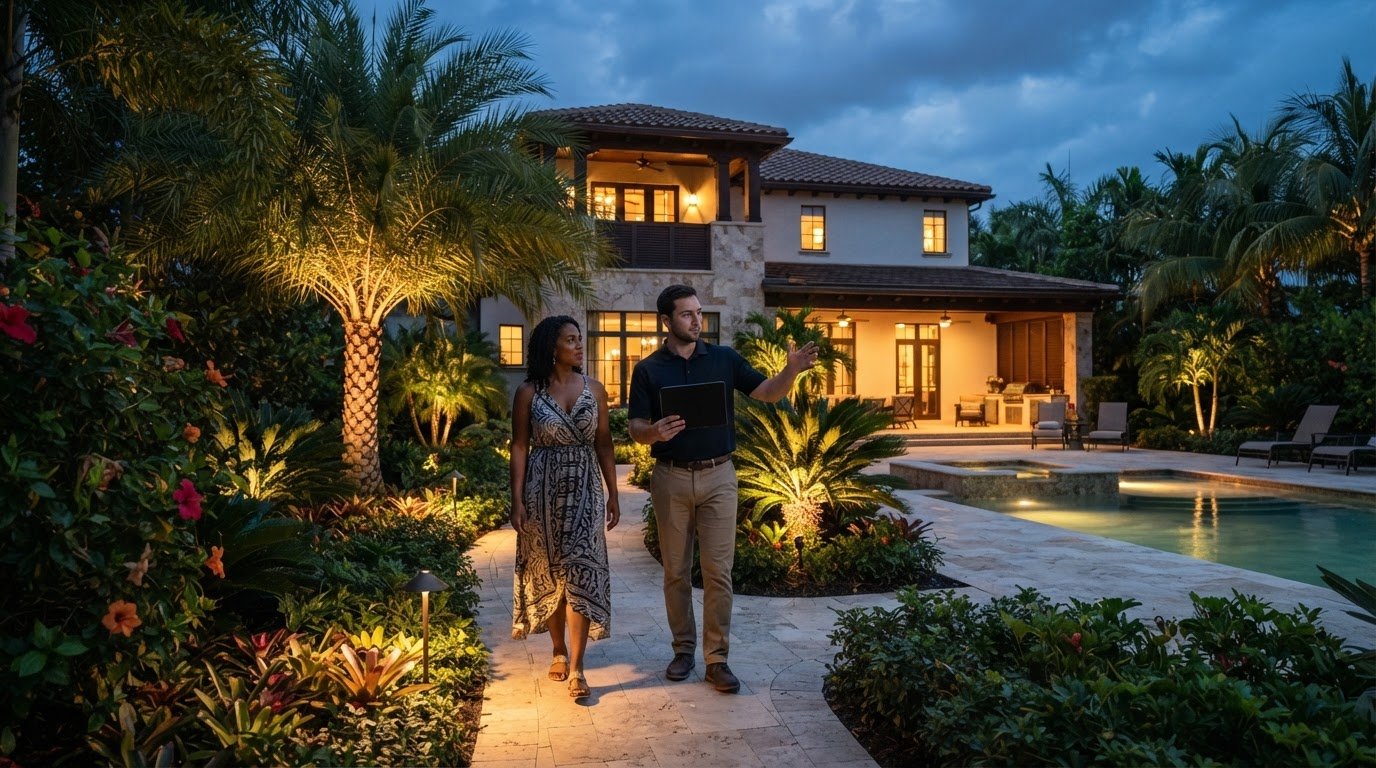
A landscape lighting consultation starts with a walk around your property. The designer discusses how you use each outdoor area, then reviews your preferences and functional needs. Note where you enter, gather, walk, or pause after dark. A patio used for dining, for example, needs a different approach from a garden viewed through a window. The walk also identifies focal points, existing fixtures, and places where light should stay subtle.
For South Florida’s tropical plants, patios, and pools, choose lighting that suits each feature. Carefully aimed light can reveal the form of palms and textured foliage. Discreet fixtures can define patio edges, while pool deck lighting helps distinguish the surrounding space. The design should account for viewing angles and how plants may cast shadows across nearby walls or paths.
Maintenance and exposure to storms are also worth discussing. Consider fixture access and mounting locations, and how the system can be inspected after severe weather. Ask how the plan accounts for Fort Lauderdale’s outdoor conditions and what routine cleaning or adjustments may involve. Building service access into the layout is more practical than treating it as an afterthought.
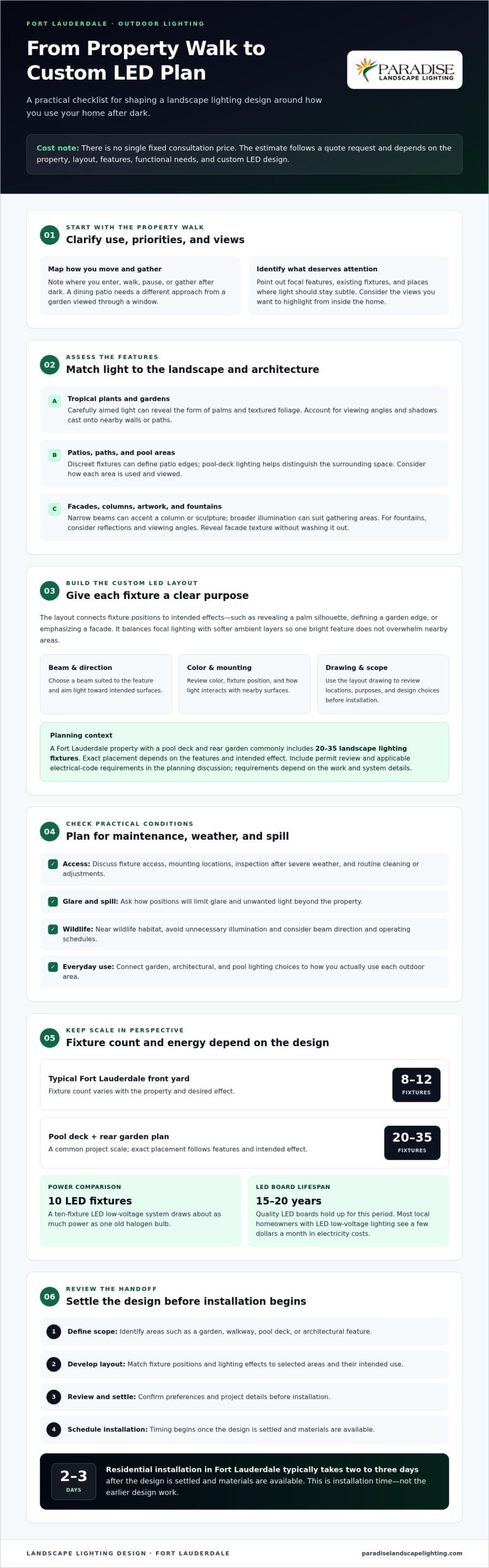
Scale matters, but fixture count depends on the property and desired effect. Fort Lauderdale front yards usually need 8 to 12 landscape lighting fixtures. A ten-fixture LED low-voltage system draws about as much power as one old halogen bulb. Quality LED boards hold up for 15 to 20 years, and most local homeowners with LED low-voltage lighting see a few dollars a month in electricity costs.
Before choosing a designer, ask practical questions that connect the concept to everyday use:
- Which garden, architectural, or pool features will the plan emphasize?
- How will fixture positions limit glare and unwanted spill?
- How will the design account for access, maintenance, and storm exposure?
The answers help shape a plan around your home’s actual features, from a shaded planting bed to a poolside gathering area.
Custom LED lighting plans
A custom LED plan turns the property walk into a coordinated lighting layout. It maps each fixture to a purpose, such as revealing a palm’s silhouette, defining a garden edge, or emphasizing a home’s facade. The designer balances focal lighting with softer ambient layers, so one bright feature doesn’t overwhelm nearby areas. For a Fort Lauderdale property with a pool deck and rear garden, a plan commonly includes 20 to 35 landscape lighting fixtures. The exact placement depends on the features and intended effect.
Fixture selection depends on the intended effect. A narrow beam can accent a column or sculpture, while broader illumination can suit an outdoor gathering area. The plan also considers beam direction, color, mounting position, and how light interacts with nearby surfaces. A fountain design, for example, should account for reflections and viewing angles, while architectural lighting can reveal texture without washing out the facade. A layout drawing shows how these choices work together before installation.
For Fort Lauderdale projects, include permit review and applicable electrical-code requirements in the planning discussion. Requirements depend on the work and system details, so clarify the proposed equipment and installation scope in the plan.
For outdoor lighting in Florida, direct fixtures toward intended surfaces and limit spill beyond the property. Near wildlife habitat, avoid unnecessary illumination and consider how beam direction and operating schedules affect the surrounding area.
Before approving a plan, review the fixture locations, lighting purpose, and any color choices together. A custom landscape lighting design can coordinate architectural details, artwork, and poolside areas as one cohesive composition. Ask how the drawing reflects your priorities and which design decisions affect the final installation scope.
Design process duration
Design duration has two distinct parts: developing the plan and installing it. In Fort Lauderdale, residential installation typically takes two to three days after the design is settled and materials are available. That timeframe covers installation, not the earlier design work. Separating these stages helps homeowners plan around the property visit, design decisions, and on-site work.
The design process starts by recording your priorities and identifying the areas included in the project. Those priorities then inform a layout showing fixture positions and intended effects. A front-entry plan, for example, may coordinate the approach path with the facade rather than treating each fixture separately. Reviewing the layout before installation gives you a chance to clarify the scope and preferred emphasis.
- Define the scope. Identify the areas included, such as a garden, walkway, pool deck, or architectural feature.
- Develop the layout. Match fixture positions and lighting effects to the selected areas and their intended use.
- Review and settle the design. Resolve preferences and project details before installation begins.
- Schedule installation. The two-to-three-day installation window applies after the design is settled and materials are available.
Several project details shape how the design moves from one step to the next. A plan covering a single entry requires fewer coordinated decisions than one connecting a pool deck, rear garden, and facade. Changes to the scope or lighting priorities can require layout revisions. Material readiness also affects when installation can start, so design approval and material availability are key scheduling milestones.
To keep the process moving, gather reference photos and note which areas matter most before the consultation. Mark the routes you use after dark and identify views you want to highlight from inside the home. During the review, discuss the layout, fixture locations, and any changes together. This creates a defined handoff from design decisions to installation without confusing planning time with on-site work.
Design proposals, estimates, and timelines
A useful proposal connects the design to a clearly defined project scope. It should identify the areas included, such as an entry, garden, facade, or pool deck, describe the intended lighting effects, and show planned fixture locations. This makes it easier to judge whether the proposal matches your priorities, rather than comparing totals alone. Two plans may cover the same front yard but illuminate different features.
The project quote depends on the property and its scope. The estimate is shaped by the layout, selected fixtures, installation complexity, and areas included. During a landscape lighting design consultation in Fort Lauderdale, these details connect the proposed layout with the project quote. A walkway-and-facade plan differs from one that also includes a pool deck, fountain, and rear garden. Reviewing the scope helps clarify what the estimate covers.
Before approving a proposal, compare its scope with your consultation notes. Check that each priority area appears, fixture placements are clear, and requested features haven’t been overlooked. If you want to highlight a sculpture, confirm that the plan shows its location and intended effect. A landscape lighting design consultation in Fort Lauderdale can help turn these choices into a plan. Make sure agreed changes appear in the revised proposal so the design and estimate stay aligned.
- Scope: Confirm which outdoor areas and architectural features are included.
- Design: Review fixture locations, lighting purposes, and any color choices.
- Estimate: Understand which design and installation elements shape the quoted amount.
- Schedule: Clarify the sequence from design approval to material readiness and installation.
Timelines depend on settling the design and having materials available before installation begins. Use the proposal review to resolve scope changes early and establish the next steps. To shape a plan around your property and priorities, request a landscape lighting design consultation.
Paradise Landscape Lighting: Landscape Lighting Design
Paradise Landscape Lighting helps homeowners turn outdoor priorities into a cohesive lighting plan. Its Landscape Lighting Design considers how LED Lighting Installation can serve your property’s layout and desired visual effects. A consultation is the next step when you’re ready to move from ideas to a tailored plan for your outdoor spaces.
A garden sculpture, for example, can receive focused illumination, while a pool deck can form part of the broader composition. Paradise Landscape Lighting offers Sculpture and Artwork Lighting and Pool Deck Lighting, integrating individual features into your design vision. Discuss which areas matter most and how you want them to look after dark.
Contact Paradise Landscape Lighting to discuss a landscape lighting design for your property.
Shape an Outdoor Setting That Feels Like Yours
Start by deciding what you want your outdoor spaces to express after sunset. A landscape lighting design consultation in Fort Lauderdale can turn those priorities into a tailored direction for your home, whether you want a calmer garden atmosphere, a more defined poolside setting, or a striking view of a sculpture.
Paradise Landscape Lighting brings design and installation together through Landscape Lighting Design and LED Lighting Installation. Its Sculpture and Artwork Lighting can also give a treasured feature a considered place in the overall composition. Share your priorities so the design reflects how you want to experience your property.
Contact Paradise Landscape Lighting to discuss a custom outdoor lighting plan. Your next evening outdoors can begin with a design shaped around the details you value most.
Frequently Asked Questions
Can you incorporate sustainable or eco-friendly elements into my landscape design?
Yes. Energy-efficient, low-voltage LED lighting can support a thoughtful outdoor lighting plan. Focus light on useful areas and chosen features rather than illuminating every corner. For example, a carefully aimed fixture can highlight a specimen plant without flooding the entire garden with light. Discuss which spaces need regular lighting and which features should remain softly lit or dark.
How Does the Designer Determine the Overall Style and Layout for My Property?
The designer shapes the layout around your property’s features, preferences, and how you use the space. In Fort Lauderdale, Weston, Southwest Ranches, Wilton Manors, Palm Beach, Miami, Miami Beach, Coral Gables, Plantation, West Palm Beach, and Coconut Grove, a home’s architecture and landscaping can suggest different design directions. Share reference images or describe the atmosphere you want, such as subtle garden accents or a more dramatic facade.
How Much Does Landscape Lighting Cost in Fort Lauderdale?
The price depends on the property and project scope, and is provided after a quote request. Factors include the areas being illuminated, fixture selection, installation complexity, and the number of features involved. A plan focused on a walkway differs from one designed around several outdoor areas. Review the proposal’s scope alongside its estimate to understand which design and installation elements shape the quoted amount.
How many fixtures does an average Fort Lauderdale yard need?
Fort Lauderdale front yards usually need 8 to 12 landscape lighting fixtures, though the right layout depends on the property and desired effect. A clear entry path, mature trees, and a prominent facade each influence placement. Think in terms of the features you want to reveal and the routes you use after dark, not simply adding fixtures evenly across the yard.
What Should I Expect During the Initial Design Consultation?
Expect a property walk and a conversation about how you use your outdoor spaces, your preferences, and your functional needs. Beforehand, note which areas feel dark or difficult to navigate and which views you’d like to enjoy from indoors. For example, identify a favorite garden view or the route guests take from the driveway. These details keep the discussion grounded in everyday use.
What is the difference between low-voltage and line-voltage outdoor lighting?
Low-voltage systems use a transformer to reduce the electrical supply for outdoor fixtures, while line-voltage systems use the home’s standard electrical supply directly. Paradise Landscape Lighting designs residential outdoor systems using low-voltage LED technology. This distinction can help frame the conversation around the project’s design, installation needs, and intended areas, such as a garden path or focal feature.
Return to News