
How to Light a Banyan Tree at Night: A Layered Approach
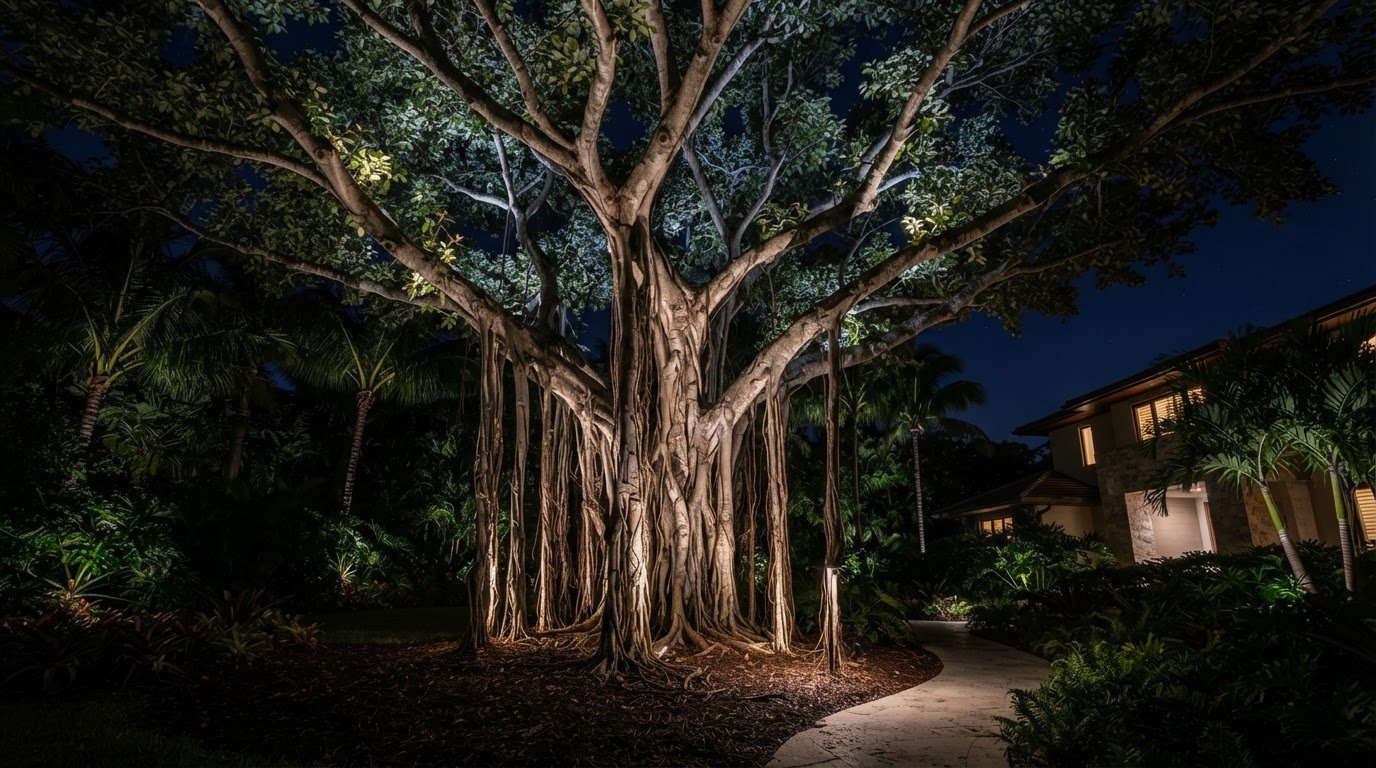
When deciding how to light a banyan tree at night, start with the details that make it distinctive: its sweeping canopy, textured trunk, and aerial roots. More light is not necessarily better. A blanket of brightness can wash out those features, while carefully aimed layers reveal the tree’s form without overwhelming the setting.
The tree’s scale can make fixture placement feel uncertain. Poorly aimed beams may create glare, flatten the structure, or leave parts of the canopy harshly lit. A thoughtful plan starts by choosing which features deserve attention and how light can reveal them while the rest of the landscape stays comfortable.
This guide explains how to use selective uplighting and restrained canopy accents to create visual depth. You’ll also find practical ways to test fixture positions, protect access for maintenance, and account for tree health and site conditions. For complex placements, a lighting professional can help plan the system, while an arborist can advise on potential impacts to the tree. The goal is a banyan that feels striking after dark, with its structure visible and the surrounding landscape still at ease.
Key Takeaways
- Learn how to light a banyan tree at night by highlighting its trunk, roots, and selected canopy areas instead of flooding the whole tree.
- Give each lighting layer a distinct role, then balance the overall effect so no single area overwhelms the composition.
- Choose fixture positions based on the desired visual effect, site conditions, and access for maintenance.
- Test the lighting after dark from key viewpoints, including windows, patios, and garden paths, then adjust the aim to reduce glare.
- Consider professional design for complex trees, and seek arborist guidance before placing fixtures near roots, trunk, or branches.
How to Light a Banyan Tree at Night Without Losing Its Natural Shape
Reveal a banyan selectively rather than trying to illuminate every surface. Its character comes from the relationship between the trunk, branching structure, aerial roots, and broad canopy. A blanket of light can flatten those features, while carefully chosen accents let the tree’s shape emerge with depth and restraint.
Layered lighting uses distinct, carefully aimed sources to highlight selected parts of a tree without making every part equally bright. This principle matters especially for a banyan. Unlike a smaller, single-trunk tree, it may have a wide crown and multiple prop roots that create a complex structure. The banyan tree is known for developing aerial prop roots, so a lighting plan needs to account for its distinctive, multi-trunk appearance.
There isn’t one placement formula that suits every tree. The result depends on the specimen’s scale, the viewpoints that matter, nearby landscape features, and where fixtures can sit without disrupting the scene. To understand how to light a banyan tree at night, first decide which features should lead the composition and which can remain quieter.
Which parts of a banyan tree should you highlight?
Start with the trunk and branching structure as the visual anchor. Light can reveal bark texture and the direction of major limbs, helping the eye read the tree’s shape. Then consider a few aerial roots as secondary accents. Selective illumination can distinguish their lines from the darker spaces behind them, creating depth without making every root a focal point.
Treat the canopy as a soft backdrop, not a surface that needs uniform coverage. Let some foliage recede so the highlighted structure remains clear and the tree retains a sense of natural depth.
Why does banyan tree lighting need a lighter touch?
Dense foliage can block light from reaching inner branches, creating pockets of brightness and shadow. Adding more light indiscriminately may make the outer leaves glow while leaving the structure harder to read. The aim is visible detail, not maximum brightness. Excessive output or too many competing accents can create glare and visual clutter.
Observe the tree from the places people will actually see it, such as a patio or path. A lighting designer can help assess how the tree, surroundings, and viewing angles work together. Consider fixture positions near roots, the trunk, or branches carefully, and seek arborist guidance where needed. The right approach depends on the individual tree and a site-specific assessment.
Build a Layered Banyan Tree Lighting Plan From Trunk to Canopy
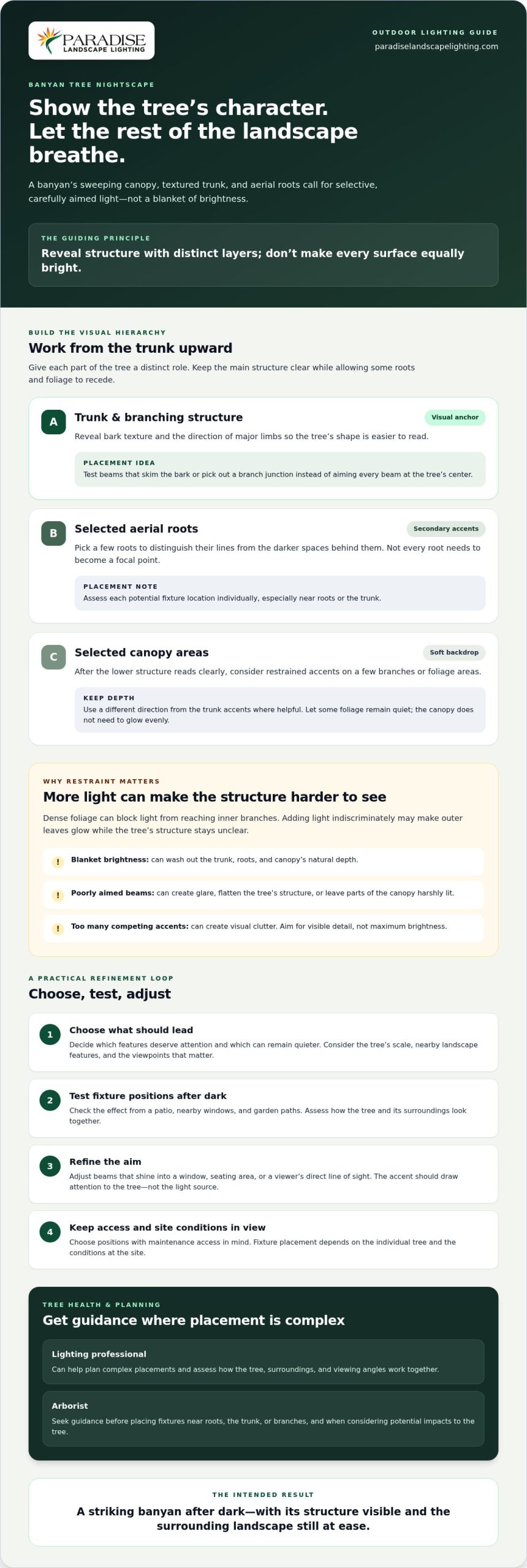
Plan the lighting in visual layers, beginning with the lower trunk and selected roots, then moving upward through the branches to a few canopy areas. This sequence gives the eye a clear focal point and lets other parts of the tree recede. The goal isn’t to make every layer equally bright, but to create a considered transition from grounded texture to softer foliage.
Layered tree lighting uses separately positioned light to reveal a tree’s structure in depth while keeping the overall scene balanced. For a banyan, beam direction and fixture location matter as much as brightness. A beam aimed across the trunk may reveal bark and contours. A beam directed into a branch junction can distinguish its shape from the leaves behind it. Explore broader principles in this guide to bespoke outdoor LED lighting design in Fort Lauderdale.
Use uplighting to reveal the trunk and aerial roots
Begin with ground-level fixtures aimed upward at selected sections of trunk and aerial roots. Rather than pointing every beam at the tree’s center, test angles that skim the bark or pick out a root against a darker background. This can create definition without making the entire lower structure equally bright. Roots and trunks vary in position and form, so assess each potential fixture location individually and seek arborist guidance for placements near the tree.
Before final installation, test the effect from common viewing areas. Check the view from a patio, nearby windows, and garden paths. Adjust any beam that shines into a window, seating area, or a viewer’s direct line of sight. An effective accent should draw attention to the tree, not to the light source.
Add selective canopy light for depth
Once the lower structure reads clearly, consider restrained accents on selected branches or foliage. Lighting from a different direction than the trunk accents can help separate the layers visually. The canopy doesn’t need to glow evenly. Dense leaves and branches naturally block some light, so trying to force uniform coverage can produce hot spots and glare. Let darker areas remain part of the composition.
Review the result if the canopy changes noticeably. Its density can affect the balance between illuminated branches and shadow. Reassess the aim and effect rather than simply adding more light. For a large or difficult-to-access specimen, a custom plan can help coordinate tree detail, nearby landscape, and visual comfort. Explore landscape lighting design as one option for shaping a cohesive approach.
Choose Banyan Tree Fixtures and Placement for South Florida Conditions
Choose fixtures according to the effect you want, not a one-size-fits-all layout. Ground-level uplights can reveal trunk texture and selected roots. Discreet accent positions may help reach a branch or canopy area that ground fixtures can’t show clearly. Each option differs in visibility and ease of access, so consider how it will look by day and whether it can be adjusted or maintained without disrupting the landscape.
For a South Florida property, also consider rain, humidity, heat, and storm exposure. These conditions can affect outdoor equipment over time. Before selecting fixtures, check the manufacturer’s information for suitability at your property, including exposure to moisture and coastal air where relevant. Don’t assume a particular material, rating, or fixture will suit every site. For a complex specimen, custom landscape lighting design can coordinate the visual effect with site conditions and maintenance needs.
Where should fixtures sit around a banyan tree?
Test possible positions and beam directions around the trunk rather than assuming one angle will reveal the tree well. A beam from one side may define bark texture, while another position may better separate an aerial root from the background. Compare the effect from the places you’ll view the tree, then keep fixtures accessible for adjustment and maintenance. Choose placement based on the tree, beam spread, and surrounding layout rather than relying on a fixed distance.
How can lighting respect the tree and surrounding property?
Avoid attaching fixtures to bark or branches unless a qualified professional confirms the approach is suitable. Before ground installation, identify roots, irrigation lines, drainage patterns, and nearby paths. These can affect fixture and wiring placement, as well as how people move through the landscape. If a proposed position could affect the tree’s health, ask a qualified arborist for guidance. Lighting installation doesn’t replace arboricultural advice.
To decide how to light a banyan tree at night, assess the desired view alongside practical access and site conditions. A lighting professional can help evaluate beam direction, fixture visibility, and maintenance access, while an arborist can advise on potential tree impacts. Explore landscape lighting design as one way to consider a tailored plan for a challenging residential landscape.
Test, Aim, and Refine Your Banyan Tree Lighting After Dark
A banyan’s appearance changes after sunset, so assess the lighting in darkness before treating fixture placement as final. A nighttime test can reveal glare, harsh shadows, washed-out bark, or a canopy that feels disconnected from the trunk. Review the scene from your home’s main windows, patio, and garden paths. A beam that looks balanced from one position may shine directly into someone’s eyes from another.
Use this sequence to refine the effect:
- 1. Observe. View the unlit tree from the main places you’ll see it. Note which trunk, root, and canopy features stand out naturally, as well as nearby windows and neighboring spaces.
- 2. Place temporarily. Set fixtures in possible positions without committing to a permanent installation. Keep them stable and out of walkways while testing.
- 3. Test after dark. Turn on the lights and inspect the result from each viewpoint. Look for glare along approach routes, hard shadows that obscure the tree’s shape, washed-out bark, and light spilling unnecessarily toward neighbors or the night sky.
- 4. Adjust. Shift the fixture position or aim, or reduce the output if possible. Check whether the roots, trunk, and canopy read as one composition, with enough contrast to distinguish the layers without letting one area overpower the rest.
- 5. Finalize. Once the scene feels comfortable from all key viewpoints, confirm that placements remain accessible for maintenance and don’t interfere with normal use of the landscape.
What should you check during a nighttime lighting test?
Look beyond the tree itself. From seating areas and windows, make sure the fixture source isn’t in direct view. From paths, check that the light guides the eye without distracting from the route. Then scan the property edges. A restrained, well-aimed effect should focus attention on the banyan rather than sending unwanted light into neighboring spaces or upward into the night sky.
When should you adjust or bring in a professional?
If the tree looks flat, overexposed, or visually disconnected, reposition or dim the lighting before adding more fixtures. A broad canopy or several important viewing angles can make it difficult to balance the scene through trial and error alone. For South Florida homeowners considering a coordinated design, explore custom outdoor lighting design with Paradise Landscape Lighting.
Create a Banyan Tree Nightscape With Professional Design and Installation
A banyan can be a striking focal point, but its scale and branching form make a cohesive result more involved than placing a light beside the trunk. A custom plan can coordinate the tree’s defining features with the home, surrounding landscape, and the views people enjoy after dark. For homeowners considering how to light a banyan tree at night, professional design, engineering, installation, and maintenance can carry a considered vision through each stage.
What does a custom tree-lighting project involve?
Planning begins with the site: the banyan’s visible structure, nearby architecture and planting, possible fixture positions, and preferred nighttime viewpoints. A lighting designer can shape the intended effect by deciding which details should draw attention and how the tree should relate to its setting. An engineer can coordinate that design with the low-voltage LED system. Together, these roles connect aesthetic decisions to practical system planning.
Installation puts the plan into place, with fixture positions and aims refined to suit the landscape. Ongoing maintenance can help keep the system functioning as intended. This work concerns lighting, not tree care. If a proposed fixture location raises concerns about roots, trunk, or branches, consult a qualified arborist for tree-health guidance.
Custom low-voltage LED lighting may suit a residential landscape with a large specimen tree, several important viewpoints, or placement challenges that make a standard arrangement unsuitable. Paradise Landscape Lighting designs, engineers, installs, and maintains custom systems for outdoor spaces in South Florida, including Fort Lauderdale, Weston, Southwest Ranches, Wilton Manors, Palm Beach, Miami, Miami Beach, Coral Gables, Plantation, West Palm Beach, and Coconut Grove.
How can homeowners take the next step?
Before discussing a plan, note the views you care about most, such as the scene from a patio, main window, or garden path. Identify the features you hope to reveal, whether that’s the trunk’s texture, selected aerial roots, or depth in the canopy. Also consider glare, access for future fixture maintenance, and how rain, humidity, heat, and storm exposure may affect equipment choices at your property.
Sharing these priorities gives the design conversation a clear starting point. For a site-specific discussion, explore custom landscape lighting design and installation with Paradise Landscape Lighting.
Bring Your Banyan’s Character Into Focus
The best nighttime view doesn’t come from lighting every leaf. Choose which features should lead, then balance the trunk, aerial roots, and canopy with carefully aimed light. Test the scene from the places you’ll enjoy it, and correct glare or imbalance before settling on the final arrangement.
Knowing how to light a banyan tree at night also means recognizing when its scale or setting calls for a site-specific plan. Paradise Landscape Lighting provides custom design, engineering, installation, and maintenance for low-voltage LED landscape lighting at South Florida homes.
Ready to plan lighting for your property? Explore custom landscape lighting design with Paradise Landscape Lighting.
Frequently Asked Questions
How do you light a banyan tree at night?
Use a restrained, layered plan that reveals selected features rather than lighting the entire tree evenly. Decide whether the trunk, aerial roots, or particular branches should be the focal point, then test light positions from the places you’ll view the tree. A banyan’s broad canopy can create deep shadows, so refine the aim after dark to keep the structure visible without glare or an overlit appearance.
Where should lights be placed around a banyan tree?
Place fixtures where they can illuminate chosen details without obstructing paths or drawing attention to the hardware. Test positions around the trunk, since an angle that reveals bark from the patio may look unbalanced from a window. Consider roots, irrigation, drainage, and maintenance access before installing anything in the ground. If a possible location is close to roots or the trunk, ask an arborist whether it’s appropriate.
Can you attach lights directly to a banyan tree?
Don’t attach fixtures directly to bark or branches unless a qualified professional confirms the method is suitable for that tree and location. A fixture may be better positioned on the ground or at another discreet point, depending on the effect and site. If installation could affect the roots, trunk, or branches, consult a qualified arborist about tree health. Lighting designers can plan the visual result, but that doesn’t replace arborist guidance.
What kind of lighting is best for a banyan tree?
Choose lighting based on the details you want to reveal and the conditions at the property. Carefully aimed landscape fixtures can highlight trunk texture and selected roots, while restrained accents can add depth among branches. Low-voltage LED systems are one option for residential outdoor landscapes, but fixture suitability depends on the site, intended effect, and manufacturer guidance. Test the design at night rather than assuming one fixture type will suit every banyan.
How many lights do you need to illuminate a banyan tree?
There’s no fixed fixture count for every banyan. The tree’s size, canopy density, viewing angles, and surrounding landscape all affect the plan. A smaller specimen may need fewer carefully placed accents than a broad, mature tree. Begin with the features you want to highlight, then test the result and add or reposition fixtures only if needed. A site assessment can help determine the right balance without flooding the canopy.
How do you reduce glare when lighting a large tree?
Check the view from seating areas, main windows, and paths, not just from beside the tree. Reposition or re-aim any fixture visible directly to the eye, and reduce its output if the source allows adjustment. Notice whether light spills toward neighboring spaces or the night sky. If the trunk looks washed out or shadows seem harsh, refine the angle and balance of the layers instead of simply adding more light.
Are LED landscape lights suitable for South Florida banyan trees?
Low-voltage LED landscape lighting can suit residential outdoor settings, but fixture selection should account for the property’s exposure to rain, humidity, heat, and storms. Check manufacturer information for the conditions where each fixture will be installed, including coastal exposure where relevant. Paradise Landscape Lighting designs and installs outdoor LED systems in Fort Lauderdale, Weston, Southwest Ranches, Wilton Manors, Palm Beach, Miami, Miami Beach, Coral Gables, Plantation, West Palm Beach, and Coconut Grove.
Return to News