
Hidden Costs of Cheap Landscape Lighting: What South Florida Homeowners Should Compare
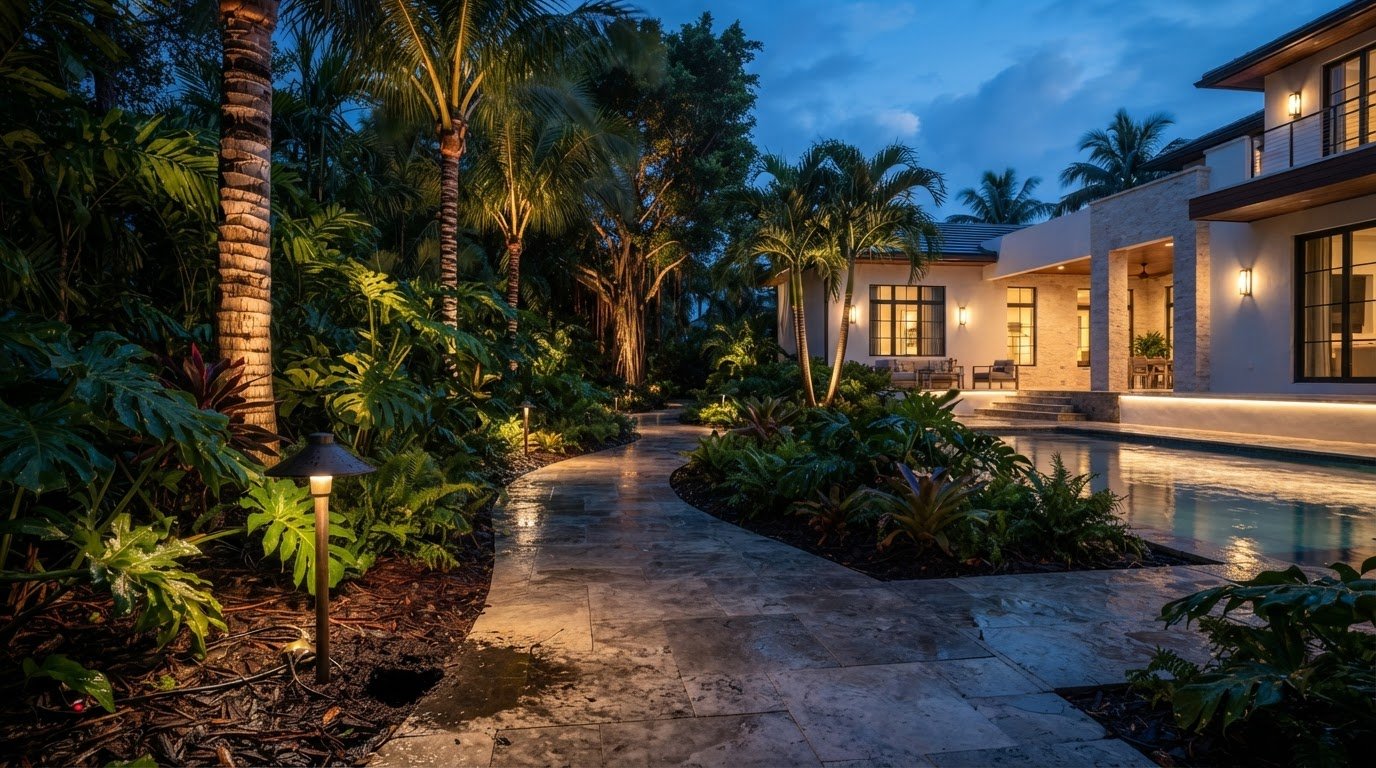
The lowest landscape lighting quote can look like a saving until a fixture shifts, a connection fails, or the finished light doesn’t suit your property. In South Florida, the hidden costs of cheap landscape lighting can show up over time in repairs, replacement parts, and adjustments, not just on the original receipt.
It’s reasonable to focus on upfront price when quotes can be difficult to compare. But fixture count alone won’t tell you how well a system is designed, installed, or suited to outdoor exposure. Components, wiring and connections, placement, light quality, and maintenance all shape the value you get from the system.
This article explains how to compare landscape lighting beyond its initial price, identify common tradeoffs, and assess the factors that can affect upkeep without relying on unsupported cost estimates. You’ll learn how custom low-voltage LED design and installation can connect fixture choices with your home’s architecture, pathways, pool areas, and landscape. The goal is a considered system that performs well and fits the demands of your South Florida property.
Key Takeaways
- Compare the full system, including design, wiring, power supply, installation, aiming, and maintenance, rather than judging by fixture price alone.
- Understand how voltage drop and system layout can affect performance and create troubleshooting or expansion needs.
- Compare DIY kits, basic installed packages, and custom-designed systems to see which approach fits your property and intended use.
- Account for South Florida conditions, including humidity, rain, coastal salt exposure, and plant growth, when planning installation and upkeep.
- Consider how the hidden costs of cheap landscape lighting may emerge over time, and how coordinated design, engineering, installation, and maintenance can support a well-planned system.
What Cheap Landscape Lighting May Leave Out of the Initial Price
A low price may cover only the fixtures or a limited installation scope. A product-only kit and a designed, installed system aren’t equivalent: one supplies components, while the other accounts for how light will work across a particular property. For a basic overview of what landscape lighting is, consider its purpose as well as the equipment: illuminating outdoor features in a way that supports both function and appearance.
Total ownership cost includes the initial purchase and installation, plus future upkeep, troubleshooting, replacements, and changes needed to keep the system working as intended. This definition helps reveal the hidden costs of cheap landscape lighting without assuming that every lower-priced option is poorly made. Price alone doesn’t establish quality. The details of the complete system and project scope matter.
What may be excluded from a low landscape lighting quote?
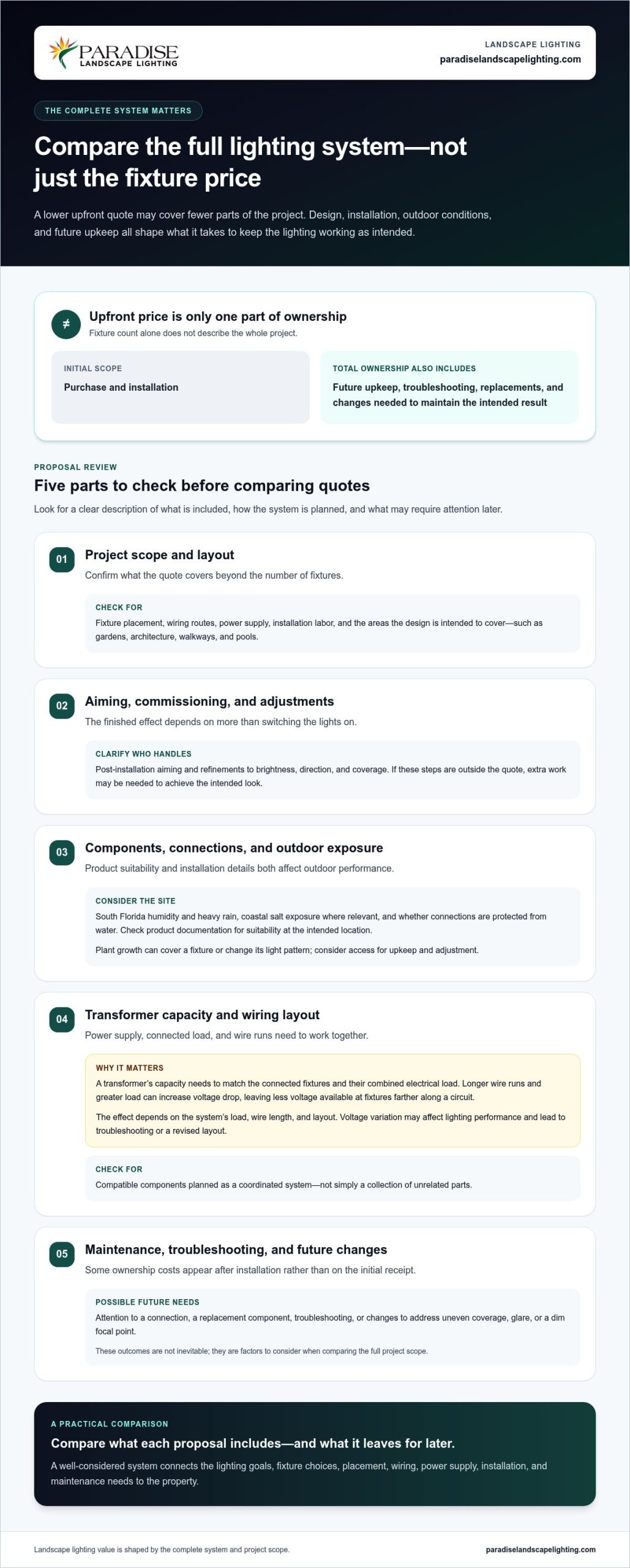
Start by identifying exactly what the quoted price covers. Fixture count is only one part of the plan. Placement, wiring routes, power supply, installation labor, and site conditions all affect the scope. A product purchase may leave you to plan and install the system. A property-specific installation also considers how lights relate to gardens, architecture, walkways, pools, or other features.
The finished effect depends on more than switching on the lights. Commissioning, aiming, and adjustments help refine brightness, direction, and coverage after installation. If those steps aren’t included in the scope, achieving the intended look may require additional work. When comparing proposals, look for a clear description of who handles these tasks and what areas the lighting is designed to cover.
Why the lowest upfront price can obscure tradeoffs
A quote may leave future maintenance and troubleshooting outside its immediate scope. If a component needs replacement or a connection needs attention, those tasks can become later expenses. The same applies when the initial layout doesn’t account for your goals: uneven coverage, glare, or a dim focal point can prompt changes or added fixtures.
That’s why comparing lighting by fixture price alone can be misleading. Consider whether the proposal explains the layout, power supply, installation, adjustments, and maintenance. Thoughtful design connects those decisions to your property’s features and the nighttime atmosphere you want. For more on how a tailored plan shapes the finished result, explore this bespoke outdoor lighting design guide.
Where Cheap Landscape Lighting Can Cost More Over Time
A lower-cost system can become more expensive to own if its components or installation don’t suit the property. A fixture that stops working, a connection that needs attention, or a layout that leaves important areas dim may lead to troubleshooting, replacement, or system expansion. These outcomes aren’t inevitable, but they’re worth considering when weighing the hidden costs of cheap landscape lighting.
Fixtures, connections, and outdoor exposure
Connections deserve similar attention. If they’re poorly protected or placed where water can collect, the system may need service later. Plant growth can also cover a fixture or change its light pattern, so consider whether fixtures will remain accessible for upkeep and adjustment.
Wiring, transformers, and uneven lighting
A transformer supplies low-voltage power to the lighting system, so its capacity needs to match the connected fixtures and their combined electrical load. Fixture compatibility matters, too: matching components helps the system operate as a coordinated whole rather than a collection of unrelated parts.
Wiring layout affects fixture performance because longer wire runs and greater electrical load can increase voltage drop, leaving less voltage available at fixtures farther along the circuit. The effect depends on the system’s design, including its load, wire length, and layout. If voltage varies across a run, some lights may not perform as intended. Uneven illumination could lead to troubleshooting or a revised layout, though it isn’t an inevitable result of every lower-cost installation.
Energy use is another part of ownership. ENERGY STAR’s overview of energy-efficient LED lighting explains how LED bulbs compare with traditional incandescent options in energy use and service life. This provides useful context, while actual outdoor performance depends on the specific products and installation.
Coordinated design and engineering connect fixture placement, transformer capacity, wiring, and lighting goals. Explore custom low-voltage LED landscape lighting to see how these elements can be planned together for your South Florida property.
Is Cheap Landscape Lighting Really Cheaper? Compare the Full System
A lower-cost option can suit a small, straightforward project. The useful comparison isn’t simply cheap versus expensive. It’s what each approach includes and whether it suits the property, priorities, and intended use. A kit, a basic installed package, and a custom-designed system can differ in design input, component information, installation scope, and planning for future changes.
| What to compare | DIY kit | Basic installed package | Custom-designed system |
|---|---|---|---|
| Design fit | May follow a preset layout or homeowner’s plan | May cover a defined set of fixtures and locations | Planned around the property and homeowner’s priorities |
| Fixtures and wiring | Review included components and instructions | Scope may specify supplied fixtures and wiring | Components and wiring are coordinated with the plan |
| Installation and handoff | Typically requires homeowner installation | Installation is included within the stated package scope | Design, engineering, and installation are considered together |
| Adjustability and maintenance | Changes and upkeep may fall to the homeowner | Depend on the package and its maintenance arrangements | Access, adjustments, and future needs can inform planning |
| Expected use | May suit a limited, simple lighting goal | May address a clearly defined set of areas | Can address several features and goals across the property |
Which comparison criteria reveal value beyond price?
Look for a plan that responds to the home’s architecture, planting, and pathways, as well as your priorities. Compare how clearly the scope describes fixtures, transformer capacity, wiring layout, installation, and system handoff. Maintenance access matters, too. Consider whether the layout can be adjusted or expanded if landscaping changes or new areas become priorities. Don’t assume a specification, warranty, lifespan, or energy saving that isn’t documented for the actual components.
How design and engineering change the comparison
Good design balances visual emphasis with practical movement through outdoor spaces, while avoiding excessive illumination. Engineering connects those creative goals to a functional low-voltage system, including its components and layout. This doesn’t guarantee a particular outcome, but it makes the decisions visible and coordinated. For a local example of how these disciplines come together, explore this Boca Raton low-voltage lighting guide.
That fuller view helps clarify the hidden costs of cheap landscape lighting: the tradeoffs may involve fit, adjustment, or upkeep, not just replacement. Compare what each option delivers, then choose the level of planning that matches your property and intended use.
What South Florida Homeowners Should Check Before Installing Landscape Lights
A lighting plan for a Miami home should reflect the property, not a one-size-fits-all fixture list. Exposure can vary between an open coastal yard and a sheltered garden, and conditions can differ between a walkway and a planting bed. A short pre-installation review connects the desired effect with the site’s practical demands and helps prevent overlooked details from becoming part of the hidden costs of cheap landscape lighting.
How coastal and rainy conditions affect lighting plans
Humidity and heavy rain are relevant considerations across South Florida, but the amount of direct exposure depends on the location. A property near the coast may also experience salt exposure, while covered or sheltered areas face different conditions. Consider where water drains, whether connections could sit where water collects, and whether fixtures will remain accessible for maintenance. Nearby plants matter, too: growth can eventually shade or obscure a light, or change how it illuminates a feature.
A practical checklist for comparing installation scope
Before comparing plans, write down what the system should accomplish. Then use this sequence to make the scope more specific:
- Define the goals: Decide whether you want to highlight architecture, create a welcoming arrival, illuminate a walkway, or draw attention to a garden feature.
- Map the areas: Note relevant pathways, planting, architecture, pools, fountains, fences, or artwork, along with the effect you want in each area.
- Review the site: Mark existing power access, drainage patterns, sheltered and exposed locations, and landscape constraints that could affect fixture placement.
- Plan wiring and access: Consider likely wiring routes, connection locations, and how fixtures can be reached for adjustment or upkeep.
- Set maintenance expectations: Account for plant growth and consider how the system can be checked and adjusted as the landscape changes.
Use the same details to compare installation scopes. A walkway plan may prioritize clear movement and controlled illumination. A pool or fountain area may call for a different placement strategy. Keep code or permit assumptions out of the comparison unless they’ve been verified for the property and project scope.
If you’re evaluating an existing system rather than starting from scratch, this LED landscape lighting retrofit guide can help frame the considerations involved in an upgrade. For a plan tailored to your property, explore custom landscape lighting design.
How Professional LED Landscape Lighting Can Protect Long-Term Value
Long-term value comes from planning a system around how you want to experience your property, not simply from choosing LED fixtures. Design, engineering, installation, and maintenance work together to shape how the lights look, how the system is arranged, and how it can be cared for over time. This makes it easier to weigh the hidden costs of cheap landscape lighting against the value of a complete, property-specific plan.
What a coordinated lighting project should accomplish
A considered plan connects visual intent to practical decisions. Fixture placement can emphasize a garden, reveal architectural details, guide attention along a walkway, or bring focus to a pool or fountain. The wiring plan and system layout should support those goals, while practical access makes future adjustments and maintenance easier to plan.
The aim is balanced illumination that supports evening use and highlights selected features without treating every area the same. A softly lit planting bed, a clearly defined path, and an architectural focal point each call for a different approach. Custom low-voltage LED lighting can be tailored to the home, landscape, and homeowner’s priorities, rather than applying one layout across properties with different needs.
From initial design to maintenance in South Florida
At Paradise Landscape Lighting, a lighting designer and lighting engineer work on custom residential projects, bringing visual planning and technical coordination into the same process. They connect fixture placement and homeowner goals with the functional design of the low-voltage system. Installation puts the plan into place, and maintenance supports the system as the property and landscape change.
That continuity is useful in South Florida, where each property has its own combination of exposure, planting, and outdoor features. A garden may grow around a fixture, or a pathway may need adjustment as its surroundings change. Considering care from the outset helps homeowners understand what ongoing attention could involve, without assuming a particular lifespan, guaranteed savings, or fixed maintenance schedule.
The most meaningful comparison looks beyond the initial quote to the system’s fit, installation scope, adjustability, and care. If you’re ready to apply that framework to your property, discuss a custom landscape lighting project for your South Florida home.
Choose Lighting That Fits Your Property for the Long Term
The hidden costs of cheap landscape lighting aren’t always visible in the initial quote. Compare the complete scope, including design, components, wiring, installation, adjustments, and maintenance. A lower-cost option may suit a simple need, but the right comparison considers what the system is planned to do and how well it fits your property.
For South Florida homes, site conditions and intended use matter. A coordinated plan can connect the look you want with fixture placement and system performance, while making room to care for and adjust the lighting as the landscape changes.
Paradise Landscape Lighting brings a lighting designer and lighting engineer together with custom low-voltage LED design, installation, and maintenance for properties in Fort Lauderdale, Miami, Boca Raton, and surrounding communities. Explore a custom landscape lighting solution for your property and take the next step toward an outdoor space that feels welcoming after dark.
Frequently Asked Questions
Why can cheap landscape lighting cost more over time?
Cheap landscape lighting can cost more over time if the initial purchase leaves out planning, installation details, troubleshooting, replacement, or future changes. These expenses aren’t inevitable, and inexpensive fixtures aren’t automatically poor quality. Compare what the system includes, how its placement and wiring fit your property, and what upkeep may involve. A clear scope makes the potential hidden costs of cheap landscape lighting easier to evaluate before you choose.
Are cheap landscape lighting kits worth buying?
Yes, a kit can suit a small, straightforward project if you understand its specifications and installation needs. The tradeoff is that a packaged system may offer less flexibility for complex layouts or a coordinated look across paths, planting, and architectural features. Before choosing, compare the included components, intended coverage, wiring requirements, and maintenance expectations with the result you want. The right fit depends on your project, not price alone.
What parts of a landscape lighting system commonly need attention?
Fixtures, connections, wiring, and the transformer may all need inspection or troubleshooting over time. No single component always fails first; exposure, installation conditions, system layout, and maintenance all influence what may need attention on a particular property. Keeping a record of the installed components and system layout can make future troubleshooting more straightforward. It also helps distinguish a component issue from a broader wiring or system concern.
Does South Florida weather affect landscape lighting?
Yes, site conditions can influence fixture placement, connection protection, drainage, and maintenance access. Humidity and heavy rain are relevant considerations, while coastal properties may also experience salt exposure. Conditions can differ among Fort Lauderdale, Weston, Southwest Ranches, Wilton Manors, Palm Beach, Miami, Miami Beach, Coral Gables, Plantation, West Palm Beach, and Coconut Grove, as well as within one property. Evaluate the actual exposure and relevant product information rather than assuming every site faces the same risks.
Is professional landscape lighting design worth considering if I have a small yard?
It depends on the yard, your goals, and how comfortable you are planning the system. A simple space may call for a modest approach, while a compact property can still include pathways, planting, or architectural details that benefit from coordinated fixture placement. Compare the design and installation scope with the effect you want, not just the number of lights. A thoughtful plan can help distinguish practical needs from unnecessary additions.
Can an existing inexpensive landscape lighting system be upgraded to LED?
Often, an existing system can be evaluated for an LED retrofit, but suitability depends on its components, wiring, power supply, and condition. Replacing lamps alone may not resolve layout or performance concerns. Paradise Landscape Lighting provides LED retrofitting and system maintenance, helping South Florida homeowners determine whether a focused upgrade or a broader redesign better fits their existing setup and lighting goals.
Return to News