
Garden lighting for bougainvillea: Design and LED placement
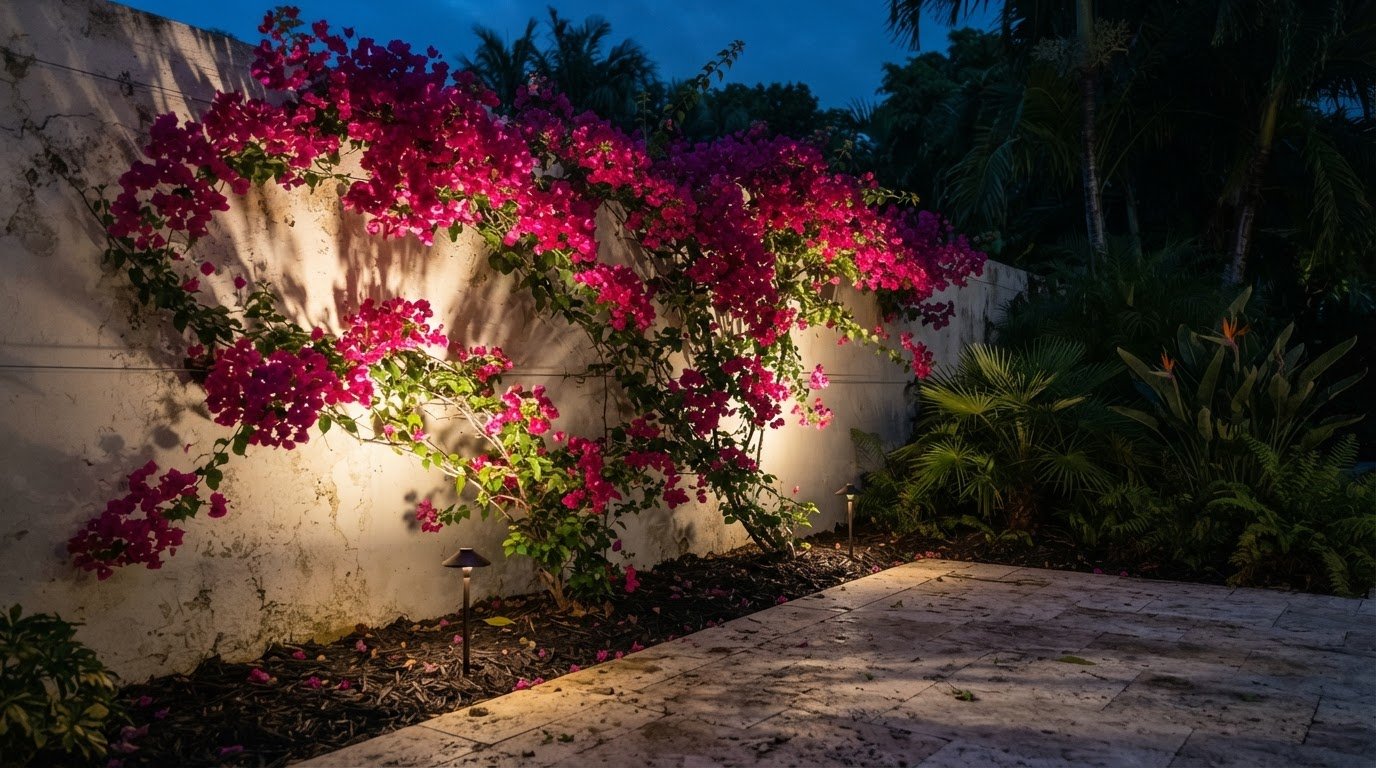
Let the plant’s form lead the lighting, rather than turning the garden into a field of evenly spaced fixtures. A considered garden lighting for bougainvillea plan uses carefully aimed LEDs to reveal its flowering bracts, climbing shape, and surrounding garden features while keeping the effect balanced. Lighting complements the display after dark; it doesn’t replace the full sun bougainvillea needs to bloom.
The plant’s vivid color naturally draws the eye, and thoughtful lighting can make it a focal point without overwhelming the rest of the landscape. This guide explains how bougainvillea can shape the design, where professionals can position LED fixtures for a refined effect, and how timers help coordinate the lighting with your evening routine. It also covers the practical details that influence the finished look, from the vine’s growth pattern to nearby paths, walls, and garden features.
Key Takeaways
- Plan fixture positions around the vine’s shape and the garden features you want to reveal, rather than placing lights at random.
- Use a coordinated lighting approach to create a clear focal point while keeping nearby paths and landscape elements visually balanced.
- Choose spotlight brightness and color to complement the bougainvillea’s bracts and suit the effect you want after dark.
- Thoughtful aiming and placement help illuminate the plant without directing harsh light onto its leaves and flowers.
Professional LED fixture placement and timer planning for bougainvillea
For garden lighting for bougainvillea, start by considering the vine’s established shape, trellis, and main viewing angles. Position LED fixtures to reveal the colorful bracts while keeping the leaves visible and the plant’s form dimensional. A light placed near the base can create an uplight effect, while an offset beam can bring out the climbing structure. For a container plant, preserve clear access to the pot and drainage.
To highlight a trellis or wall, aim uplights through open sections of the vine and adjust the beams to pick out its structure and flowering bracts. Avoid directing a concentrated beam into dense foliage, which can create harsh highlights and flatten the plant’s layered form. Account for seasonal growth and pruning when choosing fixture positions, so new shoots do not obscure the intended effect.
For low-voltage outdoor lighting, choose fixtures suited to outdoor use and protect electrical connections from water exposure. Plan cable routes around planting and maintenance areas to limit disturbance to established roots. MU Extension emphasizes that grounding electrical fixtures is important where water is used around plants. Keep fixtures clear of irrigation and fertilizer application areas as well.
Plan timers around the desired evening scene, not the plant’s daylight needs. Garden lighting for bougainvillea is a nighttime design feature, not a substitute for sunlight. Timers can coordinate the garden lighting with household routines, with settings adjusted as daylight hours change. Separate the bougainvillea accent from walkway lighting when needed, so each area remains balanced.
Plant care should inform the layout. Bougainvillea tolerates drought better than persistently wet soil, and overwatering may cause bract drop or stop blooming. Preserve access for watering and avoid routing routine maintenance traffic across roots. Fixture placement should complement the plant’s flowering and natural outline without obstructing drainage or care.
3. What type of lighting is best for bougainvillea in a garden?
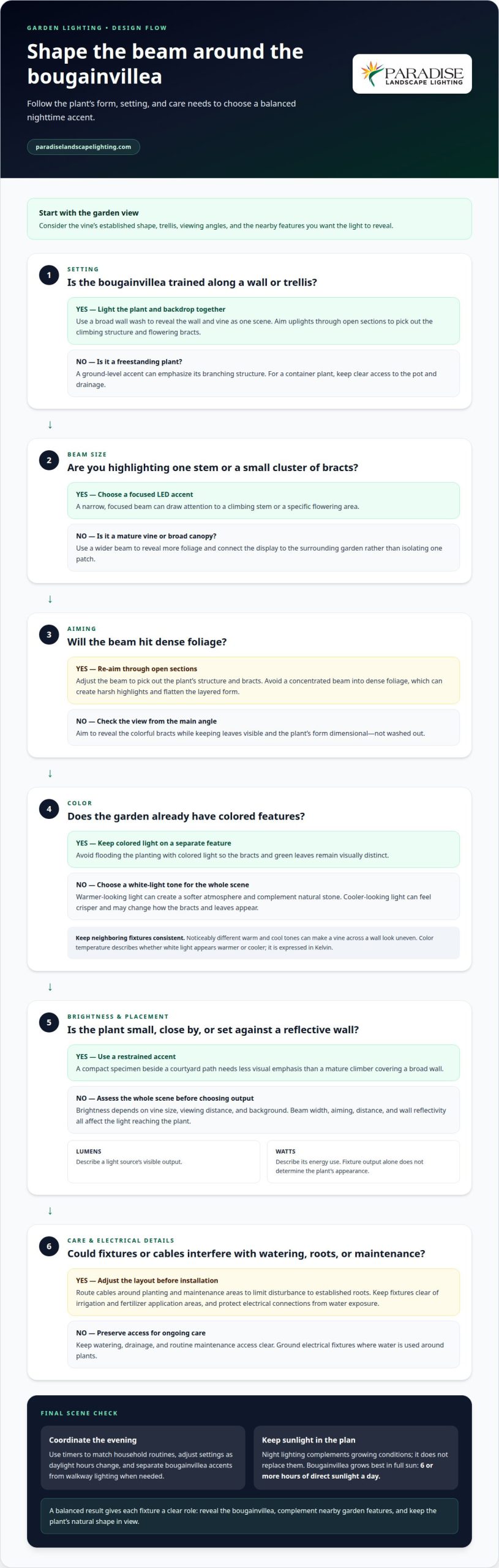
Garden lighting for bougainvillea works best when the fixture and beam suit the plant’s shape and setting. A focused LED accent can draw attention to a climbing stem or cluster of bracts. A wider beam can reveal more of a mature vine and its foliage, connecting the display to the surrounding garden instead of isolating one patch.
Ground-level fixtures and wall lighting create different effects. A ground-level accent can emphasize the branching structure of a freestanding plant. For bougainvillea trained along a wall, a broad wash can reveal the wall and plant together, making the vine feel integrated with the architecture rather than detached from its backdrop.
Layered lighting is useful when the garden has several functions. A focused accent can highlight bougainvillea, while discreet walkway lighting helps define a nearby route. In a courtyard, a gentle wall wash paired with a distinct plant accent can create depth without introducing competing focal points. Give each fixture a clear role in the scene.
Color LED lighting offers another design option, especially if the garden already includes colored features. To keep the bracts and leaves visually distinct, reserve colored light for a separate feature rather than flooding the planting. The right combination depends on the vine’s form, its background, and the atmosphere you want after dark.
A garden lighting for bougainvillea design can combine spotlights, washes, and path lighting into one composition. Professionals tailor beam direction to the garden’s actual features, including nearby walls, sculptures, or outdoor routes. A coordinated landscape lighting design can bring those elements into balance while giving the bougainvillea a clear place in the evening view.
Nighttime lighting complements, but does not replace, suitable growing conditions. Bougainvillea grows best in full sun, defined as 6 or more hours of direct sunlight a day, according to the North Carolina Extension Gardener Plant Toolbox. Keeping this in mind when choosing a planting location can help the vine thrive while its form and bracts remain visible in the evening.
Care for other plants in a mixed garden can also shape the overall display. English lavender should be pruned back by one-half after flowering for the best repeat show. Its maintenance can be considered alongside bougainvillea lighting and the garden’s broader nighttime composition.
4. What LED spotlight brightness and color temperature suit bougainvillea?
The right brightness depends on the vine’s size, viewing distance, and background. A compact specimen beside a courtyard path needs less visual emphasis than a mature climber covering a broad wall. Professionals assess the whole scene, then choose spotlight output that reveals bracts and foliage without washing out their detail.
Lumens describe a light source’s visible output, while watts describe its energy use. Fixture output alone does not determine how bougainvillea will look. Beam width, aiming, distance, and the wall’s reflectivity all affect the light reaching the plant. A narrow beam can focus attention on a small flowering area, while a wider beam spreads illumination across a larger canopy.
Color temperature, expressed in Kelvin, describes whether white light appears warmer or cooler. Warmer-looking light can create a softer garden atmosphere and complement a natural stone wall. Cooler-looking light can feel crisper, but may change how vivid the bracts and green leaves appear. Consider the plant and nearby surfaces together when selecting the tone.
Keep the color of adjacent fixtures consistent. If one spotlight casts warm white and another appears noticeably cooler, bougainvillea trained across a wall can look uneven. Consider nearby architectural and path lighting so the plant remains distinct without competing color casts. A restrained setup often lets the bracts provide the strongest color in the composition.
For a dramatic accent, color LED lighting can introduce a deliberate hue, but it changes how the plant’s colors appear. Reserve colored light for a separate feature, such as a wall or sculpture, while illuminating the bougainvillea with white light. The final choice should balance visual impact, the plant’s natural appearance, and the surrounding garden after dark.
Bougainvillea’s colorful parts are bracts, which are modified leaves that last a long time. Bougainvillea ends should be pinched or pruned after each bloom cycle because the plants show color only on new growth. During non-coloring months, especially in cool temperatures, Bougainvillea fertilizer frequency should be reduced to half. Bougainvillea does not like temperatures below 32 degrees Fahrenheit for a prolonged period. In North Texas, Bougainvillea can be grown seasonally as an annual or brought indoors and protected from frost and freezing temperatures.
How to professionally light bougainvillea without damaging leaves or flowers?
Plan fixture positions around the plant’s current shape and future growth. Keep lights clear of stems and foliage, and aim beams through open gaps toward the bracts. This helps prevent fixtures from rubbing against leaves as the vine moves and grows. On a trellis, an offset angle can reveal flowers without lighting every leaf directly.
Beam control matters. A tightly focused spotlight aimed straight into a dense canopy can create harsh highlights and obscure the plant’s layered form. Instead, the designer adjusts the angle and distance to spread light across selected branches. For a wall-trained vine, a soft wash can reveal the wall and flowers together, while preserving visible detail in both.
Plant care also shapes fixture placement. Keep fixtures and cables clear of the root zone where possible, and preserve access for watering, pruning, and applying fertilizer. This is especially useful for container-grown bougainvillea, where the pot needs to remain accessible. Because overwatering can cause bract drop or stop blooming, the layout should not obstruct drainage or routine care.
Water and electrical equipment require careful planning. MU Extension emphasizes that grounding electrical fixtures is important where water is used around plants. Plan outdoor lighting routes and positions with irrigation and wet planting areas in mind, protecting connections and keeping maintenance access clear. Fixture selection and installation should suit the garden conditions, not appearance alone.
After installation, the lighting designer reviews the scene from the intended viewing point. They adjust aim if a beam catches bare stems, produces glare, or makes the bracts lose definition. Seasonal pruning can also change the canopy, so a thoughtful layout leaves room for future growth and care. For a composed, plant-conscious result, request professional landscape lighting.
Paradise Landscape Lighting
Paradise Landscape Lighting designs and installs custom low-voltage LED lighting for bougainvillea and the wider garden. Its team brings design and technical planning together, considering the vine’s form, nearby walls, paths, and focal features as one composition. The result is a tailored plan for positioning LED fixtures and balancing the plant’s evening presence with the surrounding landscape.
When the garden needs more than a single accent, Paradise Landscape Lighting’s Landscape Lighting Design can coordinate bougainvillea with features such as a sculpture or pool deck. LED Lighting Installation brings the selected layout into the outdoor space. This approach is especially useful when the plant climbs across a wall or trellis, or its lighting needs to work alongside other garden elements.
Contact Paradise Landscape Lighting to discuss a considered lighting plan and installation for your garden.
Shape a garden scene that grows with your vision
Start by defining how you want the garden to feel after dark. Decide whether bougainvillea should quietly frame a seating area, create a focal point from the house, or complement other outdoor features. These priorities give the lighting design a clear direction and help connect the finished scene to how you use the space.
A garden lighting plan for bougainvillea can be part of a broader landscape composition. Paradise Landscape Lighting offers Landscape Lighting Design and LED Lighting Installation, as well as Sculpture and Artwork Lighting to bring nearby features into the same visual plan. The aim is a cohesive outdoor setting, not a collection of unrelated bright spots.
For a tailored next step, start a conversation with Paradise Landscape Lighting about the look you want to create. With a considered plan, your garden can feel welcoming and beautifully composed after sunset.
Frequently Asked Questions
How far should professionals place garden lights from bougainvillea?
Set fixture distance according to beam spread, plant size, and viewing angle rather than relying on standard spacing. A compact specimen beside a path calls for different placement than a mature vine covering a wall. Assess where the beam falls across the leaves and whether access for upkeep remains clear. This tailored approach suits gardens in Fort Lauderdale, Weston, Southwest Ranches, Wilton Manors, Palm Beach, Miami, Miami Beach, Coral Gables, Plantation, West Palm Beach, and Coconut Grove.
Return to News