
Create a Resort Feel at Home with Outdoor Lighting in Fort Lauderdale
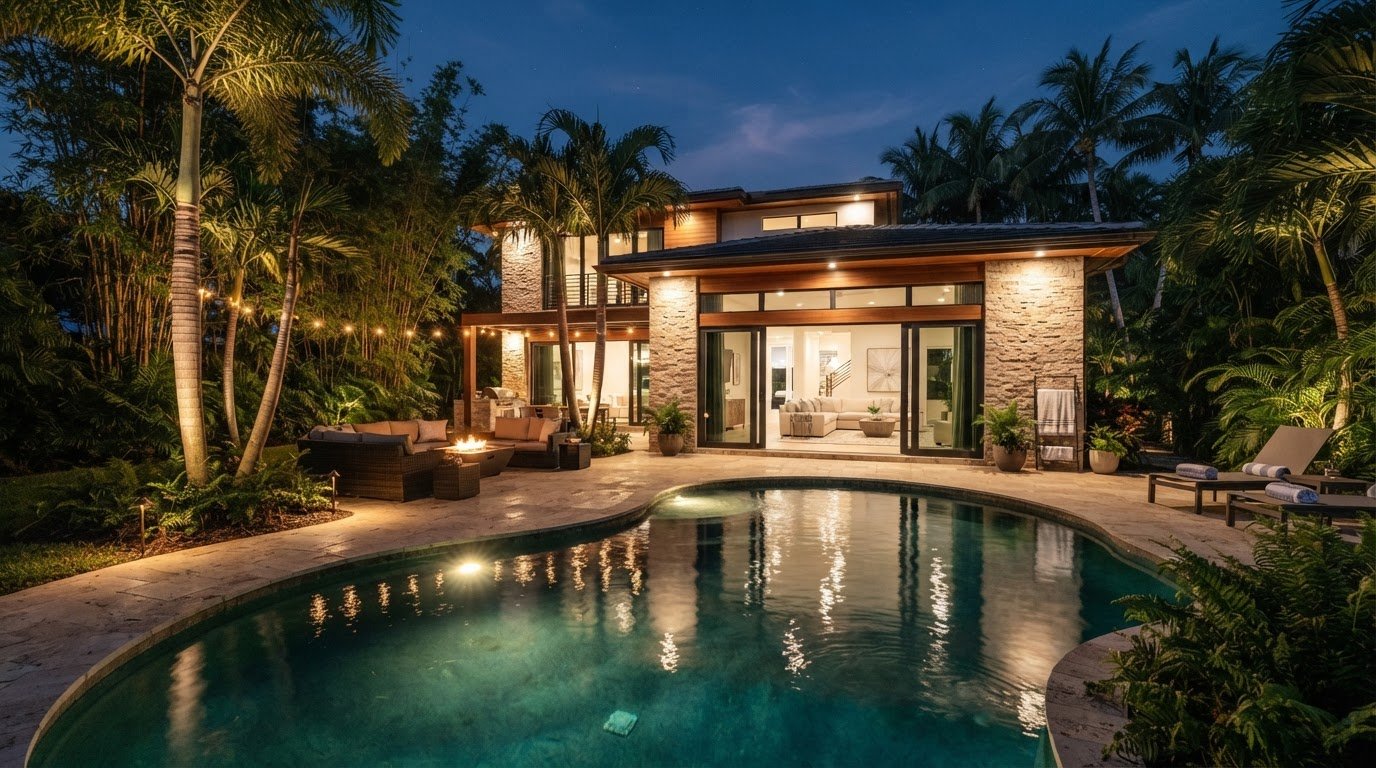
A resort-like outdoor space is shaped less by brighter lights than by where they fall. To create a resort feel at home with lighting in Fort Lauderdale, layer a soft glow with accents on trees, architectural details, and gathering areas. The result can feel welcoming and serene while keeping the landscape and home at the center.
Outdoor lighting can do more than help you see after sunset. Thoughtful placement brings patios, poolside lounges, and garden nooks into the evening, while LED technology provides an efficient foundation for the design.
Fixture choices, placement, and the character of your home and landscape all shape the effect. Learn how to create a comfortable nighttime destination, what goes into a tailored lighting plan, and when professional design and installation can bring your vision to life.
Key Takeaways
- Choose outdoor fixtures and LED lighting that complement your home’s finishes and the character of your landscape.
- Plan light around architectural details, trees, paths, and gathering areas so the design feels cohesive rather than scattered.
- Layer ambient, accent, and task lighting to shape a soft, welcoming atmosphere for evenings outdoors.
- Use the article’s color-temperature guidance to create a warm mood while keeping outdoor features clear and inviting.
Outdoor fixture materials and LED technology
For Fort Lauderdale patios and pools, combine outdoor fixtures suited to their locations with efficient LED light. A layered plan can connect your home’s architecture, landscape, and evening gathering areas.
Warm Color and LED Choices
Warm-toned light can soften a patio while preserving the textures of stone, foliage, and wood. For a poolside lounge, use a gentle glow around the seating area and focused accents on a palm or garden feature. Low-voltage LED technology supports a coordinated effect across the space. Compare the LEDs’ color appearance and dimming compatibility when selecting fixtures.
Coastal Fixtures and Lighting Considerations
Coastal air can challenge exposed fixtures, so choose materials and finishes intended for damp, salty conditions. Review each fixture’s outdoor suitability, seals, and location, especially near a pool deck. Avoid spots where water collects, and consider corrosion exposure when choosing finishes. Inspect exposed fittings for wear and keep lenses clear.
Near a beach or waterfront, location-specific lighting restrictions may apply, particularly where light could affect the shoreline or wildlife. Shield fixtures and direct beams onto the property, following applicable local requirements. Smart controls and dimmers let you lower brightness for a quiet evening or adjust separate zones for entertaining. Make sure dimmers match the selected LEDs.
Common mistakes in humid coastal settings include using indoor fixtures outdoors, overlooking exposure, and directing glare toward seating or neighboring windows. Choose fixtures suited to their patio or poolside positions, and aim them at a path or feature rather than eye level.
Layering helps connect the outdoor space to the interior. Pair patio lighting with walkway guidance and a restrained accent on a fountain or sculpture. In South Florida, a coordinated lighting plan can address these different areas together. Keep the transition from indoor rooms through a sliding glass door comfortable by avoiding a bright hotspot directly beyond the glass.
Designing lighting around landscape and architecture
A cohesive outdoor plan starts with the features you want to notice after sunset. In Fort Lauderdale, map the patio, poolside lounge, garden nook, and architectural details before choosing fixture locations. This connects separate areas without making every surface a focal point. A palm near the seating area, for example, can become a gentle visual anchor.
Start with the home. Identify the entry, columns, rooflines, textured walls, and sliding glass doors. Use light selectively to reveal a façade’s shape or material instead of illuminating every wall evenly. A narrow beam aimed upward can emphasize a column, while softer light near a doorway makes the transition outdoors feel natural. Keep bright sources out of sightlines from windows and seating.
Next, trace how people move through the landscape. A walkway to the pool needs clear visual guidance, while a garden nook benefits from calm accent light. Mark changes in direction with path lighting, and position fixtures so plants don’t cast confusing shadows across walking areas. For a fountain or sculpture, highlight its form without competing with nearby architecture.
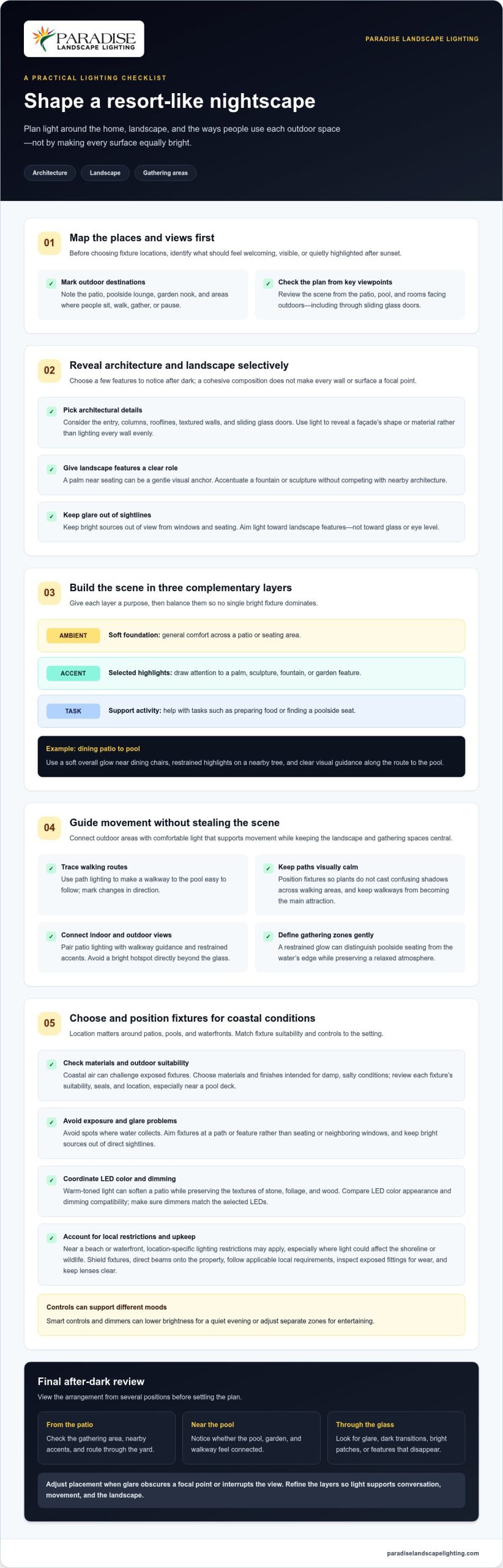
Build the composition in layers: ambient light for general comfort, accents for selected features, and task lighting where people gather or move. Give each layer a purpose. A dining patio, for example, can have a soft overall glow, while a nearby tree and the route to the pool receive restrained highlights. This creates depth without making the entire yard equally bright.
Review the plan from several viewpoints, including the patio, pool, and rooms facing outdoors. Adjust fixture placement when glare obscures a focal point or when a bright patch interrupts the view through glass. A landscape-focused lighting plan can help coordinate architecture, planting, and outdoor living areas as one composition.
Expansive windows, sheer drapes, and glass doors invite natural light into Florida homes. At night, thoughtful fixture placement can preserve views through these openings and complement the connection between interior and garden.
Creating a nighttime destination
Give each outdoor area a clear purpose after sunset. A Fort Lauderdale patio might host dinner, while a poolside lounge invites quieter conversation. Lighting can define these uses without making the whole yard equally bright. Start by identifying where people sit, walk, gather, or pause, then plan a distinct layer of light for each activity.
Build the mood with three complementary layers: ambient, accent, and task lighting. Ambient light provides a soft foundation across a patio or seating area. Accent light draws attention to a palm, sculpture, or fountain. Task lighting supports activities such as preparing food or finding a poolside seat. Balance the layers so no single bright fixture dominates the scene.
Consider the view from indoors as well as outside. Through sliding glass doors, a softly lit garden can extend the sense of living space after sunset. A bright fixture reflected in the glass can distract from the view, so aim light toward landscape features rather than windows. From the patio, check whether the pool, garden, and nearby walkway feel connected. Adjust the placement if one area seems isolated or overly prominent.
For entertaining, create a gentle progression from the house to the gathering area. Use comfortable ambient light near dining chairs, then add subtle accents around nearby plants. Keep walkways easy to see without making them the main attraction. At a poolside lounge, a restrained glow can distinguish the seating zone from the water’s edge. This helps guests navigate naturally while preserving a relaxed atmosphere.
Before finalizing the arrangement, view the space after dark from several positions. Sit at the patio table, stand near the pool, and look through the main glass doors. Notice glare, dark transitions, and features that disappear. Refine the layers so the light supports conversation, movement, and the landscape’s character. Dimmers can soften the mood for a quiet evening, while stronger task lighting can serve active areas when hosting.
Which warm color temperature is best for resort-style home lighting?
For a resort-inspired mood, choose a warm color appearance that feels comfortable against your home’s finishes and landscape. Color temperature, measured in Kelvin, describes whether light appears warmer or cooler. Lower Kelvin values appear warmer, while higher values look cooler. A warm tone, for example, can make a stone patio feel intimate, while cooler light may emphasize crisp architectural lines. The right choice depends on the atmosphere you want and the surfaces the light will reveal.
Compare the fixtures or light sources you’re considering beside the patio’s stone, the home’s exterior, and nearby foliage. A warm light that flatters a cream wall may look different on a gray surface. Check the appearance after dark, too, since daylight can affect how you judge a fixture’s color. Keep adjoining areas visually compatible, especially where the patio, pool deck, and garden are visible together.
Consistency matters more than using one color temperature for every outdoor feature. A seating area can have a comfortable, warm glow, while a fountain or artwork may need a carefully balanced accent. Avoid abrupt color shifts along a walkway or between adjoining zones. If a feature looks stark beside the patio, adjust its light source or placement until the overall view feels cohesive. For color-changing LEDs, choose restrained settings for a calm, resort-like atmosphere.
Before settling on a palette, review how the light renders key materials. A wood ceiling, pale stone, green planting, and pool water each respond differently. Compare the result from the main seating position and through the home’s glass doors. This helps reveal distracting glare or a mismatch between indoor and outdoor views. A dimmer can also soften the atmosphere for a quiet evening, provided it works with the selected LED source. Plan a warm outdoor lighting palette around your home’s architecture and landscape.
Paradise Landscape Lighting: Landscape Lighting Design
Paradise Landscape Lighting can turn your outdoor vision into a coordinated lighting plan. Its Landscape Lighting Design considers how your home, garden, pool, and gathering areas work together after dark. This service is a natural fit when you want to connect separate spaces or highlight features without relying on scattered fixtures.
A lighting designer and lighting engineer create tailored solutions for residential outdoor spaces. The plan can include LED Lighting Installation, Pool Deck Lighting, or Sculpture and Artwork Lighting, depending on the features you want to emphasize. For example, a poolside area and focal sculpture can each have a considered role in the overall composition.
Share the areas you use most and the details you want to highlight. Contact Paradise Landscape Lighting to discuss landscape lighting design for your home.
Shape the evenings you want to enjoy
Think about how you want to use your outdoor space after sunset. A quiet evening by the pool may call for a different atmosphere than a gathering on the patio. That vision gives the lighting plan purpose and helps every design choice feel intentional.
To create a resort feel at home with lighting in Fort Lauderdale, bring your priorities to a design conversation. Paradise Landscape Lighting offers Landscape Lighting Design, LED Lighting Installation, and Sculpture and Artwork Lighting to shape a cohesive outdoor environment. Share the features you want to highlight and how you use your outdoor areas, then discuss a plan tailored to your home.
Contact Paradise Landscape Lighting to discuss your outdoor lighting vision and take the next step toward evenings that feel distinctly your own.
Frequently Asked Questions
What lighting creates a resort-style atmosphere at home?
Warm, controlled outdoor lighting creates a relaxed, resort-style atmosphere. Start by checking the view from your favorite seat and noting which bright sources are visible. Concealed fixtures keep attention on the setting rather than the hardware. For a Fort Lauderdale patio, a soft glow around seating and a subtle poolside highlight can feel polished without making the entire yard equally bright.
How can layered lighting make a home feel like a luxury resort?
Layered lighting lets an outdoor space shift with the evening’s plans. For dinner on the patio, keep the dining area comfortable and reduce competing accents nearby. Later, draw attention toward a poolside lounge while retaining enough light to move between areas. Grouping controls by outdoor zone makes adjustments practical, so the setting can change without lighting every feature at once.
How can lighting highlight tropical landscaping and architectural features?
Position each fixture to reveal a feature’s shape or surface. For broad tropical leaves, test the beam from several angles so foliage doesn’t hide the plant or cast distracting shadows. On a textured exterior wall, place the light to bring out its surface rather than create a flat, bright patch. Check the view from nearby windows, too, to preserve visibility without glare.
Return to News