
Compare Polycarbonate and Metal Fixtures for Salt Air
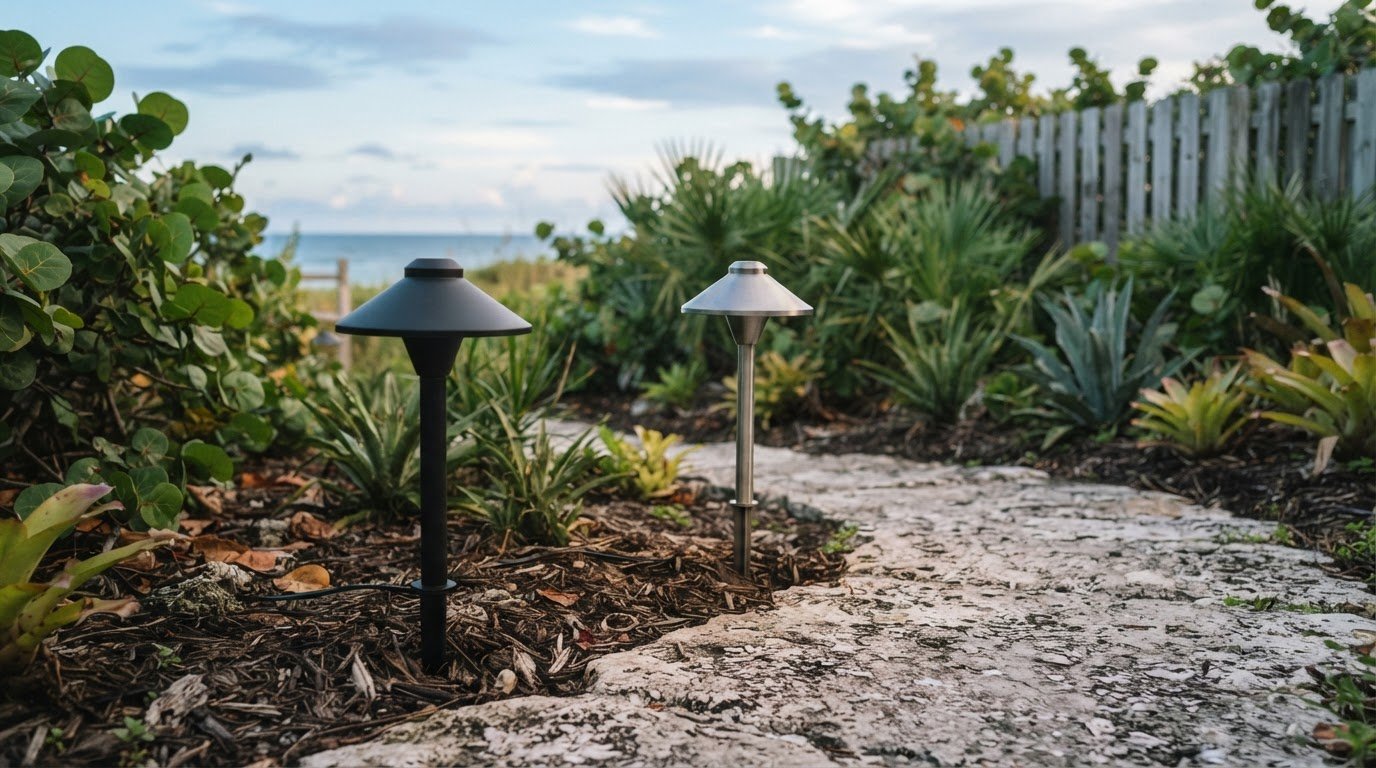
Metal isn’t automatically the safest choice near the coast. Polycarbonate fixtures resist salt-air corrosion, moisture, and UV rays while remaining impact-resistant, making them a strong option among the best outdoor lighting fixtures for salt air. Solid brass and stainless steel can also suit coastal settings, but each has different care needs.
Choosing fixtures for a seaside property means weighing more than corrosion resistance. Salt and humidity can affect exposed materials, sunlight can wear finishes, and wind or impacts can test a fixture’s construction. This comparison explains how polycarbonate, aluminum, steel, brass, and stainless steel respond to these conditions, so you can focus on the qualities that matter for your space. Material is only part of the decision: exposure, finish, and routine cleaning also affect a fixture’s appearance and performance over time.
Key Takeaways
- Compare materials by the conditions they face: salt and moisture challenge metals, while UV exposure and impact also matter for polymer fixtures.
- Distinguish solid brass from brass-plated fixtures; a worn coating can expose the base metal to corrosion.
- Consider the upkeep as well as the material: salt buildup and regular cleaning affect how coastal fixtures hold up.
- Use the fixture’s exposure, placement, and design requirements to narrow your options before choosing a finish.
Corrosion risks for aluminium, steel, brass, and stainless steel
Salt and moisture make fixture material and finish important coastal considerations. Compare how each option handles exposure, sunlight, and ongoing care.
Aluminum Exterior Fixtures
Aluminum exterior lighting won’t rust like iron-based steel, but coastal exposure can still cause pitting and corrosion. Powder coating adds protection, yet direct sunlight can make paint peel. Once the coating breaks down, moisture and salt can reach the aluminum beneath. A sun-facing fixture, for example, may need closer attention than one in shade. Aluminum is lighter than brass, but its coating still needs care.
Stainless Steel Fixtures
Stainless steel offers strong corrosion resistance, though salt exposure still calls for regular cleaning to help prevent rust. Marine-grade stainless steel is recommended for coastal or humid climates. Unlike aluminum, stainless steel doesn’t rely on paint for corrosion resistance, but surface deposits still need attention. Rinse and clean fixtures routinely to prevent salt buildup. Factor in this care when comparing stainless steel with solid brass.
Solid brass resists corrosion and develops a changing patina rather than relying on a painted layer. Brass-plated fixtures are different: wear can expose weaker base metal to rust and deterioration. Steel without stainless properties is more vulnerable to salty moisture and may rust. Choose solid brass if a naturally aging finish suits your design, and don’t treat plated brass as equivalent.
The International Electrotechnical Commission explains that the first digit in an IP rating ranges from 0 to 6 and indicates protection against solid objects. That digit doesn’t describe corrosion resistance. A rating and a metal choice address different fixture considerations.
| Material | Salt-air consideration | Finish or care |
|---|---|---|
| Aluminum | Can pit or corrode | Powder coating may peel in direct sun |
| Steel | Can rust in salty moisture | Finish condition matters |
| Solid brass | Corrosion-resistant | Develops a natural patina |
| Stainless steel | Corrosion-resistant | Clean regularly around salt exposure |
Which outdoor light brands offer warranties against salt-air corrosion? Coverage varies by brand and fixture. Read the written terms for corrosion, finish damage, and coastal exposure rather than assuming a particular metal guarantees coverage.
Weigh salt exposure, sunlight, finish durability, and each material’s maintenance needs when choosing.
Polycarbonate compared with traditional fixture materials
Polycarbonate avoids metal corrosion, while traditional metals offer distinct finishes and performance in different conditions. Compare salt exposure, sunlight, impact, and material compatibility before choosing.
Traditional Fixture Materials
Polycarbonate is a lightweight, impact-resistant thermoplastic that resists salt-air corrosion, moisture, and UV rays. Solid brass, bronze, and copper instead develop a protective patina; stainless steel resists corrosion but needs cleaning where exposed to salt. Aluminum may pit in coastal conditions, and plastic fixtures can crack in extreme cold. When combining aluminum and brass, separate the fixtures or use coatings to reduce corrosion from electrochemical reactions.
Climate-Specific Material Selection
For a coastal property, compare polycarbonate with solid brass or marine-grade stainless steel based on exposure and desired appearance. Polycarbonate handles salt and humidity without metal corrosion, while brass develops a naturally aging surface. Copper performs well in hot, humid climates. Powder-coated aluminum and stainless steel can suit cold, snowy regions, though coastal salt affects their care needs. Match each fixture’s material to its location, such as a sheltered entry or exposed garden edge.
When comparing highly rated coastal outdoor lighting fixtures, prioritize wet-rated construction and materials suited to salt and humidity. Polycarbonate and solid brass have different strengths: one resists corrosion without a metal body, while the other develops a protective patina.
U.S. outdoor lighting electrical requirements depend on adopted codes and installation conditions. Damp or wet locations call for suitable exterior wiring and appropriate installation practices.
Local coastal building rules and dark-sky restrictions vary by jurisdiction. Requirements may address fixture direction, brightness, or operating hours, shaping placement and design.
No single IP rating fits every oceanfront location. Choose wet-rated fixtures designed for seaside exposure. An IP rating addresses ingress protection, not metal corrosion.
For installation, use exterior wiring intended for damp or wet locations. Clean fixtures to remove salt buildup, which can accelerate corrosion, and maintain metal surfaces according to their material.
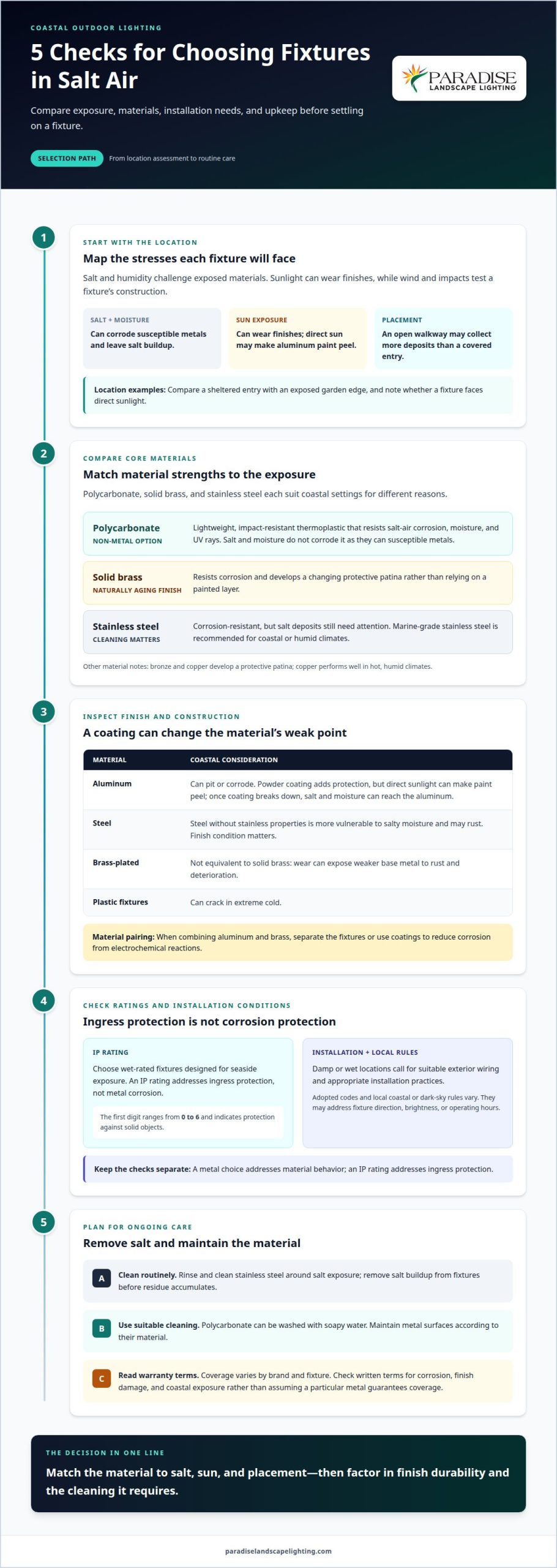
Polycarbonate resistance to salt, moisture, UV exposure, and impact
Among the best outdoor lighting fixtures for salt air, polycarbonate stands out because it resists corrosion without a metal body. This impact-resistant thermoplastic also resists moisture and UV rays. Those qualities address distinct coastal stresses, but they don’t eliminate the need for cleaning. Salt residue can still collect on a fixture’s exterior after sea breezes or rain, especially in exposed locations.
Salt and moisture don’t corrode polycarbonate as they can susceptible metals. A light beside an open walkway, for example, may collect deposits more readily than one beneath a covered entry. Cleaning the surface removes residue before it builds up. Polycarbonate fixtures can be washed with soapy water, making routine care straightforward for garden paths, gates, and other outdoor settings.
Direct sunlight is another consideration. UV-resistant polycarbonate suits open locations, such as an unshaded garden edge or poolside area. This resistance is useful where a fixture receives regular sun, but fixtures don’t all have identical construction. Assess the complete fixture and its placement alongside the material rather than treating one property as a measure of overall performance.
- Salt: Resists corrosion from salt air.
- Moisture: Resists moisture-related corrosion; cleaning removes surface residue.
- Impact: Its impact-resistant thermoplastic construction helps withstand knocks.
To narrow your options, identify the strongest exposure at each fixture location: salt-laden air, moisture, direct sun, or possible impact. Then consider whether polycarbonate’s combination of properties suits that setting. A light along a garden path, for instance, may face sunlight and accidental contact, while a sheltered entry has different demands. Choosing the best outdoor lighting fixtures for salt air means matching material properties to each location and keeping surfaces clean. Polycarbonate’s resistance helps address coastal stresses, while thoughtful placement and basic care support the fixture’s appearance over time.
Effects of salt air, moisture, wind, and sunlight on outdoor fixtures
Coastal fixtures face several stresses at once, so placement and maintenance matter as much as material. Salt residue, persistent moisture, windblown debris, and direct sun affect different parts of a light.
Salt Air Effects
Salt carried in coastal air settles on fixture surfaces and can build up between cleanings. Deposits can accelerate corrosion on vulnerable metals, especially where a finish is scratched or worn. Wind can carry salt into sheltered areas too, so distance from the shoreline alone doesn’t determine exposure. To keep coastal metal fixtures looking bright, clean them in place at least twice a year.
Moisture Effects
Humidity, rain, and spray keep surfaces damp, allowing salt deposits to remain active. Wet-rated outdoor lights are designed for exposure to rain and moisture, but that rating doesn’t itself prevent metal corrosion. Consider a fixture beside an open pool deck differently from one beneath a covered entry. Choose a suitable fixture for the location, then remove salt and residue with regular cleaning.
Sunlight creates a separate challenge: direct exposure can wear fixture finishes, including paint on aluminum. Wind can drive rain and airborne debris against a fixture, making exposed placement more demanding. A light beneath an overhang may receive less direct spray than one on an open fence line. Evaluate the site by its exposure, not simply by whether it is outdoors. When severe coastal storms and persistent environmental exposure lead to broader structural concerns across a home or facility, General Forensic Engineers, LLC provides forensic investigations to determine the root causes of building failures and property damage.
How much do salt-resistant outdoor lighting fixtures cost? The price depends on the project and is provided after a quote request. Material, fixture design, placement, and installation requirements all affect cost.
How often should salt-air outdoor fixtures be rinsed or cleaned? Regular cleaning removes salt buildup before it accelerates corrosion. For coastal metal fixtures, cleaning them in place at least twice a year helps maintain a bright finish.
The practical takeaway is to match fixture materials and placement to the combined exposure, then keep surfaces free of salt. For a coordinated plan around coastal conditions, plan your outdoor lighting layout.
Paradise Landscape Lighting
Paradise Landscape Lighting helps homeowners turn material considerations into a cohesive outdoor lighting plan. Its Landscape Lighting Design and LED Lighting Installation bring fixture placement, visual effect, and the needs of each residential space together. For a coastal property, the plan considers fixture locations and how lighting can highlight gardens, pools, fountains, or architectural features.
A lighting designer and engineer shape custom solutions around your priorities and the property’s layout. Contact Paradise Landscape Lighting to discuss your outdoor lighting project.
Plan a Coastal Lighting Scheme That Lasts
Your next decision is how lighting should shape the experience of your outdoor spaces. Identify the features you want to notice after dark, then consider how each fixture’s position relates to salt, moisture, sun, and wind. This design intent helps narrow the best outdoor lighting fixtures for salt air without letting material choice overshadow the look and function of the whole setting.
Paradise Landscape Lighting brings those priorities together through Landscape Lighting Design and LED Lighting Installation, including Sculpture and Artwork Lighting when a distinctive focal point deserves attention. The result is a plan shaped around the coastal environment and your property’s character, rather than a collection of isolated fixtures.
Share the spaces and features you want to illuminate, and start shaping a cohesive approach with Contact Paradise Landscape Lighting. A thoughtful next step can help turn a practical material decision into an outdoor setting you’ll enjoy after sunset.
Frequently Asked Questions
What is Coastal-Grade Polycarbonate?
Coastal-grade polycarbonate describes outdoor lighting made with polycarbonate and selected for coastal exposure. The material resists corrosion from salt air and moisture, UV rays, and impact. That combination can suit a seaside walkway where salt, sunlight, and accidental knocks may all affect a fixture. The label alone doesn’t describe the complete fixture, so consider its construction and placement together.
What materials resist corrosion best in salt air outdoor lighting fixtures?
Solid brass and copper are recommended for coastal conditions, while stainless steel also resists corrosion. Marine-grade stainless steel is a coastal option, but salt-exposed fixtures need regular cleaning to help prevent rust. Aluminum can pit or corrode in coastal conditions, and ordinary steel is more vulnerable to rust. Compare the material and its maintenance needs before choosing a fixture for a seaside garden.
Which outdoor lighting fixture finishes hold up best in coastal environments?
Bare solid brass, bronze, and copper don’t rely on clear lacquer that can crack or discolor in coastal conditions. These metals develop a surface patina over time. Brass-plated fixtures are different: if the coating wears, the base metal may be exposed to rust and deterioration. On aluminum, powder-coated paint can peel in direct sunlight, so choose a finish suited to the site’s sun exposure.
How do marine-grade 316 stainless steel, brass, copper, and aluminum compare for coastal lights?
Marine-grade stainless steel, solid brass, and copper are coastal options, but they differ in care and appearance. Stainless steel needs regular cleaning in salt-exposed areas; brass and copper develop a patina. Aluminum is lighter, but it can pit or corrode near the coast, and its coating may peel in direct sun. These distinctions matter for homes in Fort Lauderdale, Weston, Southwest Ranches, Wilton Manors, Palm Beach, Miami, Miami Beach, Coral Gables, Plantation, West Palm Beach, and Coconut Grove.
What IP rating should outdoor lighting fixtures have near the ocean?
There is no single IP rating for every oceanfront location. Choose wet-rated fixtures designed for seaside exposure. An IP rating measures ingress protection, not corrosion resistance.
Return to News