
Benefits of Low Voltage Outdoor Lighting for Yard Safety
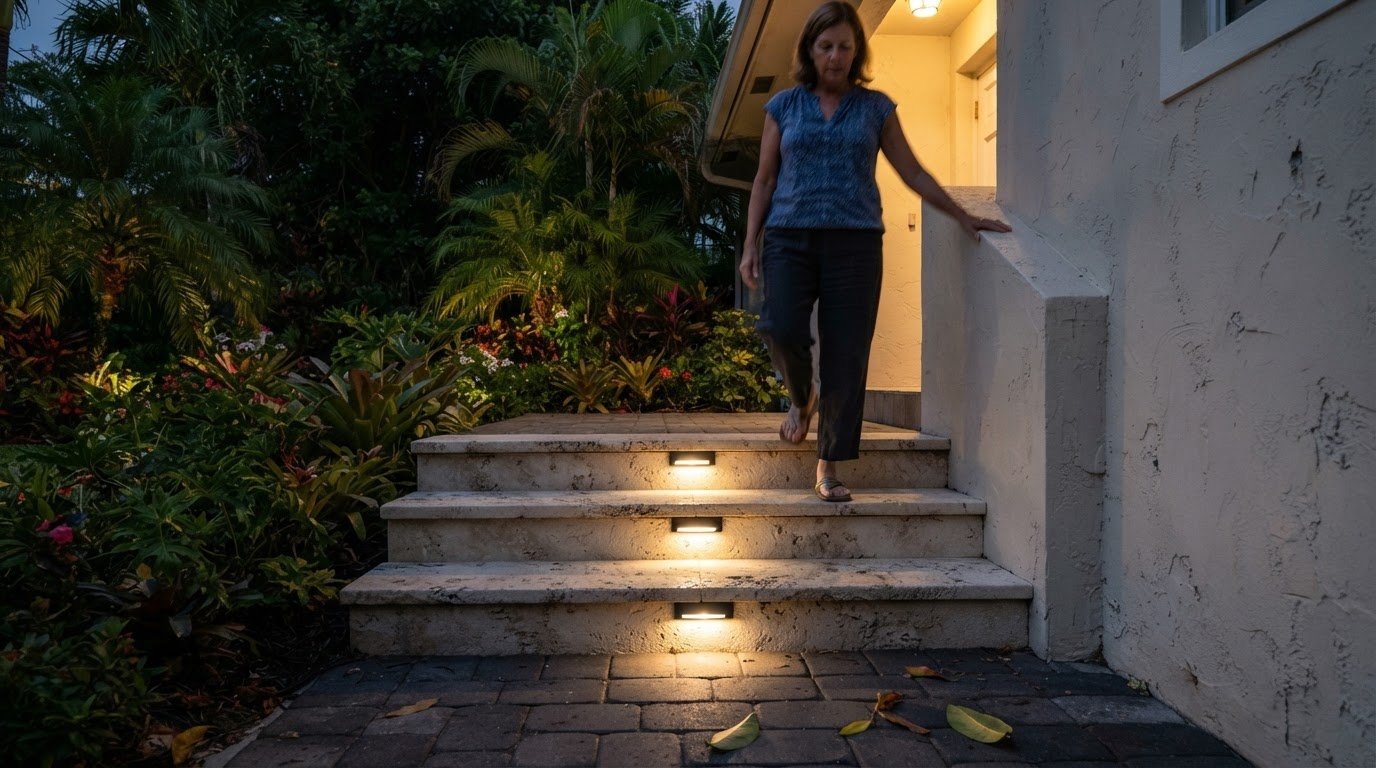
The benefits of low voltage outdoor lighting include clearer paths, more comfortable visibility, and flexible ways to highlight a landscape. These systems typically operate at 12 volts, compared with 120 volts for line-voltage lighting. That lower voltage can reduce the risk of shock, while carefully placed fixtures help make steps, entries, and walkways easier to see.
Good outdoor lighting should do more than brighten a yard. It should help people move around confidently while preserving the character of the home and garden. This article explains how low-voltage lighting supports safety, creates visual interest, and offers flexibility in fixture placement and design. You’ll also learn how practical illumination can bring pathways, pools, trees, and architectural details into a cohesive nighttime setting.
Key Takeaways
- Learn how thoughtful lighting placement can make paths, steps, and entries easier to navigate after dark.
- Understand how low-voltage systems balance outdoor illumination with reduced electrical risk and efficient LED technology.
- See how fixture placement and beam direction can highlight landscape features while keeping light comfortable.
- Discover how a coordinated lighting plan can adapt to different outdoor areas, from walkways to pools and focal features.
What Are the Safety Benefits of Landscape Lighting?
The benefits of low voltage outdoor lighting include clearer paths, steps, and entries after dark. Fixtures can illuminate routes between outdoor living areas, making a step edge or walkway easier to distinguish from nearby planting. For example, lighting the route from a driveway to the front door can guide movement without flooding the yard with light. Shielded or downward-facing pathway fixtures can also limit glare and keep illumination comfortable for passersby.
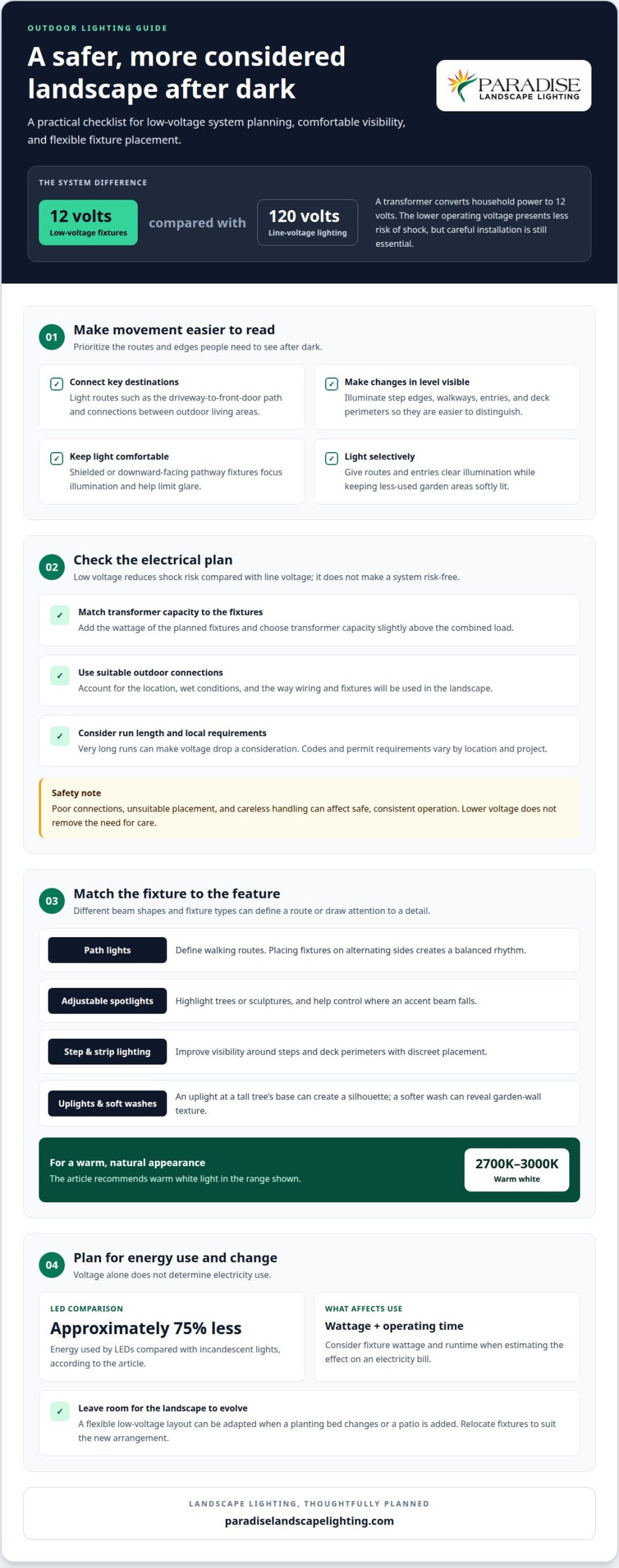
Electrical safety is another consideration. Low-voltage systems typically operate at 12 volts, while line-voltage outdoor systems operate at 120 volts. The lower operating voltage presents less risk of shock than traditional line-voltage lighting, but outdoor equipment still needs suitable installation and connections. That distinction matters in gardens shared by people, pets, and routine landscape work. Low voltage doesn’t mean fixtures or wiring should be handled carelessly, especially in wet outdoor conditions.
For energy efficiency, bulb type matters more than voltage alone. LEDs use approximately 75% less energy than incandescent lights, reducing the electricity needed for the same lighting purpose. Voltage describes the system’s electrical level; wattage and operating time determine energy use. A 12-volt system doesn’t automatically use less energy than every 120-volt setup.
Another benefit of low voltage outdoor lighting is the ability to use LED fixtures for targeted illumination. Actual energy use depends on the fixtures and how long they operate, so wattage and runtime are useful considerations when estimating the effect on an electricity bill.
Thoughtful placement can improve visibility while preserving the yard’s appearance. Instead of adding brightness everywhere, fixtures can illuminate a walkway or entry while keeping less-used garden areas softly lit. This balances practical illumination with atmosphere, without treating every part of the yard as if it needs the same amount of light.
LED options keep a low-voltage landscape lighting system energy efficient. Outdoor LED lights can provide light output using 20% of the energy used by an incandescent bulb, while low-voltage lighting can use up to 90% less energy than conventional lighting. LED outdoor lighting consumes up to 80% less energy than traditional bulbs. Low-voltage landscape lighting is described as safe for areas where children and pets play, dig, and chew; lighting steps and entries clearly can help people avoid misjudging a step.
Why Choose Low Voltage Landscape Lighting?
Low-voltage lighting systems combine reduced operating voltage with flexible illumination for outdoor spaces. Their safety and performance depend on sound connections, suitable transformer capacity, and thoughtful fixture placement.
Installation Safety and Shock Risk
A low-voltage system uses a transformer to convert household 120-volt power to 12 volts for outdoor fixtures. Compared with line-voltage lighting, this lower operating voltage presents less risk of shock, but it doesn’t remove the need for careful installation. Outdoor connections should be appropriate for their location, and fixtures need a layout that accounts for paths, planting, and wet areas. Local codes and permit requirements vary, so there isn’t one permit answer for every U.S. installation; the applicable local rules and project details determine what applies.
To size a transformer, add the wattage of the planned fixtures and select capacity slightly above the combined load. A suitable transformer supports the planned system, while very long lighting runs can make voltage drop a consideration.
Visibility and Outdoor Security
Well-directed light makes outdoor routes easier to distinguish after dark. Fixtures along a driveway-to-entry route can help reveal changes in the path, while recessed or strip lighting on steps and deck perimeters can improve visibility there. Shielded or downward-facing pathway fixtures keep illumination focused and comfortable, without unnecessary glare. Lighting also makes entrances and landscaped areas more visible, contributing to a greater sense of security around the home.
Low-voltage systems still require care: poor connections, unsuitable placement, and very long runs can affect safe, consistent operation. The transformer, wiring, and outdoor fixtures should work as a coordinated system. Lower voltage does not make an installation risk-free.
A carefully considered layout can balance safety with visual appeal. Plan outdoor lighting around your spaces to bring clear illumination to the routes and features you use most.
These systems are often easier and less expensive to install than line-voltage lighting, and low-voltage landscape lighting can often be installed without professional help. Professional advice may still help optimize the layout and installation. Cable does not need to be installed in conduit.
A transformer connected to a standard 110-volt outlet supplies the 12-volt lighting system. Low-voltage lighting can illuminate pathways, steps, and driveways to improve safety.
Landscape aesthetics and fixture flexibility
Low-voltage fixtures can shape how a landscape looks after sunset, not simply brighten it. A narrow beam can draw attention to a tree trunk, while a softer wash can reveal the texture of a garden wall. For a welcoming curb appeal, warm white light in the 2700K to 3000K range creates a natural, cozy appearance. The right balance lets accents stand out without making the entire yard feel overlit.
A range of fixtures lets the design respond to different features. Path lights define routes, adjustable spotlights highlight sculptures or trees, and discreet fixtures fit near steps or garden beds. Placing pathway fixtures on alternating sides of a path creates a balanced rhythm. For taller trees, an uplight at the base can create a silhouette, while an adjustable beam helps control where the accent falls.
Low-voltage lighting options also make it easier to adapt a layout as the landscape changes. If a planting bed is redesigned or a patio is added, fixtures can be relocated to suit the new arrangement. Systems can also be expanded as needs change without extensive rewiring. That flexibility helps lighting continue to support both the home’s aesthetic and practical security as outdoor spaces evolve.
Weather resistance matters because outdoor fixtures face rain and changing conditions. Choose fixtures designed for outdoor use and suited to their installation location; areas exposed to water need equipment appropriate for wet conditions. Durable placement and compatible connections help the system remain functional, while the fixture material and finish can complement nearby stone, planting, or architectural details.
Scale affects the final effect. A compact fixture can blend into a narrow planting bed, while a more substantial fixture may suit an open lawn or broad façade. Submersible LED lights can create a shimmering effect in ponds. Lights mounted on trees or pergolas and angled downward can suggest moonlight, creating a softer evening atmosphere in outdoor living areas.
Low-voltage landscape lighting purpose and function
Low-voltage landscape lighting distributes illumination to selected outdoor areas through a transformer and connected fixtures. The transformer converts household 120-volt electricity to 12 volts, supplying light for paths, planting beds, and architectural details. This setup supports layered lighting, where each fixture serves a clear purpose rather than brightening every part of the yard. The result can guide movement and create ambiance at the same time.
Line-voltage systems serve different needs. They operate at 120 volts and are often used in commercial, security, and public-use settings. Their brighter fixtures can illuminate large areas with fewer lights, which may suit broad open spaces. For a residential garden, low-voltage fixtures can instead create smaller pools of light, highlighting a walkway or focal feature without making the entire landscape equally bright.
Placement determines how the system works. Pathway fixtures can trace a route between a driveway and patio, while an uplight near a tree can highlight its form. Narrow-beam spotlights can draw attention to tall structures, and lights near water features can be aimed to limit harsh reflections. These choices distinguish functional illumination from accents and give each outdoor area a deliberate visual role.
Solar-powered landscape lights collect energy from daylight for use after dark. Their operation depends on access to sunlight, so shade may affect how well they illuminate a path or feature. A wired low-voltage system connects fixtures to a transformer, making it a different option for coordinated lighting across several areas. The right approach depends on the layout, available sunlight, and desired effect.
Low-voltage systems can combine practical light with aesthetic detail, but they aren’t designed for every scale or purpose. A large open area needing broad, powerful illumination may call for a different lighting approach than a garden path or focal tree. For a tailored plan that balances walkways, features, and ambiance, explore landscape lighting design.
Paradise Landscape Lighting
Paradise Landscape Lighting helps homeowners plan outdoor lighting around how they use their yards and want them to look. Turn to the team when planning a new low-voltage layout or improving illumination for paths, pools, gardens, or architectural features. Its design and installation work brings safety, function, and visual balance together, tailored to the outdoor space.
Whether you want clearer routes after dark or an accent for a landscape focal point, a coordinated plan helps fixtures work together rather than compete. Paradise Landscape Lighting also offers sculpture and artwork lighting and pool deck lighting, integrating these areas into the broader design.
For a personalized outdoor lighting plan, contact Paradise Landscape Lighting to discuss your space and goals.
Shape a Lighting Plan Around Your Evenings
Start by deciding how you want your yard to feel and function after dark. Consider the areas you use regularly, the features you want to highlight, and the atmosphere you want for outdoor gatherings. These priorities create a clear brief for a cohesive plan, rather than a collection of fixtures added without a shared purpose.
The benefits of low voltage outdoor lighting are clearest when design and installation suit the property. Paradise Landscape Lighting offers Landscape Lighting Design and LED Lighting Installation, as well as Sculpture and Artwork Lighting for distinctive focal points. A considered plan can connect practical needs with the look you want for your outdoor spaces.
Ready to explore a lighting approach tailored to your home? Contact Paradise Landscape Lighting to discuss your goals and take the next step toward a more inviting yard.
Frequently Asked Questions
What are the main benefits of low-voltage outdoor lighting?
The main benefits are more comfortable movement after dark, efficient LED illumination, and flexible ways to shape a yard’s appearance. For example, a lighting plan can make the route from a Fort Lauderdale home’s entry to its patio easier to follow while giving a garden or focal feature a distinct evening presence. The best results come from matching each fixture to how the space is used.
Return to News